









- bhavya gada
- No Comments
If I want to help backyard wildlife fast, I start with shallow water. In Maryland, a simple water setup can support birds, bees, butterflies, frogs, and dragonflies – if it stays clean, shallow, and easy to reach.
Here’s the short version:
- Birdbaths work well for songbirds and can also help bees and butterflies.
- Shallow basins are best for pollinators that need a safe landing spot.
- Small ponds support more types of wildlife, including frogs and dragonflies.
- Drips and misters attract birds with motion and sound.
- Recirculating bowls and small fountains fit small patios and keep water moving.
A few numbers matter right away:
- Birdbath edges should be about 1.5 to 2.5 inches deep
- The center should stay at 4 inches or less
- Place water features about 5 to 10 feet from shrubs for cover and safer access
- Clean still water about once a week to help limit algae, debris, and mosquito larvae
The main idea is simple: pick a water source that fits your space, keep it shallow, and keep it clean.
DIY water station for wildlife in your backyard
sbb-itb-843f8be
Quick Comparison
| Water source | Best for | Best spot | Main care |
|---|---|---|---|
| Birdbath | Songbirds, some pollinators | Patios, small yards | Clean weekly |
| Shallow basin | Butterflies, bees | Sunny flower beds, deck edges | Refill often |
| Small pond | Frogs, toads, dragonflies, birds | Quiet yard areas | Remove leaves, watch water level |
| Drip or mister | Birds, hummingbirds | Near shrubs, compact spaces | Flush parts, keep water moving |
| Recirculating bowl or small fountain | Birds | Patios, entry beds | Wipe basin, winter prep |
If I’m setting up a wildlife-friendly yard in Maryland, I’d use this list to match the water source to the animal, the space, and the amount of care I can keep up with.
Why Water Features Matter in Maryland Yards
Maryland yards come with a bit of a push and pull. Summers get hot, winters freeze, and that makes backyard water features tougher to keep up than many people expect. At the same time, local wildlife still needs a steady water source.
That’s why placement and upkeep matter so much here. Mosquitoes and falling leaves can turn a nice feature into a chore fast, especially if your yard has deciduous trees. Regular cleaning helps keep the water usable for birds and other animals.
Design matters too. Go with shallow, textured edges so animals can get in and out without trouble. It also helps to place the feature near shrubs or native plantings, which give wildlife a fast place to duck into for cover.
If you want the easiest place to start, begin with a birdbath.
1. Birdbaths
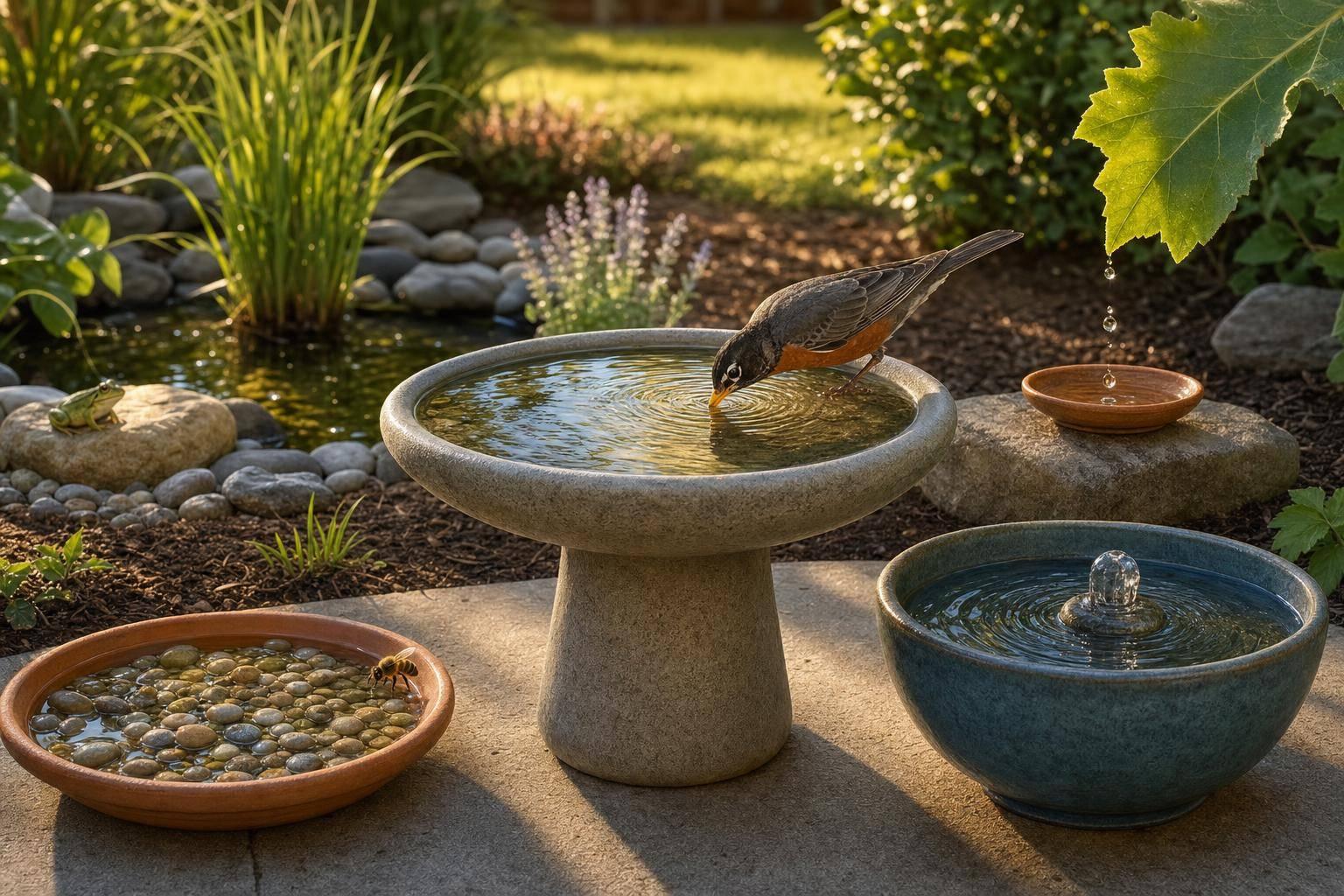
A birdbath is one of the simplest ways to add water to a Maryland yard. Birds use it to drink and bathe. Butterflies and bees may use the shallow edges too, especially on hot days. The main thing is simple: make it shallow, steady, and easy to access.
Aim for a basin that’s 1.5 to 2.5 inches deep at the edges, with a gradual slope to no more than 4 inches in the center. A basin that’s 16 to 24 inches wide gives wildlife enough space to move around[3]. If the bottom feels slick, add a few flat stones or a thin layer of gravel so birds and insects can get a better foothold.
Placement matters more than people think. Set the birdbath 5 to 10 feet from nearby shrubs or trees[2][3]. That keeps birds near cover, but not right under thick branches where predators may hide.
Moving water can help a lot. A small solar-powered bubbler adds sound and motion, and it can help cut down on mosquitoes[3][4]. If you’d rather use a still bath, change the water each week and scrub off algae and debris. For bigger basins, Bti mosquito dunks are a safe biological way to control mosquito larvae without harming birds or pollinators[4][5].
In winter, use a de-icer to keep water available[3][4].
For insects and butterflies that need even less water, the next option goes shallower.
2. Shallow Basins and Butterfly Puddling Stations
Small visitors need small water sources. That’s where shallow basins and butterfly puddling stations come in.
Butterflies, bees, and other pollinators use shallow water to drink and puddle for minerals. A low dish, saucer, or shallow tray filled with pebbles or sand works well, with the water level kept just below the surface. That setup gives insects a safe place to land without slipping in.
Set the basin near native flowers in a sunny spot, like the edge of a patio or a bright garden bed. During hot, dry spells, refill it often. Scrub and refill the basin on a regular basis to help stop algae and stagnant water.
3. Small Wildlife Ponds
If a shallow basin doesn’t give wildlife enough space, a small pond can. It adds deeper water, more habitat, and a better setup for animals that need a bit more room.
Frogs, toads, dragonflies, birds, and beneficial insects all do well with a backyard pond that has shallow edges, rough stones, and native shoreline plants. Those details matter. They give animals simple ways to get in and out instead of turning the pond into a steep-sided trap.
In Maryland yards, small ponds usually work best in low-traffic spots with partial sun and nearby native plantings for cover. That kind of placement helps wildlife feel safer and makes the pond easier to fit into the yard without constant disturbance.
To keep the water clean and usable, skim out leaves on a regular basis, check water levels during dry spells, and stop stagnant pockets from forming along the edges.
For a smaller, low-maintenance way to keep water moving, the next option uses drips and mists.
4. Dripping and Misting Features
If you want a small, low-maintenance water feature that still adds motion, a drip or mist setup is a smart pick. These features add moving water, which draws birds in and gives wildlife a sound cue they can follow. [1][3]
Birds are usually the first visitors you’ll notice. Hummingbirds, in particular, use fine mist to cool off and bathe. [5] And in Maryland’s hot, humid summers, that extra moisture can help wildlife get through hot, dry stretches. [5]
Placement matters. Set the feature 5 to 10 feet from shrubs, and add flat stones or gravel nearby so animals have steady footing. [2][6]
A little upkeep goes a long way:
- Keep the water moving to cut down on mosquito breeding. [3][4]
- If you’re using a small reservoir, flush it weekly and refill it with rainwater or dechlorinated water. [3][4][5]
- Remove pumps and misting parts before freezing weather arrives. [3][4]
If you want another compact setup, a recirculating bowl or small fountain also works well.
5. Recirculating Bowls and Small Fountains
If you want something a bit more decorative that still keeps water moving, recirculating bowls and small fountains are a good fit. Shallow recirculating bowls and low fountains sit well on patios, near entry beds, and in small garden spaces. Birds are drawn to the gentle motion, and the shallow basin gives them a safe, easy place to drink and bathe.
Upkeep is simple. Wipe the basin, refill it when needed, and store the pump indoors before freezing temperatures arrive.
Used together, these water sources can support more species across the yard.
Quick Comparison of Backyard Water Options
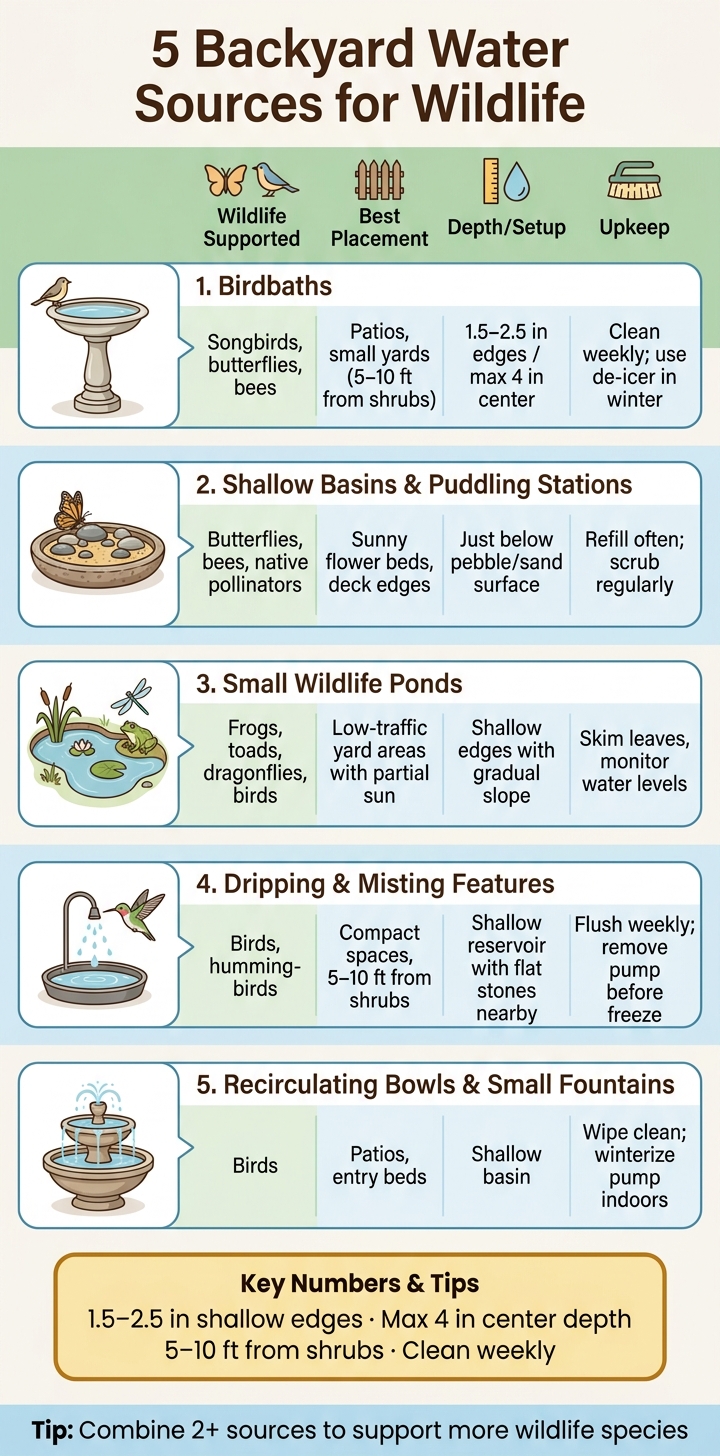
5 Backyard Water Sources for Wildlife: Quick Comparison Guide
For a fast side-by-side look, match each water source to the wildlife it helps most and the care it calls for. This makes it easier to pick the right fit for your space, whether you have a tiny patio or a bigger backyard.
| Option | Wildlife Supported | Best Placement | Upkeep |
|---|---|---|---|
| Birdbaths | Songbirds, butterflies, bees | Patios, small yards | Clean weekly |
| Shallow basins and puddling stations | Butterflies, bees | Sunny beds, deck edges | Refill often |
| Small wildlife ponds | Frogs, toads, dragonflies, birds | Low-traffic areas | Skim leaves, manage water levels |
| Dripping and misting features | Birds, hummingbirds | Compact spaces | Keep water moving |
| Recirculating bowls and small fountains | Birds | Patios, entry beds | Wipe clean, winterize |
Using more than one water source can help a broader mix of wildlife. A birdbath might draw in songbirds, while a shallow basin gives butterflies and bees a safer place to drink.
Using Multiple Water Sources for a More Wildlife-Friendly Yard
Once you know the main options, the next step is matching them to how wildlife uses water. Birds, butterflies, and native bees don’t all drink or bathe the same way, so using two or more water sources can support more life in your yard.
Pair features based on what each animal needs. A birdbath near dense shrubs gives birds a place to drink and bathe, with cover close by if they need to duck out of sight. Add a shallow puddling station near nectar-rich native flowers, and you can draw in butterflies and native bees that are already stopping by those blooms. If you have the room, a small pond adds a steadier water source and a more varied aquatic habitat.
Native plants, stone edging, and drainage features can make the space work better and help control overflow without soaking the rest of the yard. That matters even more during hot Maryland summers, when water may be hard to find. And if space is tight, don’t worry – two small features can still meet different needs.
For a smaller yard, even a simple combo like a recirculating bowl on a patio and a shallow basin near a flower bed can support more wildlife. The best setup depends on your yard size, sun exposure, and how much upkeep you’re willing to handle.
Conclusion
Pick the feature that matches your space, sunlight, the wildlife you want to attract, and how much upkeep you can handle. These options work best when they offer fresh water, safe access, and steady care – giving Maryland wildlife the shallow, easy-to-reach water it needs most.
FAQs
Which water source is best for a small yard?
For a small yard, a shallow, low-fuss birdbath or a container-style water feature with recirculation is usually the best fit. It gives birds a safe place to drink and bathe without taking over the space.
A recirculating birdbath helps keep the water fresher and can discourage mosquitoes. The shallow edge also works well for birds and many helpful insects.
Clean it weekly in summer, and clear out algae and fallen leaves when needed. It also helps to place it near shrubs, so birds have quick escape cover if they feel at risk.
How can I keep a wildlife water feature mosquito-free?
Keep water moving with a recirculating pump, fountain, or bubbler. That surface movement makes it harder for mosquitoes to lay eggs.
If you have static containers or shallow water features, drain and refill them on a regular basis.
You can also use Bti dunks as directed on the label. Clear out organic debris, and encourage natural predators like dragonfly larvae to help keep mosquito numbers down.
Can I use more than one water source together?
Yes. Using more than one water source can make your backyard habitat support a broader mix of wildlife.
For example, a birdbath gives birds a place to drink, a small pond can help amphibians, and a shallow puddling station works well for butterflies. Different depths and water setups also make it easier for animals to find water and cover in different parts of your yard.
Chat with Us