









- bhavya gada
- No Comments
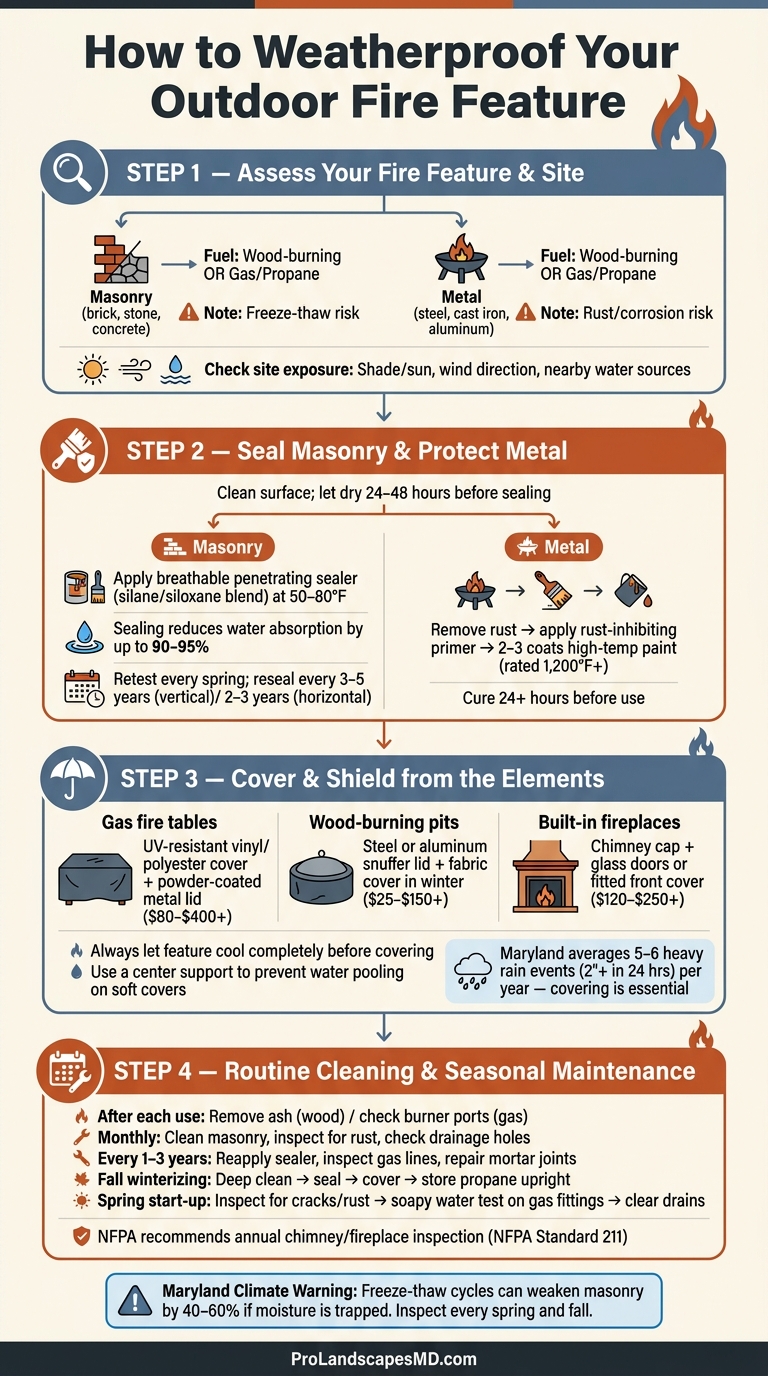
Want your outdoor fire feature to last? Here’s what you need to know: Weatherproofing is essential for protecting fire pits, fireplaces, and fire bowls from damage caused by Maryland’s tough climate. Freezing winters, humid summers, and heavy rainfall can crack masonry, rust metal, and damage gas components. Proper care ensures both safety and longevity.
Key Steps to Protect Your Fire Feature:
- Assess Materials & Location: Identify if your fire feature is masonry or metal and note its exposure to rain, wind, and sunlight.
- Seal Masonry & Metal: Use breathable sealers for stone and rust-proof coatings for metal to prevent water damage and corrosion.
- Use Covers & Shields: Invest in UV-resistant covers, metal lids, or chimney caps to guard against rain, snow, and debris.
- Routine Maintenance: Clean regularly, check for cracks or rust, and ensure drainage works. Winterize before freezing temperatures.
By following these steps, you can extend the life of your fire feature while keeping it safe and functional year-round. For professional help, consult local experts like Pro Landscapes MD.
How to Weatherproof Outdoor Fire Features: Step-by-Step Guide
Assessing Your Fire Feature and Local Weather Conditions
Take 20–30 minutes to closely examine your fire feature’s material and its location on your property. The way you protect it from the elements depends entirely on two key factors: the materials it’s made from and its exposure to weather conditions. Understanding these factors is crucial before diving into sealing or maintenance work.
Identifying Materials and Fuel Type
Start by determining the material of your fire feature. Masonry fire features – constructed from materials like brick, concrete block, natural stone (such as Pennsylvania bluestone or granite), or manufactured stone veneer – are porous. This makes them particularly susceptible to Maryland’s freeze-thaw weather cycles. On the other hand, metal fire features, made from materials like mild steel, stainless steel, cast iron, or aluminum, don’t absorb water but are prone to rust and corrosion if not protected.
You can often identify the material through a simple visual inspection:
- Natural stone: Irregular shapes, color variations, and visible grain lines.
- Manufactured stone veneer: Uniform appearance, thinner, and lighter.
- Mild steel: Develops reddish-brown rust.
- Stainless steel: Shiny, silver, and corrosion-resistant.
- Cast iron: Heavy, dark, and coarse-textured.
If you’re unsure, check any installation paperwork or manufacturer labels for clarity.
Fuel type also plays a big role in maintenance. Wood-burning fire features tend to collect ash, soot, and moisture-retaining residue, which can speed up masonry damage and rust if not cleaned regularly. Gas and propane fire features, on the other hand, require attention to mechanical parts like burners, valves, ignition systems, and gas lines. Protecting these components from water and debris is essential.
| Fire Feature Type | Primary Material | Key Weatherproofing Focus |
|---|---|---|
| Built-in masonry fire pit | Brick, concrete, natural stone | Penetrating sealer, mortar joint inspection |
| Portable metal fire pit | Steel, cast iron, aluminum | Rust prevention, high-heat coating |
| Gas fire pit / fire table | Metal burner pan, stone veneer | Component protection, burner cover, drainage |
| Outdoor fireplace | Concrete block, brick, stone | Sealing, cap inspection, chimney moisture control |
| Fire bowl | Cast concrete or metal | Cover when not in use, check for cracks or rust |
Once you’ve identified the materials and fuel type, you’ll be better equipped to focus your weatherproofing efforts.
Understanding Maryland’s Climate and Your Site’s Exposure
Maryland’s climate can be tough on outdoor fire features, and your specific site conditions can make things even more challenging. Winters bring freeze-thaw cycles that cause trapped water in masonry to expand and contract, leading to cracks and mortar damage. Summers, with their high humidity, keep surfaces damp for long periods, which promotes efflorescence on masonry and rust on metal surfaces. Add in heavy rain and wet snow, and the wear and tear can be substantial year-round.
Certain site factors can either worsen or mitigate these effects. For instance:
- Sunlight exposure: Fire features in shaded areas, especially on the north side of structures or under trees, stay wet longer after rain. This increases the risk of moss growth, staining, and freeze-thaw damage.
- Wind exposure: Open, elevated areas are more vulnerable to driving rain and debris, which can force moisture into cracks and gas enclosures.
- Nearby moisture sources: Downspouts, irrigation systems, low-lying areas, or pool splashback can regularly soak the fire feature. If water tends to pool near the base, address drainage issues first, as no sealer or cover can work effectively if standing water remains a problem.
sbb-itb-843f8be
How to Seal Masonry and Metal Fire Features
Once you’ve assessed your fire feature, the next step is sealing it to protect against Maryland’s tough weather conditions. Sealing can reduce water absorption by as much as 90–95%, which is especially important during those January freeze-thaw cycles when temperatures in central Maryland often dip into the 20s °F.
Cleaning and Preparing the Surface Before Sealing
Never seal a surface that’s dirty or damp – it can trap soot, moisture, and salts, which speeds up damage. Start by letting the fire feature cool for at least 24 hours. Use a metal scoop and a stiff nylon brush to remove ash and debris. For smoke stains, scrub with warm water and a bit of dish soap, or use a cleaner recommended by the manufacturer. If you notice efflorescence – those chalky white salt deposits – dry-brush them off before using any water. Skip high-pressure washing, as it can damage mortar joints; a garden hose will do the job just fine. After cleaning, let the surface dry for 24–48 hours, and if it’s spring or fall when Maryland’s humidity is higher, allow extra drying time. For gas fire features, turn off the gas supply and cover burners and valves during cleaning.
Once the surface is clean and completely dry, you’re ready to apply the sealer.
Sealing Masonry Fire Features
For materials like brick, concrete, natural stone, or manufactured stone veneer, choose a breathable penetrating sealer (silane, siloxane, or a blend) that’s designed for exterior masonry and freeze-thaw conditions. Avoid film-forming sealers like acrylics or epoxies, as they trap moisture, which can lead to spalling. Apply the sealer on a dry, overcast day when temperatures are between 50–80 °F. Use a low-pressure sprayer or brush, working from the top down. Follow a wet-on-wet application method: apply a second coat 5–10 minutes after the first. This step is especially important to protect against Maryland’s freeze-thaw cycles and humid summers. Be sure to wipe off any excess sealer from metal trim or glass immediately to avoid staining. Let the sealer cure for 24–72 hours before using the fire feature. To check if the sealing worked, perform a water bead test: water should bead up and run off the surface instead of soaking in.
High-quality penetrating sealers typically last 3–5 years on vertical surfaces and 2–3 years on horizontal caps and hearthstones. Instead of resealing on a fixed schedule, test the surface each spring to see if resealing is needed.
Protecting Metal Components
Metal parts like grates, burner pans, spark screens, and decorative panels require a different approach. Once the metal has cooled, remove any rust or flaking paint using a wire brush or coarse sandpaper, and then wipe the surface clean. Apply a rust-inhibiting primer designed for high-heat surfaces, followed by 2–3 light coats of high-temperature paint rated for at least 1,200 °F. Allow the paint to dry between coats. To ensure durability, follow the recommended curing process: either let it cure for 24+ hours at room temperature or use a progressive heat bake to set the finish and prevent blistering or early failure.
Covering and Shielding Your Fire Feature from the Elements
Even with proper sealing for metal and masonry, a quality cover remains your fire feature’s best daily protection. Maryland experiences an average of 5–6 heavy rain events per year (2 inches or more in 24 hours) across many counties. Add in winter snow, ice, and humid summers, and it’s clear why covering is essential. Without it, water can seep into burner ports, ignition systems, and masonry joints – the very areas you’ve worked hard to safeguard.
Choosing the Right Cover
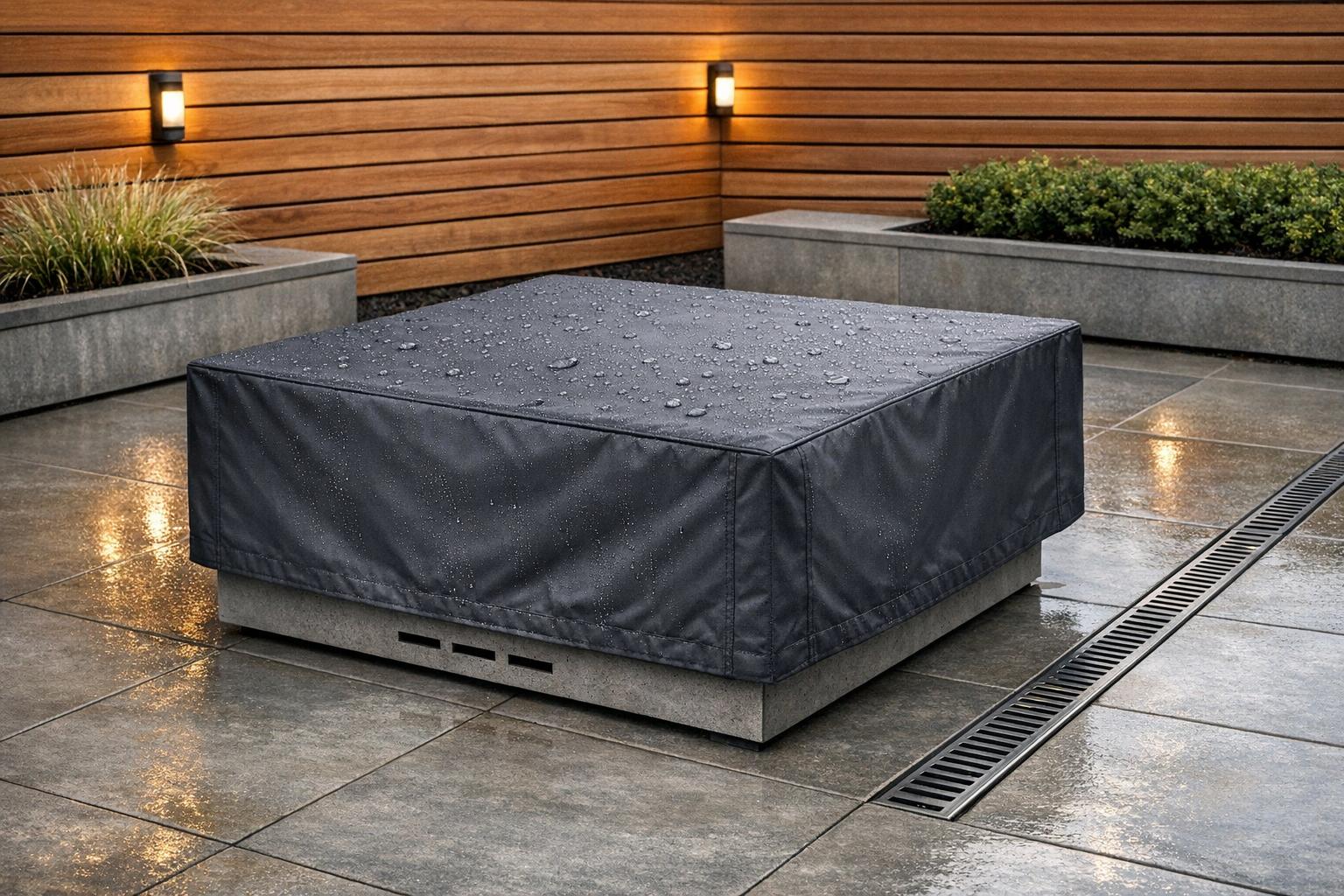
Your fire feature type determines the ideal cover. For gas fire tables, a combination of a custom-fit, UV-resistant vinyl or polyester cover and a powder-coated metal lid offers excellent protection. The hard lid prevents moisture from reaching the burner and ignition, while the soft cover protects the table surface. Many manufacturers highlight that water damage is a leading cause of burner and ignition failures – and leaving your unit uncovered may even void the warranty.
For wood-burning fire pits, a steel or aluminum snuffer lid is a practical option. It keeps out rain and snow, safely extinguishes lingering embers, and can pair with a weatherproof fabric cover during winter for added protection. For built-in outdoor fireplaces, a quality chimney cap is essential to keep out rain and nesting animals. Adding glass doors or a fitted front cover helps shield the firebox and controls from moisture.
When selecting a soft cover, prioritize heavy-duty polyester or vinyl with waterproof backing, UV resistance, and built-in vents. Features like elastic hems, drawcords, or buckle straps ensure the cover stays secure, even during strong winds.
| Cover Type | Best For | Price Range |
|---|---|---|
| Soft vinyl/polyester cover | Portable fire features | $25–$150+ |
| Hard metal/aluminum lid | Gas fire tables, wood-burning pits | $80–$400+ |
| Tempered glass wind guard | Gas burners in open or windy areas | $120–$250+ |
How to Install Covers and Shields Correctly
Always let your fire feature cool completely before covering it. For soft covers, center and drape the cover evenly over the unit, securing it below the rim with drawcords or straps to prevent wind from lifting it. To avoid water pooling, place a small support – like an inverted bucket or dome – under the center of the cover to create a peak that directs water and snow off the surface. In areas prone to strong storms, like exposed Maryland yards, consider adding extra tie-downs or buckle clips to the fire table frame for added security.
For tempered glass wind guards on gas fire pits, follow the manufacturer’s assembly instructions carefully. Secure the panels with corner brackets, tighten all screws, and position the guard around the burner pan with at least 2–2.5 inches of clearance from the burner edge. A height of 6–8 inches is ideal for deflecting wind while maintaining safe combustion. Be sure not to block air intake vents or drainage openings, and periodically inspect the glass for chips or cracks.
These steps, combined with sealing and covering, provide strong protection against the elements.
Additional Ways to Protect Your Fire Feature
Beyond covers, structural additions can further protect your fire feature. A pergola or pavilion over the seating area can intercept rain and reduce UV exposure while maintaining an open design. Adding optional polycarbonate panels allows smoke to escape while blocking most precipitation. Just ensure the overhead structure has proper clearance.
Wind screens or low masonry walls on the windward side of the fire pit can minimize flame blowout and keep rain from being driven into the burner. These barriers don’t have to be elaborate – a stone seat wall, dense hedge, or glass privacy panel can all help in gusty conditions.
Finally, ensure the patio surface around your fire feature slopes so water flows away from it. Drainage solutions like French drains, channel drains, or dry riverbeds prevent water from pooling around the base. Pro Landscapes MD often incorporates these drainage systems into fire pit and patio projects across central Maryland, ensuring water is managed across the entire yard – not just around the fire feature. Including these protective measures in your seasonal maintenance routine can help extend the life of your fire feature.
Routine Cleaning and Seasonal Maintenance
While covers and sealers provide good protection, regular cleaning and inspections are just as important. Maryland’s climate – with its humidity, freeze-thaw cycles, and heavy rains – can turn small issues into costly repairs if ignored. By combining routine maintenance with sealing and covering, you can keep your fire pit or fireplace in great shape all year.
Daily and Monthly Upkeep Tasks
For wood-burning fire pits or fireplaces, wait 24–48 hours after use to let the ashes cool before removing them. Wet ash speeds up corrosion and damages masonry, so it’s best to clear it out promptly. Use a metal container with a tight-fitting lid to safely store the ashes. For gas fire features, the process is simpler: turn off the gas supply and check that burner ports are clear and no water has collected in the burner pan.
On a monthly basis, take things a step further. Clean masonry surfaces with a mild, pH-neutral cleaner and a soft brush to remove soot and mildew. Inspect metal parts for any signs of rust, pitting, or peeling paint. If you spot rust early, a light sanding and a fresh coat of high-temperature paint can prevent further damage. Ignoring it, however, might mean replacing the part later. Also, check the drain holes in the fire bowl or pit base by pouring a small amount of water into them. If the water doesn’t drain within a few minutes, it’s a sign you need to address the issue before the next heavy rain or freeze.
| Task | Wood-Burning | Gas |
|---|---|---|
| After each use | Remove ash; clear debris from bowl and surrounding area | Turn off gas; check burner ports and ensure no standing water |
| Monthly | Empty ash; clean masonry; inspect for rust; check drainage | Inspect burner ports and vents for debris or nests; visually inspect gas connections |
| Every 1–3 years | Reapply masonry sealer; repair deteriorated mortar joints | Inspect gas lines and fittings; replace fire media as recommended |
These tasks ensure your fire feature stays in good condition and ready for use, no matter the season.
Winterizing and Spring Start-Up
Fall is the perfect time to prep for Maryland’s tough freeze-thaw cycles. Start with a deep clean – remove all ash, soot, and debris. Let the unit dry completely before applying a breathable masonry sealer. Sealing damp masonry can trap moisture, which freezes and expands, leading to spalling and weakening the structure by up to 40–60%.
For gas units, shut off the gas supply at the valve and inspect flexible lines and fittings for any wear or cracks. If your unit has batteries or electronic ignition components, follow the manufacturer’s advice to remove or disconnect them and store them indoors. Propane tanks should be stored upright in a ventilated area with the valves fully closed. Once everything is clean and dry, cover the unit with a snug, weather-resistant cover.
When spring arrives, remove the cover and carefully inspect the unit. Check masonry for new cracks, look for rust on metal parts, and ensure that all drainage paths – like French or channel drains – are clear and functioning. For gas features, perform a soapy water test on exposed fittings and connections; bubbles indicate a gas leak that requires professional attention. The NFPA advises homeowners to have chimneys and fireplaces inspected at least once a year under NFPA Standard 211. If you’re unsure about the condition of your gas system or outdoor fireplace, hiring a licensed gas technician or chimney professional is the safest option.
For those who prefer professional maintenance, Pro Landscapes MD offers fire pit installation and upkeep services throughout central Maryland. Combining professional help with regular homeowner care is one of the best ways to extend the life of your outdoor fire feature.
Conclusion: Keeping Your Fire Feature in Good Shape Year-Round
Taking care of your outdoor fire feature isn’t a one-time task – it’s something you’ll need to stay on top of. The basics – like regular cleaning, sealing masonry every 1–3 years, preventing rust on metal parts, using a well-fitted cover, and following seasonal maintenance routines – work together to keep it in great shape. Each step, from sealing to ensuring proper drainage, plays a role in protecting your investment.
Maryland’s climate, with its humid summers, heavy rainfall, and freeze-thaw cycles, can be tough on outdoor features. For example, a stone fire pit that seems fine in the fall could end up with cracked mortar joints by spring if moisture seeps in and freezes. That’s why inspections – whether after a harsh storm or as part of your spring routine – are so important. Catching small problems early can save you from dealing with costly repairs later.
Some tasks, like clearing out ash, checking drainage, wiping down surfaces, or replacing covers, are easy to handle yourself. But for bigger issues, like cracked masonry or damaged gas lines, it’s safer and smarter to call in a professional. Expert evaluations are essential for addressing deeper problems.
By following these care tips, you can keep your fire feature safe, functional, and looking great. If you’re in need of professional help, check out Pro Landscapes MD. They offer services like fire pit installation, drainage fixes, and seasonal maintenance throughout Howard County, Montgomery County, and nearby areas. Their expertise in hardscaping and drainage ensures your fire feature is built to handle Maryland’s challenging freeze-thaw cycles, with proper base preparation, grading, and material choices. [1]
"With proper care and maintenance, hardscaping materials such as stone and concrete can last decades." – Pro Landscapes MD [1]
FAQs
What’s the best sealer for my stone or brick fire pit?
Choosing the right sealer for your stone or brick fire pit is key to keeping it protected from the elements and everyday use. Since there aren’t specific products mentioned here, it’s a good idea to seek advice from a professional. The team at Pro Landscapes MD can guide you on the best sealing methods tailored to your fire pit’s materials, helping maintain both its durability and appearance. For expert help, give them a call at 410-940-9664.
How can I tell if my fire pit needs resealing?
When water stops beading on the surface, it’s a clear sign that the protective seal has worn away. Additionally, keep an eye out for cracks, chipping, or fading – these are telltale signs of wear caused by exposure to the elements. Resealing is essential to preserve both the durability and appearance of your hardscaping. If you’re looking for expert care, Pro Landscapes MD provides professional hardscaping services throughout central Maryland to ensure your outdoor features stay in excellent shape.
What should I do if water is collecting inside my fire feature?
To keep water out of your fire feature, make sure to cover it when it’s not in use. This simple step helps prevent rain or snow from collecting. If you’re still dealing with drainage problems, companies like Pro Landscapes MD can help. They provide services like grading, land leveling, and installing drainage systems such as French drains or dry riverbeds. Proper grading around the fire feature is especially important – it directs water away, protecting the structure and extending its lifespan.
Chat with Us