









- bhavya gada
- No Comments
Timing is critical when pruning shrubs to ensure healthy growth and vibrant blooms. Prune spring-blooming shrubs, like lilacs and forsythia, right after they flower to avoid cutting off next season’s buds. Late-blooming shrubs, like butterfly bush, should be pruned in late winter or early spring to encourage new growth. Always remove dead or damaged branches anytime to protect your plants.
Quick Tips:
- Old Wood Shrubs (e.g., lilac, forsythia): Prune after spring bloom.
- New Wood Shrubs (e.g., butterfly bush, crape myrtle): Prune late winter/early spring.
- Maryland Climate: Avoid pruning too late in fall to prevent winter damage.
- General Rule: Don’t remove more than one-third of a shrub in a single session.
Proper pruning tools, clean cuts, and timing based on bloom habits are key for maintaining healthy shrubs.
When to Prune these Top 10 Shrubs
When to Prune: Timing and Its Effect on Shrubs
Pruning at the wrong time can throw off a shrub’s growth cycle, while well-timed cuts can promote healthy, vigorous growth by syncing with the plant’s natural flower bud development. Here’s a closer look at how the timing of pruning – based on whether a shrub forms buds on old wood or new wood – affects its growth and flowering.
Old Wood vs. New Wood: What It Means for Pruning
Shrubs that form their flower buds on last season’s growth are classified as blooming on old wood. A great example is forsythia, which sets its buds in summer on old wood. These buds stay dormant through fall and winter, only to bloom in early spring. If you prune forsythia in late fall or winter, you risk cutting off the buds that would produce flowers in the next growing season.
On the other hand, some shrubs, like butterfly bush, bloom on new wood – growth produced in the current season. These shrubs thrive with more aggressive pruning in late winter or early spring. Cutting them back at this time encourages fresh growth, which leads to a fuller display of flowers during the growing season.
| Shrub Type | Blooms On | Best Time to Prune |
|---|---|---|
| Forsythia | Old wood | Right after spring bloom |
| Lilac | Old wood | Right after spring bloom |
| Butterfly bush | New wood | Late winter to early spring |
| Crape myrtle | New wood | Late winter to early spring |
How Maryland’s Climate Affects Pruning Schedules
Maryland’s climate, with its mix of harsh freezes, ice storms, and occasional warm spells, adds complexity to pruning schedules. A good general practice is to perform structural pruning in late fall, once shrubs have fully entered dormancy but before winter’s most severe weather sets in.
"Late fall is an excellent time to prune trees and shrubs. By removing dead or damaged branches, you reduce the risk of them breaking under the weight of snow or ice during the winter." – Pro Landscapes MD [3]
However, Maryland’s freeze-thaw cycle presents a unique challenge. Pruning too late in the fall, when temperatures are still fluctuating, can leave fresh cuts vulnerable to severe freezes before they have a chance to heal. This can lead to dieback at the cut site and additional stress for the plant heading into winter. To avoid this, wait until after the first hard frost, when the shrub is completely dormant, to reduce these risks. Regardless of the season, removing damaged or compromised growth should always be a priority.
When You Can Prune Anytime
Dead, damaged, or diseased branches can – and should – be removed at any time of year. Waiting to address these issues can allow diseases or pests to spread, potentially harming the rest of the plant.
How to Identify Your Shrub Type and Plan a Pruning Schedule
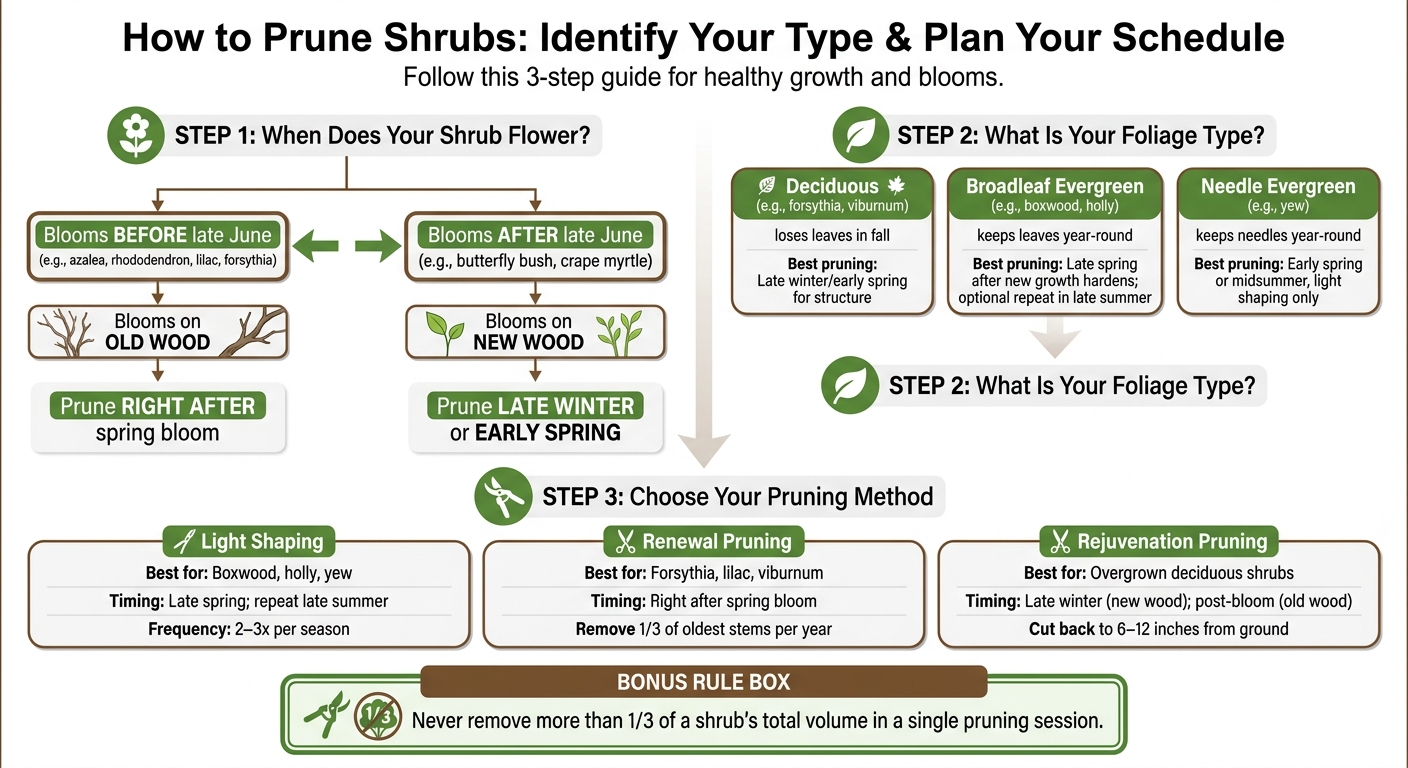
When to Prune Shrubs: Step-by-Step Guide by Shrub Type
Pruning your shrubs effectively starts with understanding their flowering habits and foliage type. Once you know these details, creating a pruning schedule becomes much simpler.
Step 1: Determine When Your Shrub Flowers
The first step is to figure out whether your shrub blooms before or after late June.
Shrubs that flower in early spring – like azaleas, rhododendrons, and lilacs – bloom on old wood. These plants set their buds during the previous summer, so it’s best to prune them right after they finish flowering. This gives the shrub time to form new buds for the next season. On the other hand, shrubs that bloom after late June, such as butterfly bush, produce flowers on new wood. These are best pruned in late winter or early spring before new growth begins.
"We recommend trimming hedges and shrubs 2–3 times a year, depending on the species and growth rate, to maintain their shape and health." – Pro Landscapes MD [1]
Once you’ve identified the bloom timing, the next step is to look at the shrub’s foliage type for additional pruning guidance.
Step 2: Assess the Foliage Type
The type of foliage your shrub has plays a key role in determining when and how to prune. Shrubs generally fall into one of three categories:
- Deciduous Shrubs: These shrubs, like forsythia and viburnum, lose their leaves in the fall. Their bare branches during the dormant season make it easier to see their structure, making late winter or early spring an ideal time for structural pruning.
- Broadleaf Evergreens: Shrubs such as boxwood and holly keep their leaves year-round. Light pruning is best done in late spring after new growth has hardened off, with an optional second round in late summer to maintain their shape.
- Needle Evergreens: Shrubs like yew are forgiving but require careful pruning to avoid cutting into bare, old wood. Light shaping in early spring or midsummer helps maintain a balanced look without leaving unsightly bare spots.
Step 3: Choose the Right Pruning Method
Once you’ve identified your shrub’s flowering habits and foliage type, you can select the best pruning method to encourage healthy growth and maintain its appearance. Here are three common approaches:
- Light Shaping: This method removes only the outermost growth to keep the plant’s size and form in check. It’s ideal for broadleaf evergreens like boxwood and holly and can be done 2–3 times per season.
- Renewal Pruning: This involves removing about one-third of the oldest, thickest stems each year to promote fresh growth from the base. It works well for multi-stemmed deciduous shrubs like forsythia and lilac that have become dense or woody.
- Rejuvenation Pruning: This aggressive technique cuts the entire shrub back to 6–12 inches from the ground. While old-wood bloomers will lose a season of flowers, new-wood bloomers like butterfly bush can benefit from this method, resulting in a fuller, more vigorous plant by summer.
| Pruning Method | Best For | Timing |
|---|---|---|
| Light Shaping | Boxwood, holly, yew | Late spring; repeat in late summer |
| Renewal Pruning | Forsythia, lilac, viburnum | Right after spring bloom |
| Rejuvenation Pruning | Overgrown deciduous shrubs | Late winter (new wood); post-bloom (old wood) |
How to Prune Shrubs for Healthy Spring Growth
Pruning shrubs effectively involves three main steps: preparing your tools, making structural cuts in the right order, and tailoring your technique to the shrub’s natural growth pattern. Here’s how to approach each step.
Gather Tools and Inspect the Shrub
Before you start cutting, take a moment to examine the shrub. Look for dead, diseased, or damaged branches. As Pro Landscapes MD explains, "By removing dead or damaged branches, you reduce the risk of them breaking under the weight of snow or ice during the winter." [3]
Make sure your tools are ready for the job. Sharp, clean tools not only make smoother cuts but also help the plant heal faster and reduce the chance of infection. Disinfect your tools with a 10% bleach solution between cuts to keep things sanitary. For most shrubs, you’ll need:
- Hand pruners for stems up to ¾ inch thick
- Loppers for branches between ¾ inch and 1½ inches
- Pruning saw for anything thicker
Once you’ve inspected the shrub and prepped your tools, you’re ready to start shaping.
Start with Structural Cuts
Begin pruning by following a logical sequence:
- Remove dead, diseased, or damaged wood first.
- Eliminate crossing or rubbing branches, prioritizing the weaker of the two.
- Thin out the oldest, thickest stems at the base. This improves airflow and allows sunlight to reach deeper into the plant.
A general rule of thumb: never remove more than one-third of the shrub’s total volume during a single pruning session.
Adjust Your Technique Based on Shrub Type
With the problem areas addressed, focus on pruning in a way that suits the shrub’s natural growth habit:
- Mounding shrubs (like spirea or potentilla): Shape them gently to maintain their soft, rounded look. Avoid trimming them into rigid geometric shapes, as this can lead to dense outer growth that blocks light from reaching the interior.
- Cane-forming shrubs (such as forsythia and lilac): These shrubs grow new canes from the base each year. After they bloom, cut the oldest, thickest canes back to ground level. This keeps the plant healthy and ensures it continues to produce flowers the following year.
- Formal hedges (like boxwood): Trim lightly and frequently – 2–3 times per season – to maintain their shape. When shaping, taper the sides so the top is slightly narrower than the base, allowing sunlight to reach the lower branches and keep them full.
Once pruning is complete, spread a 2–3 inch layer of organic mulch around the base of the shrub. Keep the mulch away from direct contact with the stems to protect roots and retain moisture.
sbb-itb-843f8be
Common Pruning Mistakes and How to Fix Them
Mastering effective pruning is only half the battle – avoiding common mistakes is just as important for ensuring healthy, vibrant growth in the spring.
Pruning at the Wrong Time
Timing is everything when it comes to pruning. For instance, trimming spring-blooming shrubs in late summer or fall can remove established buds, leaving you with fewer blooms the following spring. On the other hand, neglecting late-fall maintenance in regions like Maryland may leave shrubs vulnerable to winter storms. As Pro Landscapes MD explains:
"Late fall is an excellent time to prune trees and shrubs. By removing dead or damaged branches, you reduce the risk of them breaking under the weight of snow or ice during the winter." [3]
The solution? Understand whether your shrub blooms on old wood or new wood and plan your pruning schedule accordingly. Also, avoid overwhelming the plant with overly aggressive cuts that could hinder its growth.
Cutting Back Too Much at Once
When a shrub becomes overgrown, it’s tempting to cut it back drastically. However, this approach can stress the plant, forcing it to focus on survival rather than healthy new growth. Instead, tackle the issue gradually – spread the pruning over a few seasons to minimize stress and encourage steady recovery.
Making the Wrong Cuts
Where you cut matters just as much as when you cut. Avoid leaving stubs by making clean cuts just above a healthy, outward-facing bud at a 45-degree angle. This technique helps water drain off the cut surface, reducing the risk of rot and infection. Proper cuts not only protect the plant from disease but also set the stage for strong, healthy regrowth in the spring. [1]
When to Hire a Professional for Shrub Pruning
Taking care of routine pruning tasks at home is manageable for many, but there are times when bringing in a professional is the smarter choice.
Situations That Call for Professional Help
While homeowners can handle trimming healthy shrubs, there are specific situations where expert assistance becomes crucial. Overgrown shrubs or those affected by pests or diseases require specialized care. For example, shrubs showing signs of damage from pests or diseases need precise removal of infected branches to prevent the problem from spreading further.
Another common scenario is when shrubs are located near water features or drainage systems. Improper pruning in these areas can disrupt the delicate balance of your landscape. Additionally, tasks like relocating mature shrubs or undertaking a complete landscape overhaul demand the experience and skill of a professional to ensure success.
In these cases, professional pruning doesn’t just safeguard your shrubs – it also enhances the results of your own efforts, creating a landscape that thrives as the seasons change.
How Pro Landscapes MD Can Help

For more complex pruning needs, Pro Landscapes MD provides customized solutions designed to keep your landscape healthy and vibrant. Based in Maryland, this licensed contractor serves central Maryland with a range of services, including expert pruning, soil preparation, mulching, and care for native plants. They also tackle drainage issues alongside pruning, ensuring your entire landscape is set up for success as spring approaches.
Key Takeaways for Pruning Shrubs in Maryland
When it comes to pruning shrubs in Maryland, timing and technique are crucial for healthy, vibrant growth.
Timing matters. Shrubs that bloom in spring should be pruned right after they finish flowering. On the other hand, late-blooming varieties do best when trimmed in late winter or early spring. Missing these windows can reduce the plant’s bloom potential, so staying on schedule is key to ensuring your shrubs thrive.
Maryland’s climate also influences the best pruning practices. Late fall is an excellent time for structural pruning to remove dead or damaged branches, which can help prevent winter storm damage. Here are a few essential tips to remember:
- Always use clean, sharp tools for precise cuts.
- Avoid taking off more than one-third of a shrub during any single pruning session.
- After pruning, add a layer of organic mulch to protect the roots during the colder months.
For more complex pruning tasks – like managing overgrown shrubs, addressing pest problems, or working in hard-to-reach areas – consider bringing in professional help. For example, Pro Landscapes MD, a trusted central Maryland contractor with 15 years of experience and an A+ Better Business Bureau rating [4], offers tailored seasonal maintenance plans. Their services include trimming, mulching, and year-round landscape care, ensuring your shrubs stay healthy and well-maintained season after season [2].
FAQs
How can I tell if my shrub blooms on old wood or new wood?
Shrubs that flower on old wood develop their buds during the prior growing season and usually bloom in early spring. To maintain their health and shape, they should be pruned right after they finish blooming. On the other hand, shrubs that bloom on new wood produce buds on growth from the current season and tend to flower later in the year. Not sure which type of shrubs you have? Pro Landscapes MD provides expert pruning services to ensure your garden stays vibrant and well-maintained.
What happens if I prune my spring-blooming shrub at the wrong time?
Pruning spring-blooming shrubs at the wrong time can strip away flower buds that have already formed, leaving you with fewer or even no blooms when spring arrives. To prevent this, Pro Landscapes MD offers expert pruning services designed to meet the specific needs of your plants. Their team of professional horticulturists ensures pruning is done at the right time and with proper techniques. This approach keeps your shrubs healthy and vibrant throughout the year while avoiding the risks of incorrect pruning.
How much can I safely cut back without harming the shrub?
Pruning shrubs correctly depends on the specific species, but the main goal is to shape the plant while encouraging healthy growth. Start by cutting away any dead or diseased branches to avoid potential problems. Then, trim selectively to keep the shrub’s natural form intact. Not sure what your shrubs need? Pro Landscapes MD provides expert pruning services to help your plants flourish throughout central Maryland.
Chat with Us