









- bhavya gada
- No Comments
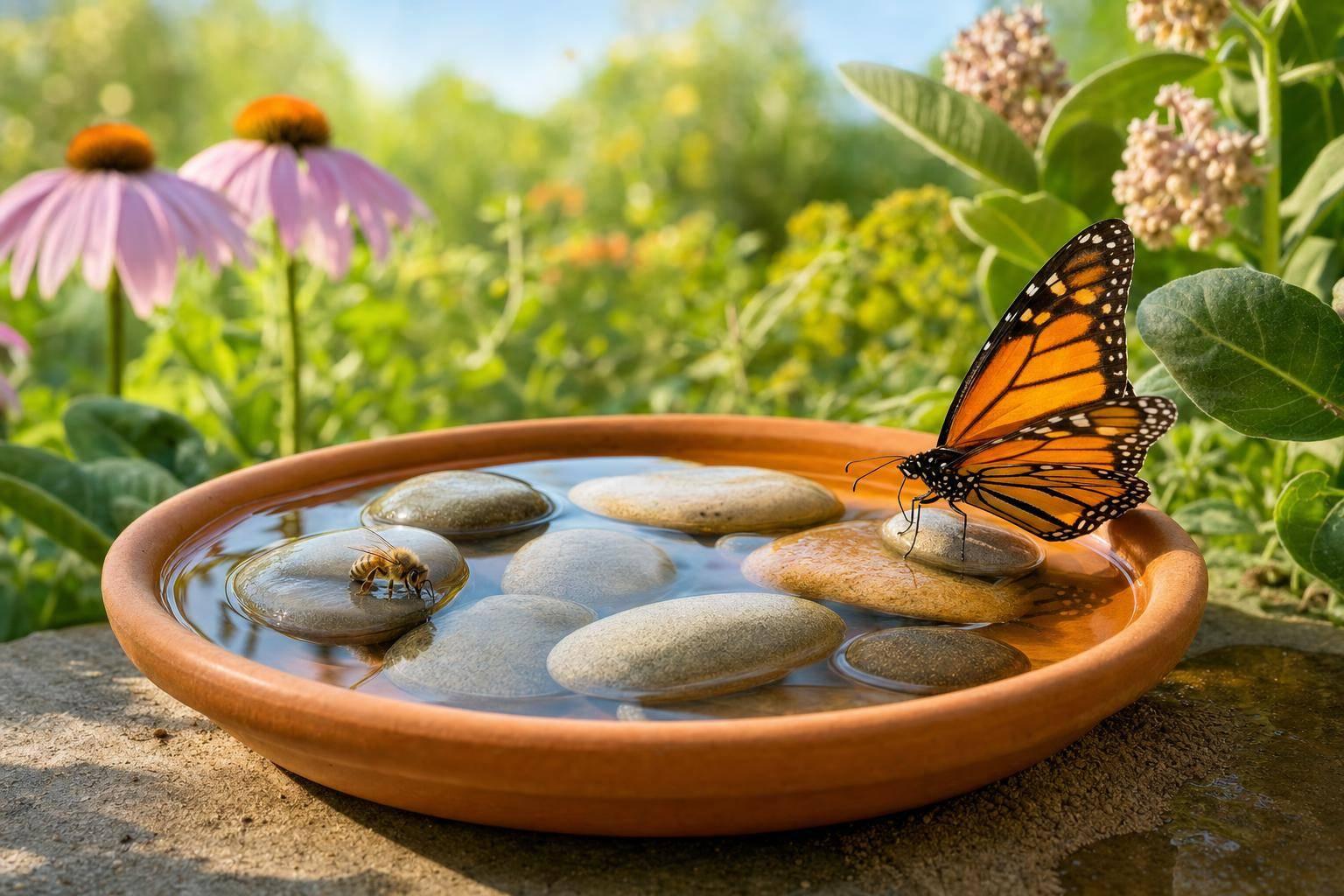
Pollinators need clean water in every season, not just in summer. Bees use water to cool brood nests kept near 93°F to 94°F, some bee species need it to build nests, and butterflies use wet soil to take in salts and minerals.
If you want to help, the main steps are simple:
- Give pollinators shallow, clean water
- Keep it away from lawn and runoff pollution
- Add stones, gravel, or sand so insects can land
- Clean and refill often
- Keep a source out through spring, summer, fall, and mild winter days
Water quality matters as much as access. Research found 100% of sampled field puddles in one study had at least one neonicotinoid, and 83% had more than one. Even very low levels can harm bees. That means a random puddle or runoff spot may do more harm than good.
Here’s the short version: if I want pollinators to keep using a safer water source, I need to make it easy to find, shallow enough to use, and clean enough to trust.
How to Make a Bee Watering Station | Pollinator Water Fountain
sbb-itb-843f8be
How Pollinators Use Water Throughout the Year
Pollinators use water for different jobs across the year, from building nests to feeding young to reproduction [7]. And they don’t all use it the same way. That’s why year-round access matters [3][6].
How Honey Bees, Native Bees, and Butterflies Use Water Differently
Each pollinator group has its own water habits. Honey bees use water to dilute larval food and help brood develop [6]. Mason bees need it to make mud for nests, while digger bees use it to soften soil before they dig. In fact, digger bees may make up to 80 water-collecting trips in a single day just to excavate a nest [1].
Butterflies use water in a different way. They gather on shallow wet soil or mud for puddling, where they take in minerals and salts tied to reproduction [1][3].
"Providing a shallow source of unpolluted water for bees and wasps can improve their overall chances of nesting successfully by reducing the time they need to forage, as well as their risk of exposure to pesticides." – Deborah Seiler, Director of Communications, Xerces Society [1]
Why Water Needs Continue Into Fall and Mild Winter Periods
Water use doesn’t stop when summer ends. During fall and mild winter spells, bees still need shallow water that isn’t frozen. A sunny spot can help keep that water usable on warmer days [5].
There’s also a habit piece here. When a safe water source stays available through the year, bees are more likely to keep using it instead of drifting toward risky spots like dirty puddles or swimming pools [2][6].
Since pollinators keep using water in different ways across the seasons, keeping that water clean and free from contaminants becomes just as important as making sure it’s there.
What Research Says About Water Quality and Pollinator Health
Clean Water Reduces Stress and Supports Pollinator Survival
Research helps show that clean water matters just as much as access to water. Bees use water to cool brood nests and help colonies stay productive. During extreme heat, a single colony can collect nearly a gallon of water per day to keep the brood from overheating [6].
But access by itself doesn’t solve the problem. Water quality matters too. Foragers can make 50 to 100 trips a day, which means dirty water can move through a colony fast [4]. Royal jelly, the food given to developing larvae, is 60–80% water [8], so poor water quality can affect bees at one of their most fragile stages.
How Pesticides and Runoff Turn Water Sources Into Hazards
Puddles and slow-moving runoff near treated lawns or fields can be dangerous. A study published in PLOS One by Samson-Robert et al. found that 100% of water samples collected from corn fields were contaminated with at least one neonicotinoid compound, and 83% contained multiple systemic insecticides [4].
And the problem isn’t limited to doses that kill on contact. Neonicotinoids can harm bees at very low levels. Research shows that concentrations as low as 0.0001 ppb can increase viral replication in bees, while 0.001 ppb can reduce food consumption and fecundity [4]. When puddles shrink during dry spells, evaporation can make those chemicals more concentrated [4].
Bees also visit water sources that look usable but aren’t safe. Water with debris and dissolved contaminants can pull them toward gutters filled with decaying matter, agricultural runoff, or stagnant puddles [2][4]. What seems convenient can end up doing harm.
Why Drought and Urban Landscapes Increase the Need for Reliable Water
The risk gets worse when clean water is hard to find. In central Maryland, drought and managed landscapes can limit access to safer water. In fragmented urban and suburban habitats, pollinators may turn to swimming pools or stagnant puddles in treated areas when cleaner sources dry up [1][3][5].
Neonicotinoid seed treatments such as clothianidin and thiamethoxam can contaminate field puddles through drifting dust and soil leaching [4]. Compounds in this group can persist in soil for 148 to 1,155 days [4]. So this isn’t just a summer issue. It makes supplemental clean water a long-term need, not a short seasonal patch.
Research-Based Ways to Provide Safe Water in Maryland Landscapes
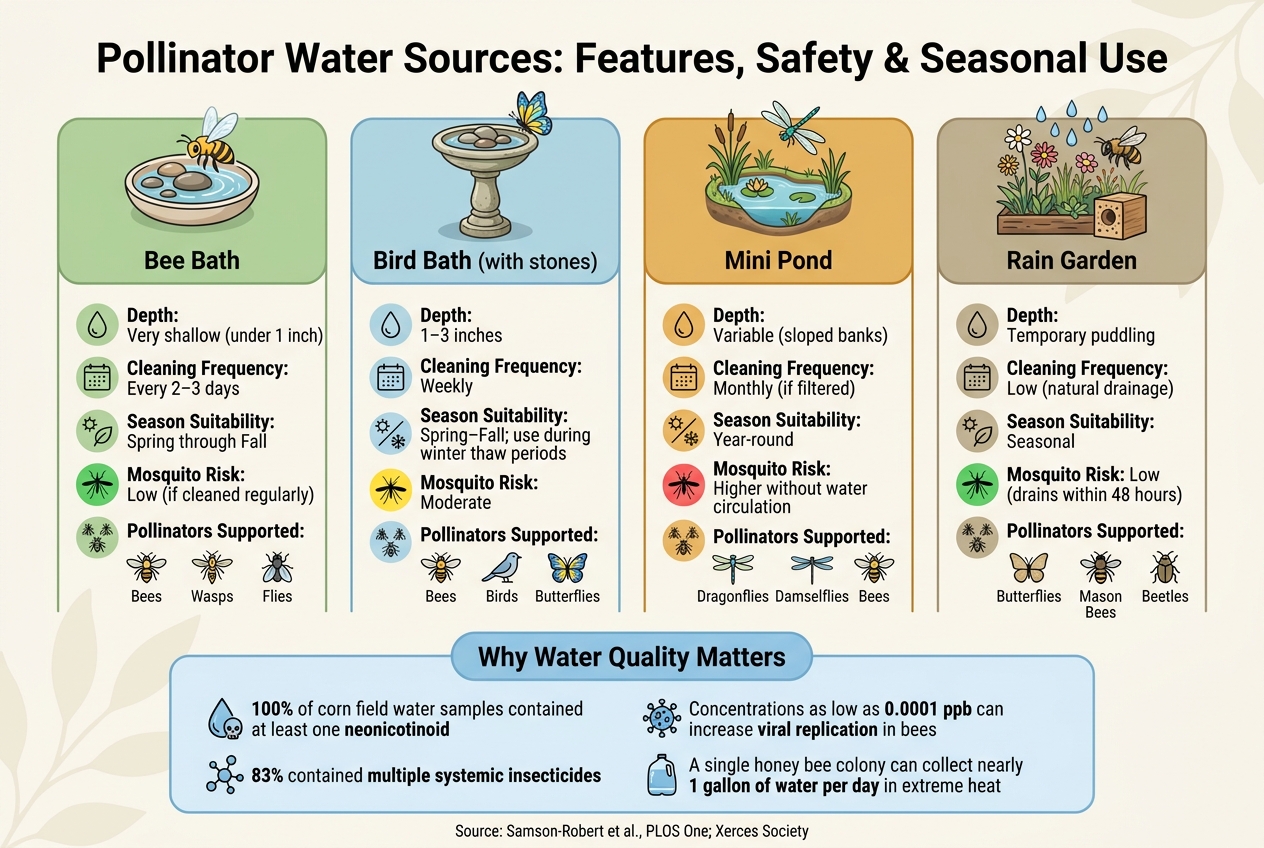
Pollinator Water Sources: Features, Safety & Seasonal Use
Design Features That Make Water Sources Safer for Pollinators
Dirty water and stagnant runoff can turn a good idea into a problem fast. That’s why water design matters just as much as water access. The best home setups act like shallow edge habitat and stay away from treated runoff. This matters all year, but it becomes even more important when summer heat, fall dry spells, or winter thaw cut down natural water sources. Aim for water that is shallow, clean, and steady.
The biggest rule is shallow depth. As the Xerces Society puts it:
"Providing a shallow source of unpolluted water for bees and wasps can improve their overall chances of nesting successfully by reducing the time they need to forage, as well as their risk of exposure to pesticides." [1]
If water is deeper than 1 inch, add stones or gravel that stick above the surface. That gives insects a place to land without slipping in. Sloped or gradual edges matter too. Steep sides can trap insects, which is the last thing you want. A damp sand patch also helps butterflies and mason bees. And if you place the feature in partial shade, it can lose water more slowly during Maryland’s hot summers [4][7].
Water Feature Types That Work in Residential Yards
The best option depends on your yard, how much upkeep you’re fine with, and which pollinators you want to help.
| Feature Type | Depth | Cleaning Frequency | Season Suitability | Mosquito Risk | Pollinator Groups Supported |
|---|---|---|---|---|---|
| Bee Bath | Very shallow (<1") | Every 2–3 days | Spring–Fall | Low (if cleaned) | Bees, Wasps, Flies |
| Bird Bath (with stones) | 1"–3" | Weekly | Spring–fall; use during thaw periods | Moderate | Bees, Birds, Butterflies |
| Mini Pond | Variable (sloped banks) | Monthly (if filtered) | Year-round | Higher without circulation | Dragonflies, Damselflies, Bees |
| Rain Garden | Temporary puddling | Low (natural drainage) | Seasonal | Low (drains within 48 hrs) | Butterflies, Mason Bees, Beetles |
A bird bath can do the job once stones or gravel make a dry landing edge. Mini ponds can also work well, but moving water helps cut down mosquito breeding. If you add a pump, put protective screening around the intake so you don’t harm dragonfly and damselfly nymphs [1]. Rain gardens make a lot of sense in central Maryland too. They can catch stormwater while also giving native mason bees the damp soil they use for nest building [1][7].
How Pro Landscapes MD Can Help With Water, Drainage, and Habitat Design

Grading, soil drainage, and distance from treated lawn areas all shape whether a water feature stays clean and safe – or turns into another source of contamination. Pro Landscapes MD offers drainage and grading services, including rain gardens, French drains, dry riverbeds, stormwater management, and professional grading. These services help manage runoff, stop pooling near treated areas, and support the damp-soil conditions that mason bees and butterflies use. If you want a more permanent setup, they also install ponds and other landscape water features that can serve as the center of a pollinator-friendly yard with cleaner water and better habitat.
Even the best water source still needs routine cleaning and seasonal upkeep.
Year-Round Maintenance and Local Ecosystem Benefits
Season-by-Season Steps to Keep Water Clean and Usable
Set up water sources in late winter so bees find them before hot, dry weather drives them toward pools, gutters, and muddy puddles.
After you have a safe water source in place, regular care keeps it useful.
| Season | Key Task | Why It Matters |
|---|---|---|
| Spring | Install before bees begin foraging at 55°F. | Helps bees use a safer source instead of risky options like pools [5] |
| Summer | Refill daily; check for mosquito larvae. | Colonies may need nearly a gallon of water per day for hive cooling [6] |
| Fall | Scrub weekly; remove debris. | Keeps water usable as floral resources decline [3] |
| Winter | Keep it in a sunny, sheltered spot. | Helps reduce freezing and supports early-emerging native bees [3] |
A little upkeep goes a long way. Scrub container surfaces once a week to remove algae, bacteria, and parasites [7][3]. Dump and refill the water every 2 to 3 days so mosquito larvae don’t have time to mature [1][3]. Skip bleach and harsh soaps, and rinse with plain water instead.
How Clean Pollinator Water Benefits Local Landscapes and Ecosystems
Clean water does more than help pollinators drink. It also supports the yard’s habitat network.
Even a small residential water feature can form a microhabitat that supports urban biodiversity and gives helpful species a place to persist [1]. Dragonflies and damselflies spend their immature stage in water, then later become pest predators in the landscape [1]. Mason bees (Osmia spp.) also rely on water in a different way: they use it to make mud for nest cells, so nearby access can support reproduction in Maryland yards [1][5].
Clean water can also give pollinators a safer option when other sources are contaminated. Research has found neonicotinoid concentrations in agricultural field puddles ranging from 0.01 to 63 µg/L – levels high enough to impair foraging behavior and reduce colony growth [4]. A steady water source in your yard can help pollinators avoid those contaminated puddles [4].
FAQs
Why do pollinators need water in cooler months?
Pollinators still need water during cooler months, and that need is more than a small detail. It supports basic survival and, for some species, nesting too.
Honey bees, for example, use water to dissolve crystallized honey and thin food stores that become too thick to eat. Without enough water, food may be right there in the hive but harder to use.
Some solitary bees need water or mud during active periods as well. They use it to soften soil for nesting or to build nest cells.
How can I keep pollinator water safe from pesticides?
Skip chemical sprays in your garden, especially when plants are blooming. Instead, use integrated pest management strategies. Pesticides can pollute puddles and other nearby water sources that pollinators rely on.
A clean, shallow water station in your yard gives bees and other pollinators a safer place to drink than ditches or treated areas. Pro Landscapes MD supports pollinator-friendly, eco-friendly outdoor spaces across Maryland.
What water source works best for bees and butterflies?
The best water sources for pollinators are shallow, safe, and easy to reach. A bird bath or simple tray can work well, as long as you add landing spots like pebbles, stones, sticks, or floating corks so insects can drink without falling in and drowning.
Butterflies also do well with damp sand or soil, which can give them minerals and salts along with moisture. It also helps to keep the water clean and fresh, since stagnant, dirty puddles can carry bacteria and other pollutants.
Chat with Us