









- bhavya gada
- No Comments
If you wait until ice shows up, you may already be too late. In Maryland, freeze-thaw swings can damage fountains fast, and supply lines often fail when temperatures sit near 20°F for several hours.
Here’s the short version: I would shut off power and water, drain every part of the fountain, clean it, remove the pump, cover it, and check it through winter. I’d also aim to finish the job a few days before temps first drop to 30–32°F.
What matters most:
- Turn off power at the outlet and breaker
- Shut off the water supply and open drain valves
- Drain bowls, basins, lines, and hidden low spots
- Dry seams, joints, and crevices by hand
- Clean off algae and mineral scale
- Store the pump indoors above freezing
- Use a breathable cover, not one that traps moisture
- Check the fountain monthly and after storms
- Do not restart during a random warm week in winter
A lot of winter damage comes from water you can’t see – inside porous stone, fittings, elbows, and pump parts. This guide gives the simple order to follow so you can lower the risk of cracks, spalling, split seams, and line damage before the first hard freeze.
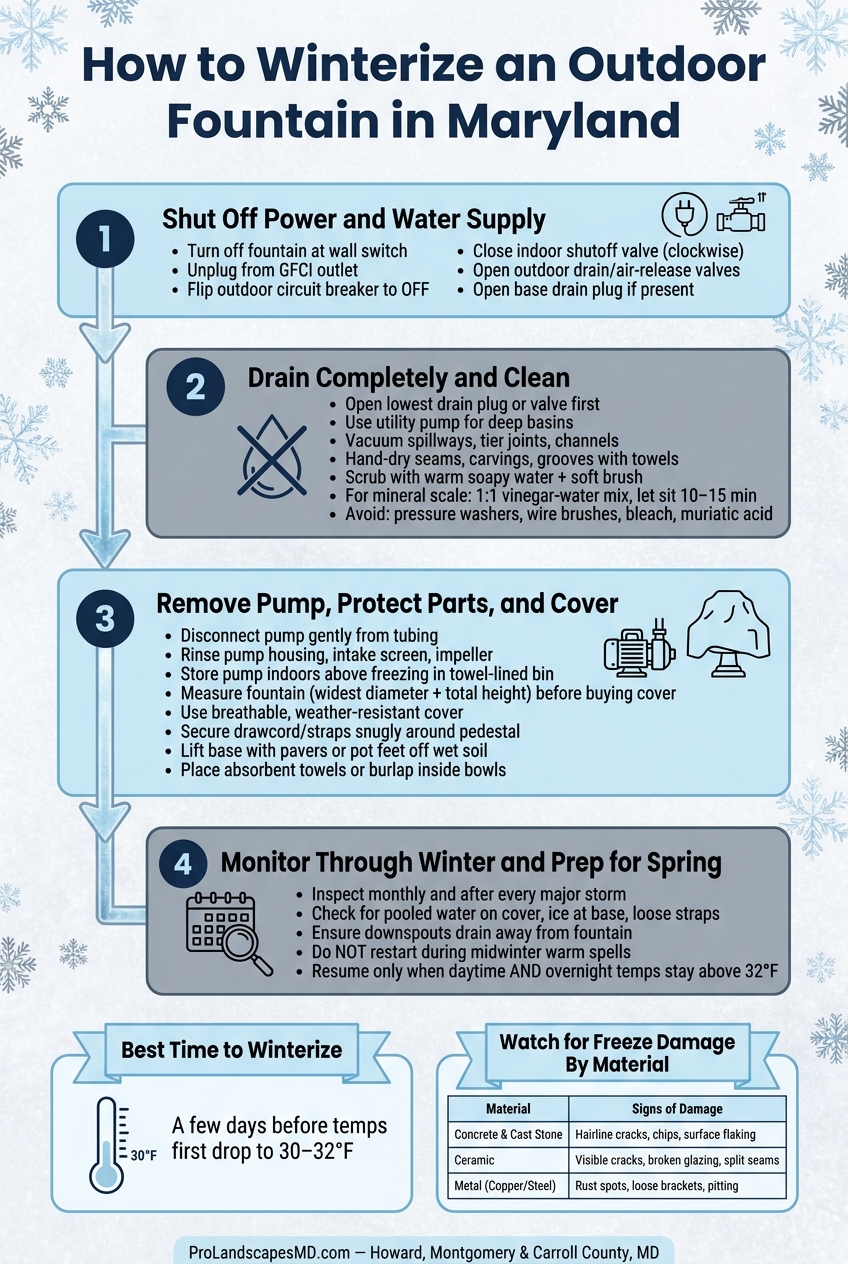
How to Winterize an Outdoor Fountain: 4-Step Checklist
Step 1: Shut Off Power and Water Supply
Start by turning the power OFF. Switch the fountain off at the wall, unplug it from the GFCI outlet, and flip the breaker for that outdoor circuit to OFF. After that, shut off the water supply so the lines can drain.
Disconnect Electrical Components Safely
Pick a dry day for this job. Never unplug cords while they’re sitting in standing water or lying on wet ground.
Once you’ve confirmed the power is off, unplug the pump and place the cord off to the side. Then check the cords, plugs, and outlet covers for fraying, cracked insulation, or exposed copper. If you spot damage, replace the cord before next season instead of storing it and hoping for the best.
Make sure the outlet powering the fountain is GFCI-protected and that the weatherproof cover is still in good shape. If you notice water, discoloration, or scorch marks in the outlet or on the plug, leave the circuit off and call a licensed electrician.
Close Supply Lines and Clear Trapped Water
With the power safely off, move to the water line. Find the indoor shutoff valve that feeds the fountain. It’s usually in a basement, crawl space, utility room, or near the main water entry. Turn it clockwise until it’s fully closed.
Then open any outdoor drain or air-release valves so trapped water can escape. Leave those outdoor valves open. That gives leftover moisture a way out instead of letting it freeze inside the line.
This part matters more than many people think. Even a small amount of water left in tubing or fittings can freeze, expand, and crack a fitting or PVC elbow. If your fountain has a base drain plug, open that too after shutting off the supply.
Once the lines are shut off and drained, move on to draining and cleaning the fountain basin.
sbb-itb-843f8be
Step 2: Drain the Fountain Completely and Clean It
Now that the power and water are off, drain the fountain all the way before temperatures dip again. Any water left behind can freeze, expand, and crack the fountain. That risk is higher with porous stone, concrete, and ceramic, where water can hide below the surface.
Remove Water From Bowls, Basins, and Crevices
Start with the lowest drain plug or valve. That usually gets most of the water out first.
If the basin is deep, use a small submersible utility pump to move things along. Set the pump on a brick so it doesn’t suck up sludge from the bottom, and send the discharge away from foundations and walkways.
Once the pump stops pulling water, switch to a siphon hose or wet/dry vacuum. Use it to clear out spillways, tier joints, and recessed channels. Then go over the fountain by hand with towels or sponges. Blot seams, carvings, grooves, and overhangs until every surface is dry.
Wash Away Algae and Mineral Deposits
After the basin is dry, clean it before you cover it for winter. Scrub the interior with warm soapy water and a soft-bristle brush or sponge.
If you see mineral scale, use a 1:1 vinegar-and-water mix. Let it sit for 10 to 15 minutes, then scrub with a nonabrasive brush if the manufacturer says it’s okay.
Skip harsh tools and cleaners. That means:
- Pressure washers
- Wire brushes
- Steel wool
- Bleach
- Muriatic acid
They can etch stone and strip sealers. Rinse with clean water, then towel-dry the whole fountain.
After the fountain is fully dry, remove the pump and get the remaining parts ready for storage or covering.
Step 3: Remove the Pump, Protect Fountain Parts, and Cover the Unit
Now that the fountain is clean and dry, take out the pump. If water freezes inside, it can crack the housing, impeller, seals, and gaskets.
Store the Pump Indoors for Winter
Disconnect the pump from the tubing and fittings with a light touch. Rinse the housing, intake screen, and impeller cavity. If you see scale buildup, scrub it off with a soft brush and diluted vinegar.
Store the pump indoors in a dry spot that stays above freezing. A bin lined with towels works well. Keep the cord loosely coiled and off the floor. Some submersible pumps can sit in clean water during winter to help keep seals from drying out, but the bucket still needs to stay above freezing.
After the pump is put away, cover the fountain before the first snow or sleet hits.
Use the Right Cover and Secure It Tightly
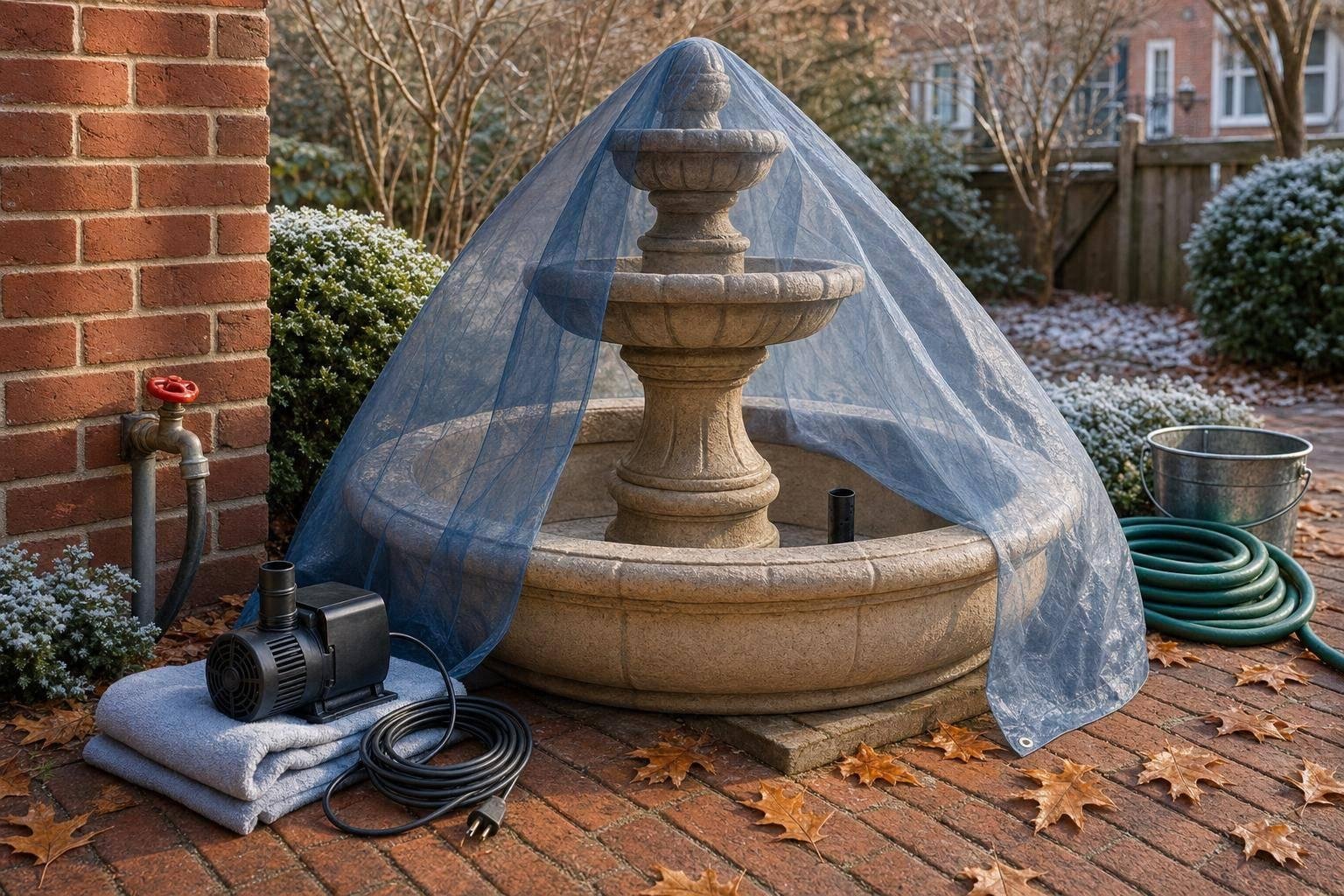
Pick a breathable, weather-resistant cover. It helps keep out rain and debris while still letting condensation escape. That matters because trapped moisture can sit against the fountain surface and lead to spalling or cracking, especially with concrete and cast stone.
Before you buy a cover, measure the fountain’s widest basin diameter and total height. Then choose one that hangs all the way over the sides. Secure any drawcord or buckle straps around the pedestal so the cover stays snug instead of whipping around in the wind.
After big storms, brush off built-up snow with a soft broom. Check the straps too, and tighten them again if they’ve loosened.
Protect Fountains That Stay Outside All Winter
If the fountain is too large to move, focus on shielding the structure that stays in place. Lift the base with pavers, bricks, or pot feet so it’s not resting right on wet soil or mulch that can freeze hard. Then place absorbent towels or burlap inside the bowls to pull away leftover moisture and help stop ice from forming right against the inside surface. This cuts down on freeze-thaw stress in porous materials.
After major storms, inspect the cover and any exposed areas for shifting, tears, or cracks.
Step 4: Check for Freeze Risks Through Winter and Prepare for Spring Startup
Once the cover is on and the pump is stored, the job isn’t quite over. Through winter, check the fountain about once a month and again after major storms. That gives you a chance to spot small problems before they turn into cracked basins, damaged hardware, or a shifted base.
During each check, look for pooled water sitting on top of the cover, ice buildup around the base, loose or torn parts of the cover, and any sign that the fountain has moved or settled. Tighten any loose straps. Make sure nearby downspouts and drainage paths aren’t sending water toward the fountain. If water is gathering near the base, check whether the surrounding slope is moving runoff away from the structure. Maryland clay tends to hold moisture, and when saturated soil freezes, it can heave the base. After major storms, brush off heavy snow.
Don’t restart the fountain during a midwinter warm spell. A few mild days may feel safe, but they’re not enough. Water can get pulled back into bowls, tubing, and pump housings, then freeze again when overnight temperatures drop. That’s exactly how internal cracking happens.
Freeze Damage to Watch For by Material
Use these signs during your spring inspection before restarting the fountain.
| Material | Common Freeze Damage | What It Looks Like |
|---|---|---|
| Concrete & cast stone | Cracking, spalling, surface flaking | Hairline cracks at edges, chips at corners, flaking on flat surfaces |
| Ceramic | Fractures, splits along seams | Visible cracks, broken glazing, pieces separating at joints |
| Metal (copper, steel) | Corrosion, pitting, weakened fasteners | Rust spots, discoloration, loose brackets or hardware |
Even a thin layer of ice expanding inside a tight basin or small crack can put enough pressure on the fountain to spall concrete, fracture ceramic, or warp metal parts.
When daytime highs and overnight lows stay above 32°F, you can move into spring startup. Remove the cover, inspect for cracks or corrosion, clean the fountain, reinstall the pump, refill it slowly, test the GFCI, and turn the power back on only after checking for leaks.
When to Call a Professional
Large or built-in fountains often need expert help because drainage, grading, and hardware all affect how well they make it through winter. These setups usually have more involved plumbing, deeper drainage connections, and structural parts that are tougher to inspect without hands-on experience.
Pro Landscapes MD serves central Maryland homeowners with hardscaping, drainage, and water feature support across Howard County, Montgomery County, Carroll County, and nearby areas. They can inspect drainage, grading, and fountain hardware before spring startup.
Conclusion: The Key Winterizing Steps to Remember
Winterize by shutting off power and water, draining the fountain all the way, cleaning it well, storing the pump indoors, covering the fountain, and checking it through winter. That routine helps prevent most freeze damage and makes spring startup much easier.
FAQs
When should I winterize my fountain in Maryland?
Winterize your outdoor fountain before the first freeze hits. In Maryland, temperatures often stay below 32°F from December through February, so it pays to get ahead of winter.
Clear out debris and drain the parts before the ground freezes. That simple prep can help prevent ice damage and other structural problems.
Can I leave my fountain pump outside in winter?
No. In Maryland, you should remove your fountain pump for winter to help prevent damage from freezing temperatures.
After you disconnect it, store the pump in a dry, sheltered indoor spot, like a garage or shed, until spring. It also helps to clean the pump and its parts before storage so it’s ready for the next season.
What type of cover should I use for my fountain?
Use insulating materials like foam or a heavy-duty protective cover to help shield your fountain from freezing temperatures.
For the best protection, disconnect and remove the pump, drain all water, and store the parts in a covered, temperature-controlled space such as a garage or shed. Keeping the fountain covered and dry helps prevent damage from Maryland’s freeze-thaw cycles.
Chat with Us