









- bhavya gada
- No Comments
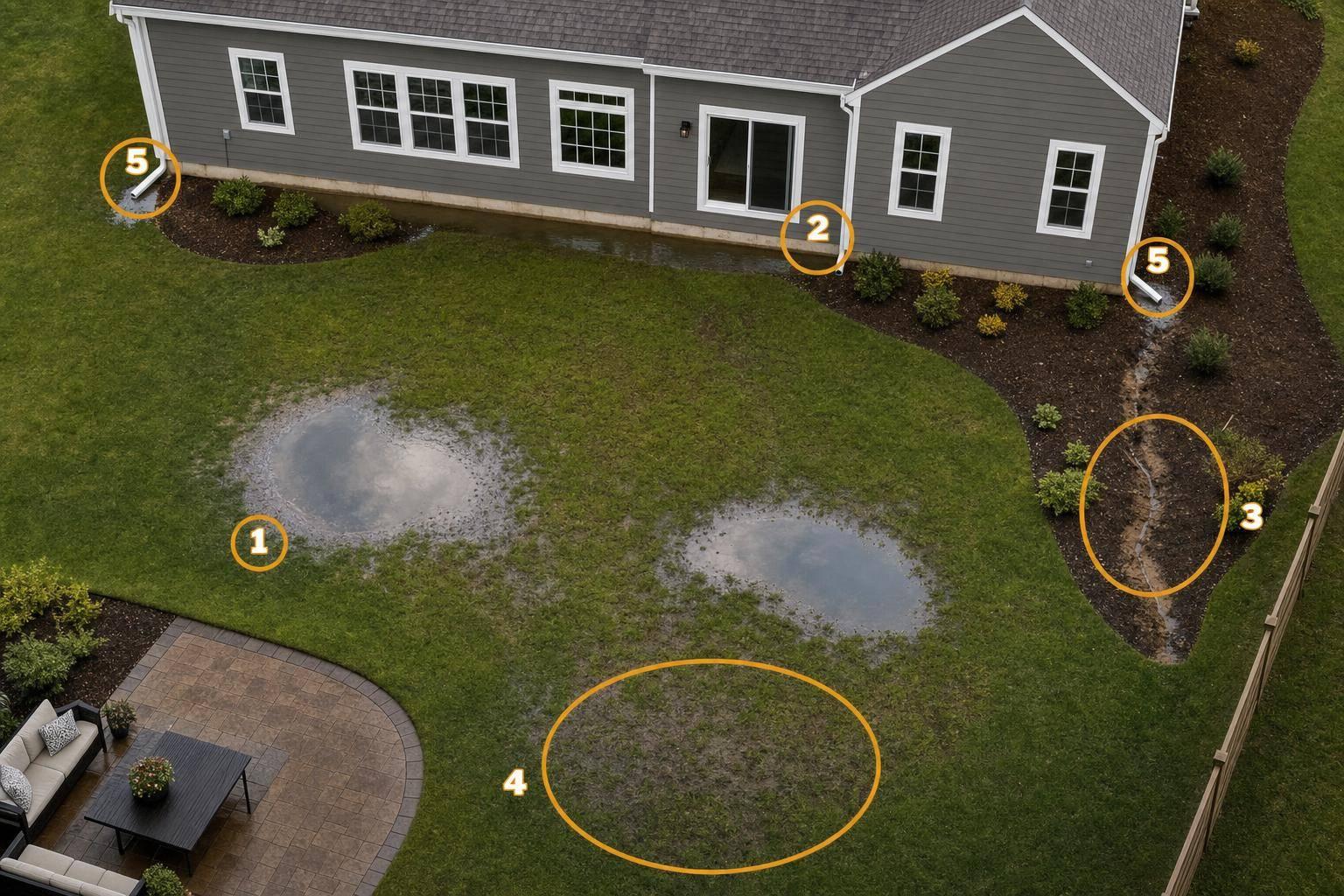
If water sits in your yard for 24–48 hours, runs toward your house, or keeps washing out soil, your yard may need grading. I’d look for five main signs: long-lasting puddles, water near the foundation or basement, erosion, soggy uneven lawn areas, and runoff that collects around downspouts, patios, or walkways.
Here’s the short version: grading is about making the ground slope away from the house so water drains the right way. A common rule is about 1 inch per foot for the first 6 to 10 feet away from the home. If that slope is off, water can stress grass, shift pavers, and add to moisture problems around the house.
What I’d check first:
- Puddles that stay put for 24–48 hours
- Wet spots by the house or signs of a damp basement
- Bare soil, exposed roots, or washout
- Soft, spongy lawn after storms
- Pooling near downspouts, patios, and walkways
How to Grade Around a Foundation | This Old House

Quick Comparison
| Sign | What it often means | Why it matters |
|---|---|---|
| Puddles that last 24–48 hours | Poor slope, compacted soil, or both | Can lead to mud, turf stress, and repeat drainage trouble |
| Water near the foundation | Ground may slope toward the house | Can add to basement dampness and moisture around the home |
| Erosion and bare patches | Runoff is moving soil | Can leave ruts, trip hazards, and weak planting areas |
| Soggy, uneven lawn | Water is not moving off the surface | Can thin turf and make the yard hard to use |
| Runoff by patios or downspouts | Drainage path is failing near hard surfaces | Can shift pavers and wear down the base below |
In places like central Maryland, clay-heavy soil, heavy rain, and winter freeze-thaw can make these problems show up faster. So if the same wet spots keep coming back after each storm, I’d treat that as a grading issue, not just a small lawn dip.
Why Drainage Problems Often Come Down to Yard Slope
A low spot is usually just the symptom. The main issue is the slope around it and the way that slope sends runoff toward your house, patio, or other parts of the lawn where water settles. If you just fill one dip with topsoil, you haven’t fixed the path of the water. You’ve only covered the spot where it was showing up.
The best time to check this is during a heavy rain or right after one. Watch where the water goes. Start at the downspouts, then follow the flow across the lawn. Look for puddles where hardscape meets grass, and pay attention to spots that stay soggy long after the storm passes.
You should also check the ground near the foundation. If it slopes toward the house instead of away from it, water is being sent in the wrong direction. A level or string line can help you confirm the grade. While you’re at it, make sure your downspouts empty onto ground that slopes away from the house too.
If water keeps taking the wrong route, standing water after rain is usually the first sign.
1. Puddles That Sit for 24–48 Hours After Rain
Standing water that sticks around for 24–48 hours after rain is a red flag. In most cases, it points to poor grading, compacted soil, or a mix of both.
Where those puddles show up matters just as much as how long they stay. Water along the edge of a patio, beside a walkway, or at the bottom of a slope often signals a low spot caused by bad grading. If puddles keep showing up in the same place, the soil may be slowing the drying process. But repeated pooling in one spot still points to a grade problem. In Maryland, clay-heavy soils drain more slowly, so puddles that return to the same area usually mean the grading is off.[6]
This kind of standing water does more than leave behind mud. It can stress turf, shift pavers, and add to basement dampness.[2][5][6]
If those same spots feel spongy after every storm, that’s another clear sign. Repeated sponginess in one area means the slope isn’t moving water away the way it should.
2. Water Pooling Near the Foundation or a Wet Basement
When water stops pooling in the yard and starts gathering near your home, grading shifts from a lawn issue to a foundation issue.
If water keeps collecting along the base of the house after rain, the ground may be sloping toward the home instead of away from it. That’s called a reversed slope, and it sends runoff straight to the foundation.[4][6]
Once that slope is wrong, water lingers near the foundation and presses against it. That trapped water can force moisture through concrete cracks or pores, floor cracks, or window wells.[2][6]
Over time, that can lead to damp walls, musty odors, and mold. In Maryland, clay-heavy soils often make things worse because clay holds moisture longer and drains more slowly than sandy soil.[6][1]
During a heavy storm, take a look at how runoff moves. If it pools near the house or carves channels through mulch beds, there’s a good chance the grading is failing.[6] Check patios and walkways where they meet the house too. If they slope the wrong way, they can direct water right back toward the foundation.[6][7] Sinking patio edges or gaps around the perimeter can also point to soil that has been weakened by repeat moisture.[7]
If that same runoff is also carrying soil away, erosion is usually the next sign to watch for.
3. Soil Erosion, Bare Patches, or Washed-Out Areas
When standing water turns into soil that’s plainly shifting, the issue usually goes deeper than a low spot. In many cases, the grade is off. Erosion starts when runoff moves fast enough to carry soil with it. So if you notice bare patches, exposed roots, or small gullies after a rain, water isn’t just passing through the yard – it’s taking soil along with it.
This often points to a slope that’s too steep or one that sends water straight into garden beds, patios, walkways, or other hardscape areas. As that water moves downhill, it carries off soil, mulch, and nutrients, then drops them at the bottom of the slope or across nearby surfaces.
That’s why dumping new topsoil into a washed-out area usually doesn’t solve much on its own. It may look better for a bit, but if the grade hasn’t been fixed, the next heavy rain will likely wash that soil right back out.
If erosion keeps coming back after you refill low spots, that’s a strong sign the grading is still wrong. And this isn’t just about looks. Erosion changes how the yard works from day to day. Gullies and uneven channels can turn into tripping hazards, and rough ground can lead to mower scalping, where the mower cuts low spots unevenly.[4][7] If the erosion is happening near the edge of a patio or walkway, it can also weaken the soil below and, over time, lead to sinking or cracking.
Mulch tells the same story. If it keeps washing out of planting beds or piling up on patios and walkways after rain, pay attention. That’s a clear warning sign. And when roots start showing, the erosion is already more advanced and may weaken nearby plants.[5]
sbb-itb-843f8be
4. Soggy, Uneven, or Unsafe Lawn Surfaces
When the grade is off, water tends to sit near the surface instead of moving away. That leaves the lawn soft, wet, and spongy long after the rain stops.
A lawn that still feels spongy 24–48 hours after rain is often a sign that the slope is wrong or the soil is compacted. In Maryland, clay-heavy soils can make this worse because clay holds moisture tightly and drains much more slowly than sandy soil [6][1].
That extra water does more than make the yard feel mushy underfoot. Oversaturated soil starves roots, which can thin out the turf and invite moss or disease [6][2][3].
There’s also the day-to-day hassle. Uneven, soggy ground can create tripping hazards for residents and pets, make outdoor furniture wobble, and lead to uneven mowing that cuts high spots too short [7][4]. And if the same low spots keep showing up after every rain, that usually means the grade is still trapping water.
5. Runoff Overwhelming Downspouts, Patios, or Walkways
This problem usually shows up where roof runoff hits patios, walkways, or downspout outlets. During a heavy storm, water moves off the roof fast and rushes into the downspouts. If the yard isn’t graded to carry that water away, it simply piles up with nowhere to go.
The most obvious signs tend to appear right where runoff meets hard surfaces: water collecting along a patio, pooling at the edge of a walkway, or sitting at a downspout outlet [6]. In most cases, that points to ground nearby that slopes the wrong way or doesn’t slope enough [2]. Once water reaches a patio or walkway, bad grading becomes hard to miss.
Poor grading lets runoff gather, soak into the soil, and wear down patios and walkways. Over time, standing water can slip under pavers and weaken the base material. That’s when stones start to shift, sink, or settle unevenly [2]. In colder climates, trapped moisture can freeze and expand, which makes cracking and loosening worse [2].
Watch for trouble spots near downspout outlets, including:
- Pavers that have shifted
- Edges that are sinking
- Base material that looks washed out or uneven
If water keeps backing up in the same places after rain, the yard’s slope is the issue.
Normal Yard Drainage vs. Grading Problems: A Quick Comparison
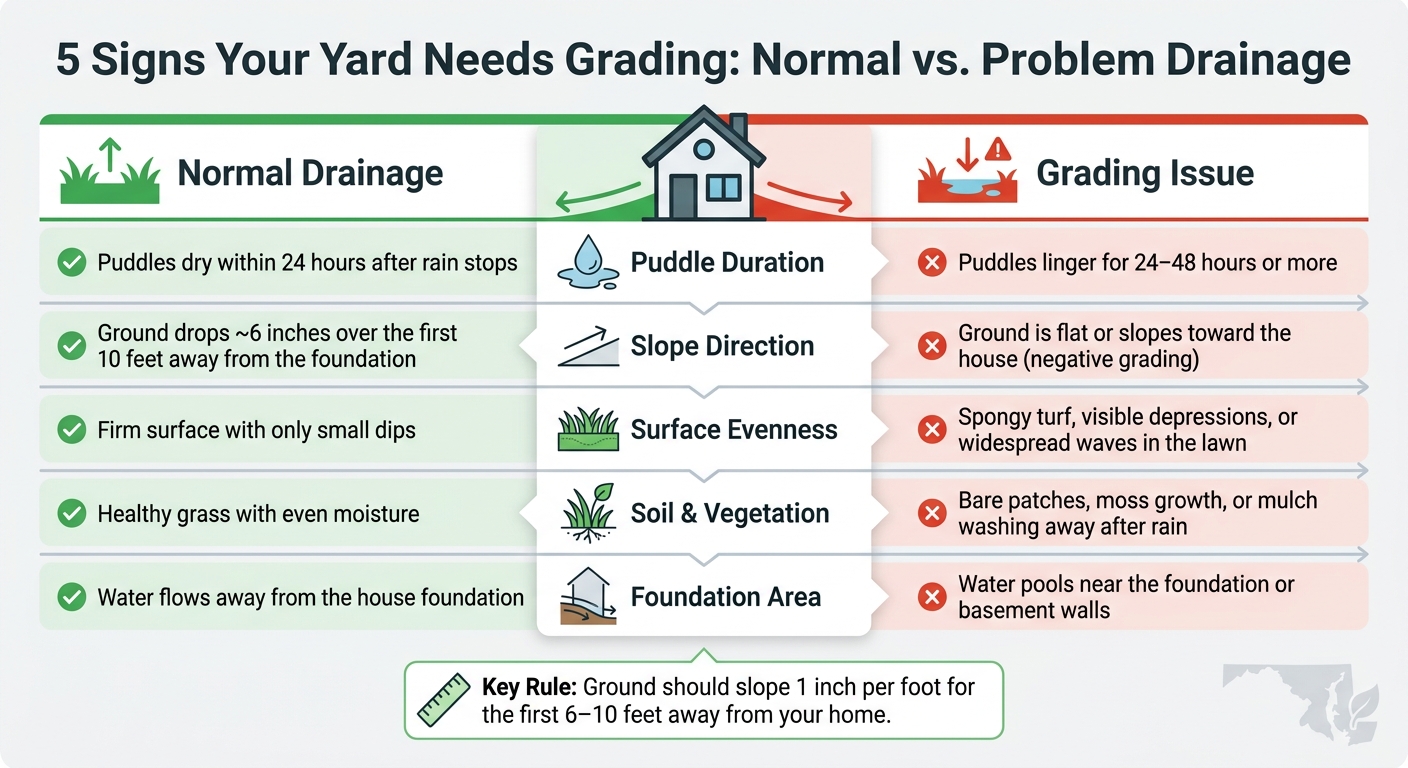
5 Signs Your Yard Needs Grading: Normal vs. Problem Drainage
Some drainage after a heavy storm is normal. What matters is what happens next. If the water drains off and the yard dries out, you’re probably fine. If the same spots stay wet or keep coming back after each storm, that’s a different story.
That distinction matters a lot in Maryland, where heavy rain and clay soil can turn a minor drainage issue into a bigger grading problem.
Use this quick check to tell the difference between normal drainage and a grading issue.
| Condition | Normal | Grading Issue |
|---|---|---|
| Puddle Duration | Dries within 24 hours after rain stops [6] | Lingers for 24–48 hours or more [6] |
| Slope Direction | Ground drops about 6 inches over the first 10 feet away from the foundation [1] | Ground is flat or slopes toward the house (negative grading) [1] |
| Surface Evenness | Firm surface with only small dips [4] | Spongy turf, visible depressions, or widespread waves in the lawn [6] |
| Soil & Vegetation | Healthy grass with even moisture [4] | Bare patches, moss growth, or mulch that washes away after rain [6] |
If you want to double-check the slope, a string line and a basic level can help confirm whether the ground drops away from the foundation. In Maryland, soil type and storm patterns can make borderline drainage problems worse fast.
Maryland Conditions That Can Make Grading Problems Worse
These signs tend to show up faster in Maryland because the local weather and soil can make small grading mistakes turn into bigger drainage issues.
In central Maryland, heavy rain, clay-heavy soil, and winter freeze-thaw cycles can turn a minor slope problem into standing water or runoff trouble in a hurry. Clay soil drains slowly, so water sticks around longer than you’d expect. If the soil is compacted, runoff gets worse because the water has fewer places to go. Freeze-thaw cycles can also move soil around and create new low spots, even if the yard looked fine before winter.
After winter, walk the yard and mark any new low spots. Late spring is a good time to check, after winter movement has settled and before summer storms roll in.
For larger regrading projects, check county or municipal permit rules before work begins.
Conclusion
All of these signs point back to the same issue: the yard isn’t sloped well enough to move water away from the house. And when that happens, the problem rarely stays in one spot. What starts in the lawn can spread across the rest of the property.
Bad grading can damage turf, wash out planting beds, weaken hardscapes, and put stress on the foundation. The longer the slope stays off, the more the repair can cost.
If you’re in central Maryland and noticing these signs, Pro Landscapes MD offers grading and yard leveling to fix slope issues and improve drainage. Schedule a grading assessment before a small slope problem turns into a costly repair.
FAQs
How do I check my yard’s slope?
Watch how water moves during and after rain. If you see water pooling or running back toward your house, that usually points to a grading problem.
If you want a more exact check, use a level or a string line near your foundation and garden beds. A solid rule of thumb is about 1 inch of drop per foot for the first 6 to 10 feet away from your home, or at least a 2% slope.
Can clay soil cause drainage problems?
Yes. Clay soil is dense, so it drains slowly. Instead of soaking in, water often sits on the surface.
That can leave your yard waterlogged, especially if the grading doesn’t push water away from your home. Pro Landscapes MD offers grading, land leveling, and drainage services across central Maryland.
When should I call for yard grading?
Call a professional for yard grading if drainage issues keep coming back or you spot signs that your home could be at risk. That includes water pooling near your foundation, soil that slopes toward the house, or standing water that still hasn’t drained 24 to 48 hours after a storm.
It’s also smart to bring in help if you’re dealing with erosion that won’t stop, washouts, hardscapes that are starting to settle, or soft, spongy ground near structures.
Chat with Us