









- bhavya gada
- No Comments
In Maryland’s challenging climate, choosing the right countertop material for your outdoor kitchen is critical. Key factors include resistance to UV rays, freeze-thaw cycles, and moisture. Here’s a quick summary of the best options:
- Stainless Steel: Durable, low-maintenance, and corrosion-resistant, especially in coastal areas. Costs $150–$300 per linear foot.
- Porcelain: Non-porous, UV-stable, and heat-resistant. Ideal for extreme temperature swings. Costs $65–$175 per square foot.
- Granite: UV-resistant and heat-tolerant but requires sealing. Costs $50–$150 per square foot.
- Soapstone: Non-porous, low-maintenance, and heat-resistant. Costs $80–$120 per square foot.
- Concrete: Customizable but prone to freeze-thaw damage without proper sealing. Requires regular upkeep.
- Quartz: Not recommended for full sun; best under shade. Sensitive to UV rays and heat.
- Tile: Affordable and customizable but requires grout maintenance.
Quick Comparison
| Material | UV Resistance | Maintenance | Cost Range | Best Use Case |
|---|---|---|---|---|
| Stainless Steel | High | Low | $150–$300 per linear foot | Hygienic, coastal areas |
| Porcelain | High | Low | $65–$175 per square foot | Extreme climates |
| Granite | High | Moderate | $50–$150 per square foot | Sun & heat exposure |
| Soapstone | High | Low | $80–$120 per square foot | Rain & moisture resistance |
| Concrete | Moderate | High | Varies | Custom designs, shaded areas |
| Quartz | Low | Low | Varies | Shaded areas only |
| Tile | High | Moderate | Varies | Customizable designs |
Each material has strengths and weaknesses. For Maryland, prioritize durability and weather resistance to ensure your outdoor kitchen stands the test of time.

Best Outdoor Kitchen Countertop Materials for Maryland’s Climate
Choosing Outdoor Kitchen Countertops | The Practical Guide to Material Options
What to Look for in Outdoor Countertop Materials
Different countertop materials react to damage in unique ways. For instance, metals like stainless steel can corrode over time, leading to rust and pitting. On the other hand, porous materials such as granite or concrete allow moisture to seep in, which interacts with minerals or salts and gradually weakens the structure from within[2].
Maryland’s climate presents a mix of challenges for outdoor countertops. Summers are hot and humid, winters bring freezing temperatures and snow, and coastal areas near the Chesapeake Bay are exposed to salt in the air. These factors make it essential to carefully evaluate how each material performs over time.
Here are some key criteria to consider:
- Porosity: Non-porous materials, like porcelain, block moisture entirely, while porous options, such as granite or concrete, need regular sealing to remain protected[3].
- Substrate Compatibility: Even the best countertop material can fail if mounted on an unsuitable base. Standard MDF, for example, absorbs moisture and swells. Instead, opt for marine-grade plywood (MDO) or stainless steel hat channels to ensure durability[2].
- Coastal Exposure: If your property is close to the coast (within 3,000 feet), standard 304-grade stainless steel might not hold up against salt exposure. In these cases, 316-grade stainless steel, which includes 2–3% molybdenum for added resistance to chloride-induced corrosion, is a better choice[2].
Below is a table summarizing the performance of various materials:
| Material | Maintenance | Weather/Corrosion Resistance | Maryland Suitability |
|---|---|---|---|
| Stainless Steel | No sealing; soap & water | UV and freeze-thaw resistant; 316-grade resists salt | High; ideal for all-season durability |
| Dekton | Low; no sealing needed | Handles thermal shock and UV; zero porosity | High; withstands temperature swings |
| Granite | Sealing every 10–15 years | Durable but porous; prone to staining or cracking | Moderate; requires sealing for protection |
| Porcelain | Minimal upkeep | Heat, UV, and moisture resistant | High; resists chemicals and moisture |
| Concrete | High; frequent sealing | Susceptible to freeze-thaw damage | Low; not ideal for harsh winters |
Cost is another factor that can heavily influence your decision. Custom stainless steel countertops, for example, cost $150–$250+ per linear foot for 304-grade and $200–$300+ per linear foot for 316-grade. The latter, designed for coastal conditions, carries about a 37% price premium[2]. While budget-friendly materials may seem appealing upfront, they often come with higher maintenance costs in the long run, so it’s crucial to balance initial investment with future upkeep.
1. Quartz Countertops
Quartz is an engineered material composed of about 90% ground quartz mixed with 10% polyester resins and pigments. This combination creates a non-porous surface that resists spills, grease, and cooking residue. However, while quartz excels indoors, it encounters some challenges when used outside.
The main issue with outdoor use is its sensitivity to UV rays. According to Granite Gold:
"Too much direct sunlight on quartz can elicit a chemical reaction of the polyester resins and synthetic pigments used in the fabrication process." [5]
This means prolonged exposure to the sun can cause discoloration, fading (especially in darker shades), and even cracking. To avoid these problems, it’s best to install quartz in shaded areas like under a pergola, pavilion, or roof overhang.
Heat is another concern. The resins in quartz can warp or scorch if exposed to hot cookware. To prevent damage, always use trivets or heat-resistant pads.
On the bright side, quartz is incredibly easy to maintain. It doesn’t require sealing and only needs regular cleaning with mild soap and water. For Maryland homeowners, quartz can deliver a sleek, modern look for indoor-outdoor spaces – just make sure it’s in a shaded spot.
2. Granite Countertops
Granite stands out as a solid choice for outdoor countertops, especially when compared to quartz. This natural stone is built to handle outdoor conditions with ease. One of its key advantages? Granite is naturally resistant to UV rays, meaning it won’t yellow or fade when exposed to sunlight. Plus, it can endure the heat from grills and burners without scorching.
"When it comes to outdoor kitchens, granite has been dealt a strong hand. It stands up to sun, snow, barbecue sauce and grandkids." – Debbie MacKay, WilgusIQ [6]
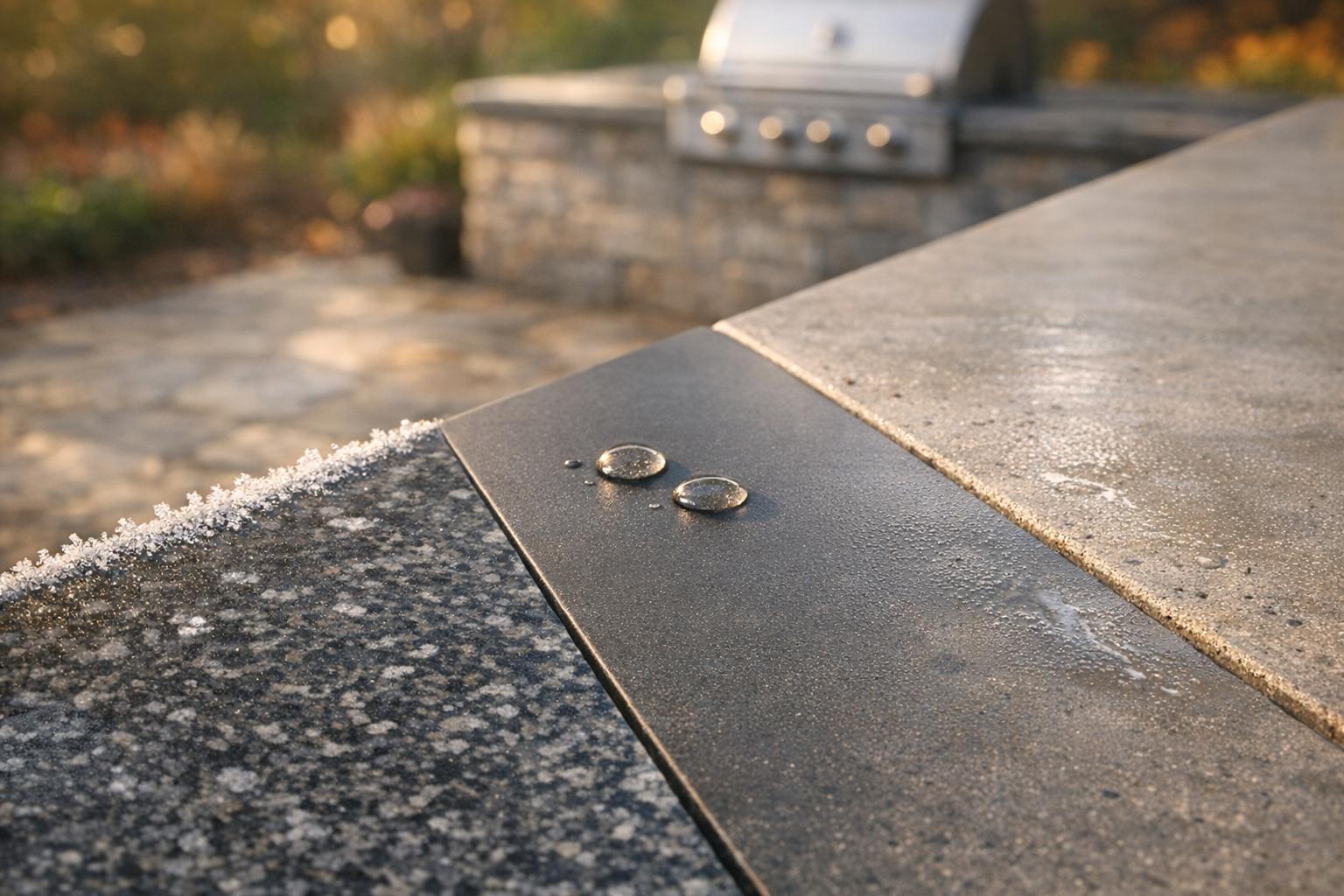
However, granite does have its quirks. Because it’s porous, it requires periodic sealing to protect against stains from oils, wine, or even leaf tannins. Here’s a simple trick to check if the seal is still effective: drop some water on the surface. If the water beads up, the seal is intact. If it soaks in, it’s time to reseal. For Maryland’s climate, resealing in the spring (after the last freeze) and again in the fall (before the first frost) usually does the job [1].
When selecting a finish for outdoor use, go for honed, leathered, or brushed surfaces instead of high-polish finishes. These textures help avoid the resin breakdown caused by UV exposure, which can lead to clouding or pitting. Additionally, lighter shades like steel gray are a smart choice – they stay cooler in the sun, while darker granite tends to absorb more heat.
Granite countertops typically cost between $50 and $150+ per square foot installed, positioning them in the mid-to-high price range [7]. For everyday cleaning, stick to mild dish soap and a microfiber cloth. Avoid using acidic or ammonia-based cleaners, as well as bleach, to preserve the stone and its sealant. This combination of resilience, manageable upkeep, and reasonable cost makes granite a dependable option for Maryland’s varied outdoor conditions.
Shelly Salomon of Unlimited Outdoor Kitchen captures its appeal perfectly:
"Granite is one of the most popular materials for outdoor kitchen countertops, and it’s easy to see why. It’s beautiful, durable, and offers flexibility in your outdoor kitchen design." [7]
3. Stainless Steel Countertops
Granite might bring natural strength to the table, but stainless steel takes things up a notch with industrial durability and effortless upkeep. Unlike stone, stainless steel is non-porous, so it doesn’t need sealing. A quick wipe with mild soap and water is all it takes to keep it spotless. This feature also ties directly to its ability to resist corrosion, even in challenging environments.
The secret behind its corrosion resistance lies in its composition. Stainless steel includes at least 10.5% chromium, which reacts with oxygen to form a protective oxide layer that naturally repairs itself, keeping rust at bay. For most uses, Grade 304 (with 18–20% chromium and 8–10.5% nickel) is the go-to choice. However, if you live near saltwater, Grade 316 is the better option. It contains 2–3% molybdenum, offering extra protection against salt-induced corrosion. FEMA even recommends Grade 316 for areas within 3,000 feet of the ocean. That added resilience comes at a price – Grade 316 costs about 37% more than Grade 304 [2].
Stainless steel also stands up well to UV rays and heat. It doesn’t fade, discolor, or break down under constant sunlight. Plus, it absorbs heat more slowly than metals like aluminum or copper, so it stays cooler to the touch, even on scorching summer days [2].
When ordering custom stainless steel countertops, two key factors to consider are grade and gauge (thickness). Gauge numbers can be confusing because they work in reverse – a lower number means thicker steel. Here’s a quick guide to common gauge options:
| Gauge | Thickness | Recommended For |
|---|---|---|
| 14-gauge | 0.0781 inches | Heavy-duty areas; integrated sinks |
| 16-gauge | 0.0625 inches | Standard outdoor use; resists dents |
| 18-gauge | 0.0500 inches | Light-duty use; prone to warping |
For outdoor countertops, stick to at least 16-gauge steel. Thinner options, like 18-gauge, are more likely to warp under heat or dent easily. Also, double-check the grade before buying – cheaper options may use 430-grade steel, which doesn’t have enough nickel to resist rust effectively. A #4 brushed finish is another smart choice, as it hides fingerprints and minor scratches better than a polished surface [2].
Finally, let’s talk cost. Custom stainless steel countertops typically run between $150–$250+ per linear foot for Grade 304 and $200–$300+ per linear foot for Grade 316. While the upfront cost is higher than some other materials, the lack of maintenance and long-term durability – especially in Maryland’s climate – make stainless steel a solid investment for outdoor kitchens [2]. It’s a long-lasting, hassle-free solution for those looking to combine style and functionality.
4. Porcelain Slab Countertops
Porcelain slab countertops are a great choice for all-weather durability. Made from refined clay, fine sand, and feldspar that’s fired under high heat and pressure, porcelain is incredibly dense and absorbs almost no moisture. This means grease and stains can’t seep into the surface, so there’s no need for sealing or special coatings [9].
Its mineral-based colors are also UV-stable, which prevents the yellowing that can occur with quartz [10]. Plus, porcelain’s heat resistance is outstanding – it can handle temperatures over 1,000°F. You can place a hot pan or grill grate directly on it without worrying about scorch marks or discoloration [10]. These qualities make it particularly well-suited for Maryland’s varying climate.
Maryland’s freeze-thaw cycles can be tough on some materials, but porcelain holds up exceptionally well. Since it doesn’t absorb moisture, there’s nothing inside the material to freeze, expand, or cause cracks during the winter [10]. This characteristic ensures it remains intact and performs reliably even after harsh cold snaps [10].
For added practicality, large-format porcelain slabs minimize grout lines, reducing potential moisture entry points [8]. Maintenance is simple – just wipe it down with mild soap and warm water to keep it looking fresh.
When it comes to cost, porcelain slab countertops typically range from $65 to $175 per square foot installed. For a 25-square-foot countertop, that translates to about $2,875–$7,375 [10]. With a lifespan of up to 50 years [9], the initial expense becomes more manageable over time. However, keep in mind that dark-colored porcelain can heat up to over 150°F in direct sunlight, so lighter shades are a better option for outdoor spaces in Maryland [10].
sbb-itb-843f8be
5. Concrete Countertops
Concrete countertops, especially those made with Glass Fiber Reinforced Concrete (GFRC), are a strong and dependable choice for outdoor kitchens. This material incorporates glass fibers, making it much lighter and stronger than traditional sidewalk concrete. As Xtreme Polishing Systems puts it:
"There are actually stronger concrete mixes used for countertops than what you see on a sidewalk because they are made with glass fiber reinforced concrete (GFRC)." [11]
One of the standout features of GFRC is its flexibility in design. It can be molded into almost any shape, which makes it perfect for custom outdoor kitchen layouts. This adaptability is especially useful for Maryland’s diverse outdoor kitchen styles. Plus, decorative finishes like stains, dyes, and metallic pigments allow for a variety of looks, from industrial and raw to polished, stone-like surfaces [11].
That said, outdoor use does come with some challenges. Concrete’s color can fade over time due to UV exposure, so applying a UV-stable sealant is a must [11]. Additionally, temperature changes and moisture can impact its durability. While concrete can handle high heat near grills, sealing it is crucial to prevent cracking during freeze-thaw cycles [2][4]. To keep it in top condition, resealing every two years is recommended [11]. For cleaning, stick to mild soap and water, avoiding harsh cleaners that could damage the sealant [4].
On the cost side, concrete is one of the more budget-friendly options if you stick with a basic, raw finish. However, if you want the added durability of a protective topcoat – ideal for outdoor use – you’ll need to spend more upfront [11]. While the initial investment may be higher, a durable topcoat can save you money on repairs down the line.
6. Soapstone Countertops
Soapstone might not be the first material that comes to mind for outdoor kitchens, but it has a long-standing history, especially in New England, where it’s been valued for centuries.
One of its standout qualities is its chemical inertness. According to Granite Guy Inc.:
"Soapstone doesn’t react to acids or bases at all. That’s why labs use it for benchtops." [12]
This means soapstone won’t etch or stain, and its non-porous surface eliminates the need for sealing – something that sets it apart from materials like granite, which require regular upkeep.
Soapstone also shines when it comes to heat resistance and UV stability. It can handle direct contact with pots or tools heated to 500–600°F without scorching or cracking. Plus, it holds up beautifully in direct sunlight, resisting fading and deterioration over time [12].
Maintenance is straightforward. Over time, oxidation will naturally darken the stone. If you want to develop a rich, even charcoal patina, you can apply food-grade mineral oil after installation and then once a month for the first year. Vermont Soapstone notes that as the stone gets more use, you’ll need to reapply the oil less frequently [13]. Scratches? No problem – just sand them lightly with 120-, 220-, and 400-grit sandpaper, then reapply mineral oil to blend the repair.
As for cost, installed prices generally range from $80 to $120 per square foot [12]. While this places it in the same ballpark as granite, soapstone’s durability, low maintenance, and lack of sealing requirements make it an excellent choice for outdoor kitchens, especially in Maryland.
7. Tile Countertops
Tile countertops bring a distinct charm to outdoor kitchens, offering a level of design flexibility that’s hard to achieve with solid slabs. With the ability to mix and match patterns, they allow for a personalized aesthetic. Among the options, porcelain tile stands out for outdoor use, thanks to its durability, resistance to UV rays, and heat tolerance [4].
Porcelain tiles share many of the advantages of solid slabs but come with a unique consideration: grout maintenance. Unlike granite slabs, porcelain tiles don’t need sealing, which simplifies upkeep [4]. However, grout lines can be a weak spot. These joints are porous and prone to staining from spills, pollen, or sap.
Michael Dougherty of Unlimited Outdoor Kitchen offers this advice:
"Don’t use vinegar or other acids, since these can actually eat away at the grout and can even damage the tiles themselves."
For cleaning, stick to mild detergents and a nylon brush. Avoid steel bristles, which can scratch tiles or damage the grout. For stubborn stains, try a homemade solution: mix three parts baking soda, one part hydrogen peroxide, and a bit of dish soap. Apply the paste to the grout, let it sit for a few minutes, then rinse with hot water [14]. After cleaning, seal the grout lines and reapply the sealant periodically to keep them protected and extend the countertop’s lifespan.
Proper installation is just as important as maintenance, especially in areas like Maryland, where freeze-thaw cycles can wreak havoc on materials. Tiles installed on a weather-resistant base are less likely to crack or shift during temperature fluctuations [14]. And if your outdoor kitchen includes a sink, don’t forget to drain the supply lines before winter hits to prevent pipe damage during freezing temperatures.
Fitting Countertops into Maryland Outdoor Kitchen Designs
Choosing durable countertops is just the beginning; they also need to blend seamlessly with your outdoor setup. In Maryland, outdoor kitchens often feature elements like flagstone or paver patios, fire pits, and garden walls, all working together to create a unified living space. When the stonework on your kitchen base matches the materials used for nearby features – such as fire pits or garden walls built with trusted brands like Belgard or EP Henry – your countertop naturally becomes the centerpiece rather than an afterthought. Combining corrosion-resistant countertops with matching outdoor structures not only enhances the visual appeal but also ensures they withstand Maryland’s varied weather conditions. This integrated design approach ties your countertop into the overall outdoor aesthetic.
Seat walls are a fantastic addition to these designs. These low retaining walls serve a dual purpose: they act as built-in seating and create a welcoming space for guests to gather near the cooking area without overcrowding it. A granite or porcelain slab countertop works beautifully here, especially when the seat wall features the same stone or brick as the kitchen’s vertical surfaces, creating a cohesive and polished look.
While elements like seat walls boost style and functionality, practical aspects like drainage are equally important. Proper drainage and grading must be planned before installation. Features such as a marine edge profile – a raised lip measuring between 1/8 and 1/2 inch – help redirect water away from cabinetry and patios, protecting your investment over time [2].
Pro Landscapes MD specializes in crafting integrated outdoor kitchen systems throughout central Maryland. Their designs include patios, fire pits, seat walls, and effective drainage solutions, ensuring your outdoor kitchen performs well and looks great for years to come.
Conclusion
Choose your countertop based on how you plan to use it, Maryland’s specific weather conditions, and the level of care you’re prepared to provide. For areas with lots of sunlight, granite stands out with its strong UV resistance. If you’re dealing with frequent rain, soapstone is a reliable option, while porcelain excels in handling extreme temperature changes. For those prioritizing hygiene and corrosion resistance near a grill, stainless steel is a solid choice.
Here’s a quick summary to help match materials to Maryland’s unique climate:
| Material | Best For | Maintenance Level |
|---|---|---|
| Granite | Sun & heat exposure | Moderate (requires sealing) |
| Soapstone | Rain & moisture | Low (easy to clean) |
| Porcelain | Extreme temperature swings | Low (minimal upkeep) |
| Stainless Steel | Hygiene & corrosion resistance | Low (requires specific polish) |
| Quartzite | Long-term durability & UV resistance | Moderate (requires sealing) |
To make the best choice, align each material’s strengths with your outdoor kitchen’s design needs. This ensures a setup that not only looks great but also stands the test of time.
One practical tip: for natural stone surfaces, test their water absorption before committing. Pour a small amount of water on a sample. If it soaks in within 30 minutes, the stone will need professional sealing to guard against stains and moisture damage [15].
For more personalized advice on incorporating these materials into your Maryland outdoor kitchen, reach out to Pro Landscapes MD.
FAQs
What countertop is best for full sun in Maryland?
Stainless steel stands out as the top choice for countertops in full-sun areas in Maryland. Its strong resistance to corrosion and impressive durability make it a reliable option for outdoor settings. Plus, it handles harsh weather conditions with ease, making it perfect for outdoor kitchens.
Do I need 316 stainless steel near the Chesapeake Bay?
If you’re near the Chesapeake Bay, 316 stainless steel is a top choice for metal applications. Known for its marine-grade qualities, this material offers outstanding resistance to rust, corrosion, and saltwater exposure. These properties make it an ideal option for coastal environments, where harsh conditions can quickly wear down other metals. Whether it’s for construction, marine equipment, or outdoor fixtures, 316 stainless steel is built to handle the challenges of coastal living.
What base should outdoor countertops be installed on?
Outdoor countertops need to be set on a solid foundation, like a concrete slab. This provides even weight distribution and helps avoid problems such as cracking or sinking as time goes on.
Chat with Us