









- bhavya gada
- No Comments
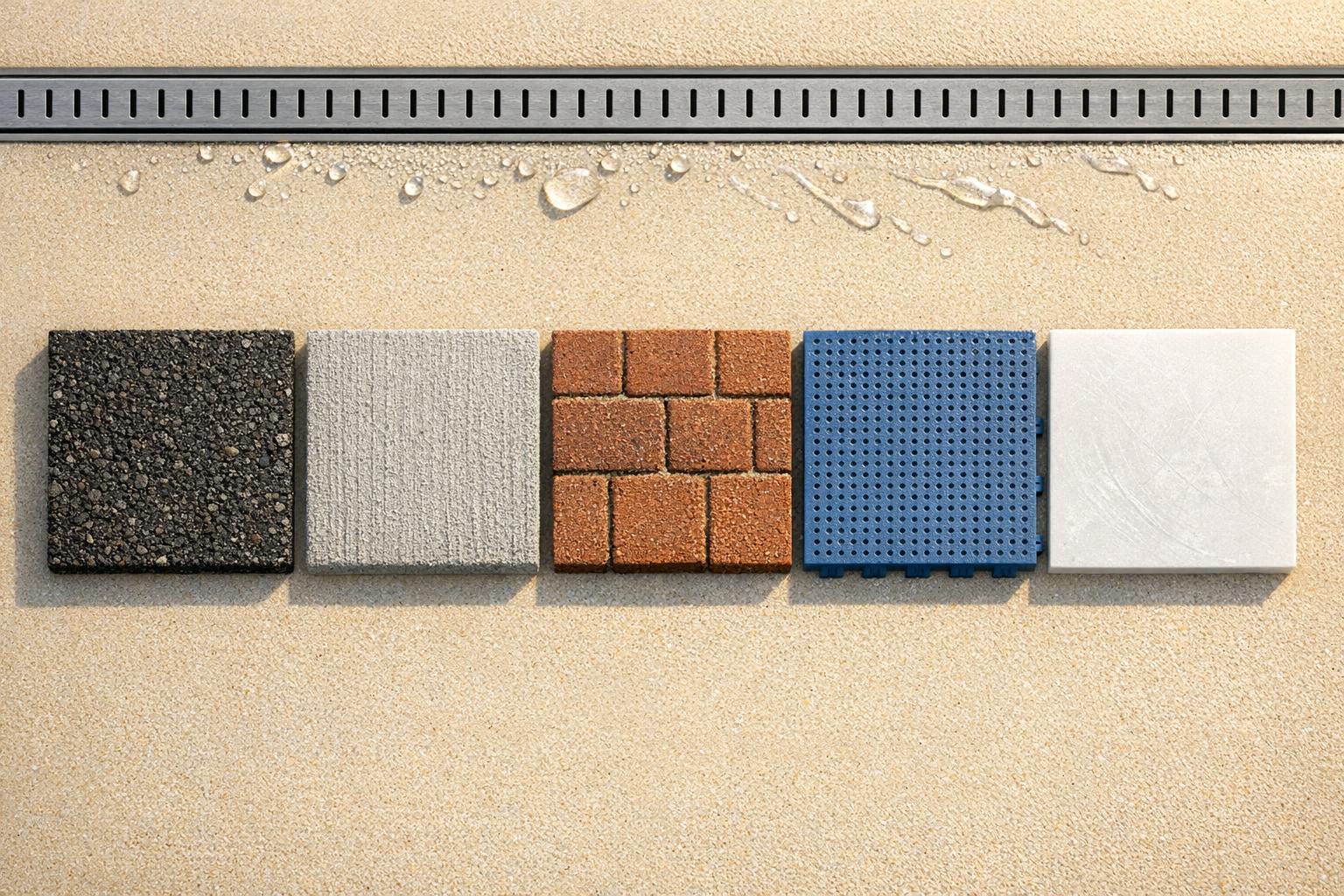
Looking to create a multi-use skating surface? Here’s what you need to know: the material you choose can make or break your court. Whether it’s skating, pickleball, or basketball, your surface must handle Maryland’s weather – hot summers, cold winters, and heavy rainfall. Here’s a quick breakdown of popular materials:
- Asphalt: Affordable and smooth but prone to heat retention and cracking.
- Concrete: Durable and fast for skating but costly and hard on falls.
- Interlocking Pavers: Long-lasting and repairable but not ideal for smooth skating.
- Modular Sport Tiles: Shock-absorbing and easy to maintain but slower for skating.
- Synthetic Ice Panels: Great for year-round skating but higher friction than real ice.
Key factors to consider: durability, skating performance, safety, and maintenance. Proper drainage is critical to avoid cracks, water pooling, and algae.
Quick Tip: For Maryland’s freeze-thaw cycles, a strong base and good drainage are essential – partnering with professionals ensures your court lasts.
| Material | Lifespan | Skating Smoothness | Maintenance Needs | Cost (Installed) |
|---|---|---|---|---|
| Asphalt | 15–25 years | Smooth (initially) | Moderate | $3–$7 per sq. ft. |
| Concrete | 30+ years | Fast, smooth | Low | $6–$10+ per sq. ft. |
| Interlocking Pavers | 25–50+ years | Less smooth | Low | $12–$20+ per sq. ft. |
| Modular Sport Tiles | 10–15 years | Consistent | Very low | $4–$10 per sq. ft. |
| Synthetic Ice Panels | 10–20 years | Higher friction | Moderate | $8–$25+ per sq. ft. |
The right choice depends on your budget, activity preferences, and maintenance expectations. Let’s dive deeper into each material.
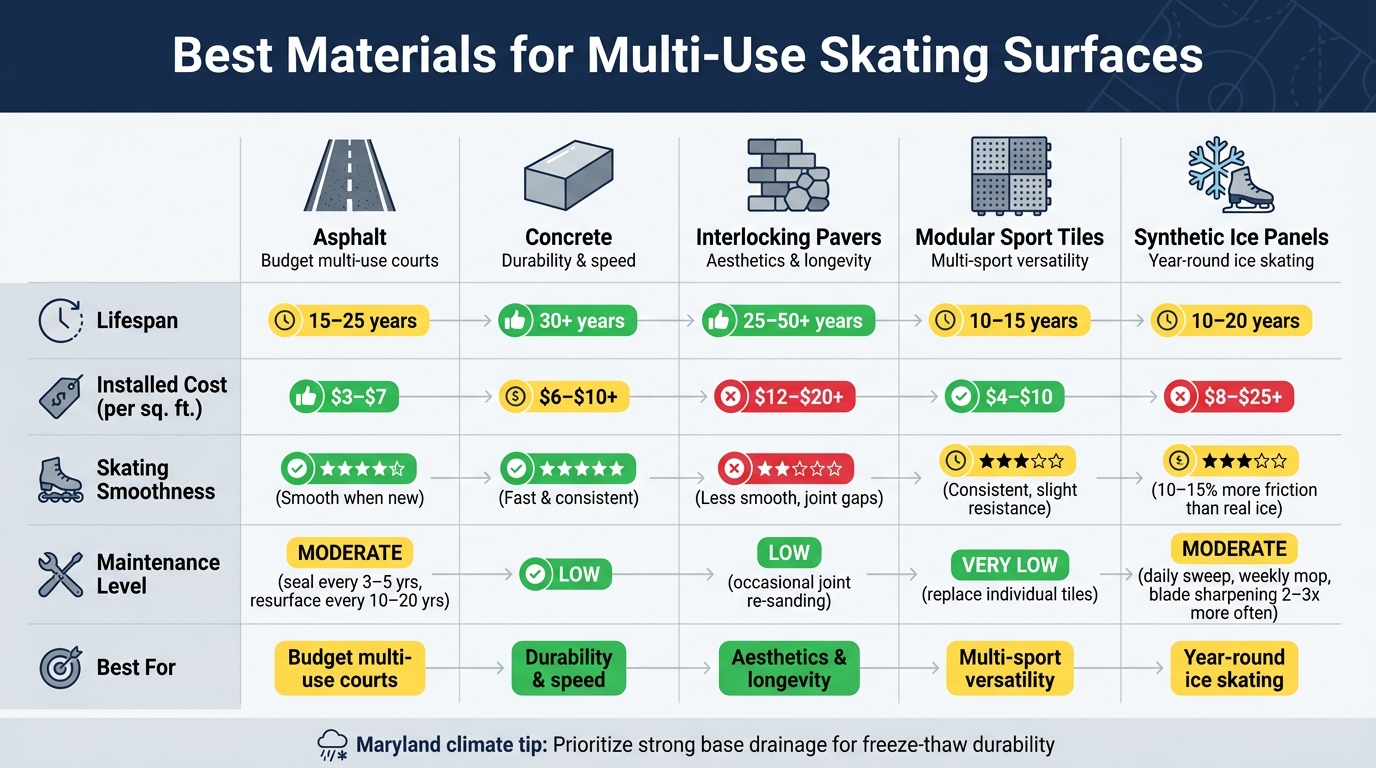
Multi-Use Skating Surface Materials: Cost, Lifespan & Performance Compared
5 Best Roller Skating Surfaces to Skate On
sbb-itb-843f8be
1. Asphalt
Asphalt is a popular option for outdoor multi-use courts and skating areas across the U.S. It’s a budget-friendly choice that can cover large spaces quickly and supports a variety of activities like inline skating, skateboarding, scootering, and biking – all without needing specialized surfaces for each.
Durability
When properly built, asphalt surfaces can last 15–25 years in outdoor recreational settings. Its flexibility allows it to handle freeze-thaw cycles better than rigid materials like concrete, as it bends slightly instead of cracking outright. To ensure longevity, a 4–8 inch compacted crushed stone base with good drainage is essential. This is especially important in regions like Maryland, where wet winters and humid summers can take a toll on outdoor surfaces. A strong foundation is key to maintaining both durability and performance.
Skating Performance
The smoothness of asphalt depends on the mix and compaction during installation. A fine-graded, dense asphalt mix – often referred to as a sport court or tennis court mix – creates a smoother, tighter surface with fewer gaps. This results in less vibration and a better rolling experience for inline skaters and scooters. In contrast, standard road-grade asphalt is rougher and less comfortable for wheels. Many facilities enhance asphalt surfaces with a colored acrylic sport coating, which improves smoothness, traction, and UV resistance. This coating is a smart upgrade for anyone looking to create a high-quality multi-use area.
Safety and Comfort
One downside of asphalt is its tendency to absorb and retain heat. On a sunny summer day, uncoated black asphalt can reach temperatures of 140–150°F, which can make it uncomfortable and may even soften the surface binder in newer installations. Adding lighter-colored coatings or installing shade structures can help mitigate this issue. From a safety perspective, asphalt is slightly more forgiving than concrete during falls due to its flexibility. However, cracks and surface irregularities can pose risks, especially for inline and quad skate wheels, which can catch on even small defects. Regular inspections are crucial to maintaining a safe surface.
Maintenance and Cost
Asphalt costs around $3–$7 per square foot to install, which is more affordable upfront compared to concrete’s $6–$10+ per square foot. However, it does require ongoing maintenance. This includes crack sealing, sealcoating every 3–5 years, and resurfacing every 10–20 years. While these costs are manageable, they should be planned for from the outset. On the bright side, localized damage like potholes or lifted edges can be repaired without needing to replace the entire surface, keeping long-term repair expenses relatively low.
2. Concrete
Concrete is a popular option for permanent, multi-use skating surfaces. It stands up well to heavy, repeated use, making it suitable for inline skating, skateboarding, and even regular foot traffic. When installed professionally with proper reinforcement and grading, concrete surfaces can last for decades with minimal daily upkeep [1].
Durability
Concrete’s rigidity is a major advantage – it holds its shape over time without rutting or deforming under pressure. However, this same rigidity makes it more vulnerable to cracking, particularly in areas with frequent freeze-thaw cycles [2]. To combat this, reinforcement methods like rebar or wire mesh, controlled expansion joints, and reliable subbase drainage are essential. These measures help minimize freeze-thaw damage and maintain the surface’s structural integrity [2][3]. Poor drainage, on the other hand, can speed up cracking and lead to more extensive damage [3].
Skating Performance
The finish of a concrete surface directly affects skating performance. A smooth, troweled finish offers a fast and consistent ride with minimal vibrations, making it ideal for inline and quad skates. In contrast, a broom finish creates more friction and a rougher ride, which isn’t as suitable for skating activities. Additionally, careful attention to expansion joints is crucial to prevent skaters’ wheels from catching, which could pose safety risks.
Safety and Comfort
Concrete’s rigidity also means falls can result in higher impact compared to softer, modular surfaces. To improve safety, it’s important to ensure proper slip resistance, smooth transitions between sections, and a crack-free surface. Sealing the concrete can help reduce dusting and surface scaling, which could otherwise lead to uneven patches over time [2]. These factors not only enhance safety but also influence ongoing maintenance needs and costs.
Maintenance and Cost
While concrete may come with a higher upfront installation cost compared to materials like asphalt, its long-term maintenance requirements are relatively low. Routine upkeep typically involves inspecting for cracks, resealing the surface when needed, and addressing drainage issues promptly to prevent costly repairs. However, repairs on concrete can be more disruptive and noticeable than on modular systems, where individual sections can be replaced without much hassle [2].
For those in central Maryland, proper installation and maintenance are key to maximizing the lifespan of a concrete skating surface. Partnering with experienced professionals like Pro Landscapes MD can ensure critical aspects such as drainage and joint detailing are handled correctly. This analysis highlights both the strengths and challenges of concrete compared to other materials discussed in this article. Next, we’ll take a closer look at interlocking pavers as another potential option for multi-use skating surfaces.
3. Interlocking Pavers
Interlocking pavers are a solid choice for multi-use recreation areas, though they do fall short when it comes to skating smoothness. Unlike asphalt or concrete, these pavers consist of individual units that lock together over a compacted base. This design allows for slight movement, which helps prevent large cracks. With regular maintenance, they can last 25–50 years [2].
Durability
Compared to asphalt and concrete, interlocking pavers stand out for their modular design. Each unit moves independently, which makes the surface more resistant to widespread cracking. These pavers are also built tough – most concrete pavers exceed 8,000 psi compressive strength, significantly more than the 3,000–5,000 psi seen in standard poured concrete. This durability allows them to handle the repeated pressure from skateboards, scooters, and inline skates without issue. Plus, if one paver gets damaged, it can be replaced individually without disturbing the rest of the surface [2].
Skating Performance
When it comes to skating, interlocking pavers don’t match the smooth glide of asphalt or concrete. Even with tightly packed joints filled with polymeric sand, the tiny gaps between pavers create vibrations and increase rolling resistance. While casual skaters and kids on scooters might not notice, more experienced skaters performing technical tricks will feel the difference. Opting for smooth-top pavers and using a herringbone pattern with tight, consistent joint spacing can help minimize these issues. Keeping joint gaps between 1/16–1/8 in. and using rigid edge restraints can also prevent gaps from widening over time. Proper installation is critical to ensuring safety and comfort for users.
Safety and Comfort
Interlocking pavers offer better traction when wet compared to troweled concrete, which is a big safety plus in areas shared by skaters, bikers, and runners. However, lippage – a height difference of just 1/8–1/4 in. between adjacent pavers – can pose a hazard by catching small skate wheels. To avoid this, precise base preparation and regular re-leveling are essential. On the comfort side, light-colored pavers reflect heat better than dark asphalt, staying cooler under the summer sun – a noticeable benefit for warm-weather activities.
Maintenance and Cost
One of the key advantages of pavers is how easy they are to repair. Unlike seamless surfaces, you can fix isolated sections without tearing up the entire area. Maintenance involves re-sanding joints, pressure washing, and re-leveling as needed. As for costs, installing pavers typically runs $12–$20+ per square foot, which is pricier than asphalt ($5–$10/sq. ft.) and standard concrete ($8–$15/sq. ft.) but less expensive than premium modular sport tiles ($15–$30+/sq. ft.) [2]. While the upfront cost is higher, the modular repair capability and long lifespan make pavers a worthwhile mid-to-high-range option when compared to other materials discussed in this guide.
4. Modular Sport Tiles
Modular sport tiles are interlocking polypropylene tiles designed to snap together over a stable base. This solution stands out for its flexibility, allowing for easy adjustments to meet evolving recreational needs. Unlike permanent surfaces, these tiles can be installed over existing concrete or asphalt and removed or expanded as needed. Let’s break down their durability, performance, safety, and maintenance.
Durability
These tiles are built to last, with a typical lifespan of 10–15 years and support through limited warranties. Most are UV-stabilized, making them resistant to sunlight and capable of withstanding freeze-thaw cycles without buckling. Each tile’s ability to expand and contract slightly helps maintain its integrity. However, an unstable or cracked base can eventually affect the tile surface, so proper preparation of the foundation is key to ensuring long-term performance.
Skating Performance
When it comes to skating, modular sport tiles offer a smoother and more consistent surface compared to rough asphalt. While they may not match the speed of a polished indoor concrete floor, they strike a balance between glide and grip. The micro-textured surface allows for good rolling speed while providing enough friction for controlled turns and stops. Skaters might notice slightly more rolling resistance than on polished concrete, but the reduced vibrations and consistent surface make up for it. For the best experience, look for tiles specifically designed for inline or roller hockey, as these often feature low-friction polypropylene blends that improve both puck and wheel glide.
Safety and Comfort
These tiles provide 15–25% more shock absorption than concrete, thanks to their slight vertical flex and built-in support grid beneath the surface [4]. This feature helps reduce stress on knees and ankles, especially for skaters who spend long periods on the surface. The textured or perforated design promotes quick drainage, minimizing puddles and improving traction in wet conditions. Beveled edge transitions also enhance safety by reducing trip hazards.
Maintenance and Cost
One of the standout advantages of modular sport tiles is their low maintenance. Keeping them clean typically involves sweeping, rinsing with mild soap, and occasionally checking the interlocks. Unlike other surfaces, they don’t require sealing or resurfacing under normal conditions. If a tile gets damaged, it can be replaced individually, similar to interlocking pavers.
Material costs for outdoor sport tiles usually range from $4 to $7 per square foot, largely because they can be installed over an existing slab, avoiding the need for a new concrete pour. When factoring in installation – such as base preparation, edging, and accessories – the total project cost often falls in the mid-to-high single digits per square foot. For those starting from scratch, contractors like Pro Landscapes MD can handle the grading, drainage, and slab work required to ensure a stable and durable installation. Next, we’ll see how these tiles compare to other modern solutions.
5. Synthetic Ice Panels
Synthetic ice panels, made from materials like UHMW-PE or HDPE, allow skaters to use steel blades without the need for refrigeration. These panels are infused with self-lubricating additives, eliminating the hassle of spray lubrication. Thanks to tongue-and-groove or dovetail interlocking systems, they can be installed on any flat and stable base, such as concrete, asphalt, or a well-leveled wooden subfloor.
Durability
When it comes to durability, commercial-grade UHMW-PE panels perform well under heavy use. In public settings, they can last over 10 years, while in homes or light-use environments, their lifespan extends to 20+ years with proper care. Thickness is key – community or multi-use rinks should opt for panels at least 1/2 inch thick, whereas 3/8-inch panels suffice for home use, provided the base is exceptionally flat. Outdoor setups face challenges like thermal expansion, UV exposure, and grit. To combat these, ensure proper expansion gaps, use UV-stabilized panels, and install on a slightly sloped base with perimeter drainage to avoid puddling or warping. With these measures, synthetic ice delivers consistent skating performance over time.
Skating Performance
While synthetic ice isn’t identical to natural ice, modern infused panels have made strides, offering 10–15% more friction compared to real ice, a significant improvement over older spray-lubricated versions, which had 30–40% more friction. This added resistance requires skaters to push harder, making these surfaces popular for hockey training and conditioning drills. Moves like edge work, stops, and tight turns are fully achievable, though competitive figure skaters often prefer natural ice for high-level jumps and spins. One downside is that blades dull faster on synthetic surfaces, necessitating sharpening two to three times more often than on real ice.
Safety and Comfort
Safety depends heavily on flush seams and tight panel connections to prevent blades from catching on raised edges. In hotter climates, dark panels can heat up and become uncomfortable, so lighter-colored panels or added shade is recommended. Wet panels are especially slippery, particularly if glide enhancers are in use, so clearing standing water is essential. For public rinks, dasher boards or low perimeter walls provide beginners with support and help contain skaters within the area.
Maintenance and Cost
Maintaining synthetic ice is straightforward but essential for optimal performance. Start with daily sweeping to remove grit that could scratch the surface and dull blades. Follow up weekly with wet mopping or gentle pressure washing to clear plastic shavings that can reduce glide efficiency. Every month or quarter, inspect panel joints for any raised edges or separation and check outdoor panels for UV-related wear.
In terms of cost, home-use tiles typically range from $8–$15 per square foot in the U.S., while commercial-grade systems with professional installation, including edging and accessories, fall between $15–$25+ per square foot. Though the initial investment is higher compared to sport tiles or asphalt, the long-term savings are substantial. Without refrigeration, resurfacing water, or Zamboni maintenance, synthetic ice can cut traditional rink energy and water costs by an estimated 80–90% over time.
Pros and Cons by Material
Choosing the right material depends on your budget, local climate, expected traffic, and specific activity needs. Here’s a breakdown of the benefits and drawbacks of each option to help you decide.
Concrete offers unmatched durability, lasting over 30 years, and provides a smooth, fast skating surface. However, it’s unforgiving, slippery when wet, and comes with the highest upfront cost.
Asphalt is an affordable choice, ideal for casual outdoor skating and multipurpose courts. Its main issues are cracking in freeze–thaw climates and surface wear from UV exposure.
Interlocking pavers are highly durable, with a lifespan of 25–50+ years, and allow for easy replacement of individual units. However, their joints and edges make them less suitable for active skating areas. They’re better suited for walkways, spectator zones, or decorative borders.
Modular sport tiles offer excellent shock absorption, good traction, and easy replacement of individual tiles. On the downside, the surface is slightly slower and noisier than harder materials.
Synthetic ice panels make year-round skating possible without refrigeration. However, they require more effort to skate on, frequent blade sharpening, and regular cleaning to maintain performance.
| Material | Durability | Skating Performance | Safety | Maintenance | Approx. Cost (Installed) |
|---|---|---|---|---|---|
| Asphalt | 15–20 years; prone to cracking and softening | Smooth when new; degrades with age | Hard surface; slip risk when wet | Moderate; periodic crack sealing | Budget-friendly |
| Concrete | 30+ years | Fast, consistent, and smooth | Hard; texture impacts slip resistance | Low long-term; cracks manageable | $6–$10+ per sq ft |
| Interlocking Pavers | 25–50+ years; replaceable units | Not ideal for skating due to joints | Permeable options reduce water pooling | Low; occasional joint re-sanding | $10–$20 per sq ft |
| Modular Sport Tiles | 15–20 years; UV-stable | Slightly slower; good for multi-sport use | Great shock absorption; reduces fall impact | Very low; replaceable tiles | $4–$10 per sq ft (tile only) |
| Synthetic Ice Panels | 10–20 years depending on use | Higher friction than real ice | Seam quality critical; slippery when wet | Regular cleaning and inspections | $8–$25+ per sq ft |
Maryland’s freeze–thaw cycles and drainage challenges make material selection especially important. For projects in central Maryland, where proper grading, drainage, and integration with hardscapes are crucial, partnering with a skilled contractor like Pro Landscapes MD can ensure better long-term results. Their expertise in coordinating concrete slabs, paver borders, and drainage systems can help you create a recreation space that stands the test of time. This comparison should give you a clearer picture of which material aligns with your needs.
Conclusion
Choose the material that aligns best with your activity goals. Concrete stands out as the most durable and reliable option, offering excellent skating performance and a lifespan of over 30 years with minimal maintenance. For those seeking versatility, modular sport tiles over a concrete base are ideal for multi-sport use, accommodating activities like roller hockey or pickleball. If aesthetics are a priority, especially for blending the skating area into a patio or garden, interlocking pavers provide a customizable and visually appealing solution. Meanwhile, for year-round ice-like skating, synthetic ice panels installed on a flat, rigid surface are a practical choice. Each material has its own strengths and challenges, but the key to success lies in pairing the right surface with proper drainage.
In Maryland’s challenging climate, drainage is absolutely crucial. Even the most durable surface won’t last without a well-designed drainage system. A properly sloped and prepared base ensures long-term performance.
"Drainage problems are complex and require a custom approach for each project." – Pro Landscapes MD [3]
This is where professional expertise becomes invaluable. Pro Landscapes MD specializes in designing and installing hardscaped recreation surfaces across central Maryland. From concrete slab preparation and paver borders to French drains, grading, and stormwater management, they handle it all. Whether you’re planning a backyard multi-sport court in Columbia, a skating pad in Ellicott City, or a paver-integrated recreation space in Bethesda, a well-prepared base ensures your investment lasts for decades.
FAQs
What surface works best for both skating and pickleball?
For spaces that serve multiple purposes, like skating and pickleball courts, high-quality interlocking pavers are a fantastic solution. These systems are built to handle heavy, repeated use while offering a stable and durable foundation. When professionally installed, pavers create a smooth, customizable surface that balances both style and functionality. Pro Landscapes MD excels in designing and installing these adaptable surfaces, ensuring your recreational area is both ready for action and made to endure over time.
How can I prevent puddles and cracking in Maryland weather?
Proper water management is key to avoiding puddles and cracking, especially in Maryland’s challenging climate. Solutions like professional grading, drainage systems, or using permeable materials can make a big difference.
Pro Landscapes MD provides effective options such as French drains, swales, and box-and-pipe systems to help divert water and minimize erosion. For patios and driveways, permeable pavers are a smart choice. They let water soak into the ground naturally, preventing water buildup. Plus, with expert installation, you can ensure the correct slope and base density, which are essential for keeping your surfaces durable over time.
Can I install sport tiles or synthetic ice over my existing slab?
Yes, as long as the slab is level, stable, and in good condition, it can work. Make sure the area has proper drainage to avoid water pooling, which can harm the surface over time. If there are drainage problems, Pro Landscapes MD can evaluate your site and offer solutions like grading or installing drainage systems to ensure a long-lasting and functional skating or recreation area.
Chat with Us