









- bhavya gada
- No Comments
Fire pits can transform your outdoor space into a cozy gathering spot, but they come with responsibilities. Maryland has specific rules for fire pit safety, and non-compliance can lead to fines up to $500 per day in some counties. Here’s what you need to know:
- Permits: Required in many counties, especially near woodlands. Gas and propane fire pits often don’t need permits.
- Placement: Keep at least 10 feet from structures and 21 feet from overhanging branches. Use noncombustible surfaces like concrete.
- Safety Measures: Always have water nearby, use dry wood, and avoid burning prohibited materials like trash or leaves.
- Local Rules: Regulations vary by county, including seasonal burn bans in some areas.
- Penalties: Violations can result in fines, immediate extinguishment orders, and even insurance issues.
Proper installation, safe operation, and adherence to local guidelines ensure your fire pit is enjoyable and compliant. Always check your county’s latest rules before use.
What Is A Safe Clearance For Outdoor Fire Pits?
sbb-itb-843f8be
Maryland Fire Codes and Local Regulations
If you’re planning to use a fire pit in Maryland, knowing the local fire codes is essential. Beyond compliance, exploring a fire pits portfolio can help you visualize safe and stylish designs for your backyard. Regulations differ across the state, with state laws, county ordinances, and city codes all playing a role. Before you light up your fire pit, make sure you understand which rules apply to your property.
At the state level, Maryland mandates an Open Air Burning Permit for fires located within 200 feet of woodlands. However, small recreational fires or those within incorporated towns are generally exempt from this requirement [5].
Fire Permits and Approvals
Permit rules can vary significantly from county to county. For instance, Howard County offers a specific "Recreational Fire Permit" through its Fire & Rescue Services [7]. Frederick County, on the other hand, charges $25.00 for a burn permit (as of September 1, 2025) for burning brush and limbs, and you are required to notify the Communications Center both before and after the fire [8]. Meanwhile, Hagerstown permits self-contained fire pits without requiring a permit, provided you follow the manufacturer’s guidelines exactly [4].
If your property is within 200 feet of woodlands, you should consult your local Maryland Forest Service Office before proceeding [5]. Gas and propane fire pits are often excluded from open burning regulations since they don’t produce smoke or embers [1], which might eliminate the need for a permit altogether.
For more details, check the specific rules for your county.
County Fire Pit Rules
Fire pit regulations differ widely across Maryland, as shown in the table below:
| Jurisdiction | Permit Required? | Key Restriction |
|---|---|---|
| Statewide (near woodlands) | Yes (within 200 ft of woods) | Not required for small recreational fires [5] |
| Howard County | Yes (Recreational Fire Permit) | Contact Fire & Rescue Services [7] |
| Frederick County | Yes ($25.00 for brush/limbs) | Seasonal ban: June, July, and August [8] |
| Montgomery County | Yes (for open burning) | Recreational fires allowed under strict conditions [2] |
| Hagerstown | No (self-contained units only) | Follow manufacturer’s specifications [4] |
Some counties also enforce seasonal restrictions. For example, Frederick County prohibits open burning during June, July, and August [8]. Additionally, Montgomery County and Takoma Park have strict bans on burning household trash, tires, construction debris, asphalt shingles, leaves, and garden trimmings – even in approved fire pits [2].
"Nothing in this regulation shall prohibit the use of approved, self-contained patio-style stoves or similar devices provided the device is used in accordance with all manufacturer’s specifications and requirements." – Hagerstown Fire Prevention Code, §98-4 [4]
Penalties for Not Following the Rules
Ignoring fire pit regulations can lead to serious consequences. In Montgomery County, fines for open burning violations can reach $500 per day [2]. Ocean City imposes even steeper penalties, with fines of up to $1,000 for bonfire permit violations [6]. Beyond fines, fire officials can order you to extinguish a fire immediately if it’s considered hazardous. Non-compliance could also result in insurance claim denials, increased premiums, or personal liability for property damage [9]. Always double-check the latest guidelines with your local Fire Marshal or county fire department before using your fire pit.
Fire Pit Installation and Placement
Getting the placement of your fire pit right is crucial for both safety and following local rules. A poorly positioned fire pit can become a fire hazard or even violate codes before you’ve had a chance to enjoy it.
Site Selection and Clearance Distances
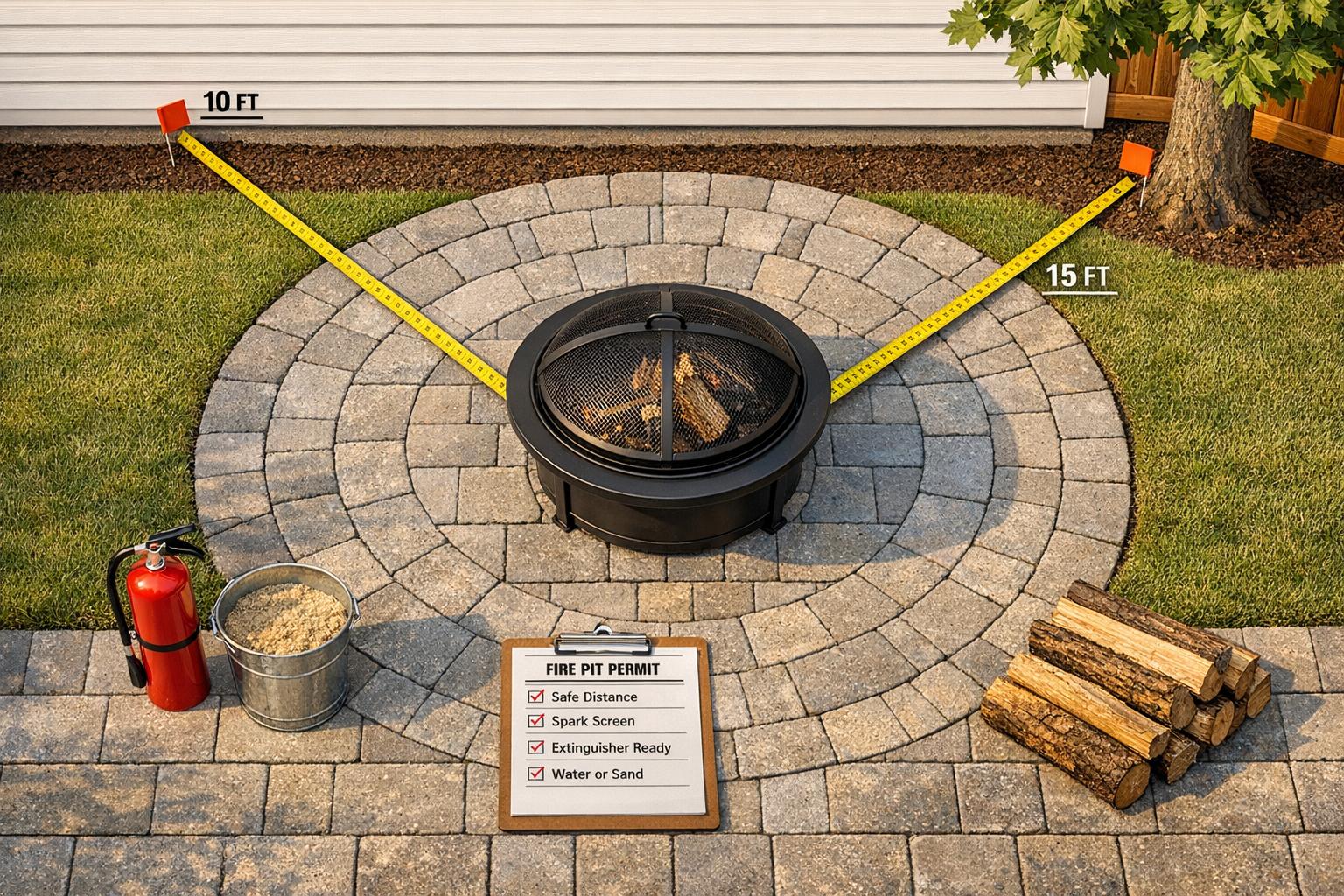
Your fire pit should be at least 10 feet away from any structure – this includes your home, fence, shed, or nearby plants like shrubs [10]. Additionally, make sure there’s at least 21 feet of vertical clearance above the pit to avoid issues with overhanging tree branches [10]. Michael Marchesani, Program Manager at Montgomery County DPS Fire Code Compliance, emphasizes:
"It is important to make sure the fire pit is located at least 10 feet from any structure, such as your home or shed, and keep people back at least three feet from the fire." [3]
Clear the surrounding area of combustibles like dry leaves, mulch, pine needles, or brush, keeping a 15- to 25-foot buffer zone free of these materials [10]. Avoid placing the fire pit under power lines, on uneven surfaces, or on wooden decks and balconies [3][10]. Always set it up on a noncombustible surface, such as concrete or pavers, for added safety.
Construction and Material Standards
For permanent fire pits, the walls should be 6 to 12 inches high and made of noncombustible materials like brick, stone, or heavy-duty metal [10]. If you’re building an in-ground fire pit, line it with heavy-gauge metal or brick and mortar, and ensure the base is at least 10 inches deep, filled with rock, sand, or gravel [10].
Keep the fire itself within safe limits – no more than 3 feet in diameter and 2 feet in height [10]. In areas with restrictions on wood burning, such as Frederick County during summer burn bans, a gas or propane fire pit is a great alternative. These options don’t produce smoke, ash, or embers, and they often fall outside the rules for open burning [1].
A well-built fire pit can blend seamlessly with your outdoor space while meeting safety standards.
Fitting the Fire Pit into Your Landscape
Beyond safety, a well-placed fire pit can enhance the overall look of your yard. Once the fire pit is built, surround it with sand, gravel, or paving stones to catch stray embers and minimize risks [10].
"Remember, embers may fly during the popping and mulch is flammable, so it is important to keep the fire pit at least three feet away from any mulch piles or landscaping." – Michael Marchesani, Program Manager, Montgomery County DPS Fire Code Compliance [3]
If you’re in central Maryland and want a permanent fire pit, Pro Landscapes MD offers expert design and installation services. Partnering with a licensed professional ensures your fire pit is both functional and meets all local safety requirements.
Safety Steps During Use
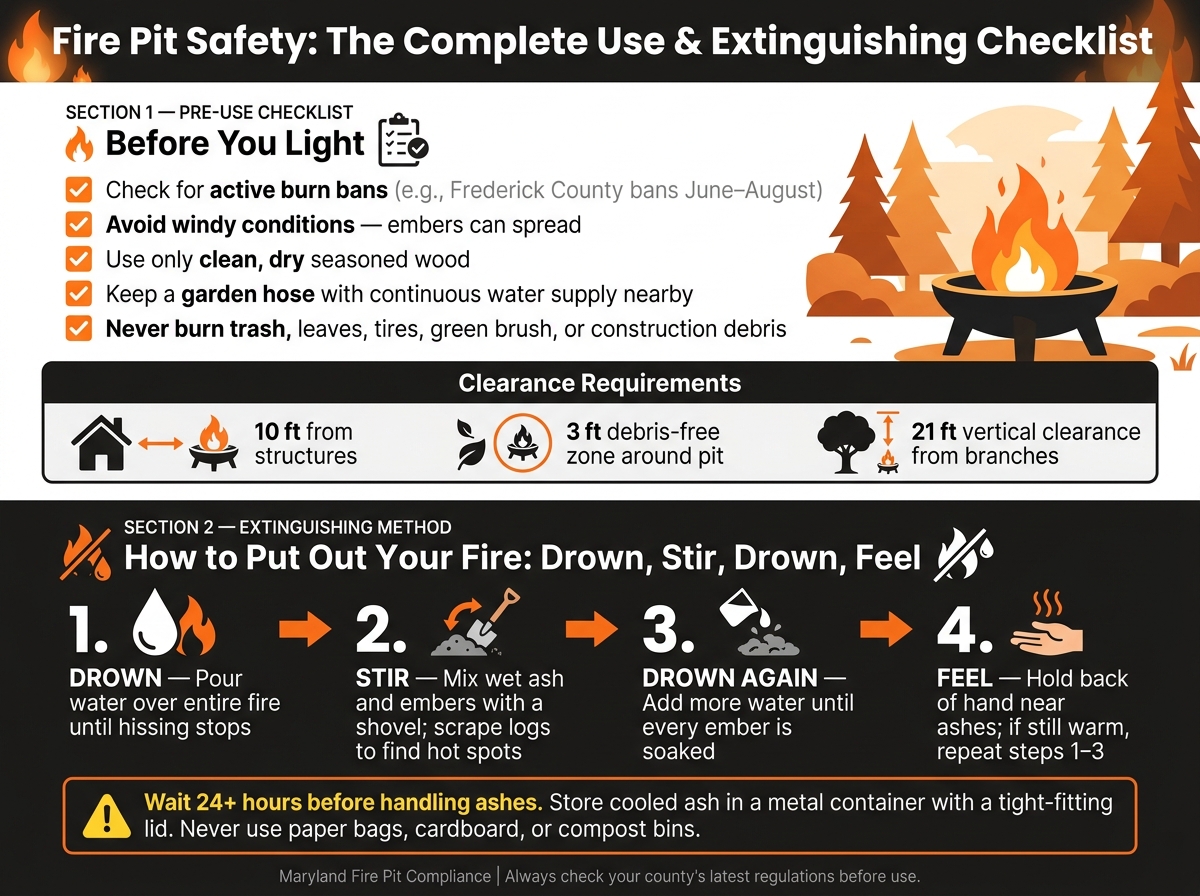
Fire Pit Safety Checklist: Maryland Compliance Guide
Once your fire pit is properly installed, using it safely is just as important. Following safe practices during use helps ensure everyone stays protected.
Pre-Use Checklist
Before starting a fire, take a moment to go through this quick safety checklist:
- Burn Restrictions: Confirm there are no burn bans in effect (e.g., summer burn restrictions in Frederick County).
- Weather Conditions: Avoid lighting fires on windy days, as embers can spread.
- Fuel Choice: Stick to clean, dry wood only.
- Safety Gear: Keep a garden hose connected to a constant water source nearby, along with a metal spark screen for wood-burning fires.
- Avoid Prohibited Materials: Never burn items like trash, leaves, green brush, tires, or construction debris.
| Inspection Category | Requirement |
|---|---|
| Structure clearance | At least 10 feet from homes, sheds, or other combustible structures |
| Ground clearance | Maintain a 3-foot debris-free zone around the fire pit |
| Water source | Garden hose with a continuous water supply |
| Approved fuel | Clean, dry wood only |
| Prohibited fuel | Trash, leaves, green brush, tires, or construction debris |
Once these steps are complete, remain vigilant and supervise the fire at all times.
Supervision and Safe Operation
An adult should always be present to monitor the fire. Make sure children and pets stay at least 3 feet away from the fire pit.
For wood-burning fires, use a metal spark screen to contain stray embers. Keep the flames under control – if they rise above the edges of the fire pit, reduce the fire immediately. Always adhere to the manufacturer’s instructions for your specific fire pit model.
"Smoke should not cross the property line." – Montgomery County Department of Permitting Services
This legal requirement in Montgomery County means that if smoke starts drifting toward neighboring properties, you must reduce the fire’s size or extinguish it altogether.
Now that you know how to safely operate your fire pit, let’s talk about extinguishing it properly.
Putting Out the Fire
Never leave a fire unattended – not even for a moment. When it’s time to extinguish a wood fire, follow the "Drown, Stir, Drown, Feel" method:
- Drown: Pour water over the entire fire until the hissing noise stops.
- Stir: Use a shovel to mix the wet ash and embers, scraping any remaining logs to uncover hidden hot spots.
- Drown Again: Add more water to ensure every ember is completely soaked.
- Feel: Carefully check the ashes with the back of your hand. If they’re still warm, repeat the process.
For gas fire pits, simply turn off the gas valve at the source and double-check that the flame is completely out before leaving the area.
Once the fire is extinguished, don’t rush to dispose of the ashes. According to Montgomery County DPS:
"Ashes that are two or three days old may appear to be safe, but can still retain enough heat to cause an unwanted fire." – Montgomery County Department of Permitting Services
Wait at least 24 hours before handling ashes. Once they are fully cooled, transfer them to a metal container with a tight-fitting lid. Avoid using paper bags, cardboard boxes, or compost bins for ash disposal. Properly shutting down your fire is a key part of following Maryland’s fire safety rules.
Neighbor Considerations and Record Keeping
Reducing Smoke and Odor for Neighbors
Even if your fire pit follows all the rules, it can still cause friction with neighbors if smoke drifts onto their property. To avoid this, always check the wind direction before lighting a fire. If the breeze is blowing toward nearby homes, it’s best to wait until conditions change.
Using clean, dry, and seasoned wood can help keep smoke levels low. Better yet, consider gas or propane fire pits – they don’t produce ash or embers and are usually not classified as open burning under local laws. This makes them much less likely to lead to complaints or air quality issues [1].
Keep in mind that even a fire pit meeting legal standards can be shut down if it’s deemed a nuisance. Non-compliance, on the other hand, can result in hefty fines. Adding a metal spark screen is a smart move – it prevents embers from drifting onto neighboring properties, offering both safety and goodwill.
Keeping Your Compliance Records
Good record keeping isn’t just about staying organized – it shows your dedication to following the rules. Always keep a copy of your fire pit’s manufacturer instructions, any required permits, and inspection records in a secure spot. If a neighbor complains or an inspector stops by, these documents can prove that your fire pit complies with the law [3].
For fire pits located at multi-family or commercial properties in Montgomery County, permits are mandatory, making these records even more essential during inspections or reviews [3]. Residential homeowners can also benefit from keeping a folder with purchase receipts, installation details, and permit approvals. Having this information ready can make resolving any disputes much easier and faster.
Conclusion
Fire pit safety in Maryland isn’t just about following rules – it’s about protecting your home, your neighbors, and your community. By sticking to the steps in this checklist, you can ensure your fire pit aligns with Maryland’s safety and legal requirements.
It’s a good idea to review this checklist before every use. Things like burn bans, weather conditions, and local regulations can change, so staying informed is key.
If you’re thinking about installing a new fire pit or double-checking your current setup for compliance, Pro Landscapes MD can assist. They specialize in designing and installing fire pits throughout central Maryland, including areas like Howard County, Montgomery County, and Baltimore County. Whether you’re leaning toward a wood-burning setup or a gas-powered option, their team can help you find something that fits your yard, lifestyle, and local guidelines.
"Gas and propane fire pits are typically not considered open burning because they do not emit smoke, ash, or embers, and the flame is controlled." – The Torch Guys [1]
A well-built fire pit doesn’t just upgrade your outdoor space – it provides a safe and enjoyable gathering spot for years to come.
FAQs
How can I find my county’s fire pit regulations?
Make sure to check with your local fire department or municipal government to understand the rules for fire pits in your area. Regulations can differ depending on where you live. A good place to start is your county or city’s website, where you can often find fire safety guidelines. Alternatively, you can reach out directly to local authorities to confirm if permits are needed or if there are restrictions during periods of high fire risk. Staying up-to-date on these requirements not only keeps you compliant with the law but also helps you avoid fines or other issues.
Does my fire pit need a permit where I live?
In most cases, whether you need a permit for a fire pit depends on where you live. Take Howard County as an example – permits typically aren’t required for recreational fires. However, you’ll still need to follow rules, such as keeping a safe distance from structures and respecting fire restrictions. More broadly, across Maryland, open-air burning is subject to regulations, and certain activities might require a permit. Always double-check your local laws to stay within the rules.
What should I do if smoke drifts onto a neighbor’s property?
To keep smoke from bothering your neighbors, set up your fire pit at least 10 feet away from any structures. Position it so that smoke blows away from nearby properties, and always keep an eye on the wind direction. Burning dry, seasoned wood can also help minimize smoke, creating a safer and more considerate environment for everyone.
Chat with Us