









- bhavya gada
- No Comments
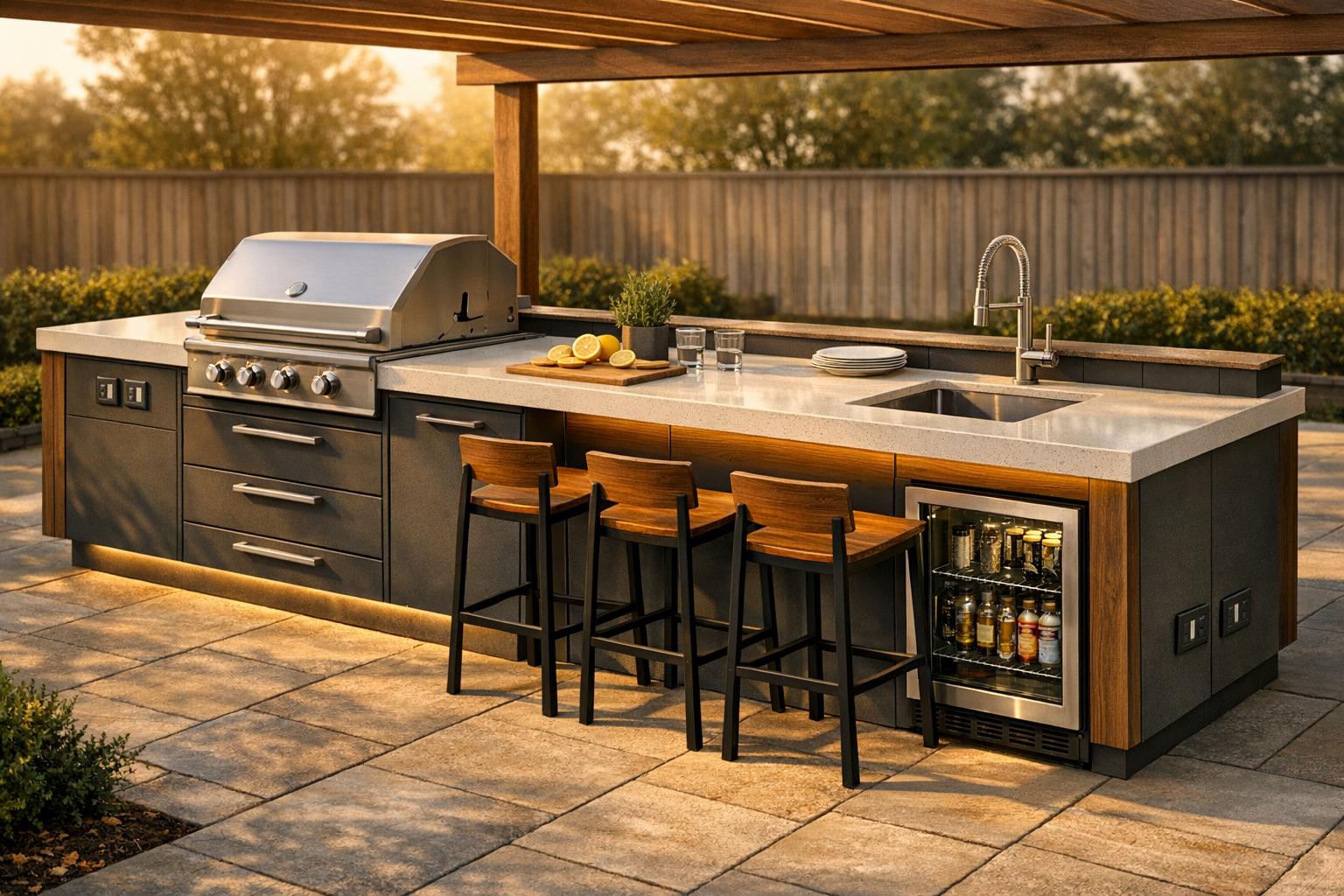
A custom outdoor kitchen island is a great way to expand your living space and make your backyard more functional for cooking, entertaining, and relaxing. Here are the seven key features you should consider when designing your outdoor kitchen:
- Built-in Grill and Cooking Station: Choose a durable, weather-resistant grill with proper insulation, ideally made from 304 stainless steel. Sizes range from 30–42 inches depending on your cooking needs.
- Island Structure and Countertops: Use materials like masonry block or poured concrete for durability. Granite and outdoor-rated porcelain are excellent countertop options for Maryland’s climate.
- Weather-Protected Storage: Opt for cabinets made from 304 or 316 stainless steel, powder-coated aluminum, or marine-grade polymer to withstand humidity and temperature changes.
- Adequate Counter Space: Plan for 10–12 linear feet of countertop space, divided into zones for cold storage, prep, and cooking.
- Refrigeration, Sink, and Utilities: Invest in outdoor-rated appliances and ensure proper gas, water, and electrical connections installed by licensed professionals.
- Shade, Shelter, and Lighting: Add a pergola or solid roof for protection and integrate lighting for functionality and ambiance.
- Seating and Social Layout: Incorporate built-in seating or divide the space into zones for cooking, dining, and relaxing.
These features ensure your outdoor kitchen is both practical and visually appealing, making it a central hub for gatherings and everyday use. Maryland homeowners can rely on experts like Pro Landscapes MD to handle design and construction tailored to local weather and regulations.
The Top 4 Ways to Build an Outdoor Grill Station
sbb-itb-843f8be
1. Built-in Grill and Cooking Station
The grill is the heart of any outdoor kitchen island. When choosing one, make sure it’s specifically designed for built-in installation. This means it should fit seamlessly into an island cutout while providing proper clearances and insulation to protect the surrounding stone or masonry.
For Maryland’s varying weather conditions, go with a grill made from 304 stainless steel – it’s known for its durability. Pay attention to details like heavy-gauge construction, welded seams, and burners made from cast stainless steel or brass. These features ensure your grill will hold up over time and provide reliable performance.
When evaluating grill performance, focus on BTU output, even heat distribution, dependable ignition, and precise control for low-temperature cooking. A grill size of 30–36 inches is usually sufficient for most families. However, if you enjoy hosting large gatherings, a 38–42 inch model might be a better fit. For extra functionality, consider options like an infrared sear burner or a built-in smoker box.
If you’re planning a permanent setup, natural gas is a great choice. A licensed professional can install the necessary gas line according to Maryland’s regulations. If a gas line isn’t an option, propane is a solid alternative – but make sure your island includes a ventilated compartment for safe tank storage.
Stainless steel finishes work beautifully with materials like stone veneer, paver patios, and natural stone countertops – popular choices for hardscaping in Maryland. A cohesive design not only boosts the functionality of your outdoor space but also enhances its overall aesthetic. Companies like Pro Landscapes MD specialize in integrating outdoor kitchen installations with broader hardscaping features, ensuring your grill station blends seamlessly with the rest of your backyard.
Finally, think about how the island’s structure and countertop materials will complement your built-in grill to create a well-rounded outdoor kitchen.
2. Island Structure and Countertop Materials
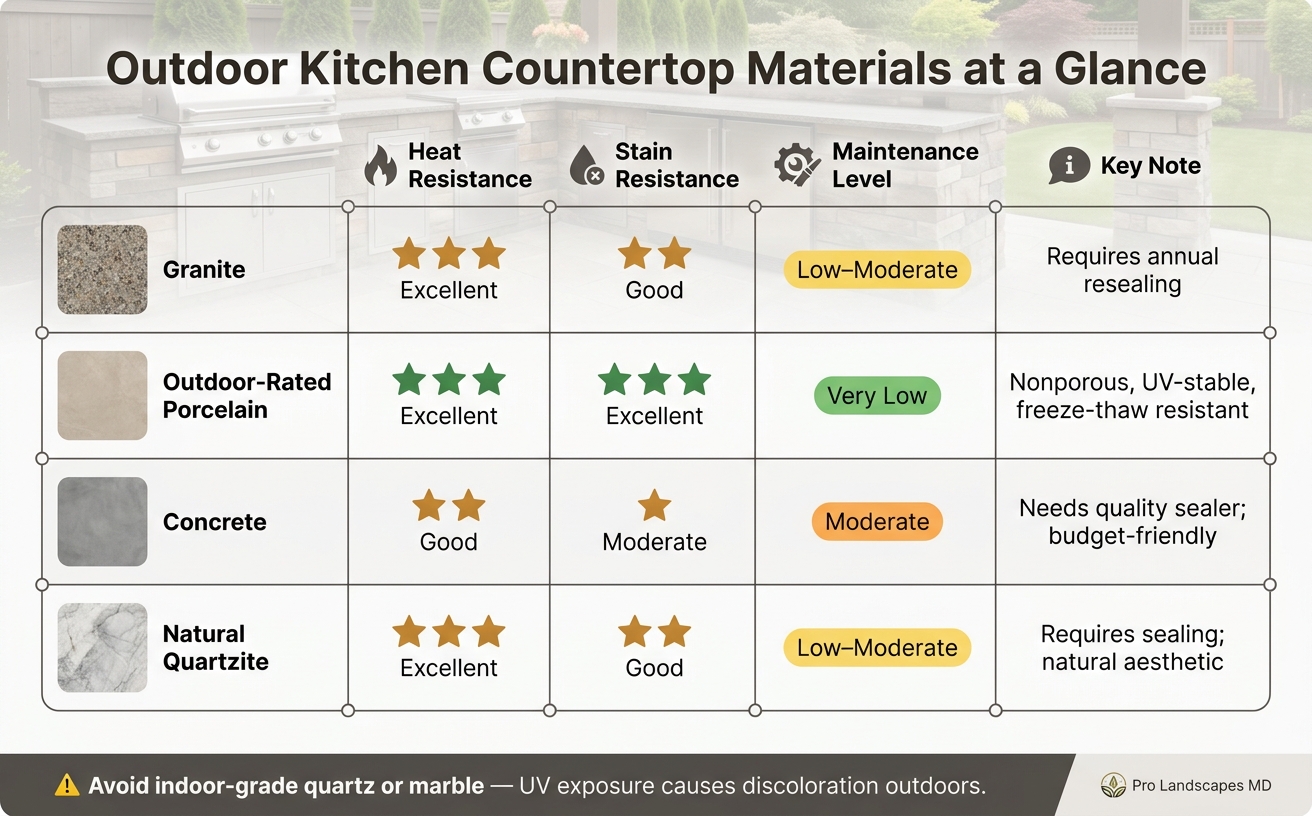
Outdoor Kitchen Countertop Materials Compared: Heat, Stain & Maintenance
When planning your outdoor kitchen in Maryland, your island’s frame must handle the state’s tough weather conditions. For the most durability, masonry block (concrete block/CMU) and poured concrete are your best bets. These materials resist moisture, insects, and fire, while also standing up to the temperature swings throughout the year. Steel framing with cement board sheathing is a lighter option, but it requires extra attention to corrosion protection, especially in humid areas. If you’re working with a tighter budget, pressure-treated wood is an option, but keep in mind it can warp, attract pests, and demand more upkeep. Once the frame is set, you can enhance the island’s appearance with an exterior finish that complements your space.
With the frame ready, it’s time to choose finishes that balance durability with aesthetic appeal. Stone veneer is a favorite in the Mid-Atlantic region for its natural look and texture, which pairs beautifully with outdoor kitchens and hardscape designs [1]. Brands like El Dorado Stone provide a premium stone-like appearance that works with various frame types, offering both flexibility and durability. If your home features traditional architecture or brick pathways, brick is another excellent choice for a cohesive design.
For countertops, durability, heat resistance, stain resistance, and low maintenance are key factors. Here’s a comparison of popular materials:
| Material | Heat Resistance | Stain Resistance | Maintenance |
|---|---|---|---|
| Granite | Excellent | Good (requires annual sealing) | Low–moderate |
| Outdoor-rated porcelain | Excellent | Excellent (nonporous) | Very low |
| Concrete | Good | Moderate (needs a quality sealer) | Moderate |
| Natural quartzite | Excellent | Good (requires sealing) | Low–moderate |
Granite is a reliable choice, capable of handling hot pans right off the grill and enduring Maryland’s freezing winters. However, it does need resealing about once a year. Outdoor-rated porcelain is another standout option – it’s nonporous, UV-stable, and handles freeze-thaw cycles with ease, making it one of the simplest materials to maintain. Steer clear of indoor-grade quartz or marble for outdoor use, as UV exposure and weather can cause discoloration and damage.
For a polished look, match your island’s materials to existing flagstone patios, paver walkways, or retaining walls. This unified design creates a seamless outdoor space and sets the stage for future features like built-in storage or appliance hookups.
3. Storage and Weather-Protected Cabinetry
Once you’ve got your island’s sturdy frame and stunning countertops in place, it’s time to think about storage. Having effective storage isn’t just about convenience – it keeps everything you need close by, so you’re not running in and out of the house during cookouts. Thoughtfully designed cabinetry can make all the difference.
For outdoor kitchens, only weather-rated cabinets can handle the elements. Indoor cabinets made from wood or MDF won’t stand a chance against rain or humidity – they’ll swell, warp, and break down in no time. Instead, choose materials like 304 or 316 stainless steel, powder-coated aluminum, or marine-grade polymer (HDPE). HDPE, for example, is completely waterproof and can handle extreme temperatures from -40°F to 140°F, making it perfect for Maryland’s humid summers and freeze-thaw winters. If you prefer stainless steel, go with 316-grade stainless, which contains 2–3% molybdenum for added corrosion resistance.
The design of the cabinetry is just as important as the materials. Look for features like gasketed doors, integrated drip edges, and raised legs or toe-kicks to keep water at bay and protect the cabinet interiors from moisture. Ventilation grilles are also a smart addition – they help reduce trapped moisture and prevent musty odors from building up over time.
When planning your storage, think about how you’ll use your island for cooking and entertaining. For a 7- to 12-foot island, aim to use 40–50% of the space below the counter for storage. Include a mix of options like a full-height cabinet, a drawer stack, and a pull-out bin for trash and recycling. A pull-out waste bin is especially helpful for keeping trash hidden and pests away. If you’re using gas appliances, don’t forget to include a ventilated access panel for easy servicing and to meet safety codes.
In Maryland’s four-season climate, cabinetry needs to work seamlessly with the surrounding hardscape for long-lasting performance. Pro Landscapes MD, for example, ensures that cabinetry bases are installed on properly graded, well-drained surfaces that align visually with patios and stone veneer. This integration not only enhances durability but also ties the whole outdoor space together beautifully.
4. Counter Space and Prep Zones
Counter space is the backbone of any functional outdoor kitchen. According to industry surveys, over 60% of homeowners adding outdoor kitchens prioritize extra counter space for prep and serving. This highlights how crucial layout planning is – right up there with choosing the right appliances.
For optimal functionality, aim for 24–36 inches of clear counter space next to the grill, 12–24 inches on the opposite side for serving, and 18–24 inches flanking the sink. If you’re designing a full island that includes a grill, sink, fridge, and serving area, experts suggest targeting 10–12 linear feet of countertop space – excluding any bar seating overhangs.
Divide the island into three main zones for maximum efficiency:
- Cold Zone: Near the refrigerator, ideal for storing ingredients and drinks.
- Wet Prep Zone: Positioned by the sink for washing and chopping.
- Hot Zone: Adjacent to the grill, perfect for staging and plating.
Arranging these zones in a logical flow – cold to wet to hot – reduces unnecessary movement and prevents cross-contamination between raw and cooked foods. For islands longer than 8–10 feet, consider adding a plating and serving zone at the far end. This keeps guests out of the cook’s way while maintaining a smooth workflow.
When it comes to countertop materials, select options that can handle Maryland’s climate. Here are some solid choices:
- Granite: Dense and sealed, it offers excellent durability and heat resistance.
- Porcelain or Sintered Stone: UV-stable and nonporous, making them great for outdoor use.
- Sealed Concrete: Durable but requires regular maintenance.
- Engineered Quartz: Best avoided for outdoor kitchens due to its sensitivity to prolonged sun exposure.
Don’t overlook the importance of finish texture. A honed or slightly textured surface provides better grip when counters are wet – whether from rain, humidity, or sink splashes. This detail isn’t just practical; it’s a safety feature, especially in the Mid-Atlantic’s variable weather. Builders like Pro Landscapes MD, serving Howard, Montgomery, and Baltimore counties, also recommend designing countertops with a slight slope to direct water away from the island. This prevents pooling on prep surfaces or against the structure.
5. Refrigeration, Sink, and Utility Connections
Once you’ve established your counter and prep areas, it’s time to add the essential utilities that will complete your outdoor kitchen. Incorporating outdoor-rated refrigeration, a durable sink, and properly installed gas and electrical connections transforms your setup from a simple grill station into a fully functional kitchen.
Stick to outdoor-rated refrigeration – indoor units aren’t built to handle the elements. Outdoor fridges are designed with weather-resistant 304-grade stainless steel, sealed backs, and powerful compressors to keep food at safe temperatures (35–42°F), even when outdoor temps soar to 90–100°F. Basic outdoor refrigerators cost between $500 and $800, while built-in models range from $1,000 to $2,500. For frequent entertaining, consider a 24-inch undercounter fridge paired with a beverage center. If you’re installing a built-in fridge, make sure it’s front-vented – enclosing a rear-vented unit can lead to overheating and may void the warranty.
Adding a sink made from 304 or 316 stainless steel, typically 15–21 inches wide, is a smart choice for handling prep and cleanup without taking up too much counter space. Position the sink between the fridge and grill for an efficient workflow. Placing it near the house wall can help minimize the distance for water and drain lines, which often reduces installation costs. Professional installation of water lines and drainage can range from a few hundred dollars to $1,000–$3,000+, depending on factors like distance and whether trenching is necessary. Make sure to consult a local plumber about drainage options, as requirements vary – your sink might need to connect to the home’s sewer line, a dry well, or a gray-water system, depending on local regulations in Maryland and the DC area.
Gas and electrical lines should always be installed by licensed professionals. For gas, you can choose between hard-piped natural gas or a buried propane system, ensuring there are accessible shutoff valves. Electrical circuits must be GFCI-protected and sized to handle the total load for your appliances, including the refrigerator, ice maker, lighting, and outlets for smaller devices.
6. Shade, Shelter, and Lighting
Maryland summers bring intense heat, high humidity, and the occasional sudden thunderstorm. Without proper shade or cover, even the most well-equipped outdoor kitchen can feel less inviting during certain times of the year. A pergola can be a great solution – it anchors the cooking area, provides some much-needed shade, and doubles as a frame for adding lighting and ceiling fans. Given Maryland’s climate, it’s smart to opt for stone or composite materials instead of wood, as wood tends to warp and deteriorate in the heat and humidity. Plus, stone and composite materials are easier to maintain, making them a practical choice.
For full rain protection, consider installing a solid roof, like a covered patio or an attached pavilion. Alternatively, you could use a pergola with a retractable canopy for flexibility.
Lighting is another key element that can elevate your outdoor setup. It’s not just about functionality; lighting creates atmosphere too. Popular choices include under-counter LED strips for subtle illumination, pendant lights for style, and recessed fixtures for a clean look. Smart lighting systems are particularly handy – you can control them right from your phone and program them to adjust automatically at sunset. This way, you’ll have bright task lighting over the grill and softer, more relaxed lighting for your dining area during those late-night summer cookouts.
7. Seating, Dining, and Social Layout
Creating a seating arrangement that connects guests to the cooking action – without making the space feel cramped – is key to a welcoming outdoor kitchen. The idea is to design a natural flow where guests feel like active participants in the gathering, not just spectators. To achieve this, integrated seating options can add both style and practicality to your outdoor island.
Built-in seat walls are an excellent choice for this purpose. Made from materials like natural stone, brick, or concrete blocks, these walls add a polished look while requiring less maintenance than traditional patio furniture. If your property has slopes, terraced seat walls that double as retaining walls can provide elevated seating and make the most of uneven terrain.
Divide your outdoor area into zones to balance functionality and aesthetics. Think of it as creating "outdoor rooms" – a cooking zone, a dining zone, and a relaxing zone. This layout keeps the kitchen as the heart of the space while giving each activity its own defined area. For instance, placing a fire pit near the dining zone offers a cozy spot for post-meal gatherings and can make the space usable during cooler months. Using durable materials for these zones ensures they’ll stand up to the elements while maintaining their appeal.
When it comes to dining surfaces, materials matter. Composite decking and natural stone are great options for Maryland’s climate, as they resist warping and fading. To handle summer storms, consider permeable pavers that let water seep through, preventing pooling in dining areas. Proper drainage is crucial to keep your outdoor space functional and safe, no matter the weather.
This thoughtful seating and layout design ties everything together, blending functionality with a stylish, social vibe.
Conclusion
A custom outdoor kitchen island can turn your backyard into a practical and inviting space. Features like built-in grills, weather-resistant cabinets, and integrated seating come together to create a well-designed, efficient outdoor kitchen. Every detail is planned to balance functionality with style.
By combining durable materials with thoughtful design, your outdoor kitchen becomes a seamless extension of your home. Matching the island to your existing hardscape ensures a unified look, while proper grading, drainage, and retaining walls protect your utilities and enhance the overall layout.
Thinking about making this dream a reality? Maryland homeowners can rely on Pro Landscapes MD to design and build a custom outdoor kitchen that fits your property’s specific needs.
"We work closely with you to ensure your hardscaping project meets your vision, budget, and timeline." – Pro Landscapes MD
From Howard County to Montgomery County, Baltimore County, and nearby areas, Pro Landscapes MD is ready to create an outdoor kitchen designed for lasting use and beauty.
FAQs
What’s the best grill fuel for my outdoor kitchen – natural gas or propane?
Deciding whether to go with natural gas or propane often comes down to your specific setup and what’s most convenient for you. If you’re someone who grills often, natural gas might be the better fit since it offers a steady, uninterrupted fuel supply – no need to worry about swapping out tanks. On the flip side, propane is portable, giving you the freedom to place your grill wherever you like without being tied to a fixed gas line. Pro Landscapes MD can easily integrate either option into a custom outdoor kitchen design that perfectly suits your space.
What countertop material is best for Maryland weather?
For outdoor kitchen islands in Maryland, natural stone and premium concrete products stand out as top picks. These materials are built to handle the area’s shifting seasonal weather without compromising durability. Pro Landscapes MD suggests natural stone for a classic, elegant appearance or engineered options like Techo-Bloc, which offers both resilience and flexibility in design. These choices ensure your countertops stay both practical and visually appealing throughout the year.
What permits or utility hookups will my outdoor kitchen island need?
When planning a custom outdoor kitchen island, it’s important to account for local rules and infrastructure needs. Permit requirements and utility connections can differ depending on where you live. To avoid any issues, reach out to your local building authorities or consult a landscaping professional. This step ensures your project complies with all zoning laws and safety standards in your area.
Chat with Us