









- bhavya gada
- No Comments
Maryland homeowners face increasing drainage challenges due to intense rainfall, outdated systems in pre-2000 homes, and strict state regulations aimed at protecting waterways like the Chesapeake Bay. Upgrading drainage systems is crucial to prevent property damage, comply with environmental rules, and reduce flooding risks. Here’s a quick guide to the most effective drainage retrofits:
- Under-Deck Drainage Systems: Channels water away from decks, protecting foundations and adhering to stormwater regulations.
- Permeable Pavers: Allow water to seep through, reducing runoff and pollution while enhancing driveways and patios.
- French Drains: Redirect water from problem areas like basements or yards, preventing flooding and erosion.
- Rain Gardens: Use native plants to absorb and filter runoff, combining functionality with visual appeal.
- Dry Riverbeds & Grading: Mimic natural streams to guide water flow while preventing erosion.
- Retaining Walls: Stabilize slopes and manage runoff with proper drainage integration.
- Rain Barrels & Shade Trees: Collect rainwater and reduce runoff while improving outdoor spaces.
Each solution balances compliance with Maryland’s stormwater laws and long-term property protection. Acting now ensures adherence to current regulations before stricter rules take effect in 2028.
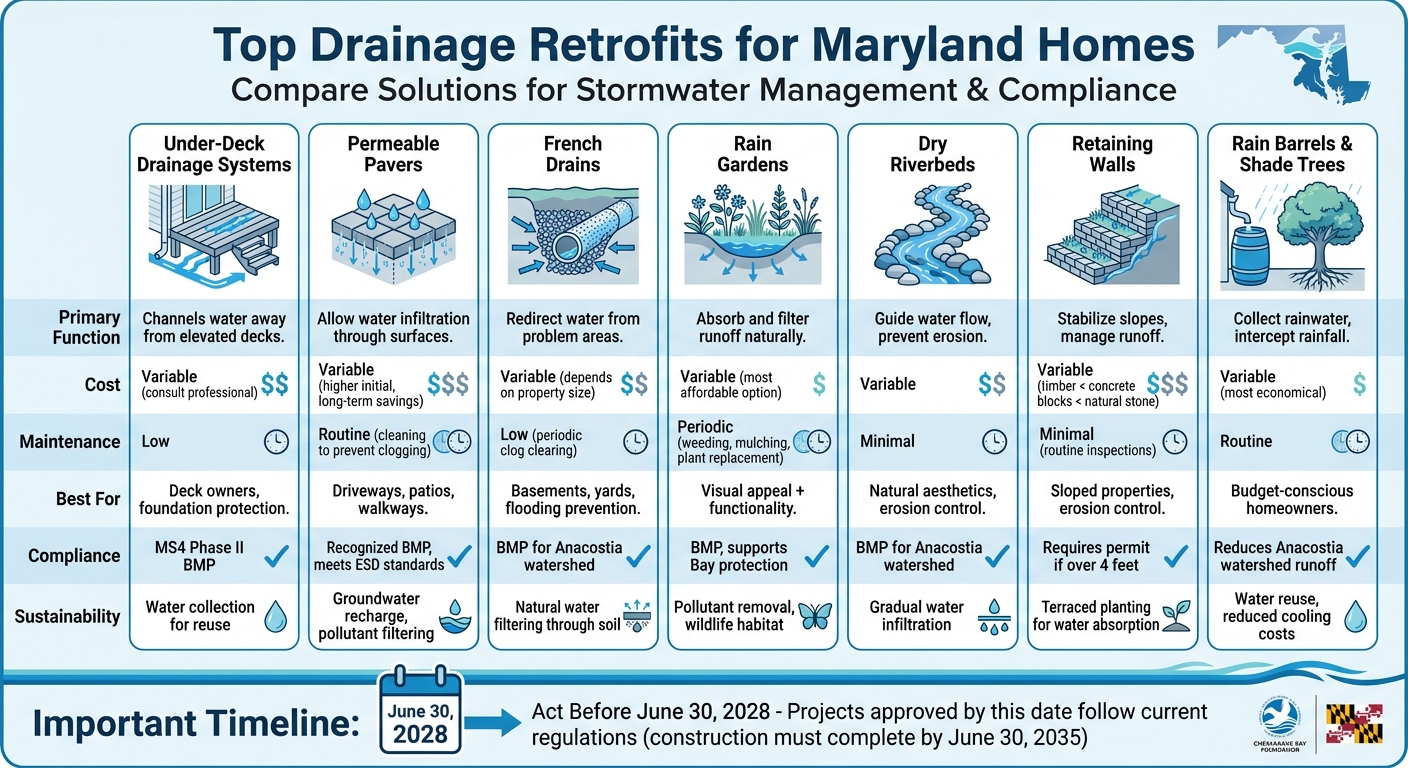
Maryland Drainage Retrofit Solutions Comparison Guide
Riding Out the Storm(water): Sensible Stormwater Solutions for Local Road Projects
sbb-itb-843f8be
1. Under-Deck Drainage Systems
Under-deck drainage systems are designed to channel rainwater away from elevated decks, protecting your foundation and nearby waterways. They work by installing channels beneath deck boards to direct water toward specific outlets, such as downspouts, French drains, or rain barrels.
Effectiveness in Stormwater Management
In Maryland, deck surfaces are often classified as impervious or semi-impervious areas that require stormwater management under the MS4 Phase II General Permit. By capturing runoff, under-deck drainage systems act as a Best Management Practice (BMP), helping homeowners comply with state regulations while protecting sensitive waterways, such as those in the Anacostia watershed. These systems also prevent illegal storm drain discharges and reduce the erosion that can occur when water flows unchecked from elevated decks [1].
Cost and Affordability
The cost of installing an under-deck drainage system depends on the size of the deck and the materials used. However, these systems offer long-term benefits by protecting your home’s foundation and increasing its value. Many Maryland jurisdictions now use GIS mapping to identify impervious surfaces and streamline permitting processes, ensuring that retrofits meet local compliance standards. With regular maintenance – like clearing debris – these systems remain effective without requiring significant additional expenses. Plus, they encourage sustainable water management practices [1].
Environmental Sustainability
Under-deck drainage systems can also contribute to water conservation efforts. By funneling stormwater into rain barrels or cisterns, they reduce the need for potable water in tasks like irrigation or outdoor cleaning. This approach not only helps homeowners meet regulatory requirements but also supports environmental efforts, particularly in areas like the Anacostia watershed, where pollution control is a high priority [1].
2. Permeable Pavers and Pavement
Permeable pavers provide a smart alternative for Maryland homeowners looking to replace traditional concrete or asphalt surfaces while staying compliant with stormwater regulations. Unlike standard solid pavement, these pavers allow rainwater to seep through small gaps, reducing runoff into storm drains and nearby waterways. They’re commonly used for driveways, patios, walkways, and parking areas where water absorption is key. This practical design not only meets regulatory standards but also plays an important role in managing stormwater effectively.
Effectiveness in Stormwater Management
Permeable pavement is recognized as a Best Management Practice (BMP) under Maryland’s environmental guidelines, especially for properties in sensitive areas like the Anacostia Watershed. Maryland’s MS4 Phase II General Permit oversees stormwater runoff from surfaces such as roads, rooftops, and parking lots that connect to storm drain systems [1]. By swapping out impervious surfaces for permeable options, homeowners can significantly cut down on the amount of runoff contributing to downstream pollution. Local governments often use GIS mapping to identify areas where retrofits are most needed.
Cost and Affordability
While the initial costs of permeable pavers are higher, they offer long-term benefits, including improved compliance with regulations and reduced strain on drainage systems. By using these pavers, homeowners can avoid potential fines or expensive retrofits tied to non-compliance. However, these systems do require regular upkeep – like inspections and cleaning – to prevent clogging and ensure they continue working as intended.
Aesthetic Appeal and Integration with Landscaping
Permeable pavers come in a variety of colors, textures, and patterns, making it easy to match them with existing landscaping. They work well with features like flagstone patios, paver walkways, and garden walls, offering both functionality and visual charm. This blend of utility and design reflects Maryland’s strong focus on environmental responsibility, allowing homeowners to boost curb appeal while effectively managing stormwater.
Environmental Sustainability
Beyond their drainage and aesthetic advantages, permeable pavers help water soak naturally into the ground, replenishing groundwater supplies and filtering out pollutants before they reach vulnerable waterways. This aligns with Maryland’s broader goals to reduce the environmental effects of runoff through robust stormwater management efforts. Installing permeable pavers not only fulfills regulatory requirements but also supports sustainable practices that protect ecosystems such as the Chesapeake Bay and its tributaries.
3. French Drains and Drain Pipe Placement
French drains are an essential part of Maryland’s strategy for managing stormwater and reducing flood risks. These systems rely on perforated pipes installed in gravel-filled trenches to collect and redirect water away from areas like foundations, yards, or other spots prone to flooding. They help tackle common problems such as standing water, basement leaks, and overly saturated soil. Proper placement of these drain pipes is crucial and often guided by mapping impervious surfaces like rooftops and driveways. This mapping identifies where water tends to collect, ensuring the drains are positioned for maximum effectiveness. These systems often work alongside other drainage methods to handle water buildup in vulnerable areas effectively.
Effectiveness in Stormwater Management
French drains are classified as a Best Management Practice (BMP) under Maryland’s environmental guidelines, particularly in sensitive areas like the Anacostia watershed. By intercepting and redirecting runoff, these systems not only prevent issues like standing water and basement flooding but also help reduce pollution, protecting downstream ecosystems. On residential properties, French drains ease the strain on municipal stormwater systems while keeping outdoor spaces usable and dry.
Cost and Affordability
The cost of installing a French drain depends on factors like the size of the property and the complexity of the system. However, they provide long-term savings by preventing water damage that could lead to expensive repairs. Regular maintenance, such as clearing clogs, is necessary to ensure the system operates smoothly and avoids costly breakdowns.
Environmental Sustainability
French drains also support broader environmental goals by filtering water through the soil, which helps remove pollutants before the water flows into local streams and rivers. This makes them a practical choice for sustainable stormwater management and contributes to efforts aimed at protecting the environment.
4. Rain Gardens and Bayscaping
Rain gardens and bayscaping take traditional drainage solutions to the next level by blending functionality with natural beauty. These eco-friendly approaches are designed to manage runoff while enhancing outdoor spaces. A rain garden is essentially a shallow, planted basin that captures and absorbs runoff from surfaces like rooftops, driveways, and parking lots. By using native plants and thoughtful design, these gardens naturally filter water before it flows into nearby tributaries. Bayscaping, on the other hand, focuses on landscaping techniques that minimize pollutants and control water flow, ultimately benefiting the Chesapeake Bay.
Effectiveness in Stormwater Management
Rain gardens and bayscaping are recognized as Best Management Practices (BMPs) under Maryland’s environmental standards, making them a powerful tool for protecting waterways like the Anacostia Watershed. These systems work by capturing runoff before it enters storm drains, allowing the water to soak into the ground where pollutants – like pesticides, sediments, and excess nutrients – are naturally filtered out. For instance, the University of Maryland, located within the Anacostia Watershed, has implemented over 100 stormwater control structures to manage runoff from its campus, which is discharged into three local tributaries [1].
Cost and Affordability
One of the advantages of rain gardens is their affordability compared to more complex, hardscaped drainage systems. Since they rely on plants, soil, and minimal excavation, costs are generally lower. The main expenses include preparing the site, purchasing native plants, and applying mulch. Maintenance is straightforward but necessary – think weeding, mulching, and occasionally replacing plants. Maryland institutions also ensure proper performance by regularly inspecting and cleaning their stormwater control systems.
Aesthetic Appeal and Integration with Landscaping
Rain gardens do more than just manage water – they add a splash of natural beauty to any property. With vibrant native plants and grasses, these gardens can be tailored to enhance existing landscapes. Homeowners can even select plants that bloom at different times of the year, ensuring the garden remains visually appealing year-round. Organizations like the Chesapeake Bay Foundation and the Anacostia Watershed Society provide helpful resources on choosing the right native species and making landscaping decisions that positively impact water quality. The result is a functional yet visually pleasing addition to your outdoor space.
Environmental Sustainability
Rain gardens go beyond stormwater management by addressing broader environmental challenges. They reduce the amount of runoff entering municipal systems and filter out pollutants before they can harm downstream ecosystems. By favoring native plants, these gardens require less water and upkeep than traditional lawns while providing vital habitats for pollinators and other wildlife. This dual benefit – effective stormwater control and support for local biodiversity – makes rain gardens a smart choice for anyone looking to protect their property from flooding while contributing to a healthier environment.
5. Dry Riverbeds and Grading Solutions
Dry riverbeds are a smart way to combine practical drainage with natural beauty, making them a popular choice for Maryland homeowners dealing with water flow problems. Designed to mimic natural streambeds, they use carefully placed rocks and gravel to guide stormwater away from areas prone to flooding or erosion. When paired with proper grading – reshaping the slope of your yard to direct water flow – they become a powerful tool for both immediate and long-term water management. Just like rain gardens, dry riverbeds blend into your landscaping while improving drainage efficiency.
Effectiveness in Stormwater Management
In Maryland, dry riverbeds are recognized as a Best Management Practice (BMP) for handling stormwater runoff. They’re especially effective in areas like the Anacostia Watershed, where managing runoff from impervious surfaces is critical to protecting water quality [1]. By carving out a clear path for water, these features help control erosion, minimize pooling, and encourage gradual water infiltration into the ground. When combined with grading, which redirects water away from your home’s foundation, dry riverbeds ensure water flows safely and efficiently.
Aesthetic Appeal and Integration with Landscaping
Dry riverbeds don’t just solve drainage problems – they can also elevate the look of your outdoor space. The arrangement of natural stones creates a striking focal point, even when the riverbed is dry. During rain, the sight and sound of flowing water add a dynamic element to your yard. For an even more cohesive look, homeowners can plant native species that thrive in wet conditions, seamlessly integrating the riverbed into their landscaping.
Environmental Sustainability
These solutions also align with Maryland’s environmental standards, emphasizing sustainable practices. As noted by the University of Maryland Environmental Safety, Sustainability and Risk:
Each permit imposes specific discharge limits and requires the implementation of Best Management Practices (BMPs) to control pollution and safeguard water quality [1].
6. Retaining Walls for Erosion Control
Retaining walls serve a dual purpose in Maryland yards: they stabilize slopes and help manage stormwater runoff. By creating level terraces, these walls effectively redirect water flow and slow its velocity, protecting both your home’s foundation and your landscaping from water damage.
Effectiveness in Stormwater Management
A well-designed retaining wall depends on proper drainage. Without it, hydrostatic pressure can build up and compromise the wall’s structure. To prevent this, essential features like gravel backfill, filter fabric, and weep holes are used to channel water away and reduce pressure. In Maryland, any retaining wall over 4 feet tall typically requires a building permit and professional engineering plans to ensure it meets safety and structural standards. This careful planning not only prevents future issues but also ensures a durable and efficient installation.
Cost and Affordability
The material you choose greatly influences both the upfront cost and the wall’s longevity. For instance:
- Pressure-treated timber is more affordable but doesn’t last as long.
- Interlocking concrete blocks strike a balance between cost and durability.
- Natural stone offers unmatched durability and aesthetic appeal but comes with a higher price tag.
No matter the material, skimping on drainage or backfill can lead to expensive repairs down the road. Investing in proper drainage components upfront saves money and headaches later.
Aesthetic Appeal and Integration with Landscaping
Beyond their functional benefits, retaining walls can enhance the overall appearance of your yard. By choosing materials that complement Maryland’s architectural styles, these walls can blend seamlessly into your property. Terraced designs are particularly appealing, as they create space for planting beds at different levels. This not only adds visual depth but also improves water absorption, making sloped yards more practical and attractive.
Environmental Sustainability
Retaining walls also align with Maryland’s environmental standards. State regulations emphasize stormwater management practices that protect water quality, especially in sensitive areas. As noted by the University of Maryland Environmental Safety, Sustainability and Risk:
Best Management Practices (BMPs) [are used] to control pollution and safeguard water quality [1].
When designing your retaining wall, consider using GIS mapping to locate impervious surfaces and determine the best placement for erosion control. Routine maintenance, such as inspections and cleaning, ensures the wall remains effective and compliant with regulations. Like other stormwater management solutions, retaining walls are an essential tool for protecting Maryland homes from erosion while supporting sustainable landscaping.
7. Rain Barrels and Shade Trees
Rain barrels and shade trees are cost-effective options for Maryland homeowners looking to manage water runoff while meeting environmental guidelines.
Effectiveness in Stormwater Management
Rain barrels are designed to collect rainwater directly from rooftops, cutting down the amount of stormwater that flows into sensitive waterways like the Anacostia Watershed. By reducing runoff, these barrels help Maryland homeowners align with regulatory standards and serve as practical tools to limit pollution [1].
Shade trees complement this effort by intercepting rainfall before it even hits the ground. Their leafy canopies slow the flow of water, while their roots soak up moisture and further reduce runoff. This combination of water capture and natural absorption offers a powerful, layered solution to stormwater management that mechanical systems alone can’t replicate. Together, rain barrels and shade trees create a cohesive strategy for managing water on your property.
Cost and Affordability
Rain barrels are one of the most economical drainage solutions available. They’re easy to install – requiring just a downspout diverter and a sturdy base – and can help lower utility bills by reducing the need for treated water. Shade trees, while having a higher initial cost, offer long-term savings by helping to manage water runoff and reducing cooling expenses during Maryland’s hot summers. With routine maintenance, both options remain effective over time [1]. Beyond their affordability, they also provide meaningful environmental benefits.
Environmental Sustainability
Rain barrels and shade trees align perfectly with Maryland’s focus on sustainable water management. Capturing stormwater for non-potable uses is a growing priority at local and regional levels [1]. These solutions not only reduce runoff but also improve soil quality, support local ecosystems, and enhance biodiversity. By installing rain barrels and planting native shade trees, homeowners contribute to a healthier environment while boosting the resilience and vitality of their landscapes. Together, these retrofits offer a practical and eco-friendly approach to managing stormwater as part of a larger drainage strategy.
8. Pro Landscapes MD Drainage Retrofit Services

Pro Landscapes MD offers drainage retrofits like French drains, dry riverbeds, grading, and drainage repair to tackle water-related issues for properties in central Maryland.
Effectiveness in Stormwater Management
Pro Landscapes MD begins each project with a thorough assessment, analyzing water flow during heavy rainfall to pinpoint trouble spots like pooling driveways, eroded slopes, or blocked drains [2]. Their solutions focus on Low Impact Development (LID) techniques to manage rainwater directly on-site. The team is well-versed in Maryland Department of the Environment (MDE) and local county regulations, ensuring all projects meet required standards [2]. They also upgrade outdated systems, transforming dry detention basins into wet ponds or bioretention areas. To maintain functionality, they conduct biannual inspections to remove debris and keep drainage pathways clear [2].
Cost and Affordability
Designed to last 30 to 40 years with proper upkeep, these systems help prevent expensive problems like foundation damage, mold, and landscape erosion. Homeowners may even qualify for state or county stormwater grants, reducing out-of-pocket expenses [2][4]. Costs depend on factors such as drain depth, soil type, yard access, and permit requirements [4]. For those tackling multiple projects, bundling services can help lower labor and mobilization costs [4].
Aesthetic Appeal and Integration with Landscaping
Pro Landscapes MD ensures that drainage solutions complement the property’s existing landscape. French drains, for instance, are topped with decorative stone, while swales may feature vegetation or crushed stone for a natural look. Trench drains are customized with a variety of grate materials [4]. Additional features like retaining walls and regrading not only prevent soil and mulch erosion but also maintain the property’s curb appeal. Functional elements like rain gardens and dry wells are designed to enhance the landscape’s overall appearance while managing water effectively [4].
Environmental Sustainability
Pro Landscapes MD prioritizes eco-friendly practices by incorporating dry wells and rain gardens that replenish the groundwater table gradually [4]. Their drainage systems also help protect the Chesapeake Bay by filtering pollutants like trash, oil, and sediment from runoff before it reaches local waterways, including Antietam and Conococheague Creeks [3]. To further support the environment, they plant Maryland-native species such as switchgrass, black-eyed Susans, and red osier dogwood, which stabilize soil and improve water absorption [2]. Additionally, using permeable pavers to reduce impervious surfaces can help homeowners save on municipal stormwater fees. For example, in Hagerstown, the fee is $36 per 1,000 square feet of impervious area annually [3].
Cost Comparison Table
When choosing a retrofit, consider your budget, property needs, and the level of upkeep you’re prepared for. The table below outlines several options, summarizing their costs, maintenance demands, and performance benefits. (Note: Actual costs and maintenance requirements may vary. For personalized estimates, reach out to Pro Landscapes MD.)
| Drainage Retrofit | Cost | Maintenance Requirements | Performance & Compliance |
|---|---|---|---|
| Under-Deck Drainage Systems | Variable; consult Pro Landscapes MD | Low maintenance | Prevents water damage beneath decks |
| Permeable Pavers | Variable; consult Pro Landscapes MD | Routine maintenance | Meets updated ESD standards [5] |
| French Drains | Variable; consult Pro Landscapes MD | Low maintenance | Redirects groundwater effectively |
| Rain Gardens | Variable; consult Pro Landscapes MD | Periodic upkeep | Filters runoff and helps manage stormwater [5] |
| Dry Riverbeds | Variable; consult Pro Landscapes MD | Minimal maintenance | Combines functionality with visual appeal |
| Retaining Walls | Variable; consult Pro Landscapes MD | Minimal maintenance | Controls erosion on slopes |
| Rain Barrels & Shade Trees | Variable; consult Pro Landscapes MD | Routine maintenance | Reduces runoff and enhances the landscape |
This table serves as a starting point for planning your retrofit upgrade.
Maryland’s updated stormwater regulations now require strategies to handle more intense, shorter-duration storms. Because of this, advanced Environmental Site Design (ESD) techniques have become increasingly important [5].
The NAIOP Maryland Chapter explains:
The proposed rules would significantly increase the cost of compliance and reduce buildable area [5].
Incorporating ESD features like permeable pavers or rain gardens not only ensures compliance with the Maryland Department of Environment (MDE) standards but also plays a critical role in managing stormwater effectively and sustainably.
Conclusion
Drainage retrofits are a practical way to reduce flooding, prevent erosion, and meet Maryland’s stormwater regulations. Since the Maryland General Assembly updated flood control standards in 2021 to reflect recent rainfall patterns, homeowners now face stricter rules for handling intense storms [5]. Solutions like French drains, permeable pavers, rain gardens, or retaining walls not only address these issues but also help safeguard your property.
The Maryland Department of the Environment emphasizes Environmental Site Design (ESD) methods for managing water quality and controlling flooding [5]. These techniques align with Maryland’s updated standards, and professional installation ensures compliance with the Maryland Stormwater Design Manual while addressing your property’s unique runoff conditions [5].
Timing is critical for drainage upgrades. Projects approved by June 30, 2028, can adhere to current regulations, provided construction is completed by June 30, 2035 [5]. Waiting could mean stricter rules and higher costs. Acting now ensures compliance and helps avoid potential complications. To meet these deadlines effectively, expert guidance is invaluable.
Pro Landscapes MD offers tailored drainage solutions throughout central Maryland, including Howard, Montgomery, Carroll, Frederick, Prince George’s, and Baltimore counties. Their expertise spans drainage installation, French drains, grading, stormwater management, and environmental pavers, ensuring both compliance and long-term durability.
For professional advice, visit Pro Landscapes MD to schedule a drainage assessment. Their team will review your property and recommend solutions that balance regulatory requirements with lasting flood protection.
FAQs
What is the best drainage retrofit for my yard’s water problem?
The best drainage solution for your yard depends on the specific problem – whether it’s flooding, standing water, or inefficient drainage. Getting a professional evaluation is key to identifying the right fix. Pro Landscapes MD offers solutions such as French drains, dry riverbeds, proper grading, and yard leveling to tackle a range of water-related issues effectively.
Do I need a permit for drainage work in Maryland?
In Maryland, some drainage projects do require permits. For instance, if you’re installing or altering stormwater discharges related to construction work, you’ll need a general stormwater permit from the Maryland Department of the Environment. Similarly, any work involving water supply or sewer systems will require water and sewerage construction permits. Be sure to review local regulations to stay compliant with these requirements.
How do I maintain these drainage upgrades so they keep working?
To keep drainage upgrades in good shape, make it a habit to check drains and pipes for blockages or debris. Clear away leaves, dirt, or anything else that might clog the system. Also, ensure the grading is correct to stop water from pooling where it shouldn’t. Watch for signs like erosion or standing water – these can signal problems that need quick attention. Regular upkeep ensures your drainage system stays efficient at handling stormwater and helps lower the risk of flooding.
Chat with Us