









- bhavya gada
- No Comments
If water keeps cutting across your slope after every storm, a dry riverbed can give that runoff a set path and help stop more soil loss. On many Maryland yards, clay soil sheds water instead of soaking it in, especially on hills. That often leads to washed-out mulch, exposed roots, small ruts, and water moving toward patios, driveways, or the house.
Here’s the short version:
- A dry riverbed moves surface runoff through a rock-lined channel
- Rock slows the water down and helps limit scouring
- Plants on the banks hold soil with their roots
- Good grading and a safe outlet matter just as much as the stone
- Wet soil that stays soggy for days may mean you also need subsurface drainage
- Storm checks are simple but important: look for silt, shifted rock, blockages, and overtopping
A few numbers from the article stand out:
- Channel depth is often 4 to 12 inches
- A common shape rule is a 2:1 width-to-depth ratio
- Stone often includes 1–3 inch river rock, plus larger cobble or boulders at bends and outlets
If I boil it down even more, the system works best when water control and soil holding work together. The channel handles runoff. The planting along the edges helps keep the slope from washing out again.
Understanding Slope Drainage and Soil Erosion Problems
How Runoff Forms on Steep Grades and Compacted Soils
On steep Maryland slopes, clay-heavy, compacted soil slows infiltration during heavy rain. Instead of soaking into the ground, water moves downhill across the surface [1][2].
On a mild slope, that runoff might not do much damage. On steeper grades, though, it picks up speed and starts to gather in narrow paths. That concentrated flow can cut through mulch beds and topsoil, leaving behind small channels that get worse after each storm [2][3].
Signs That a Slope Is Losing Stability
A hard rain usually makes the problem easy to spot. One of the clearest warning signs is exposed plant roots. That means moving water has already carried away the topsoil around them, and the soil is no longer holding things in place well enough [2].
Other signs show up fast too:
- Mulch washing into the lawn
- Fine silt collecting at the bottom of the hill
- Soft, wet spots that linger after rain
- Ruts or new channels showing up after storms [2][3]
Pooling water near a patio, walkway, or foundation is another red flag. Water sitting there can weaken the base under hardscape surfaces and lead to bigger problems over time [2][3]. If you’re seeing fresh channels after each storm, the slope is already starting to give way. At that point, the next move is to redirect runoff before those channels dig in deeper.
Why Managing Stormwater Responsibly Matters in Maryland
Slope erosion doesn’t stop at the edge of your yard. When soil washes off a residential property, that sediment can end up in storm drains and local waterways. Unmanaged runoff is exactly what dry riverbeds and plant roots are meant to slow and contain [2].
These runoff patterns are what dry riverbeds are designed to control. That is where dry riverbeds start doing the work.
sbb-itb-843f8be
How Dry Riverbeds Control Water and Reduce Erosion
What a Dry Riverbed Does on a Landscaped Slope
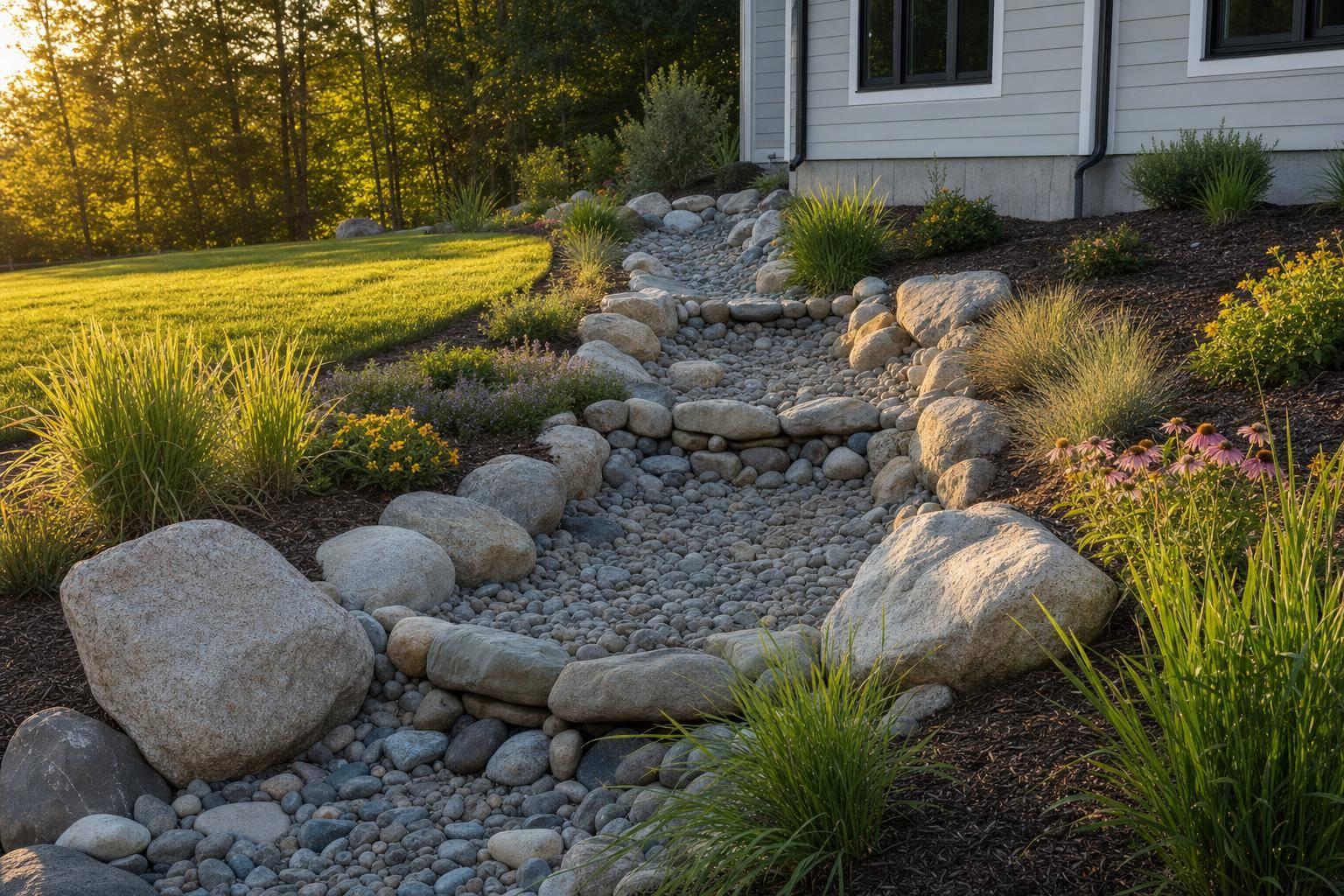
A dry riverbed guides runoff through a stable, rock-lined channel cut into the slope. Instead of letting water find its own path and dig new gullies after every storm, the channel moves that runoff through one set route and slows it as it travels to a safe outlet, like a lower drainage area or swale. In Maryland, where clay-heavy soils tend to shed water rather than soak it in, that clear path helps stop surface flow from washing away topsoil again and again [2][1].
The channel gives water a safe place to go, while nearby vegetation helps hold the surrounding soil in place. From there, the channel needs the right grade and planting so it can steady the slope while still draining it.
How Rock, Grade, and Channel Shape Slow Water Safely
The stone inside the channel isn’t there just for looks. A layered mix of 1–3" river rock combined with larger cobble and boulders adds friction, which slows runoff and cuts down erosion. That helps limit scour along the channel edges and protects the soil nearby. Larger stones placed at bends and at the discharge point work like energy breakers. They take the force of moving water so the surrounding soil doesn’t have to [2][1].
The shape of the channel matters just as much. A curved path that follows the contour of the slope slows water better than a straight shot downhill. A common sizing rule is a 2:1 width-to-depth ratio. So, if the trench is 12 inches deep, it should be at least 24 inches wide [4].
That shape and stone mix help slow the flow, but they aren’t the whole story. The channel still needs proper grading and plant cover to keep the slope from slipping or washing out.
When Dry Riverbeds Work Best and When Added Drainage Is Needed
Dry riverbeds are built to manage surface runoff and erosion on slopes. Subsurface drains deal with groundwater and standing water. If a yard stays soggy for days after rain or sits over a high water table, a dry riverbed by itself won’t solve the problem [5][2].
The best setup depends on how water moves across and through the slope. For most eroding slopes, a properly graded dry riverbed is the right place to start. Once the drainage path is set, the next step is shaping the subgrade and using vegetation to lock the channel in place.
Dry Creek Bed Design, Drainage and Calculations 🔨 Dry Creek Bed (The Complete Scope!)
Building a Stable System: Grading, Materials, and Vegetation
How to Build a Dry Riverbed for Slope Drainage
Shaping the Channel and Preparing the Subgrade
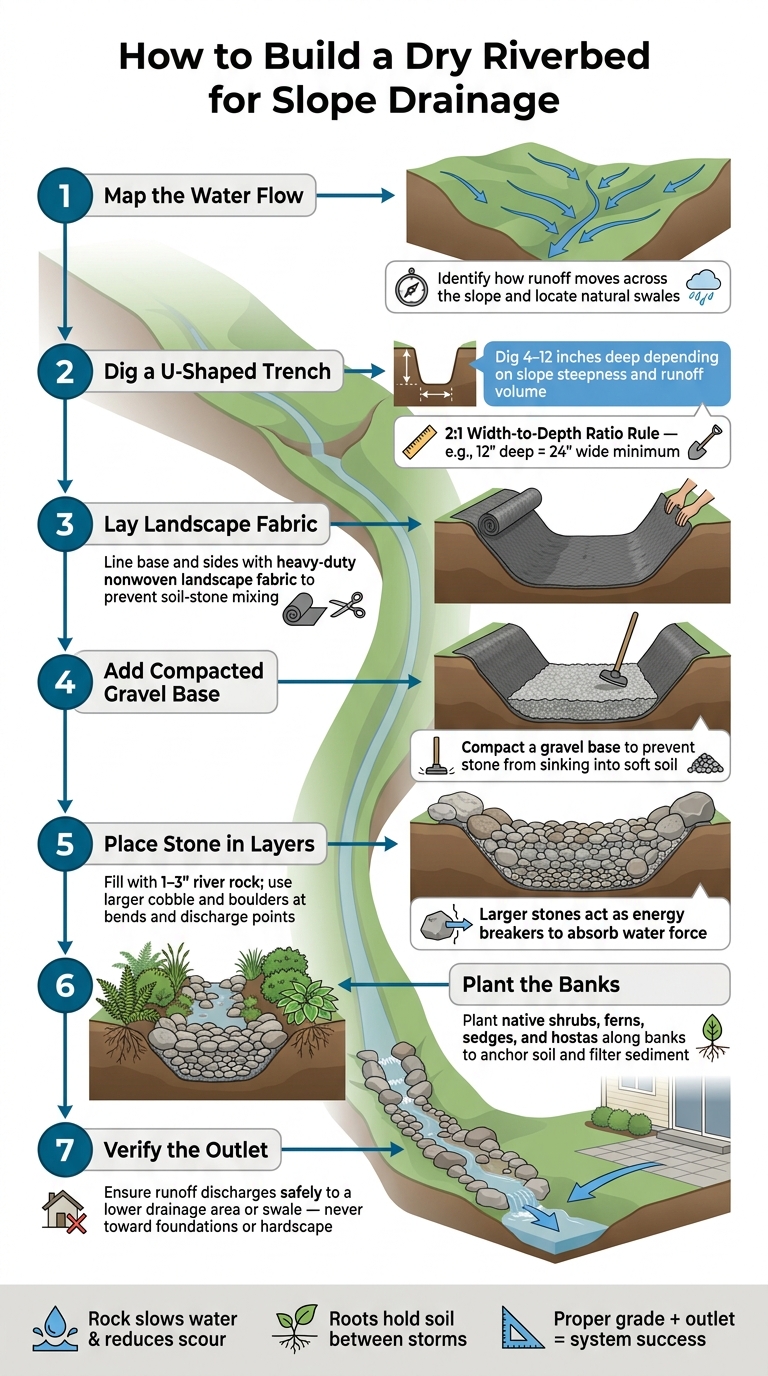
Start by mapping how water already moves across the slope. Then line up the channel with the natural grade or existing swales so runoff can move to a safe outlet instead of pooling near structures [2].
Dig a U-shaped trench, usually 4 to 12 inches deep, based on how much runoff the slope handles. Steeper slopes and heavier flows call for deeper cuts [6][3][2]. Clear out loose debris, then lay heavy-duty nonwoven landscape fabric along the base and sides. This helps keep soil and stone from mixing and cuts down on undercutting along the edges [6][1][5].
A compacted gravel base helps keep the rock from sinking into soft soil after heavy rain [2]. That gives you a steady base for the stone, fabric, and plants that help stop the slope from washing out.
Using Plants to Anchor Soil Along the Channel
After the channel is graded, plant the banks to shore up the edges. Native shrubs, ferns, sedges, and hostas along the channel banks help hold the surrounding soil on Maryland’s clay-heavy slopes [3][2]. They also filter sediment before it reaches the stone bed [2].
Why Rock and Roots Work Better Together
Rock handles the water inside the channel. Roots hold the soil in place beside it.
Put them together, and each does its part: the channel moves water where it needs to go during storms, while plant roots help keep the surrounding slope from slipping.
Maintaining Performance and Planning Professional Installation
What to Check After Storms and Through the Seasons
Once the dry riverbed is in place, a little upkeep goes a long way. After major storms, and again at the start and end of each season, check the channel for shifted stones, blockages, silt buildup, and bank erosion.
Clear out leaves, weeds, and extra debris before they tighten the flow path. In most cases, debris should be removed once or twice a year. Weeds rooted in built-up silt should be pulled, and bank plants should be trimmed before they crowd the channel.
If water overtopped the channel and carved a new path, that’s a red flag. The channel may be too shallow or too narrow for the amount of runoff moving through it.
Repeated overtopping, new erosion, or sediment that keeps coming back usually means the system needs to be redesigned.
When to Hire a Professional for Drainage and Grading
When drainage and planting need to work together on a steep slope, precision matters. A dry riverbed can fail if the grading, slope, and outlet placement don’t line up with the runoff volume.
Some situations call for professional grading right away:
- Steep slopes
- Poor outlet conditions
- Areas close to a foundation
- Runoff coming from a neighboring property
- Slopes that produce heavy runoff
- Outlets that don’t discharge safely
Pro Landscapes MD designs and installs dry riverbeds, grading, drainage, and slope plantings across central Maryland and Washington, DC.
Conclusion: Key Points for Safer Drainage and Stronger Slopes
A properly built dry riverbed moves stormwater away from eroding soil, while vegetation helps hold the slope in place between storms.
FAQs
How do I know if a dry riverbed is enough?
It depends on your slope, how much runoff you get, and where the water is coming from. A dry riverbed can handle surface water and help cut down erosion when it follows the land’s natural drainage path.
But it’s not always enough. Problems tend to show up when the channel is too shallow or too narrow, when heavy storms cause overflow or clogging, or when you need deeper drainage to protect a foundation.
Where should a dry riverbed drain?
A dry riverbed should drain into a designated area that can safely handle runoff, such as daylight, an approved swale, a collection system, or another runoff-management area.
The outlet matters a lot. It often needs larger stones or energy-dissipation features to help prevent erosion and scouring.
What plants work best along the edges?
For a natural look and better stability, plant native, low-maintenance varieties along the edges of your dry riverbed. Set them along the banks, and they can help absorb water, cut down on soil erosion, and soften the shift into your lawn.
Native plants are a smart pick here because they usually need less upkeep and tend to blend in nicely with the surrounding landscape.
Chat with Us