









- bhavya gada
- No Comments
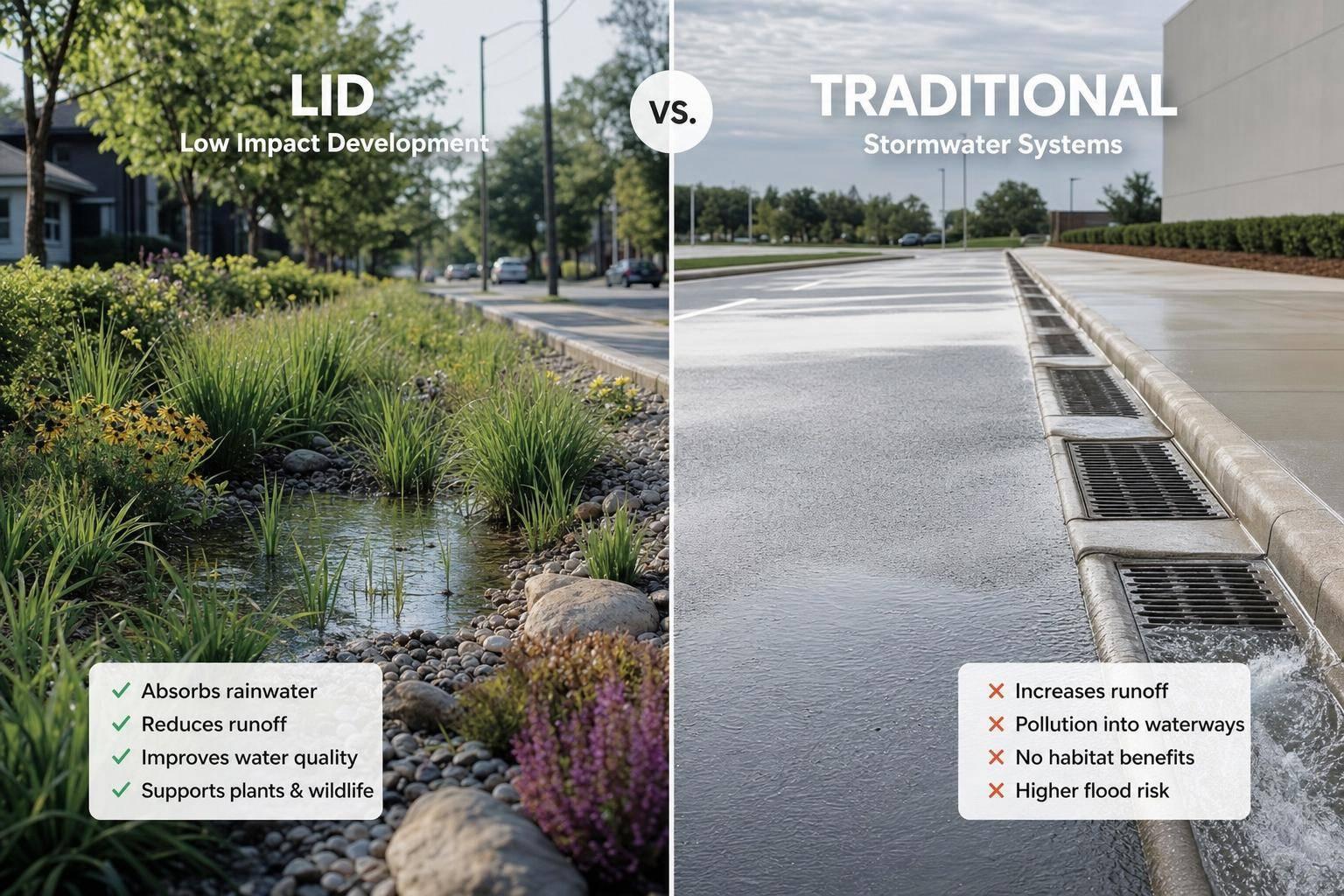
If you want less runoff on-site and a greener neighborhood look, LID usually does more than pipe-and-pond systems. In Maryland, LID can cut post-construction storm flow by 42% while keeping peak discharge near pre-construction levels. It can also reduce runoff pollution linked to nitrogen, phosphorus, and sediment.
Here’s the short version:
- Pipe-based systems move water away through curbs, gutters, drains, and detention ponds.
- LID deals with rain close to where it falls with rain gardens, swales, dry riverbeds, and permeable pavers.
- Older pipe-based neighborhoods can produce storm flow up to 600 times higher after development than before construction.
- Compared with LID areas, those same neighborhoods can send about 78 kg more nitrogen, 3 kg more phosphorus, and 1,592 kg more sediment per square kilometer each year into runoff.
- LID needs light routine care, like weeding, mulch, and debris removal.
- Pipe-based systems need less resident input, but repairs and cleanouts can be heavier and more specialized.
- In Maryland, the best choice depends on soil, slope, drain connections, space, and HOA rules.
If I were sizing up a neighborhood, I’d look at two things first: where the water collects and whether the ground can soak it in. That usually tells me whether LID fits, or whether a pipe-driven setup still makes more sense.
Introduction to LID Design as Stormwater Controls
sbb-itb-843f8be
Quick Comparison
| Factor | Traditional Systems | LID |
|---|---|---|
| Main idea | Move runoff off-site fast | Keep runoff near the source |
| Common parts | Curbs, gutters, pipes, catch basins, ponds | Rain gardens, swales, permeable pavers, dry riverbeds |
| Visibility | Mostly hidden | Easy to see in the landscape |
| Resident role | Low | Higher |
| Routine care | Less frequent, heavier work | More frequent, lighter yard-type work |
| Water quality | Lower treatment near the source | Better filtering near the source |
| Retrofit fit | Harder on built sites | Easier to add in yards and common areas |
| Neighborhood look | More utility-focused | More green space and curb appeal |
So the choice is pretty simple: if your site has room, decent infiltration, and support for landscape-based drainage, LID often gives you runoff control plus better-looking outdoor space. If the site has tight limits, poor soils, or a heavy drain network already in place, conventional stormwater infrastructure may still be the better fit.
Traditional Stormwater Systems: Centralized Control with Low Resident Involvement
Many older Maryland neighborhoods follow a simple approach: move water off the property as fast as possible. Rain lands on streets, driveways, and lawns, runs into curbs and gutters, drops into catch basins, and travels through underground pipes to a detention pond or an outfall. Most of that system stays out of sight, so people tend to notice it only when something goes wrong.
How Traditional Systems Work in Residential Areas
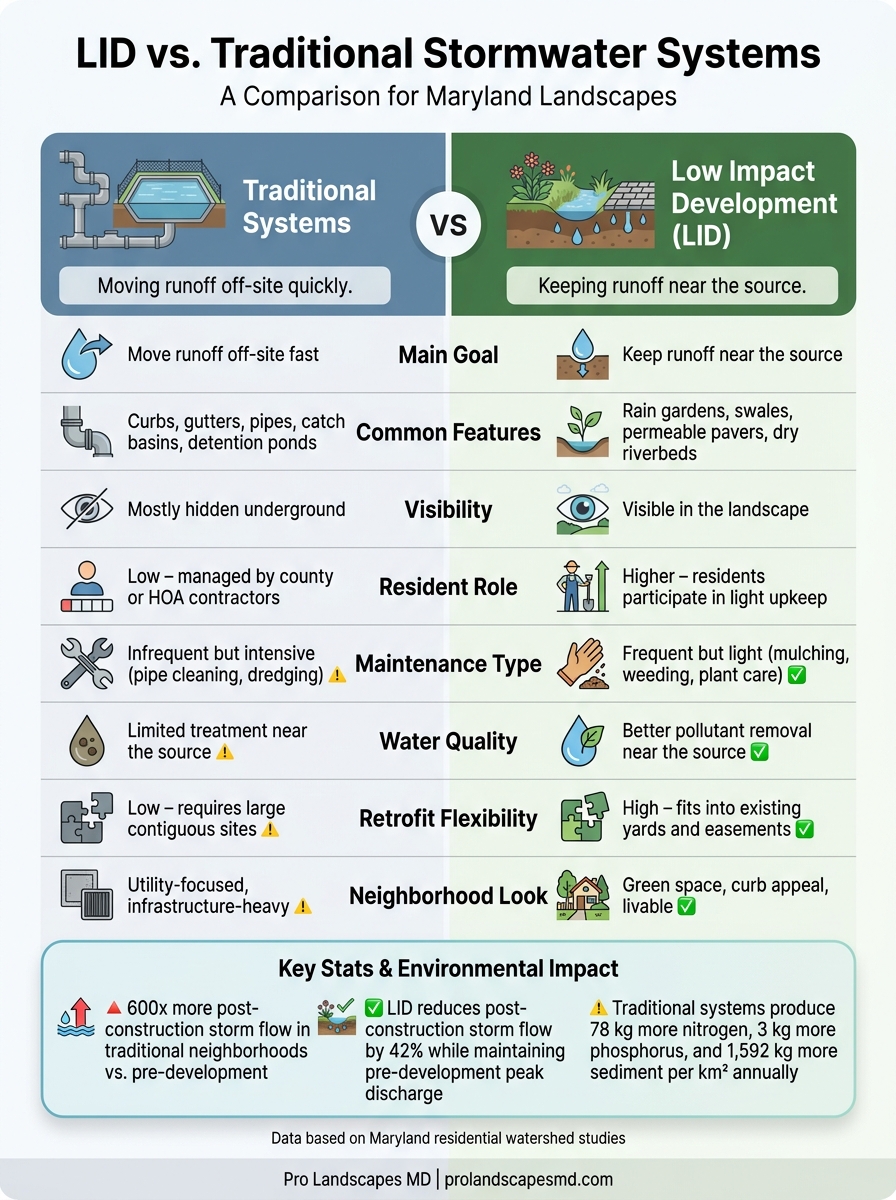
In Montgomery County, the numbers are stark. In old-style residential watersheds, post-construction storm flow was 600 times higher after construction than before development. These systems also leave about 78 kg more nitrogen, 3 kg more phosphorus, and 1,592 kg more sediment in runoff per square kilometer each year than neighborhoods built with LID [1][2].
Long-Term Tradeoffs for Neighborhood Appearance and Use
One clear upside is responsibility. If a pipe backs up or a detention pond needs work, there is usually a set party in charge – most often the county or the HOA. That makes ownership of maintenance pretty clear, but it also keeps residents on the sidelines.
The downsides become easier to see over time. Concrete gutters, metal grates, and fenced basins don’t add much to how a neighborhood looks or how people use it day to day. Because the system is mostly hidden, people rarely think about it, much less care for it. There’s no shared sense of upkeep, and the stormwater setup stays separate from the parts of the neighborhood people actually spend time in.
That split between stormwater control and daily life is exactly what LID changes by bringing these features into the landscape.
Low Impact Development: Stormwater Solutions Built Into the Landscape
Low Impact Development, or LID, manages runoff right on the property by using the landscape to catch, slow, and filter rain where it lands. The main idea is simple: deal with water across the site instead of sending it off to one faraway system. LID best management practices treat runoff close to its source [2]. And because these systems are out in the open, residents can actually see them, use the space around them, and help care for them. In Maryland neighborhoods, that usually shows up through a handful of familiar landscape features.
Common LID Features for Maryland Homes and HOAs
Common LID features include rain gardens and bioretention areas, which help runoff soak into the ground on-site. They also include permeable pavers for patios, walkways, and driveways, which let rain move through the surface instead of running off in sheets. Dry riverbeds and vegetated swales also play a big part by slowing water down and guiding it through the yard.
A lot of LID performance comes down to soil. In many suburban neighborhoods, lawns get compacted during construction, and that makes it much harder for water to soak in. Adding compost to the soil and cutting back on impervious surfaces can help the ground absorb rain more like it did before development [1].
How LID Builds Resident Stewardship and Everyday Value
Because LID features are visible – planted, mulched, and built into the yard – they change how people relate to stormwater. A rain garden doesn’t feel like hidden infrastructure. It feels like part of the landscape. Pulling weeds from a rain garden, clearing debris from a swale after a storm, or adding a new layer of mulch to a bioretention bed can fit right into normal yard work.
That simple upkeep gives residents a direct role in how well the system works. HOAs that share basic maintenance guides often find that residents have an easier time keeping up with these areas when the features are easy to spot and blended into the landscape.
Native plantings can bring color and habitat. Permeable pavers, dry riverbeds, and swales can also make outdoor areas more usable and more attractive. But there’s a catch: these features need the right grading, drainage, and plant choices for the site. If those parts don’t line up, the system won’t do its job well.
Where Pro Landscapes MD Fits Into LID Projects

Pro Landscapes MD designs and installs the drainage and landscape elements that turn LID principles into working site conditions across central Maryland. That includes accurate grading, plant selection that fits the location, and drainage features sized and placed for the property. That blend of visible landscape features and on-site stormwater control is what sets LID apart in the next comparison.
LID vs. Traditional Stormwater Systems: Side-by-Side Comparison
LID vs. Traditional Stormwater Systems: Side-by-Side Comparison
In Maryland neighborhoods, the biggest differences show up in day-to-day upkeep, how a community looks, and how well each system holds up over time.
| Factor | Traditional Systems | LID |
|---|---|---|
| Layout | Centralized; curbs, gutters, and storm sewers carry runoff to one location | Distributed; managed near the source |
| Design Purpose | Fast conveyance and centralized detention | Infiltration and volume reduction |
| Appearance | Hidden pipes, concrete curbs, and large basins | Rain gardens, grass swales, permeable pavers, and green space |
| Resident Involvement | Low; managed by municipalities or HOA contractors | Higher; residents can participate in light upkeep |
| Maintenance | Periodic but intensive, such as dredging and pipe cleaning | Frequent but light, such as mulching, weeding, and plant care |
| Flood & Erosion Control | Strong peak control through rapid conveyance and detention | Reduces post-construction storm flow by 42% while maintaining peak discharge at predevelopment levels [1] |
| Water Quality | Limited; focuses more on flow rate | Better pollutant removal near the source |
| Retrofit Flexibility | Low; requires large contiguous sites | High; can fit into existing yards and easements |
| Long-Term Neighborhood Value | Functional; focused on flood protection | Adds greenery and curb appeal |
Community Involvement and Stewardship
Traditional systems are mostly out of sight, so residents seldom think about them. LID puts stormwater features where people can actually see them. That simple shift matters. When a rain garden sits near a sidewalk or a grass swale runs along a shared space, upkeep feels more like normal neighborhood care than some distant public works task.
That also makes stewardship easier to spread across a community. Light tasks like weeding, mulching, and basic plant care are easier to notice and easier to share.
Long-Term Benefits for Property Value, Comfort, and Resilience
Traditional systems are good at moving large volumes of water away from streets and buildings fast. But they usually don’t do much for the feel of a neighborhood. You get drainage, but not much else.
LID gives HOAs and property managers a two-for-one setup: stormwater control plus better-looking common areas. Rain gardens and permeable surfaces can cut down on standing water while adding greenery and curb appeal. In plain terms, the drainage system does its job without making the neighborhood look like pure infrastructure.
How Maryland Regulations Support Both Approaches
In Maryland, the right design still depends on site conditions and runoff goals. State rules are leaning more toward on-site runoff reduction, which fits LID well. At the same time, traditional systems still make sense on sites with limited infiltration, large drainage areas, or low-permeability soils.
Putting LID Into Practice in Existing Maryland Neighborhoods
What to Evaluate Before Choosing a Stormwater Approach
Once the difference between the two systems is clear, the next step is simple: figure out whether the site can handle an LID retrofit.
Start by mapping how runoff moves across the property. Look at where water starts, where it collects, and where it leaves the site. Wet patches and erosion often point to strong places for a retrofit.
Next, check the site’s soil permeability, slope, and total impervious surface. Rain gardens, swales, and permeable pavers tend to work best where water can soak into the ground on-site. If the property ties into an existing storm drain network, document those storm drain connections before picking an LID retrofit. That choice shapes more than drainage. It also affects resident upkeep and how the neighborhood works day to day.
If the property sits within an HOA, review the governing documents before locking in a design. Some communities restrict pavement types or landscape changes. So it helps to confirm early whether features like pervious pavers or shared driveways are allowed.
Designing LID Features That Fit the Neighborhood
Once runoff patterns and soil conditions are understood, the layout can be matched to the site.
A stormwater feature that feels out of place or is tough for residents or HOA crews to maintain usually won’t stick around for long, even if it looks good on paper. The better move is to match the solution to how the space is used and cared for.
That means choosing features that fit both drainage needs and neighborhood routines. Durable materials matter. Native plants that suit Maryland’s climate and soil also matter. And the layout should avoid adding extra maintenance work where possible. A rain garden can manage runoff without clashing with the look of the neighborhood. Permeable paver driveways can help with drainage while still giving the space a polished finish.
Pro Landscapes MD can support these projects with grading, drainage installation, permeable pavers, and dry riverbeds.
Conclusion: Centralized Drainage or Landscape-Based Stormwater Control
The main difference between the two approaches comes down to where and how stormwater is managed.
Traditional systems move water away fast through centralized pipes and basins. LID keeps stormwater control closer to the source by using landscape features. That helps cut runoff at the source and improve water quality. For many communities, it can also mean less visible infrastructure, better curb appeal, and lighter routine upkeep.
Neither option is better in every case. Sites with poor infiltration, large drainage areas, or strict HOA limits may still need conventional infrastructure. But in many existing Maryland neighborhoods with room for retrofits, LID can be a practical way to improve runoff control, support cleaner water, and add landscape function without a full rebuild.
FAQs
Is LID more expensive upfront?
Not always. Some LID features, like soil amendments or specialized landscaping, can cost more upfront.
But in many cases, LID can cut total construction costs compared to standard systems.
Why? Because it can reduce the need for heavy grading, stormwater pipes, curbs, and paved surfaces.
Across different project types, LID has delivered construction cost savings of 15% to 80%.
Can LID work in clay soil?
Yes. Low Impact Development (LID) can work in areas with clay soil.
Clay soil drains more slowly, so the setup often needs a few adjustments. But practices like bioswales, rain gardens, and permeable pavers can still help slow, clean, and reduce stormwater runoff.
In clay-heavy soils, these systems are often modified with soil amendments, underdrains, or special drainage installations to support effective, long-term water management.
Who maintains LID in an HOA?
In a homeowners association (HOA), LID maintenance usually falls to either the property owners or the association. The answer depends on what the governing documents say.
That’s why a clear maintenance plan matters. Once these features are installed, they still need regular care to keep doing their job.
LID often needs less upkeep than older stormwater systems. But “less” doesn’t mean “none.” It still takes steady attention over time.
Chat with Us