









- bhavya gada
- No Comments
Erosion can wreak havoc on your property, but you don’t need expensive solutions to manage it. From simple planting methods to basic structural fixes, there are plenty of affordable ways to protect your soil and landscape. Here’s a quick guide to budget-friendly techniques:
- Mulch: Absorbs water impact and stabilizes soil. Easy to apply and eco-friendly.
- Hydroseeding: Sprays seeds and mulch to cover large areas quickly. Ideal for steep slopes.
- Riprap: Crushed rocks to control runoff in high-flow areas like shorelines.
- Ground Cover Plants: Low-maintenance vegetation that holds soil together.
- Biodegradable Fabrics: Temporary mats for soil stability while plants grow.
- French Drains: Gravel-filled trenches to redirect water.
- Rain Gardens: Plant-filled basins to collect and absorb runoff.
- Retaining Walls: Stone barriers to stabilize steep slopes and reduce water flow.
Each method works best for specific erosion challenges. For example, mulch and ground covers are great for mild issues, while riprap and retaining walls suit areas with heavy water flow. Combine techniques for better results, and consider professional help for complex projects like retaining walls or French drains.
Quick Comparison
| Technique | Best For | DIY-Friendly | Cost | Eco-Friendly |
|---|---|---|---|---|
| Mulch | Light erosion, shaded areas | Yes | Low | Yes |
| Hydroseeding | Large areas, steep slopes | No (needs tools) | Moderate | Yes |
| Riprap | Shorelines, heavy water flow | Yes (small areas) | Moderate to High | Moderate |
| Ground Cover Plants | Gentle slopes, soil stability | Yes | Low | Yes |
| Biodegradable Fabrics | Temporary slope stabilization | Yes | Low | Yes |
| French Drains | Water redirection, slopes | Yes | Moderate | Yes |
| Rain Gardens | Runoff collection, flat areas | Yes | Low | Yes |
| Retaining Walls | Steep slopes, terraces | Yes (small walls) | High | Yes |
Choose the right method based on your needs, budget, and landscape. Protecting your property doesn’t have to cost a fortune!
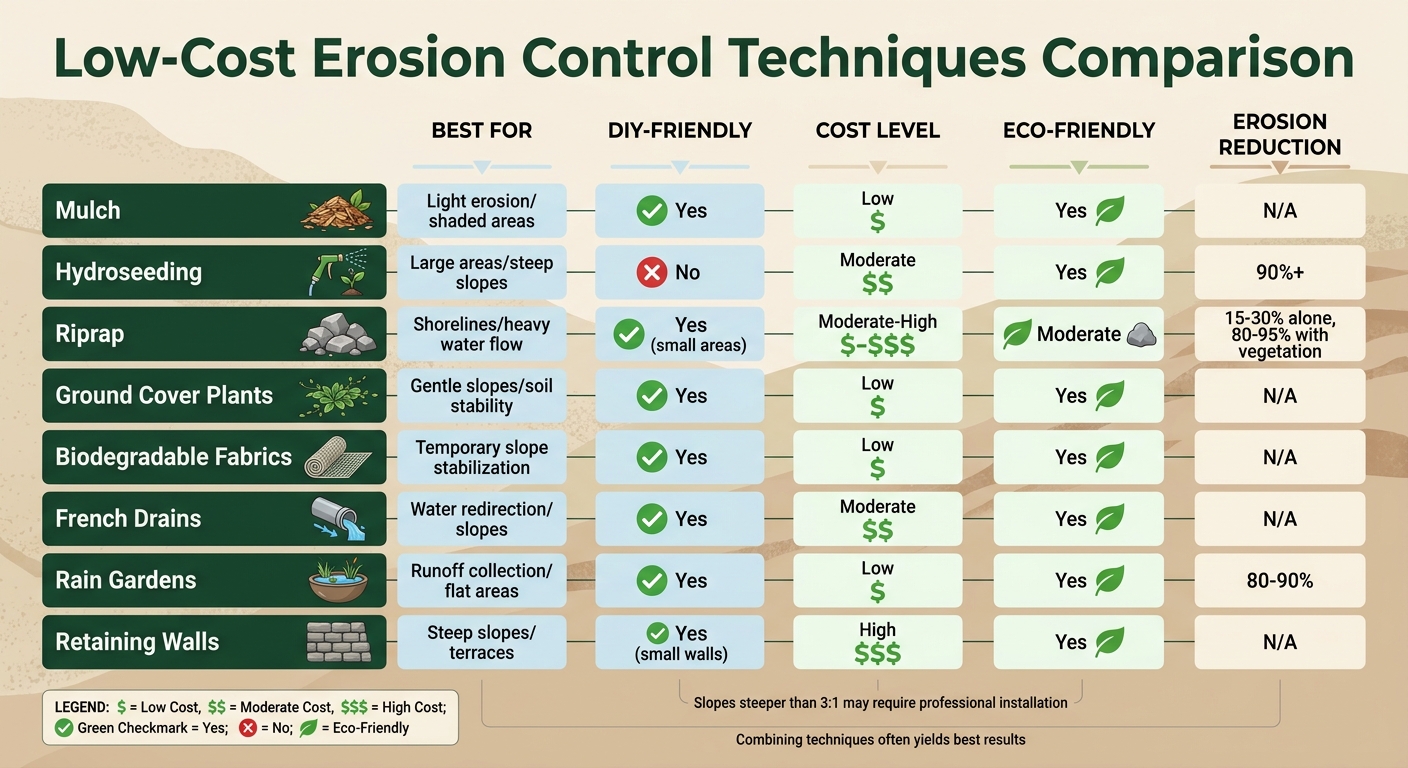
Comparison of 8 Low-Cost Erosion Control Techniques for Maryland Landscapes
How to Stop Slope Erosion 🌿 Landscaping Solutions
sbb-itb-843f8be
1. Mulch Application
Mulch is a simple and budget-friendly way to protect exposed soil by absorbing the impact of raindrops and slowing water runoff. According to the Northern Virginia Soil and Water Conservation District, which deals with soil conditions similar to those in Maryland, "For areas with light erosion problems, replanting with vegetation and covering with mulch are good solutions." [2]
Cost-effectiveness
When it comes to controlling erosion, mulch provides a practical solution without requiring costly infrastructure. In areas like tree and shrub beds where the soil lacks protective cover, a layer of organic mulch helps stabilize the ground while new plants take root. For grass seeds, a thin layer of straw mulch not only keeps birds away but also locks in moisture – all at a low cost. Plus, the straightforward installation process makes it accessible for anyone to apply.
Ease of DIY Installation
Installing mulch is a task most homeowners can handle on their own. Start by loosening compacted soil with a rake or aerator to improve water absorption. For high-traffic areas like footpaths, laying landscape fabric underneath the mulch can prevent it from sinking and block weed growth. In spots prone to gully erosion, filling gaps with clay-rich soil, adding a layer of topsoil, and then applying mulch can enhance stability. If you’re using edging to contain the mulch, leave small gaps at the lowest points to allow proper water drainage.
Suitability for Maryland Landscapes
Maryland’s clay-rich soils and seasonal rainfall make mulch an effective tool for erosion control. It’s especially useful in shaded areas where grass struggles to grow and on well-trodden paths where vegetation has difficulty surviving. Adding compost to the mulch – or spreading a compost blanket underneath – can improve soil fertility and help balance pH levels. This not only supports healthier plant growth but also contributes to long-term erosion management.
Eco-friendliness
Using natural mulches like wood chips, shredded bark, or straw aligns with environmentally conscious erosion control strategies. These materials gradually break down, enriching the soil without leaving behind synthetic residues. This approach eliminates the need for artificial products or extensive hardscaping. For even better results, combine mulch with runoff management methods like rain gardens or rain barrels to reduce water’s impact on erosion-prone areas.
2. Hydroseeding
Hydroseeding takes the idea of affordable mulch techniques a step further, offering a fast and effective way to protect soil from erosion – especially over large areas or steep slopes.
This method involves spraying a mix of seeds, mulch, and a binder directly onto bare soil. The result? Immediate protection. Unlike traditional hand-seeding, which leaves soil exposed while waiting for seeds to sprout, hydroseeding’s slurry acts as a protective layer right from the start.
Cost-effectiveness
While hydroseeding does require professional equipment and expertise, it’s a smart investment for preventing costly soil erosion. It’s particularly efficient for covering large areas quickly, reducing the need for expensive repairs after heavy storms. Research shows that hydraulic mulching can reduce erosion by 90% or more, even on steep slopes [3]. That’s a huge advantage when dealing with challenging landscapes.
Suitability for Maryland Landscapes
Maryland’s hilly terrain and frequent storms make hydroseeding a lifesaver for properties with slopes steeper than a 3:1 grade. The spray application ensures even coverage on slopes where traditional methods struggle. Once the seeds sprout and roots take hold, the vegetation works like natural reinforcement, locking the soil in place. Meanwhile, the mulch-binder mix keeps the slope stable, even during heavy downpours in the spring.
Eco-friendliness
Hydroseeding is also a greener choice. The biodegradable mulches and binders used in the process encourage natural restoration of the land. Native grasses flourish with little maintenance, creating a plant cover that absorbs moisture and slows runoff. This creates a long-lasting, erosion-resistant landscape without relying on synthetic materials or chemical treatments.
3. Riprap Installation
When dealing with areas prone to aggressive water flows, structural solutions like riprap can be a game-changer. This method is especially effective along shorelines, steep slopes, or drainage channels where natural or blended approaches might fall short. Riprap involves placing angular, crushed rocks in strategic patterns to absorb wave energy and control runoff. As the University of Minnesota Extension explains:
Placement of large rock, usually referred to as rip-rap, is the preferred and most common form of shore protection [1].
Cost-effectiveness
The cost of riprap largely depends on the availability of local rock sources. If materials need to be hauled over long distances, expenses can climb quickly. However, significant savings are possible with a hands-on approach:
A big savings can be realized if you can install these items yourself [1].
For Maryland residents with accessible terrains and moderate slopes, a DIY installation can cut costs significantly compared to hiring professionals. By combining this method with natural erosion control strategies, homeowners can create a balanced and economical solution.
Ease of DIY Installation
Installing riprap can be straightforward if you follow the right steps and consider local permit requirements. Start by laying geotextile fabric to prevent soil erosion underneath the rocks. Then, place angular, crushed stones in an overlapping pattern for better stability. Unlike rounded boulders, angular rocks lock together under pressure, creating a sturdy structure that resists movement during storms [1]. To further secure the installation, add extra rocks at the base – commonly called the "toe" – to guard against water flow undercutting the structure.
Suitability for Maryland Landscapes
Maryland’s varied terrain, which includes shorelines, steep hills, and areas with heavy rainfall, makes riprap a practical option for erosion control. In the Mid-Atlantic region, riprap is often used to protect areas where stormwater scours the ground or threatens to wash away soil [2]. It’s particularly effective on slopes steeper than 3:1, where vegetation alone may struggle to take root. While riprap by itself can reduce erosion by 15–30%, combining it with vegetation increases effectiveness dramatically, reaching 80–95% [3]. Adding native grasses or shrubs around and within the rocks creates a stronger, more natural-looking barrier.
Eco-friendliness
Although riprap is often viewed as a last resort when vegetation cannot stabilize the soil [1], it provides immediate erosion control. To offset its lack of ecological benefits, native plantings can be incorporated into the design. This approach not only strengthens soil binding but also provides habitats for local wildlife, blending structural stability with environmental benefits.
For those who prefer professional assistance or want the confidence of expert craftsmanship, Pro Landscapes MD offers specialized erosion control services. Their team can design and install riprap systems tailored to Maryland’s unique landscape needs and regulatory guidelines.
4. Ground Cover Planting
Ground cover planting is another natural way to improve soil stability, complementing methods like mulch and hydroseeding. By using low-growing plants, this approach creates a living layer that protects soil from erosion. These plants spread across the surface, forming a natural shield against heavy rain and runoff, while also helping to stabilize the ground. The Northern Virginia Soil and Water Conservation District highlights its effectiveness:
"Well-established vegetation can stabilize the soil in cases of light erosion." – Northern Virginia Soil and Water Conservation District
Cost-effectiveness
Ground cover planting is an affordable erosion control method. It requires only seeds, starter plants, and some basic soil amendments. Once the plants are established, they cut down on long-term costs by retaining soil moisture and suppressing weeds, reducing the need for additional maintenance.
Ease of DIY Installation
This method is relatively easy to implement, especially on gentle slopes. Begin with a soil test to determine any necessary amendments, such as compost, to improve soil structure. For seeding, cover the seeds with about 1/4 inch of topsoil and a thin layer of straw to deter birds and aid germination. If sod is your choice, lay it perpendicular to the direction of water flow and secure it with staples. Consistent watering during the first year is key to successful establishment.
Suitability for Maryland Landscapes
Maryland’s Mid-Atlantic climate offers ideal conditions for a variety of ground cover plants. On slopes steeper than 3:1, low-maintenance options like creeping phlox, creeping thyme, clover, or sedum are better choices than traditional turf. Deep-rooted plants such as tall fescue are particularly effective at stabilizing soil. Native species are especially beneficial, as they’re naturally suited to Maryland’s moisture levels, sunlight conditions, and clay-heavy soil. This approach works well alongside other erosion control methods, creating a stronger, more natural solution.
Eco-friendliness
Beyond soil protection, ground cover plants contribute to the local ecosystem. They attract pollinators like bees and butterflies, enhancing biodiversity. Their roots also help filter out sediment and pollutants from runoff, improving downstream water quality. Opting for perennial native plants ensures year-round soil protection while fostering a healthier environment.
For Maryland homeowners looking for expert advice on erosion control, Pro Landscapes MD provides tailored solutions designed to meet local needs, offering a practical and comprehensive approach to managing soil erosion.
5. Biodegradable Fabric and Pins
Biodegradable fabrics, such as coir mats and straw blankets, serve as an affordable and effective solution for stabilizing soil until vegetation takes root. These materials act as a protective barrier, reducing runoff and keeping soil in place while permanent plant roots develop [4]. This method provides both immediate soil stabilization and long-term erosion control benefits.
Cost-effectiveness
One major advantage of biodegradable fabrics is that they naturally decompose over time, eliminating the need for expensive removal or disposal once vegetation is established. They are budget-friendly and simple to install, making them accessible for homeowners without requiring specialized tools or expertise. By offering temporary protection during the critical establishment phase of vegetation, these fabrics help avoid the recurring costs associated with bare soil erosion.
Ease of DIY Installation
Installing biodegradable fabric is a task most homeowners can handle. Start by marking the area, clearing away vegetation, and grading the site for proper drainage. Loosen compacted soil with a rake or aerator to ensure the fabric, seeds, and soil make good contact. Lay the fabric strips perpendicular to the water flow, secure them with sod staples or pins, and tuck the edges to keep everything in place. Finally, apply grass seed or native groundcover beneath the fabric for optimal results [2].
Suitability for Maryland Landscapes
Maryland’s sloped terrain and clay-heavy soils make this method particularly useful for residential areas. These fabrics are well-suited for slopes with grades steeper than 3:1, where mowing is difficult and soil stability is a challenge. Their ability to reinforce soil in such conditions makes them an excellent choice for the region. However, for projects involving terraces over two feet tall or slopes steeper than 3:1, professional engineering and local permits may be required [2].
Eco-friendliness
Unlike synthetic geotextiles, biodegradable fabrics naturally integrate into the environment, supporting sustainable land restoration efforts. Coir logs and mats, for example, decompose without leaving synthetic residues, making them ideal for wetland and habitat restoration during the vegetation establishment phase. By combining practicality with environmental benefits, these materials provide a greener alternative to synthetic solutions while effectively addressing erosion concerns [2][4].
6. French Drains and Dry Riverbeds
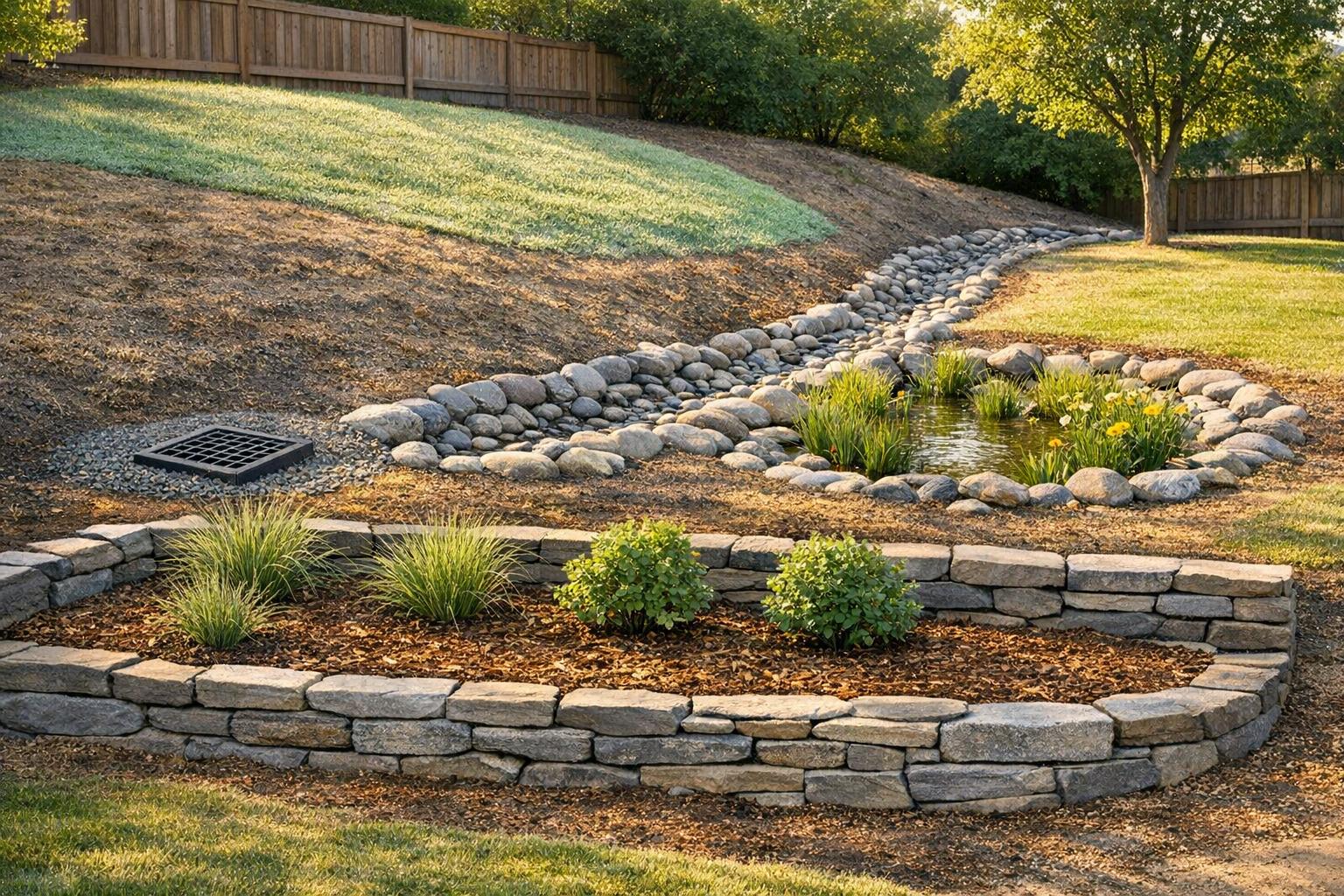
French drains and dry riverbeds are effective solutions for managing water flow on sloped properties. A French drain involves digging a trench, filling it with gravel, and placing a perforated pipe at the bottom. This setup collects and redirects water, protecting soil and vegetation from being washed away by runoff [1]. Similarly, dry riverbeds use stone to channel water, offering another practical way to control flow.
Cost-effectiveness
The Northern Virginia Soil and Water Conservation District notes, "The most cost-effective approach captures or controls runoff at its source" [2]. French drains are particularly effective in intercepting water before it gains momentum on slopes. For DIY enthusiasts, the materials – gravel, perforated piping, and geotextile fabric – are affordable compared to professional installation costs. This makes French drains a budget-friendly option for homeowners looking to tackle drainage issues without breaking the bank.
Ease of DIY Installation
Installing a French drain is a project many homeowners can handle with basic tools. To ensure the system works efficiently, wrap the perforated pipe in landscape fabric to keep soil from clogging it [1]. For steeper slopes, opt for non-perforated plastic piping to safely carry water downhill [1]. When creating a dry riverbed, use landscape fabric under the stones to prevent weeds and keep materials in place over time [2]. Adding rocks at the pipe’s outlet can also help reduce erosion where water is discharged [1].
Suitability for Maryland Landscapes
French drains and dry riverbeds are particularly well-suited to Maryland’s unique landscape challenges. The state’s Mid-Atlantic climate often results in concentrated water flows and clay-heavy soils, which can strip away vegetation and lead to erosion [2]. These methods are recommended by local conservation districts to address such issues. Deeper French drains can intercept more groundwater, offering extra protection for the unstable bluffs and slopes common in Maryland [1]. For those seeking professional help, Pro Landscapes MD provides expert installation and tailored drainage solutions.
Eco-friendliness
French drains and dry riverbeds can also support environmentally conscious practices. Coir fiber biologs, for instance, are a natural option for managing water flow. These fibers decompose over time, creating an opportunity for vegetation to establish itself. As the Northern Virginia Soil and Water Conservation District explains:
Coir fiber biologs are an environmentally friendly alternative. Over time, they will break down, giving vegetation a chance to become established first [2].
This approach not only helps manage water but also promotes sustainable land restoration, blending practicality with environmental care.
7. Rain Gardens
Rain gardens are a simple yet effective way to manage stormwater runoff and prevent soil erosion, especially on slopes. These shallow, plant-filled depressions are designed to collect water from hard surfaces like driveways, rooftops, and downspouts, allowing it to soak into the ground slowly. This process helps reduce the rapid flow of water that can erode soil. As the Northern Virginia Soil and Water Conservation District notes:
If heavy runoff is causing erosion, the least expensive solution is usually to capture or control the runoff at or near the source before it reaches the erosion problem area [2].
Rain gardens are not only affordable but also pair well with other natural erosion control methods.
Cost-effectiveness
One of the biggest advantages of rain gardens is their low cost. Homeowners can tackle erosion issues without breaking the bank. By using native plants and simple rock borders, a DIY rain garden can cut erosion by up to 80%, with material costs often staying under $100 [3]. This is a fraction of what it would cost to repair severe erosion damage or install more elaborate erosion control systems. The key to success lies in proper placement – usually at the base of a slope or near a downspout – to intercept and slow down runoff effectively.
DIY-Friendly Installation
Creating a rain garden is straightforward. Start by identifying areas with heavy runoff, then dig a shallow basin to capture the water. To improve drainage, mix in compost. Ensure the water flows steadily into the garden by shaping the slope with a gentle 2–3% gradient. This setup prevents new erosion channels from forming while guiding water into the garden for gradual absorption.
Perfect Fit for Maryland Landscapes
Rain gardens are particularly well-suited to Maryland’s climate and soil conditions. The Mid-Atlantic region, with its urbanized areas, can lose between 2 and 5 tons of soil per acre each year due to stormwater runoff [3]. Using native plants like Eastern redbud, azaleas, and grasses with fibrous roots can stabilize soil effectively. These species thrive in Maryland’s precipitation patterns and require minimal upkeep. For those seeking professional help, Pro Landscapes MD offers specialized rain garden and stormwater management services tailored to local needs.
Environmentally Friendly Benefits
Rain gardens provide more than erosion control – they act as natural filters. By trapping sediment, pesticides, and pollutants, they keep contaminants out of municipal systems and waterways. Maintaining about 70% vegetation cover in a rain garden can reduce erosion by up to 90% compared to bare soil [3]. The deep roots of the plants bind soil particles and absorb excess nutrients, which helps prevent issues like harmful algal blooms in water bodies such as the Chesapeake Bay. Regular upkeep, like refreshing mulch to a depth of 3–4 inches, ensures the garden continues to function effectively, even during heavy rainfall.
8. Retaining Walls with Natural Stone
For steep slopes, natural stone retaining walls offer a sturdy and visually appealing way to manage erosion. These walls work by forming terraces along the land’s contour, which slow down water flow and stabilize soil that might otherwise erode. Large stones and boulders not only absorb the impact of rainfall but also help reduce soil displacement and slow surface water movement.
Cost-effectiveness
Although the upfront cost of building retaining walls can be higher, their longevity makes them a smart investment. Unlike wood, which can rot and requires frequent replacement, natural stones like granite or basalt are highly weather-resistant and need minimal upkeep. For slopes under 30°, simple rock borders can be created for less than $100 in materials. While these borders offer basic erosion control, combining them with deep-rooted plants significantly boosts their effectiveness[3].
Ease of DIY Installation
Small rock borders and short retaining walls are projects that many homeowners can tackle themselves with some effort. Using angular stones is crucial for better interlocking and stability compared to rounded rocks. However, there are limitations to consider. In Maryland and nearby areas, walls taller than two feet often require a county permit, and slopes steeper than a 3:1 ratio may need professional engineering[2]. Short, multiple terraces are more effective for runoff control than a single tall wall. Be sure to include proper drainage – such as gravel or perforated pipes – to prevent water pressure from building up behind the wall.
Suitability for Maryland Landscapes
Natural stone retaining walls are particularly well-suited for Maryland’s terrain and climate. The region’s clay-heavy soils and frequent heavy rainfall can result in significant soil loss, with developed land losing as much as 2–5 tons of soil per acre annually[3]. These walls help by allowing water to infiltrate the soil and improving drainage, which is essential for managing the area’s heavy runoff. For more complex projects involving steep slopes or walls over two feet in height, Pro Landscapes MD provides professional installation services. They ensure compliance with local codes and incorporate drainage solutions to effectively manage erosion.
Eco-friendliness
Beyond their structural advantages, natural stone walls contribute to environmental well-being. They create stable conditions for vegetation to grow, which helps protect soil from losing nutrients. Additionally, these walls encourage water to seep into the ground rather than flow into storm drains, aiding in groundwater replenishment and supporting sustainable land management efforts.
Conclusion
Erosion control doesn’t have to be expensive. The techniques discussed here – ranging from applying mulch and planting ground cover to installing French drains and building natural stone retaining walls – offer practical ways to manage erosion while keeping costs reasonable. Success often comes from blending natural and structural methods rather than relying on just one. For example, combining deep-rooted plants with biodegradable fabric creates a layered defense that stabilizes soil immediately and provides long-term protection[5].
When deciding which approach to take, it’s important to distinguish between tasks you can handle yourself and those that need professional expertise. Homeowners can typically tackle projects like applying mulch, planting ground cover, or installing biodegradable fabric on gentle slopes (less than 33%). However, more complex tasks – such as installing riprap, French drains, or retaining walls – often require professionals due to the heavy materials, specialized tools, and precise engineering involved[5]. As Brian Dalinghaus, Co-Founder of Dalinghaus Construction, explains:
Preventing erosion on a slope is crucial for maintaining the health and beauty of your landscape[5].
Pay attention to slope steepness; slopes over 50% usually call for professional intervention[5]. Also, check local regulations. For instance, in Maryland, permits are often required for retaining walls taller than two feet or for specific drainage projects.
For Maryland residents, professional services can be especially helpful in managing specialized sediment control materials[4]. Companies like Pro Landscapes MD offer services throughout central Maryland, including drainage solutions, retaining walls, French drains, and dry riverbeds. Their team ensures projects comply with local safety standards while addressing runoff challenges with effective designs.
Whether it’s a DIY mulch project or a professionally installed drainage system, choosing the right erosion control strategy protects your property and preserves soil health for the long term.
FAQs
How can I identify what’s causing erosion on my property?
To figure out what’s causing erosion, pay close attention to how water behaves during rainfall. Watch for muddy water flowing through gutters, bare patches of soil, exposed roots, small gullies forming on slopes, or silt buildup in low-lying areas. Also, see if rainwater is quickly rushing into storm drains or soaking into the ground. These signs can reveal problem areas, making it easier to tackle the issue head-on.
Which erosion control method works best for my slope steepness?
For managing erosion, the best approach varies based on how steep the slope is. If your slope is over 25%, planting native plants with deep root systems can help anchor the soil. Alternatively, you can use erosion control blankets or geotextiles for added stability. For extremely steep slopes – those over 50% – consider solutions like terracing, constructing retaining walls, or applying bio-engineering methods to keep the soil in place.
When do I need a permit or a pro for erosion control in Maryland?
In Maryland, tackling erosion control projects that involve significant land disturbance – like grading, excavation, or setting up structural measures – usually requires a permit or the expertise of a professional. This is especially critical near waterways or wetlands to comply with state regulations and safeguard the environment.
Chat with Us