









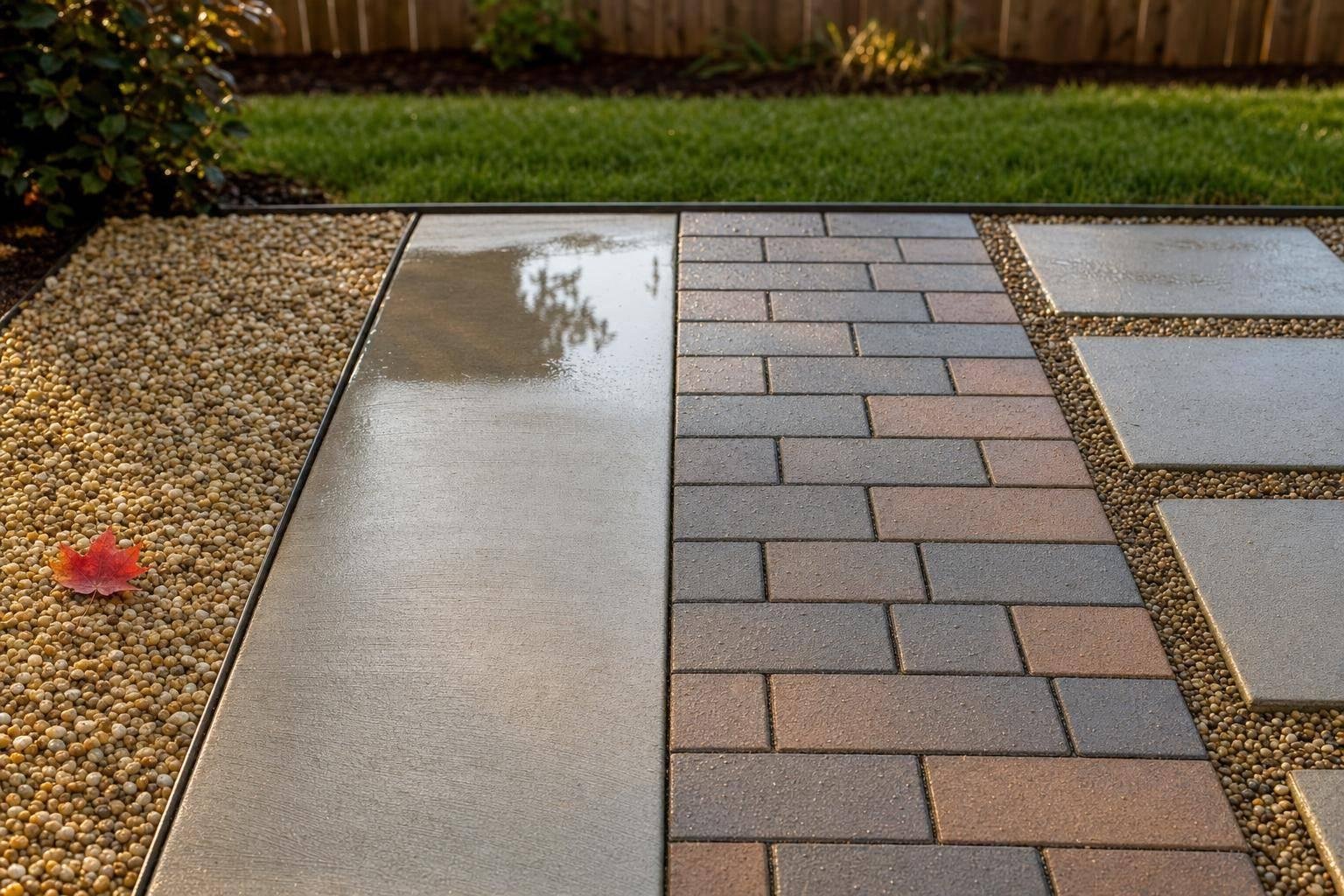
- bhavya gada
- No Comments
If I wanted the short answer, I’d say this: gravel is usually the cheapest, poured concrete gives me a solid surface for less than pavers, pavers cost the most up front but are easier to fix, and mixed-material layouts can lower the total price by using costlier surfaces only where they matter most.
For Maryland yards, I’d look at five things first:
- Installed cost
- Drainage
- Upkeep
- Freeze-thaw wear
- How the patio looks over time
The price ranges in this guide are simple:
- Gravel: about $6 to $12 per sq. ft.
- Basic poured concrete: about $6 to $18 per sq. ft.
- Concrete pavers: about $20 to $35 per sq. ft.
- Mixed-material layouts: often somewhere in between
Maryland weather can be hard on patios. Humid summers, heavy rain, and winter freeze-thaw swings can wear down the surface fast if slope, base prep, and drainage are off. And in clay-heavy soil, water can sit below the patio unless the site is graded the right way.
So if I were choosing a low-cost patio material, I’d think about it like this:
- Pick gravel if I want the lowest starting cost and strong drainage
- Pick concrete if I want a hard surface without paying paver prices
- Pick pavers if I care more about repair ease and looks
- Pick a mixed layout if I need to stretch a fixed budget
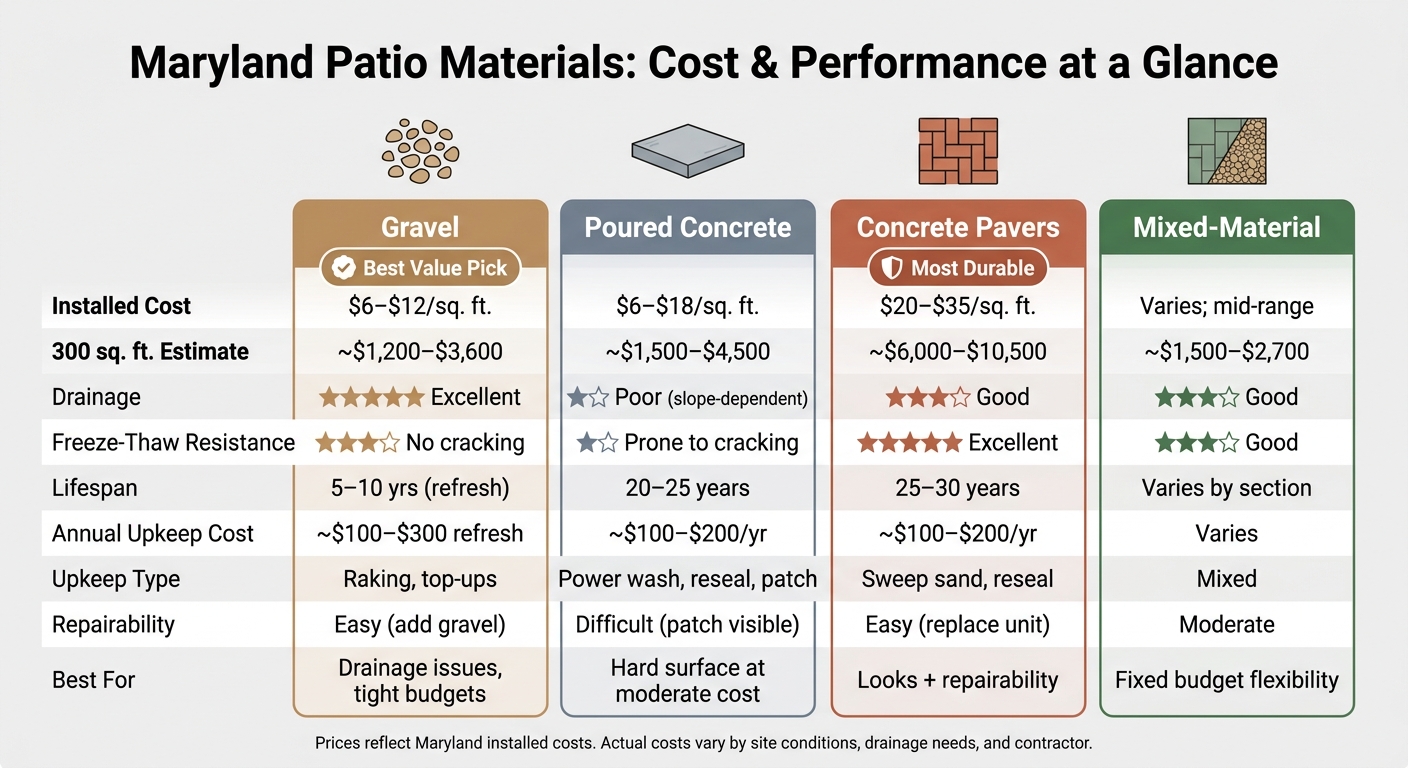
Maryland Patio Materials Cost & Performance Comparison
Patio Materials Price Guide | Gravel to Travertine
sbb-itb-843f8be
Quick Comparison
| Material | Installed Cost | Drainage | Upkeep | Life Span | Main Tradeoff |
|---|---|---|---|---|---|
| Gravel | $6–$12/sq. ft. | Very good | Raking and top-ups | 5–10 years before refresh | Shifts underfoot |
| Poured Concrete | $6–$18/sq. ft. | Poor unless sloped well | Low to moderate | 20–25 years | Can crack |
| Concrete Pavers | $20–$35/sq. ft. | Good with proper base | Low to moderate | 25–30 years | Higher starting cost |
| Mixed-Material | Varies; often mid-range | Can help move runoff | Varies by surface | Depends on each section | Seams and edging need care |
Bottom line: in Maryland, the cheapest patio is not always the lowest-cost patio over time. Drainage, slope, and soil matter just as much as the surface itself.
1. Gravel Patios
Cost
DIY material costs usually land around $2–$5 per sq. ft., while a basic professional install often runs $5–$10 per sq. ft.[5]
A low price tag doesn’t mean the patio has to look plain. The right edging and stone can make gravel feel deliberate, not like a shortcut.
Appearance
Gravel fits best in informal, naturalistic, or cottage-style landscapes. That’s a good match for many suburban and semi-rural yards across Maryland. Crushed stone like CR-6 or No. 57 stone comes in gray and blue-gray shades that pair well with brick and stone exteriors. Pea gravel has a softer look in tan or brown tones, but it shifts more underfoot.
Defined edging helps a lot here. Steel, aluminum, paver, or natural stone borders give the patio a cleaner, more settled outline. If you want it to look a bit more polished, add stepping stones under seating areas.
Drainage
Gravel is fully permeable. Rainwater moves through the stone and base layers into the soil below instead of sitting on the surface. That’s useful in Maryland, where summer storms and seasonal rain are common. Slope the patio 1/8 to 1/4 inch per foot away from the house so runoff moves away from the foundation.[5]
This matters even more in Maryland yards with clay-heavy soil and frequent storm runoff. In dense clay soil, which is common in parts of central Maryland, water can still get trapped below the gravel if the base isn’t prepared the right way. In that case, pairing the patio with a French drain or regrading the site first can make a big difference.
Lifespan
Plan on a refresh every 5–10 years. With regular care, the surface can last longer.[6][7] Gravel won’t crack from freeze-thaw cycles the way concrete can, but it does shift, settle, and wear thin over time. Rake and re-level it a few times each year, especially after storms, and add more gravel every 2–3 years.[8]
For a 200 sq. ft. patio, a gravel refresh usually costs about $100–$300 in materials. A compacted crushed stone base and solid edging do a lot of the heavy lifting when it comes to how long the patio holds up.
Next, compare gravel with basic poured concrete on cost, upkeep, and crack resistance.
2. Basic Poured Concrete Patios
Cost
A basic poured concrete patio usually costs about $8–$15 per sq. ft. installed, which makes it one of the lowest-cost solid-surface options for Maryland yards with simple grading and easy site access.[3] For a 300 sq. ft. patio, that puts the total at about $1,500 to $4,500, depending on site prep, slab thickness, and reinforcement.[3]
A plain broom-finished slab usually sits near the lower end of that range. Add color, borders, or steps, and the price goes up. Cost matters, of course, but so does the final look.
Appearance
Concrete gives you a flat, even surface that works well in modern spaces or more utility-driven backyards. You give up some style range, but in return you get a clean, uniform finish that looks more polished than gravel.
A broom finish adds grip and a bit of texture. A simple stain or integral color can make the slab feel less stark without adding much to the budget. You can also make it feel more planned-in with planted beds or a simple stone border around the edge. The look is straightforward, but water control needs attention from day one.
Drainage
Concrete does not absorb water, so runoff has to go somewhere.[15] The slab should slope about 1/8 to 1/4 inch per foot away from the house so water moves off the surface instead of hanging around.[13] In Maryland, that matters even more because clay-heavy soil tends to hold water.
If the yard around the patio does not direct water away from the edges, puddles can form. Over time, that can lead to moisture issues that are harder and more expensive to fix. In yards with drainage trouble, connecting the patio to a French drain or a larger grading plan is a smart move. Good grading and well-placed joints often do more for the slab’s life than the surface finish ever will.
Lifespan
A well-installed concrete patio in Maryland can last about 20–25 years before major repairs are needed.[10] Freeze-thaw cycles slowly turn small cracks into larger ones over time.[11][12] That’s why control joints matter. When they’re cut at regular intervals, they help guide where cracks happen so they stay mostly cosmetic.
Upkeep is pretty simple:
- Power wash once or twice a year
- Reseal every 2–3 years
- Patch cracks early to limit water intrusion[13]
Annual maintenance usually costs about $100–$200.[14] With concrete, the long-term payoff comes down to installation quality: base prep, joint placement, and drainage matter at least as much as the concrete itself.
Next, compare concrete with pavers for a higher-cost option that handles repairs differently.
3. Concrete Paver Patios
Pavers cost more than concrete, but they give you a tougher surface, easier repairs, and a cleaner finish.
The tradeoff is simple: concrete pavers cost more up front than gravel or poured concrete, but they deal with freeze-thaw movement and small repairs much better. In Maryland, that matters.
Cost
Installed concrete pavers usually cost $20–$35 per sq. ft..[1][2] For a 300 sq. ft. patio, that puts the total around $6,000–$10,500, depending on the pattern, the amount of base work, and how easy the site is to reach.
That higher price does come with a clear upside. If one area gets damaged, you can pull up and replace that section without tearing into the rest of the patio.
Appearance
Pavers give you sharper edges and a more defined layout than poured concrete or gravel. You can choose from different colors, shapes, and patterns, including running bond, herringbone, and basket weave, so it’s easier to tie the patio into the look of the house without needing a custom finish.
The result tends to look more planned and polished, not just functional. If the patio is a main outdoor living space, that can make a big difference.
Drainage
With properly filled joint sand, pavers move water more predictably than a solid slab. And unlike poured concrete, the surface doesn’t depend on one large piece staying perfect. Individual pavers can shift a bit during Maryland’s freeze-thaw cycles without cracking the whole patio.
That’s the big win here. If a few pavers settle or move, the fix is usually simple: reset them, add joint sand, and move on. On clay-heavy soil, solid base prep and proper grading still matter if you want water to drain away from the foundation.
Lifespan and Maintenance
A well-installed concrete paver patio can last 25–30 years with basic upkeep.[2] Year to year, maintenance is pretty simple:
- Sweep joint sand back into the gaps
- Rinse the surface
- Reseal every 3–5 years
If a paver cracks or sinks, you replace that one unit instead of patching a whole slab. That’s a big plus over poured concrete. Routine upkeep usually runs $100–$200 per year, which is in the same range as concrete, but pavers often avoid the kind of large repair bill that can show up later with a slab.
If a full paver patio feels out of reach, mixed-material layouts can lower the cost without giving up the overall look.
4. Mixed-Material Patios
Mixed-material patios sit in that sweet spot between a full paver build and a low-cost concrete or gravel setup. The idea is simple: use pavers or poured concrete where people spend the most time, then use gravel around the edges or in lower-traffic zones to keep the total price down. It’s a practical way to get a nicer finish where it matters most without paying for premium material across the entire surface.
Cost
For a 300 sq. ft. patio split between concrete and gravel, installed cost can land around $1,500 to $2,700, depending on site prep and the mix of materials used.[3][4][17] In Maryland, that base layer matters a lot. A compacted aggregate base under every section helps the patio stay stable over time, especially in clay-heavy soil.
A lower price point doesn’t mean the patio has to look thrown together.
Appearance
When the layout is planned well, a mixed-material patio feels deliberate, not patched up. A common setup is a concrete or paver seating area close to the house, with a gravel fire pit space farther out. Repeating colors or textures from the home’s exterior helps connect the whole space. Sticking to two or three materials usually keeps the design clean and easy on the eyes.
Drainage
This type of patio can also help with water management. Hard surfaces like concrete or pavers shed water, and the nearby gravel section gives that runoff somewhere to go, which can help cut down on puddles during Maryland’s wet weather.[16][9] All hardscape sections should slope about 1/8 to 1/4 inch per foot away from the house so water moves toward the permeable areas.
If a yard already has drainage trouble, Pro Landscapes MD can combine a mixed-material patio with grading, French drains, or dry riverbeds to help manage stormwater.
That setup works best when the seams and edging stay tight year after year.
Lifespan
The lifespan of a mixed patio usually comes down to its hardest-working sections. Gravel areas need topping up and re-leveling every few years because stones shift with foot traffic and storms.[4][17] The seams are usually the weak spot, so it’s smart to check edging each spring. That helps limit freeze-thaw heaving and keeps borders in place.
These tradeoffs are why mixed-material patios make sense when budget is the main driver, though cost, upkeep, drainage, and durability still need a side-by-side look.
Pros and Cons of Each Budget Patio Option
After looking at each patio type on its own, it helps to see the trade-offs side by side.
| Material | Best Advantages | Main Trade-offs | Best Use Case |
|---|---|---|---|
| Gravel | Lowest upfront cost; excellent drainage | Shifts underfoot; needs periodic raking and replenishment | Yards with drainage issues; casual or secondary spaces; tight budgets |
| Poured Concrete | Smooth, solid surface; low installed cost; low day-to-day upkeep | Impermeable; prone to cracking in freeze-thaw conditions; repairs are hard to hide | Flat, well-drained lots; homeowners who want a hard surface at moderate cost |
| Concrete Pavers | Replaceable units; good freeze-thaw resistance; cleaner finish | Higher upfront cost ($20–$35 per sq. ft. installed); joint sand needs occasional attention | Patios where repairability and appearance matter more than initial price |
| Mixed-Material | Budget flexibility; creates distinct zones | Requires careful planning; seams and edging can fail without careful detailing | Homeowners who need flexibility on a fixed budget |
For Maryland homeowners, two things tend to drive the decision more than anything else: total cost over time and how well the patio handles freeze-thaw cycles.
A low starting price can look great on paper. But that doesn’t always mean the patio will cost less in the long run. Upkeep, touch-ups, and material replacement can slowly add to the total.
Freeze-thaw performance is the big Maryland-specific issue. Concrete is usually the weakest link here because it’s rigid and impermeable. When water gets in and temperatures swing, cracking becomes more likely. Pavers and mixed-material layouts usually hold up better, especially when they sit on a properly compacted base with drainage built in. Gravel avoids cracking altogether, though it asks for more routine upkeep.
Here’s the simple way to think about it:
- Choose gravel if drainage and low upfront cost are your top priorities.
- Choose basic concrete if you want a low-upkeep hard surface at a moderate price.
- Choose pavers if looks and repairability matter more than the starting cost.
- Choose a mixed-material layout if you need more flexibility on a fixed budget.
Conclusion
The best patio choice comes down to three things: budget, drainage, and upkeep.
Gravel is the lowest-cost option and drains well. Poured concrete gives you a solid surface at a mid-range price. Pavers cost more up front, but they’re easier to fix if part of the patio shifts or gets damaged. Mixed-material layouts can also help you make a fixed budget go further by using higher-end surfaces only in the spots that matter most.
At the end of the day, the right pick depends on how your yard handles water and how long you want the patio to last.
Slope, soil type, and runoff paths should guide the final decision. If drainage is poor or the base isn’t stable, maintenance costs can climb over time.
For a patio that fits your site, Pro Landscapes MD helps Maryland homeowners review site conditions, drainage, grading, and patio layout so the material choice fits the yard and the budget.
FAQs
Which patio material is best for clay soil?
For Maryland’s typical clay soil, gravel is the best pick for the base layer. Clay tends to hold water, and that can lead to shifting or other structural problems over time. That’s why good drainage matters so much.
A professional installation should take soil conditions into account from the start, with proper grading, leveling, and drainage to help prevent settling and water damage.
How do I know if my yard needs drainage work first?
If you notice standing water, frequent puddles, or signs of water damage in your yard, handle drainage before you build a patio.
Poor drainage can wear down hardscaping and cut its lifespan short. It can also lead to shifting, cracking, and other headaches over time. Taking care of water flow first with fixes like grading, French drains, or dry riverbeds helps keep your patio steady and built to last.
What costs more over time: gravel, concrete, or pavers?
Over time, pavers usually have the highest upfront cost. But they also last a long time, and they’re easier to fix if part of the surface gets damaged. That can save money over the long run.
Concrete often costs less at the start. The trade-off is that cracks can be tougher to deal with, which can make repairs more of a headache.
Gravel is the cheapest option to put in. But it comes with more upkeep. You’ll likely need to add more stone over time and manage weeds to keep the surface level and working well.
Chat with Us