









- bhavya gada
- No Comments
If I want stone to last in Maryland, I have to build the base for water, clay, and winter movement from day one.
Here’s the short version: a stone patio, walkway, or step set can fail even when the stone looks fine at install. In Maryland, the usual trouble comes from freeze-thaw cycles, clay soil that swells and shrinks, and heavy rain that soaks or washes out the base. A base that lasts usually needs deeper digging, aggregate compacted in 2–4 inch lifts, geotextile between soil and stone base, and a 1%–2% slope away from the house.
If I had to boil the whole article down, it would be this:
- Water is the main trigger behind frost heave, soft spots, and edge washout
- Clay soil holds that water, then shifts as it gets wet and dry
- Freeze-thaw cycles move stone up and out of line
- Perimeter edges, steps, walkways, and flagstone patios often show failure first
- Drainage and compaction matter more than the stone itself
A few facts stand out right away:
- Water expands by about 9% when it freezes, which helps explain why trapped moisture can push stone upward
- A surface slope of 1%–2% means about 1/8 to 1/4 inch per foot, enough to move water away in many installs
- Base stone placed in 2–4 inch lifts is compacted in layers so the support under the stone stays more even over time
This article points to one clear idea: stone problems in Maryland usually start below the surface. So before any stone goes down, I need to think about excavation depth, soil separation, drainage path, compaction, and edge support as one system.
I Prepared the BASE of a Paver Patio 4 DIFFERENT Ways
Problem: Freeze-Thaw, Clay, and Rain Make Stone Bases Unstable
In Maryland, freeze-thaw cycles, clay-heavy subgrades, and heavy rain often hit the same base at once. When that happens, the stone loses support and the surface starts to go uneven.
Freeze-Thaw Heave and Joint Movement
When water gets into the base and then freezes, it expands and pushes the stone up. After it thaws, the stones rarely drop back into place evenly. Over time, those repeated freeze-thaw cycles open joints and leave stones sitting at different heights. That’s why a deeper, more stable base matters here.
Clay Subgrade Saturation and Shrink-Swell Movement
Clay-heavy soil tends to hold water after storms or snowmelt, which weakens the base above it. Then the weather shifts, the soil dries out, and the subgrade moves again. That back-and-forth movement can create soft spots, low areas, and stones that drift out of line. To limit that, the base needs separation layers and drainage built into it.
Heavy Rain, Runoff, and Edge Washout
Heavy rain can soak the base fast, and poor drainage makes the problem worse. Water also strips material from the edges, especially along the perimeter. Once that edge support starts to give way, stones along the border can settle or tip. Good slope and edge control help stop that chain reaction.
| Problem | Common Symptoms |
|---|---|
| Freeze-thaw movement | Uneven stones, open joints |
| Clay-heavy subgrade | Soft spots, low areas, shifting stones |
| Heavy rain and runoff | Eroded edges, settling at the perimeter, standing water |
These failure patterns shape how installers excavate, compact, and drain the base.
Solution: Base Prep Methods That Work in Maryland Conditions
In Maryland, base prep fixes these problems by digging deeper, compacting the base the right way, and controlling where water goes.
Deeper Excavation and Proper Compaction
The fix starts under the stone, not at the surface. First, remove all topsoil and weak organic material until you hit a stable subgrade. If the soil has a lot of clay, it can stay weak because it holds water. That means Maryland jobs often need deeper excavation to get below weak soil layers and frost-affected material.
After that, add aggregate in 2–4-inch lifts and compact each lift before adding the next one. That step matters. If you dump it all in at once, the base may look fine at first but fail later.
Slope and Water Management
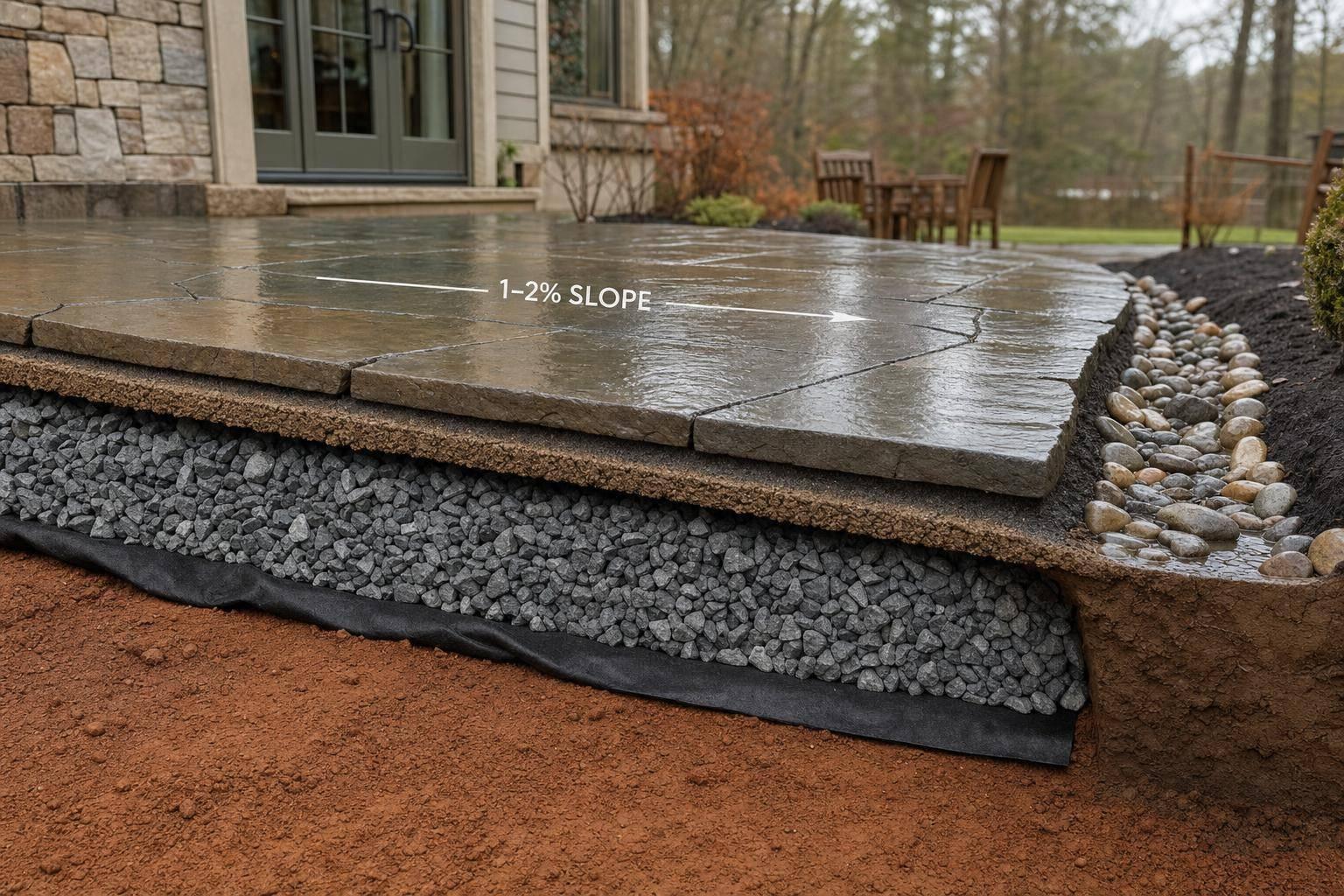
Once the base is compacted, the surface needs to move water off fast. A 1%–2% slope away from the structure helps keep water from sitting on the surface and soaking into the base [1]. The slope also needs to work with the outlets and edge restraint. If those parts fight each other, water can still collect where you don’t want it.
This is how Maryland site problems line up with the base-level fixes installers use:
| Problem | Base Prep Response |
|---|---|
| Freeze-thaw heave | Deeper excavation; compaction in 2–4-inch lifts |
| Unstable subgrade | Weak soil removed; stable layer exposed |
| Water pooling | 1%–2% slope away from the structure |
sbb-itb-843f8be
How Installers Build a Long-Lasting Stone Base
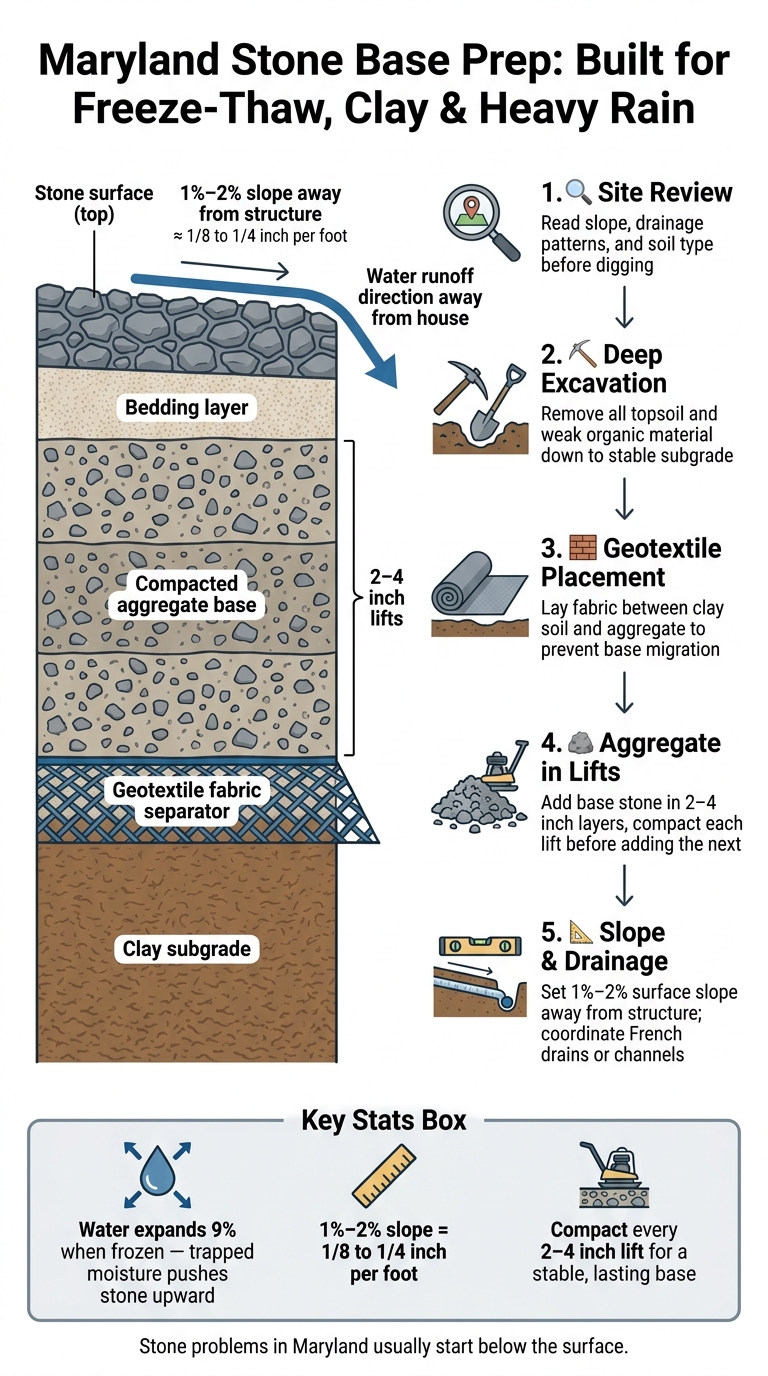
Maryland Stone Base Prep: Step-by-Step for Freeze-Thaw Durability
Site Review, Layout, and Elevation Control
Slope and drainage rules don’t stay on paper for long. On the job site, they shape the whole build process.
Before any digging starts, experienced crews study the site to read the slope, drainage patterns, and soil type. That early soil check matters because excavation depth and drainage details need to fit the conditions on the ground. Installers also set the finished elevation before excavation begins, so the surface can move water off the stone the way it should once everything is in place.
Layered Base Construction and Bedding Prep
Once the layout is confirmed, crews excavate and remove unstable soil until they reach a stable subgrade. After that subgrade is exposed, they place geotextile fabric between the soil and the aggregate base. That layer keeps the aggregate from blending into clay and helps the base stay stable over time.
From there, the base goes in layer by layer, with compaction at each stage:
| Step | What It Does | Why It Matters |
|---|---|---|
| Geotextile placement | Separates the aggregate from the clay subgrade | Helps prevent base migration into the soil |
| Aggregate in lifts | Builds the base gradually | Supports a stable foundation |
| Compaction after each lift | Locks each layer into place | Reduces settling and shifting |
Free-draining aggregate helps limit trapped moisture and freeze-thaw movement. But this kind of layered build only does its job when the drainage plan is worked out before the stone goes in.
Coordinating Hardscape and Drainage Work
Drainage needs to be part of the hardscape plan from the start, not something added after installation. Pro Landscapes MD coordinates stone work with grading, French drains, dry riverbeds, and stormwater management across central Maryland.
Conclusion: What Matters Most for Maryland Freeze-Thaw Base Prep
After excavation, compaction, and drainage planning, the main point is simple: a natural stone patio or walkway is only as strong as the base beneath it. In Maryland, that base has to be built for soil movement, freeze-thaw cycles, and heavy rain, not just the weight of the stone.
Freeze-thaw heave, clay movement, and heavy rain all put stress on the base. That’s why installers use deeper excavation, layered compaction, and soil separation to help keep the structure steady.
Drainage is the last piece that carries the load. It needs to be part of the foundation from the start, through slope, channels, and stormwater control.
Long-term performance comes down to base design that fits Maryland’s soil and climate.
Pro Landscapes MD handles base prep, drainage coordination, and natural stone installation across central Maryland.
FAQs
How deep should a stone base be in Maryland?
In Maryland, natural stone base depth depends on how the space will be used and what the soil is like underneath.
For pedestrian patios and walkways, the base usually needs 4 to 6 inches of compacted crushed stone. For driveways or other areas that carry vehicle traffic, that depth usually increases to 8 to 12 inches.
Maryland’s clay-heavy soils and frequent freeze-thaw cycles can make the ground move more than you’d want. That’s why installers often go a bit thicker with the base and compact the aggregate in lifts. It’s a simple step that helps cut down on shifting, frost heave, and settlement.
Why is geotextile fabric important under stone?
In Maryland’s climate, geotextile fabric separates the subgrade from the crushed stone base. That matters even more in clay-heavy soils, where freeze-thaw cycles can cause the layers to mix.
By keeping those layers apart, the fabric helps stop fines from moving into the aggregate. If that happens, the base can weaken and lead to sinking, uneven surfaces, and less resistance to frost heave.
What drainage features help prevent stone movement?
To help prevent stone movement in Maryland’s freeze-thaw conditions, installers put a lot of attention on drainage. The goal is simple: keep water from pooling under and behind hardscapes.
That usually starts with a surface slope of 1/8 to 1/4 inch per foot. Installers may also use French drains, perforated drain pipes, and channel drains to move water away from the area.
For retaining walls, drainage matters just as much. Granular backfill, perforated pipe wrapped in filter fabric, and weep holes help relieve water pressure before it builds up and causes trouble.
Chat with Us