









- bhavya gada
- No Comments
If I want the short answer: pull small weeds, dig deep roots, cut woody vines, smother big patches, and spot spray only when hand work stops making sense.
In Maryland beds, the best choice usually comes down to 5 things:
- Root depth
- Plant type
- Patch size
- Slope
- Distance from plants I want to keep
I’d use hand pulling for seedlings and shallow roots, especially after rain. I’d switch to digging for plants with deeper roots. For vines on fences or trunks, I’d cut them and deal with regrowth. For broad bed cleanup, I’d use smothering with cardboard and mulch. And for weeds that keep coming back, spread too far, or sit in hard-to-reach spots, I’d use targeted spot spraying with care.
A few numbers stand out:
- 2–3 inches of mulch helps keep new seedlings shallow
- 4–6 inches of mulch works better for patch smothering
- 6–12 months is a common wait before a smothered area is ready for replanting
The main rule is simple: use the least soil disturbance you can, especially on slopes and in planted beds.
When To Pull vs. Spray Weeds – Ace Hardware

sbb-itb-843f8be
Quick Comparison
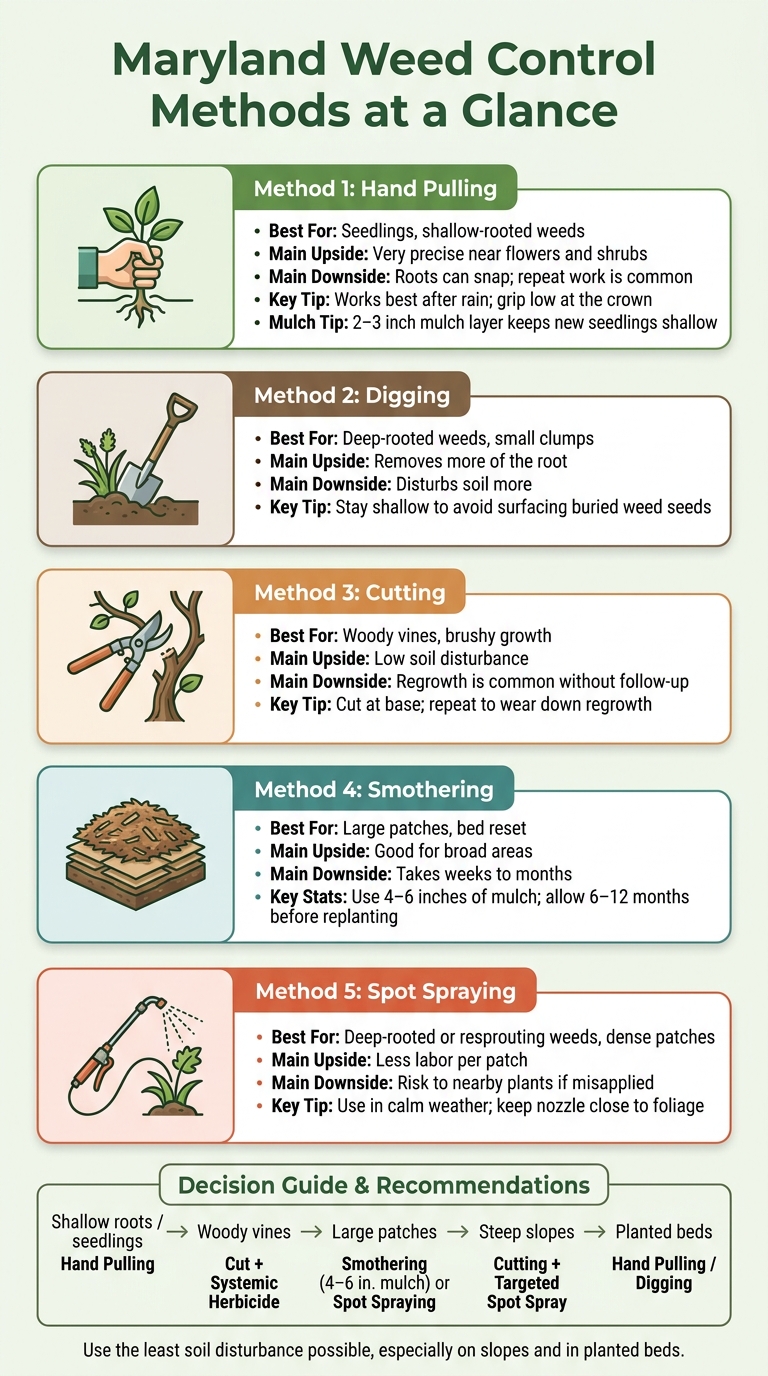
Maryland Weed Control Methods: Hand Pull vs. Spray Comparison Guide
| Method | Best for | Main upside | Main downside |
|---|---|---|---|
| Hand pulling | Seedlings, shallow-rooted weeds | Very precise near flowers and shrubs | Roots can snap; repeat work is common |
| Digging | Deep-rooted weeds, small clumps | Removes more of the root | Disturbs soil more |
| Cutting | Woody vines, brushy growth | Low soil disturbance | Regrowth is common |
| Smothering | Large patches, bed reset | Good for broad areas | Takes weeks to months |
| Spot spraying | Deep-rooted or resprouting weeds, dense patches | Less labor per patch | Risk to nearby plants if misapplied |
If I’m working near ornamentals, on a steep slope, or in a tight border, I’d lean toward manual control first. If the area is large, stubborn, or hard to reach, spot treatment may be the better tradeoff.
When Hand Pulling, Digging, Smothering, and Cutting Work Best
Non-spray methods make the most sense in planted beds where precision matters and you want to avoid herbicide drift. The best way to choose? Start with the weed’s root type, then match the method to the bed, border, or slope.
Hand Pulling for Seedlings and Shallow Roots
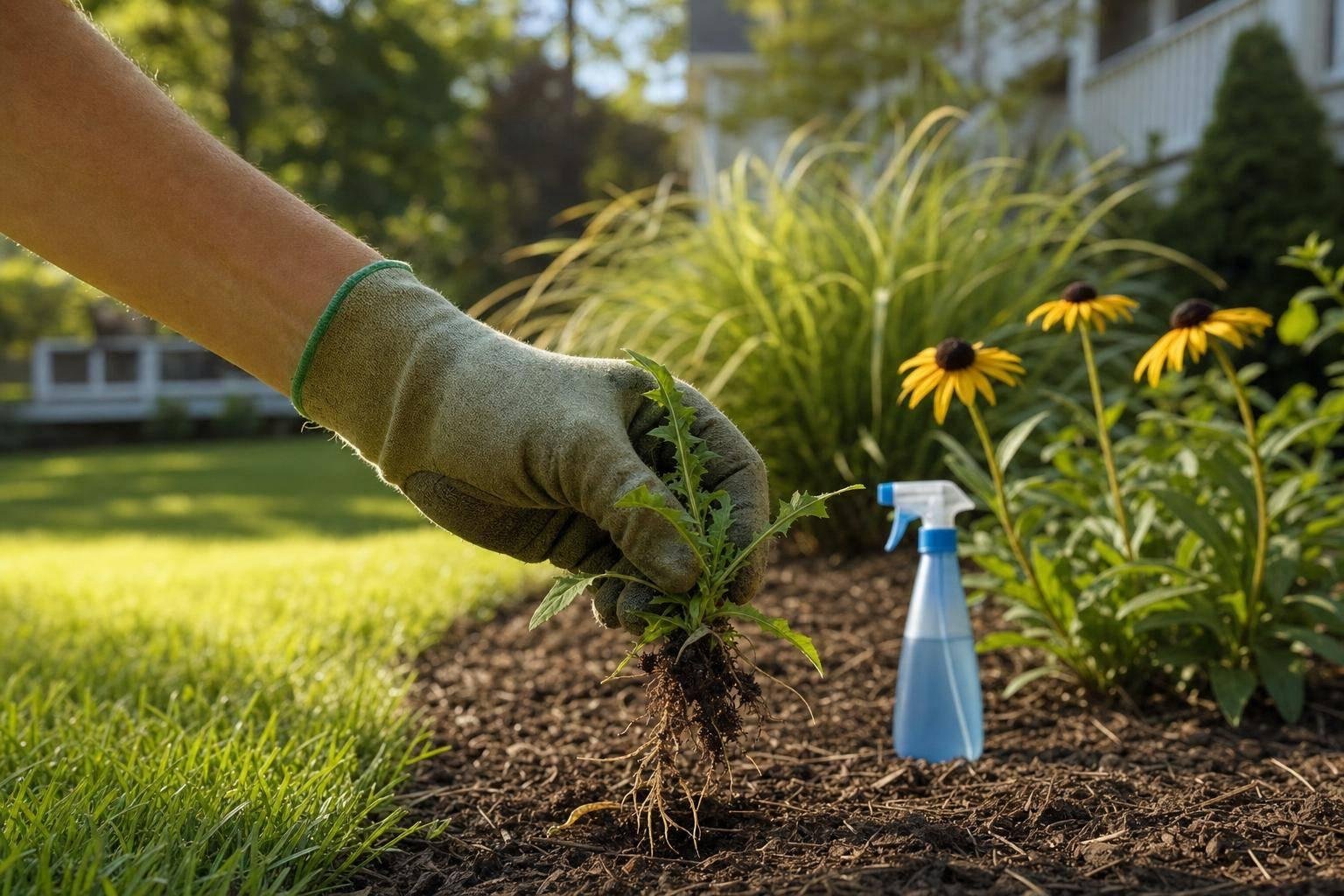
Use hand pulling when weeds still have shallow roots. In Maryland beds, that often means chickweed, purslane, and young dandelions. It’s easiest after rain or watering, when the soil is loose enough to let the roots come out in one piece.
Around flower borders, foundation shrubs, and groundcovers, hand pulling gives you tight control. You can remove one plant at a time without messing with nearby roots. Grip the weed low at the crown and pull with a steady motion. If you yank from the top, the stem can snap and leave the root behind.
A 2–3 inch mulch layer helps too. It keeps new seedlings shallow, which makes them easier to pull as soon as they show up.
Once roots get deeper, switch to digging instead of pulling.
Digging and Cutting for Rooted or Woody Growth
Digging works best for rooted plants you can lift out whole, like established dandelions, plantain, and invasive perennial clumps. Use a spade or digging fork to loosen the soil around the plant, then follow the roots until you can remove them fully. Stay fairly shallow while you work so you don’t bring buried weed seeds to the surface.
Cutting is the better fit for woody vines on fences and tree trunks that won’t pull free. Cut them at the base, then repeat as needed to wear down regrowth over time.
If you’re dealing with a broad area that needs a reset, smothering is usually the cleaner route.
Smothering for Large Patches and Bed Cleanup
Use smothering when you’re cleaning up a bed before replanting. After mowing or cutting the growth short, cover the area with overlapping cardboard or newspaper. Then top it with mulch or compost. This blocks light and helps knock back the patch over time.
That said, deep-rooted perennials can still come back, so some follow-up work may still be needed.
Pros and Cons of Non-Spray Methods
| Method | Best Use | Labor | Precision | Speed | Disturbance | Regrowth Risk |
|---|---|---|---|---|---|---|
| Hand pulling | Annuals, seedlings, shallow roots | Moderate | Very high | Immediate, ongoing | Low | Low for annuals; higher if roots break |
| Digging | Deep roots, small woody plants | High | Moderate | Quick per plant | High | Moderate |
| Cutting | Woody vines, brushy growth | Moderate | Moderate | Fast above ground | Low | High without follow-up |
| Smothering | Large patches, bed restoration | High at start | Low to moderate | Slow, over weeks to months | Low | Low with full coverage |
Spot spraying fills the gap when growth is too established, too spread out, or too hard to reach by hand.
When Spot Spraying Is the Better Choice
Spot spraying means treating individual weeds or small clumps with herbicide instead of spraying an entire bed.
Best Uses for Spot Spraying
When hand pulling, digging, or smothering stops getting the job done, spot spraying is often the faster next move.
It makes sense when a weed is well established, hard to dig out, or spread too far for hand removal to be practical. This method works especially well on dense infestations and deep-rooted perennial weeds that keep coming back after pulling or cutting. Creeping Charlie and bindweed are common examples. A systemic herbicide applied to the leaves can move down into the roots and help cut back regrowth.
It can also help with invasive vines like English ivy or honeysuckle after cutting. The timing matters. New regrowth is often the best target because the fresh leaves are still tender enough to absorb the herbicide.
Spot spraying is also useful in places that are awkward to work by hand, like:
- long fence lines
- tight corners behind sheds
- weeds wedged between rocks
- growth tucked into retaining wall stones
In those spots, walking the area with a hand wand and treating only the visible clumps is usually much easier than digging out each plant one by one.
Where Extra Caution Is Needed
Planted beds and mixed borders call for a steady hand. If shrubs, perennials, or groundcovers you want to keep are close by, it’s easy to make a bad shot. Use a shielded wand or a small hand sprayer, keep the nozzle close to the weed foliage, and leave some space around nearby plants.
Calm weather helps keep droplets where they belong. Once wind starts moving, drift becomes a real problem for ornamentals and lawn edges nearby. On the flip side, still air can also hold droplets in place and add to drift.
Heat and drought stress matter too. Most homeowner herbicides work best when temperatures are moderate and plants are actively growing. During a heat wave or dry spell, weeds may not take up the product as well, and off-target movement can increase.
Steep slopes bring another issue: runoff. Keep spray away from storm drains and ditches, use smaller amounts aimed right at the foliage, avoid spraying on soaked soil, and skip the job if heavy rain is in the forecast.
Pros and Cons of Spot Spraying
| Factor | Spot Spraying | Non-Spray Methods |
|---|---|---|
| Coverage | Strong for large or dense patches | Better for isolated, scattered weeds |
| Labor | Lower physical effort per plant | Higher effort, especially for digging and pulling |
| Precision | High when conditions are right; lower with drift or misapplication | Very high – no off-target spray risk |
| Speed | Fast across large areas in one pass | Slower, especially for deep-rooted plants |
| Follow-up needs | Often requires repeat treatment as regrowth appears | Repeated pulling or cutting is often needed for perennials |
| Risk to nearby plants | Moderate to high if conditions are poor or technique is off | Low, unless roots or stems are physically disturbed |
The next step is matching the method to the plant type and site conditions. That choice comes down to root depth, patch size, slope, and how close the weeds are to plants you want to keep.
Comparing Methods by Plant Type and Site Conditions
Best Method for Shallow Roots, Woody Vines, Large Patches, Steep Slopes, and Planted Beds
The best method depends on the plant, the size of the patch, and what the site will let you do.
Shallow roots and seedlings: Pull seedlings and other shallow-rooted annuals early, while the soil is moist. Chickweed, pigweed, and young crabgrass come out much more easily before they set seed.
Woody vines: For English ivy, Oriental bittersweet, and honeysuckle, cut the stem a few inches above the ground and treat the fresh cut with a systemic herbicide.[4][7] Cutting alone often turns into a game of whack-a-mole.
Large patches: Use smothering for broad, open areas. A layer of mulch that is 4 to 6 inches deep can hold back many annual and shallow-rooted weeds, but weeds with deep roots or spreading roots usually need more follow-up.[3]
Steep slopes: Skip heavy digging on steep slopes. It loosens the soil and increases erosion risk. Cut back the top growth first, then follow with the least disruptive method.[2] If the slope is steep, the area is hard to reach, or the patch is just too big, the choice often comes down to cutting or spot treatment.
Planted beds: In planted beds, hand pulling and careful digging give you the most control. Smother only open gaps, and use spot spray only with a shield and only in calm weather.[1]
| Condition | Best Method | Key Reason |
|---|---|---|
| Shallow roots / seedlings | Hand pulling | Removes the root system |
| Woody vines | Cut + systemic herbicide (cut-stump) | Helps suppress resprouting; cutting alone often regrows |
| Large patches | Smothering (4 to 6 in. mulch) or spot spraying | Low labor; suited to broader areas |
| Steep slopes | Cutting + targeted spot spray | Minimizes soil disturbance and erosion risk |
| Planted beds | Hand pulling / digging | Highest precision; lowest off-target risk |
When a patch is too large, too steep, or too tangled for hand work, the next step is to decide whether spot spraying is worth the tradeoff.
How to Choose Based on Labor, Precision, and Regrowth Risk
Once you know the plant type and site limits, the choice usually comes down to labor, precision, and regrowth risk.
Manual methods – pulling, digging, and cutting – give the most control near plants you want to keep. The downside is simple: deep-rooted perennials often come back, so you may need repeated passes. These methods fit small gardens, tight borders, and areas near vegetables, pollinator gardens, or children’s play areas.
Smothering shifts the work to the front end. After thick wood chips are in place, there isn’t much day-to-day effort left. Still, it takes time. Plan on 6 to 12 months before the area is fully ready for replanting.[5][6]
Spot spraying cuts labor on steep, dense, or resprouting growth, but it only works well when the weather cooperates and the application is precise. It’s often the practical option when pulling or cutting hasn’t solved the problem and plants keep resprouting, or when the site is too large or too steep for hand work to make sense.[2]
When to Call for Help With Difficult Beds, Slopes, or Restoration Work
When hand pulling or spot spraying keeps missing the mark, the weeds may not be the main problem. Sometimes the site itself is setting you up to lose.
If water sits in the bed after rain, that points to a drainage problem.[8] If a slope is steep or starting to wash out, it needs stabilization, not another round of pulling or spraying.[9][10][11] At that point, the job shifts from weed control to site repair.
That’s where restoration work starts to make more sense than one more treatment pass. A neglected planted bed often needs restoration, not a basic cleanup. When invasive roots, compacted soil, and poor drainage stack up in the same area, the bed usually needs deeper repair. Fixing the site helps cut regrowth pressure and makes later weed control much easier.
Pro Landscapes MD handles bed restoration, grading, drainage, and slope work across central Maryland. The aim is a stable, replantable bed with lower weed pressure.
Conclusion: Match the Method to the Plant and the Site
No single method works for every weed. The right choice depends on the plant and the place.
Once you compare root depth, patch size, and site conditions, the path is pretty clear: hand pull shallow-rooted seedlings in moist soil; dig small established plants; cut woody vines to the ground and cut regrowth again; smother large patches with cardboard and mulch; spot spray persistent, deep-rooted, or resprouting infestations.
On steep slopes or sites that drain easily, skip heavy digging. If the area is fragile, start with the option that disturbs the soil the least. Use low-disturbance control, then cover bare soil fast with mulch or new planting.
For bed restoration, grading, and drainage issues, Pro Landscapes MD serves central Maryland.
FAQs
How do I tell if a weed is shallow-rooted or deep-rooted?
Check the plant type first, and test the soil if you need to. Groundcovers usually have shallow, dense roots close to the surface. Shrubs and trees usually have deeper, more extensive root systems.
If you’re not sure what you’re dealing with, use a probe to check root depth. You can also ask the University of Maryland Extension, a local Master Gardener, or Pro Landscapes MD for plant identification and weed management guidance.
When is spot spraying worth it over hand pulling?
Spot spraying makes sense when weeds keep coming back, won’t budge, or when hand pulling just isn’t enough for one plant or a small patch.
Because it treats only the problem area instead of the entire garden, it can cut down on impact compared with broadcast treatments.
What should I use on weeds growing on a slope?
For weeds on a slope, use 3 to 4 inches of organic mulch around plants. It helps hold back weeds, keep moisture in the soil, and improve soil health without messing up drainage.
Ground covers, shrubs, and perennials can also help hold the soil in place while crowding out weeds. In tougher spots, Pro Landscapes MD recommends retaining walls or rock barriers to slow runoff and add long-term stability.
Chat with Us