









- bhavya gada
- No Comments
MSE (Mechanically Stabilized Earth) retaining walls offer a reliable way to manage flood risks by combining reinforced soil, drainage systems, and flexible materials. These walls are designed to handle water pressure, prevent erosion, and redirect floodwaters, making them a practical solution for flood-prone areas. Key features include:
- Reinforced soil structure: Geogrids and compacted backfill create a strong, flexible wall.
- Drainage systems: Free-draining materials reduce hydrostatic pressure, preventing water buildup.
- Erosion control: The reinforced design holds soil in place, even during heavy rain.
Compared to rigid concrete walls, MSE walls are less prone to cracking, easier to install, and have a longer lifespan (120+ years). They also incorporate materials like gravel-filled geotextile bags, which allow water to flow through, reducing flood damage risks. Proper installation and maintenance ensure these walls remain effective over time.
Flood defences – Retaining walls
sbb-itb-843f8be
What Are MSE Retaining Walls?
MSE Retaining Walls vs Traditional Concrete Walls Comparison
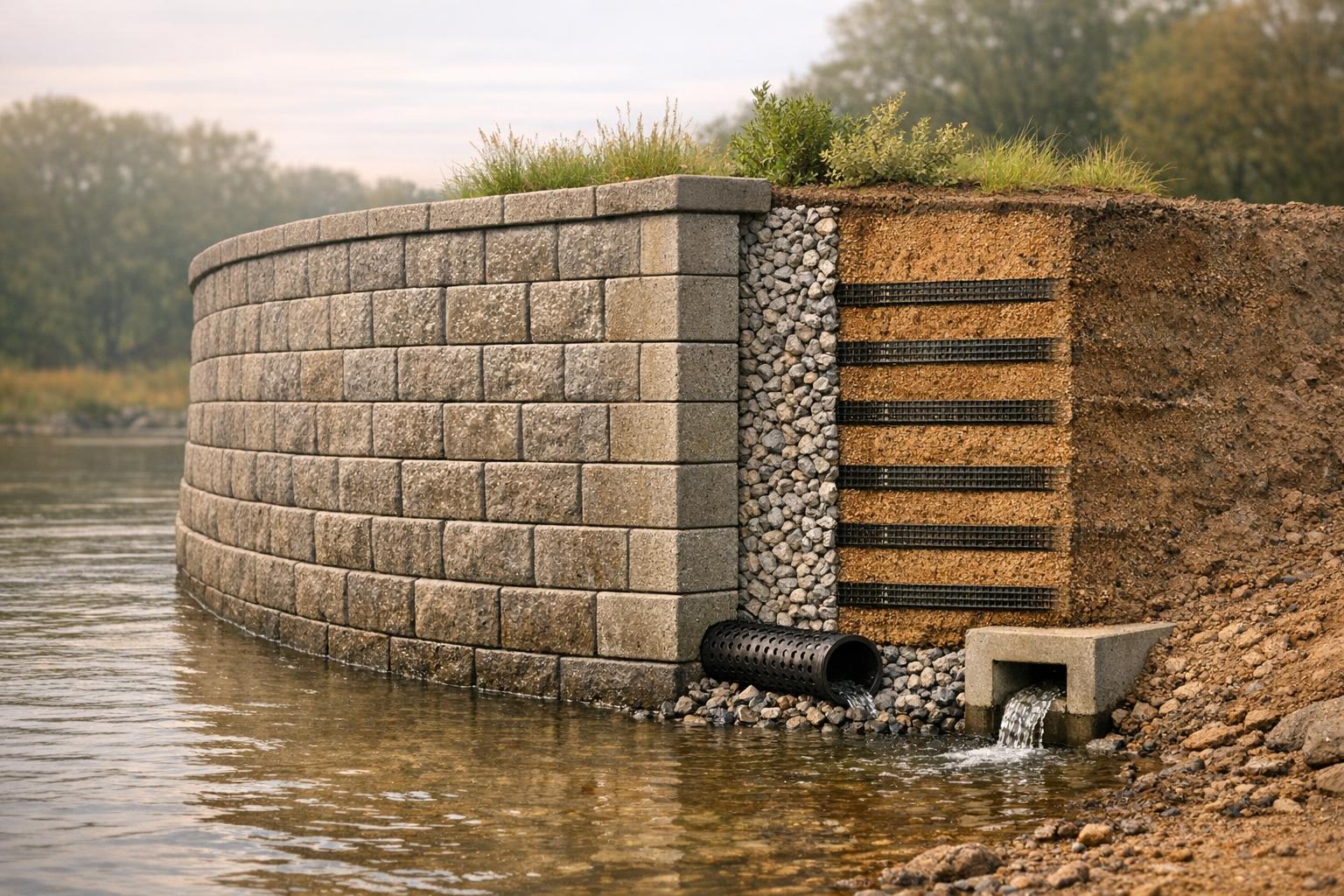
MSE, or Mechanically Stabilized Earth, is a construction method that turns compacted, reinforced soil into a flexible retaining wall. It uses geotextile reinforcements and compacted backfill to create a stable gravity structure [3]. Unlike rigid concrete walls that can crack or fail when the ground shifts, MSE walls are designed to absorb and redistribute stress, making them far more adaptable to ground movement. This flexibility is especially useful in areas prone to flooding, where soil conditions can change quickly [3]. Let’s take a closer look at the components and mechanics that make these walls so effective in flood-prone environments.
Main Components of MSE Retaining Walls
An MSE wall is made up of four key elements that work together to ensure stability and durability:
- Facing: The outer layer is made from high-strength polypropylene geotextile bags, which can be filled with vegetation-friendly material or gravel for a more rugged look [3].
- Interlocking Plates: These recycled polypropylene plates connect and stabilize the geotextile bags, ensuring the wall remains secure [3].
- Geogrid Layers: These are embedded within the backfill to reinforce the soil mass and provide additional strength [3].
- Compacted Backfill: This is the soil placed behind the facing, which serves as the structural core of the wall [3].
The type of fill material used depends on the installation site. For areas above water, sand and compost are common choices to encourage vegetation growth. In underwater or high-moisture conditions, gravel is used to ensure water can flow freely through the structure, preventing dangerous pressure from building up [3].
How MSE Walls Function
The strength of MSE walls lies in the way they use geogrid reinforcement to create friction and interlock between soil particles. This interaction generates a "pseudo-cohesive" effect [1], allowing the soil mass to stand vertically and support heavy loads. In fact, MSE walls can be built as tall as 60 feet [1].
One of their standout features is permeability. Unlike traditional solid walls that block water, MSE walls with gravel-filled bags allow water to pass through. This reduces hydrostatic pressure, a common cause of failure in rigid walls, and plays a critical role in ensuring the wall’s performance during floods [3]. The combination of effective drainage and flexibility is why MSE walls remain intact during flooding events that often destroy conventional retaining walls.
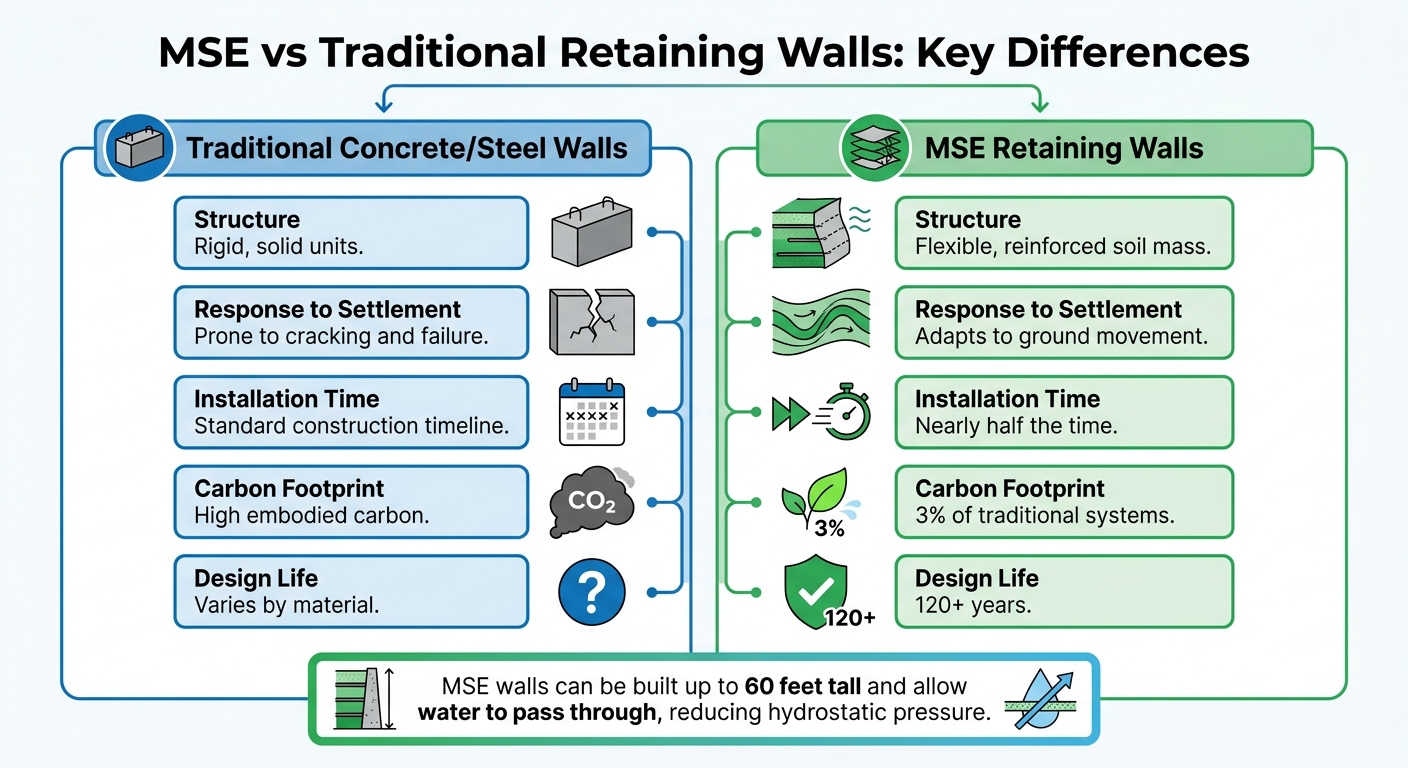
| Feature | Traditional Concrete/Steel Walls | MSE Retaining Walls |
|---|---|---|
| Structure | Rigid, solid units | Flexible, reinforced soil mass |
| Response to Settlement | Prone to cracking and failure | Adapts to ground movement |
| Installation Time | Standard construction timeline | Nearly half the time |
| Carbon Footprint | High embodied carbon | 3% of traditional systems |
| Design Life | Varies by material | 120+ years |
How MSE Retaining Walls Prevent Flooding
MSE retaining walls act as effective barriers designed to manage water flow during floods. They achieve this by redirecting water, stabilizing soil, and incorporating drainage systems that stop water from building up. These three elements work together to shield properties from flood damage. Let’s break down how each of these mechanisms works.
Redirecting Floodwater
MSE walls are strategically placed to guide floodwaters away from vulnerable areas, such as building foundations, driveways, and landscaped zones. By acting as barriers, they divert water during heavy rainfall or creek overflows. When installed near waterways, engineering guidelines recommend placing the wall’s footing at least 2 feet below the creek bed to avoid being undermined by fast-moving water [5]. In areas with high water flow, additional protection like grouted rip-rap can be added to the front face of the wall. This prevents scour – when rushing water erodes the soil at the base, threatening the wall’s stability [5].
In addition to managing water flow, MSE walls play a crucial role in preventing soil erosion.
Erosion Control and Soil Stability
The reinforced design of MSE walls forms a solid barrier that holds soil in place, even during heavy flooding. This is especially important for sloped properties, where rain can easily displace soil. By embedding geogrid layers within the backfill, these walls create friction between soil particles, reducing the risk of erosion and preventing flooding caused by soil runoff. Unlike rigid walls, MSE walls have the flexibility to handle the shifting forces of moving water without cracking or collapsing. This durability makes them a reliable choice for flood-prone areas.
Improving Drainage Systems
To further combat flooding, MSE walls include specialized drainage systems that ensure water doesn’t collect behind the structure. Using free-draining backfill materials, like #5 ballast rock, these walls allow water to flow out quickly as floodwaters subside [5]. According to Dexman PE:
The underdrain system is necessary to prevent underground ponding for when the water level gets high enough to infiltrate the backfill. The water needs a way back out [5].
Design Features for Flood-Resistant MSE Retaining Walls
Flood-resistant MSE (Mechanically Stabilized Earth) retaining walls are carefully engineered to handle water pressure and maintain soil stability during flooding. Their effectiveness comes down to three key design elements: drainage layers, adaptable wall geometry, and permeable materials. Together, these features ensure the wall can manage water flow and remain stable, even under extreme conditions.
Adding Drainage Layers
Drainage layers play a crucial role in preventing water buildup behind the wall. MSE systems use high-performance geogrids, which are installed in horizontal layers throughout the structure. These geogrids reinforce the soil, helping to distribute loads evenly and maintain stability even when the ground is saturated [3]. By working in tandem with the wall’s facing, these layers allow water to escape rather than accumulate.
As Green Gravity Walls UK explains:
The geotextile bag and interlocking plate facing forms a flexible, mechanically stabilised structure that can adapt to ground movement and differential settlement [3].
In areas where space is tight or excavation is deep, engineers often combine soil nailing with the MSE wall and geogrid system for extra reinforcement [3].
Slope and Wall Geometry
Unlike rigid concrete walls that are prone to cracking under pressure, MSE systems are designed to be flexible. These walls can be built in various shapes, allowing engineers to tailor them to specific site needs, such as along shorelines or flood-prone embankments [3][4]. This flexibility is especially important in areas with fluctuating water levels, as the wall can shift with the land over time, reducing the risk of stress-related failures [4].
Not only are these walls adaptable, but they are also efficient. They have a lifespan exceeding 120 years and can be installed in nearly half the time and at 40% less cost compared to rigid wall systems [4].
Using Permeable Materials
The materials used in MSE walls are critical for managing floodwater effectively. In underwater or high-moisture zones, gravel-filled MSE bags are preferred, as they allow water to pass through the system, reducing hydrostatic pressure [3]. Above-water sections typically use a mix of sand and compost, which supports vegetation while still allowing for drainage [3].
The geotextile bags themselves are made from durable, non-woven polypropylene, which resists UV damage, chemicals, and biological degradation [3]. For added stability, many systems use interlocking plates made from 100% recycled polypropylene, which maintain mechanical strength without compromising drainage capacity [3]. These design choices also make vegetated MSE walls far more environmentally friendly, producing just 3% of the carbon footprint compared to traditional concrete or steel systems [4].
Installing MSE Retaining Walls for Flood Prevention
Installing an MSE retaining wall to prevent flooding involves detailed planning and precise execution. Unlike traditional concrete walls, these systems are designed for quicker setup and greater adaptability in areas vulnerable to flooding.
Site Assessment and Preparation
Before construction begins, a thorough geotechnical evaluation is essential. This step identifies whether additional reinforcement, like soil nails, might be needed to stabilize slopes or handle deep excavations [3]. It also determines if the wall will be installed above or below the waterline. For underwater installations, gravel is used instead of a sand/compost mix to ensure better permeability and reduce hydrostatic pressure [3].
One standout feature of modular MSE bag systems is their lightweight design. This reduces the need for heavy machinery, unlike traditional concrete walls [3][4]. As Green Gravity Walls UK explains:
The lightweight ECO-MSE® system enables fast mobilisation and effective repair without the need for heavy plant – making it ideal for urgent works in difficult or sensitive locations [3].
This makes these systems a strong choice for areas with limited access or where minimizing environmental impact is a priority. Proper preparation ensures a stable base for the layered construction process that follows.
Construction Steps
Once the site is ready, the wall is built by creating a reinforced soil mass through the strategic use of geogrids. These geogrids are laid horizontally within compacted backfill, working in tandem with geotextile facing to distribute loads evenly [3]. For above-water sections, a 70/30 mix of sand and compost is used, supporting vegetation growth while maintaining effective drainage [3].
A great example of this method in action is the Normanton Train Station project. Green Gravity Walls UK successfully designed, manufactured, and installed an ECO-MSE® vegetated wall system for TMT Commercial Contractors, Northern Trains, and Network Rail, completing the project on time [3]. Unlike rigid concrete, MSE systems can adapt to ground movement and differential settlement, which is crucial in flood-prone areas where soil saturation can cause significant pressure [3][4].
Post-Installation Maintenance
Installing the wall is just the beginning. Regular maintenance ensures the structure continues to provide flood protection throughout its 100- to 120-year lifespan [3][4]. For vegetated systems, maintaining healthy plant cover is vital for preventing erosion and preserving the wall’s stability. Many installers use hydroseeding – a blend of seeds, mulch, and fertilizer – immediately after construction to encourage rapid and even vegetation growth [3].
In flood-prone regions, inspections after major water events are critical. Look for signs of bag displacement, soil erosion, or blockages in the permeable gravel-filled bags. These inspections help ensure the system’s components remain functional and allow water to pass through as intended. Steve B. from Municipal Works shared his experience:
Working on creek rehabilitation projects, we have found nothing works as well as this system [4].
Thanks to the flexibility of MSE walls, they can adapt to land movement without cracking, unlike rigid concrete. Regular checks confirm the wall is performing as expected and not showing signs of structural failure.
Regulatory Requirements for Flood-Prone Areas in Maryland
When it comes to building MSE retaining walls in Maryland’s flood-prone areas, following regulatory guidelines isn’t just a formality – it’s a necessity for ensuring safety and structural reliability.
In Maryland, installing an MSE retaining wall in designated flood hazard zones means complying with the Maryland Building Code 2021, Appendix G. This includes obtaining a permit from the local Floodplain Administrator for any filling, grading, or construction activities. These walls, classified as Group U structures (Utility and Miscellaneous), must be securely anchored to resist flotation, collapse, or lateral movement during flooding. If the wall is in a designated floodway, a registered design professional must certify that the project will result in a "no-rise" condition. In other flood hazard areas, the development must not increase the design flood elevation by more than 1 foot [6].
Adherence to ASCE 24 standards is mandatory for flood-resistant construction. This ensures that materials used below the design flood elevation are capable of withstanding damage from floodwaters. Geoquest USA highlights the durability of their MSE walls in such conditions:
The mechanical connections used for our MSE walls ensure that the facing will remain intact and stand up to the force of water, flooding, and wave action during the entire service life of the structure [2].
To navigate these regulations effectively, it’s crucial to work with professionals familiar with Maryland’s specific rules. Hydrologic and hydraulic analyses, sealed by a registered design professional, are required, and site plans must clearly show flood hazard areas, floodway boundaries, and design flood elevations. Additionally, permits come with a strict timeline – they expire if work doesn’t begin within 180 days of issuance. For projects involving alterations to watercourses, it’s essential to notify adjacent jurisdictions and FEMA. An engineering analysis must also confirm that the changes won’t reduce the flood-carrying capacity [6].
Benefits of Partnering with Pro Landscapes MD
Expertise in Retaining Wall Construction
Pro Landscapes MD has a strong track record in designing and building retaining walls that can handle Maryland’s tough flood conditions. They understand the local soil and flood patterns, which allows them to create MSE walls tailored to specific sites. By using free-draining granular backfill and carefully selecting materials based on the area’s soil characteristics, they help prevent hydrostatic pressure buildup during heavy rains [1]. Their attention to detail in material selection and reinforcement placement ensures that these walls remain stable, even under the stress of flood conditions. This level of expertise makes their retaining walls highly effective for flood mitigation.
Comprehensive Stormwater Management Services
In addition to their retaining wall expertise, Pro Landscapes MD offers a full range of drainage solutions that work seamlessly with their MSE installations. Their services include French drains, drainage pipe installation, grading, and land leveling. These measures are designed to manage both surface water runoff and subsurface drainage. By preventing water accumulation, they reduce the risk of soil destabilization caused by water acting as a lubricant between soil particles, which is crucial for maintaining stability [1].
Focus on Sustainable Landscaping
Pro Landscapes MD goes beyond engineering to prioritize sustainability in their projects. They incorporate environmentally friendly materials like eco-conscious pavers and design solutions that reduce environmental impact. With their horticultural expertise, they blend vegetation and natural elements such as dry riverbeds and rain gardens into their designs. This approach not only improves flood prevention but also enhances the aesthetic appeal of properties, from Ellicott City to Potomac. The result is outdoor spaces that are functional, visually appealing, and environmentally considerate.
Conclusion
MSE retaining walls have shown themselves to be reliable flood prevention measures for Maryland properties. They are designed to handle differential settlement and provide strong resistance against erosion and wave action, making them a durable solution for protecting landscapes and structures alike[1][2].
The secret to their lasting performance lies in proper design and professional installation. Features like free-draining backfill help manage hydrostatic pressure effectively, while mechanical connections ensure the facing stays intact even with the force of moving water[1][2].
"The inherent flexibility of the MSE structure allows it to absorb energy and deform just enough under dynamic loading to remain in service." – Geoquest USA[2]
This ability to perform under dynamic conditions highlights the importance of expert planning and site-specific customization. Maryland property owners can enjoy the benefits of MSE walls when they are designed with tailored reinforcement, integrated drainage solutions, and compliance with AASHTO standards. These walls not only provide essential flood protection but also maintain the aesthetic appeal of the surrounding area. With a history of successful applications in Maryland, including early containment dikes, properly installed MSE walls offer dependable, long-term protection while preserving the natural landscape[2].
FAQs
Do MSE retaining walls let water pass through?
MSE retaining walls can indeed be designed to handle water flow. These walls are often built with features that allow water to pass through, addressing water infiltration in the backfill. This is particularly critical in areas prone to flooding. To ensure stability, proper drainage systems are usually incorporated into the design, effectively managing water movement and reducing potential pressure on the wall.
What drainage is needed behind an MSE wall?
Proper drainage behind an MSE wall involves two key components: internal drainage and external drainage. Internal drainage handles water within the reinforced soil, while external drainage directs surface water away from the structure. Together, these systems help prevent problems like hydrostatic pressure buildup, erosion, and piping, which are essential for maintaining the wall’s stability and extending its lifespan.
When is an MSE wall better than a concrete wall for flooding?
An MSE wall is a more practical choice than a concrete wall for flooding scenarios when fast installation, flexible design, and the capacity to accommodate ground movement are important. Additionally, it can be strengthened to endure water pressure and flooding conditions, offering a reliable solution in situations that demand both adaptability and durability.
Chat with Us