









- bhavya gada
- No Comments
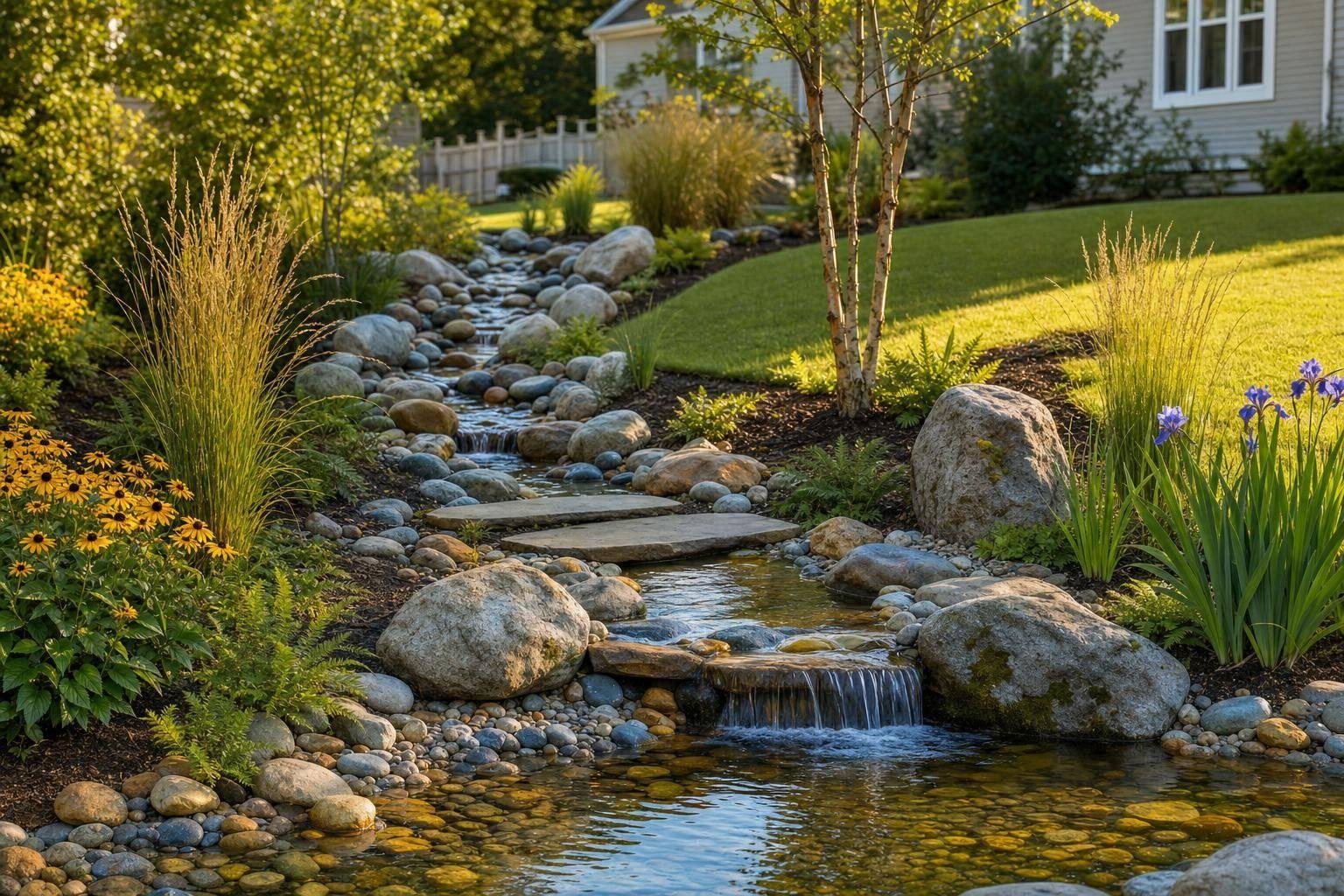
If your Maryland yard holds water after rain, a stone stream can fix the drainage issue and improve the look of the space at the same time. In this guide, I walk through 12 stream ideas for side yards, front entries, patios, slopes, sunny lots, wooded areas, and rain gardens. I also cover the main choice most homeowners face: dry creek bed vs. recirculating stream.
Here’s the short version:
- Dry creek beds are best when you need to move stormwater
- Recirculating streams are best when you want sound and moving water
- Sloped lots often fit terraced or cascading layouts
- Tight spaces work well with narrow channels, rills, and side-yard runs
- Stone choice matters in Maryland because of heavy rain and freeze-thaw weather
- Planting helps hold soil, soften edges, and keep the stream from looking too harsh
The 12 designs covered in the article include:
- Small side-yard dry creek stream
- Front entry stone stream bed
- Backyard stream linked to a pond
- Woodland-style meandering stream
- Patio-edge stream channel
- Compact courtyard stone rill
- Dry riverbed for stormwater management
- Terraced cascading stream with stone steps
- Flagstone stream crossing and pathside channel
- Rock garden stream in a sunny yard
- Modern stone channel
- Seasonal rain garden stream feature
A few points stand out right away:
- Maryland storms can drop several inches of rain in a short period, so grading and runoff flow are a big part of the design
- On many suburban lots, even a small slope can send water toward patios, walkways, or foundations
- A dry creek bed usually needs less upkeep than a pumped stream
- Native grasses, ferns, and pollinator plants can help with edge support and year-round appearance
Building a Natural Pondless Stream & Waterfall
sbb-itb-843f8be
Quick Comparison
| Type | Best For | Water Source | Upkeep | Yard Fit |
|---|---|---|---|---|
| Dry creek bed | Drainage, erosion control | Rain only | Low | Side yards, slopes, low spots |
| Recirculating stream | Sound, movement, focal point | Pumped water | Medium to high | Patios, ponds, seating areas |
My main takeaway: the right stream style depends on your yard’s slope, runoff path, space, and how you want the area to function. Once you know those four things, the best design is usually much easier to pick.
What to Know Before Adding a Stone Stream in Maryland
A stone stream should work with your yard’s drainage pattern, not against it. That’s the big idea. With proper grading, it can guide runoff, deal with low spots, and make the whole space feel more put together. On sloped Maryland lots, that same approach can also lead to terraced layouts.
Maryland’s sloped lots are a good fit for terraced stone streams and retaining walls that help limit erosion. If you plan the layout well, you can also connect the stream to existing patio and walkway lines so it feels like part of the yard, not something dropped in later. After that, the stone you pick and the way the stream is built play a big role in how natural it looks and how well it works.
A dry creek bed is meant to carry stormwater. A recirculating stream uses a pump to keep water moving and add that sound people love. If you’re dealing with heavy roof runoff or long-term drainage trouble, a dedicated drainage or stormwater system usually makes more sense. That choice will shape which of the 12 stream ideas below fits your yard.
For construction, use liner-based builds for recirculating streams and gravel-only builds for dry creek beds. Flagstone works well for borders, crossings, steps, and paths. Pro Landscapes MD designs and installs dry riverbeds, grading, and natural stone features across central Maryland.
1. Small Side-Yard Dry Creek Stream
A narrow side yard is a great spot for a dry creek bed. In a tight corridor, the trick is to keep the layout compact so it looks natural and doesn’t take over the space.
Stone size matters. Go with smaller stones and flat bluestone flagstone for a clean, natural look. It’s a smart fit for Maryland homes because of its texture and color variation.
Grade the channel so runoff moves to the lower end of the yard. Then edge the stream with low-maintenance ground cover to soften the banks and help hold the soil in place.
This setup works well for compact suburban lots because it helps manage runoff while giving a narrow side yard a more finished look. On larger or more visible lots, the same stone-stream idea can also work near the front entry.
2. Front Entry Stone Stream Bed
At the front entry, drainage should look as polished as the doorway itself. A front-entry stream bed needs to frame the space, not steal the show. Natural flagstone or bluestone works well here, especially when it’s arranged in an easy, natural pattern and softened with low plantings.
The channel should be graded so roof or driveway runoff moves away from the foundation. A permeable stone setting also helps water soak into the ground instead of pooling near the house [2].
To soften the stone without crowding the entry, use ornamental grasses and native pollinator plants.
3. Backyard Stream Linked to a Pond
A pond-linked stream is a good fit for Maryland yards that have enough room for grading and a clear route for the water. It gives the yard a strong focal point, and the stream and pond should feel like one continuous water feature, not two separate parts.
Use bluestone flagstone or Pennsylvania thermal full-color flagstone in a random pattern so the layout feels natural [4]. Where the stream flows into the pond, a wide water spout creates the softer sound most homeowners want [3].
Slope and grading do a lot of the heavy lifting here. They help the feature look natural and work the way it should [1]. On sloped suburban lots, low stone seat walls can hold soil in place and define the area without making it feel tight [1][3]. If the yard has deeper shade, the same stream style can lean more into a woodland look.
For planting, mix ornamental grasses along the stream edges with native ferns and moisture-tolerant ground covers near the water’s edge to help stabilize the soil [3][2]. In larger yards, this same idea can stretch into a more wooded, meandering run.
4. Woodland-Style Meandering Stream
In a larger yard, this idea can open up into a looser, woodland-style stream. Use irregular natural flagstone with mixed texture and color so the stream feels at home in a wooded space instead of looking like a formal hardscape. A gentle slope and careful grading help move water, reduce erosion, and fit a typical suburban lot. Keep the layout uneven and winding so it sits naturally in the yard.
Native plants and ornamental grasses help soften the stone, hold the edges in place, and fill in the banks with ground cover. That mix keeps the stream looking natural without making it seem messy.
This style works best when you want a relaxed, natural look more than a clean, formal layout.
5. Patio-Edge Stream Channel
A stream channel along the edge of a patio does two jobs at once: it handles drainage and gives the patio a clean, defined border. Instead of rainwater sheeting across the surface during a heavy storm, runoff moves into a set channel and drains in a controlled way. For that to work, the grade needs to stay even and the channel should be shallow and controlled. On most Maryland lots, proper grading is enough to keep water moving cleanly.
Stone choice matters here. Thermal full-color Pennsylvania flagstone and bluestone both fit this layout well. Setting the channel stones in a random pattern instead of a strict grid helps the feature feel like part of the patio, not something tacked on later. And near a high-traffic patio, the stones need to sit on a stable base so they don’t rock or end up with cracked joints over time.
Along the channel edge, ornamental grasses and perennials are a good fit, especially in partly sunny spots that are common around patio borders. If the space is tight, the same idea can scale down into a courtyard rill.
6. Compact Courtyard Stone Rill
For spaces that feel tighter than a patio-edge channel can handle, a courtyard rill brings moving water into the yard in a clean, narrow line. A stone rill is a formal water channel, and in smaller Maryland suburban courtyards, a straight or gently curved layout adds motion without taking over the space. It’s the most structured option in this list. [2]
Bluestone flagstone works well here. It has a timeless natural look that fits Maryland and DC hardscaping. [2]
The rill can carry runoff while also creating a clear divide between a dining area and a garden bed, without the need for bulky barriers. So it does two jobs at once: it shapes the layout and helps with drainage. [2]
Pollinator plants can soften the stone edges and bring habitat value into the same footprint. [2]
If you add a recirculating pump, a wide head spout can introduce sound at the start of the channel. [3]
7. Dry Riverbed for Stormwater Management
If runoff is the main problem in your yard, a dry riverbed can do two jobs at once. It helps move stormwater through the landscape, and it also looks like it belongs there.
A dry riverbed is a stone drainage feature that follows the yard’s slope. In a Maryland yard, that makes it a practical way to guide water while adding texture and shape to the space.
The layout should work with the natural grade of the yard and connect with any grading work or drain pipe placement. Pro Landscapes MD installs dry riverbeds as part of its stormwater management services.
For the best look, use stone that fits the surrounding landscape. Then soften the edges with ornamental grasses or other plantings so the feature feels natural instead of harsh.
This option works especially well on suburban lots across central Maryland, where drainage problems and curb appeal often go hand in hand. And if the grade gives you more room to work with, that same idea can turn into a terraced cascade with more flow and more visual punch.
8. Terraced Cascading Stream with Stone Steps
If your yard has more slope to work with, the stream can shift into a stepped cascade. In a sloped yard, that means short falls, stone steps, and retaining walls that turn the grade into a series of smaller drops. Flagstone and bluestone work well for these stepped channels. Each level slows the water as it moves downhill, which helps cut erosion.
Between the drops, small planting pockets keep the layout from feeling too stiff. Retaining walls shape each level and make room for native planting pockets that soften the edges of the stone.
On a typical suburban lot in central Maryland, a terraced cascade can be sized to fit the yard without taking over the whole space. The grading, retaining walls, and stone steps need to be planned together from the start.
From there, the stream can keep going as a crossing or side channel once it reaches flatter parts of the yard.
9. Flagstone Stream Crossing and Pathside Channel
Where the slope starts to level off, a flagstone crossing gives the stream a natural stopping point. Wide, flat stones stretch across the channel, so people can cross without tiptoeing around the water. A pathside channel can do double duty here too: it helps lead guests along the walkway and moves runoff at the same time.
On sloped Maryland lots, this setup can help control erosion while also shaping a yard that feels usable and artful. The crossing isn’t just there to handle drainage. It also marks a shift in how people move through the space and how the yard feels – especially on compact suburban lots with short, sloped paths.
Bluestone or Pennsylvania thermal flagstone works well for this kind of layout. Flagstone brings natural texture and subtle variation, which helps the crossing feel like it belongs there. A random pattern keeps the look organic instead of stiff, and the stones should be set securely so they do not rock underfoot [4][1].
Use ornamental grasses and native plants to soften the edges without crowding the path. In brighter yards, that same stone-and-plant mix can also lean into more of a rock-garden look.
10. Rock Garden Stream in a Sunny Yard
In a sunny yard, this stream should read like a dry-garden feature, not a lush woodland one. Thermal full-color Pennsylvania flagstone works well here because its mixed tones look natural in direct sun. A gentle, steady grade also matters. It helps the stream drain well and keeps runoff moving across sloped suburban lots. Set each stone on a stable base so the layout stays in place over time [4].
The planting should soften the stone, not hide it. Sun-tolerant ornamental grasses and ground covers can ease the hard edges in bright, open yards without crowding the channel [3][1]. Once the plants take the edge off, the stone layout should still feel loose and natural. A random pattern helps the stream blend into the yard instead of looking man-made [4].
11. Minimalist Modern Stone Channel
For a cleaner look, this version swaps loose curves for straight lines and sharper edges. A minimalist stone channel works best when every part has a job. Unlike woodland or rock-garden styles, this one leans on symmetry and restraint, which makes it a strong fit for modern patios and contemporary facades.
Keep the channel shallow, linear, and scaled to the yard so it feels like a planned architectural feature, not extra decoration. That’s the whole idea here: clean shape, clear purpose, no visual noise.
Thermal Pennsylvania flagstone is a good match for this style. Its thermal finish creates a smooth, even surface with crisp edges and consistent sizing that supports the modern look [4]. Stone veneer can make the edges look sharper without the weight of full stone walls [1].
Good grading helps water keep moving, and this style can tuck a drainage path into a clean-looking design [1]. Ornamental grasses along the channel edges add texture without crowding the space [3]. A stable base matters too, since it helps those neat lines stay in place [4].
That same restrained approach also fits spaces where a stream needs to run alongside seasonal rain-garden planting.
12. Seasonal Rain Garden Stream Feature
If your yard needs better drainage and more planting space, this setup handles both at once. It pairs a shallow stone stream with a rain garden so runoff slows down and soaks into the soil instead of collecting in low spots. After a storm, the channel moves water into the basin. When things dry out, the stone and planting still give the area shape and purpose. What could’ve been just a fix for water trouble becomes part of the landscape.
Permeable bluestone flagstone helps the stream look natural while letting water move through more easily. Good grading matters here. It keeps water flowing toward the rain garden and helps stop pooling where you don’t want it.
Native pollinator-friendly plants and ornamental grasses soften the stone edges and create a gentler, more natural border around the basin [2][3]. This approach fits standard suburban yards especially well because it deals with a drainage problem while also adding curb appeal. Native plants and grasses help the feature look natural in both wet and dry seasons.
Dry Creek Bed vs. Recirculating Stream: A Side-by-Side Look
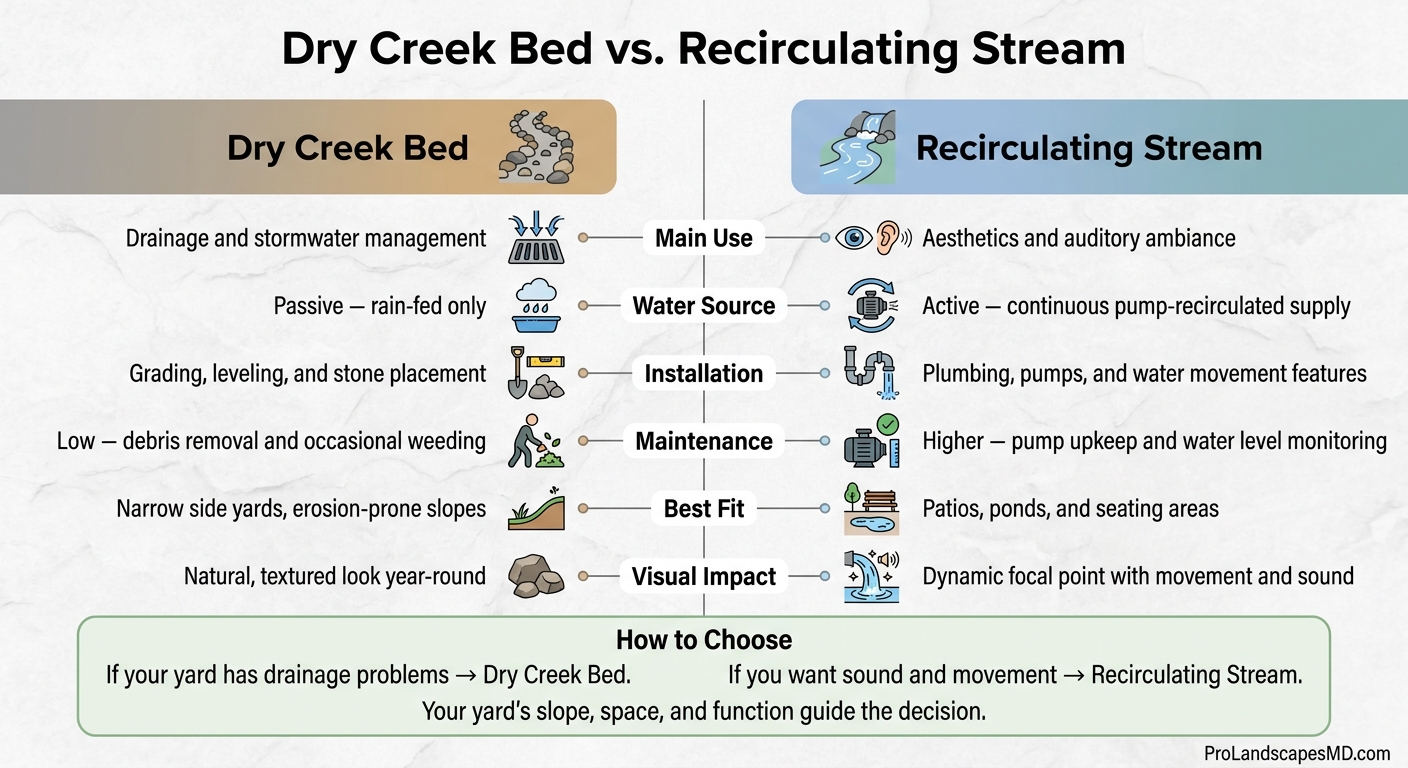
Dry Creek Bed vs. Recirculating Stream: Maryland Yard Guide
After the 12 designs, the big choice comes down to one thing: Do you need drainage, or do you want moving water as part of the design? These two options can look alike at first glance, but in a Maryland yard, they do very different jobs.
A dry creek bed carries stormwater only when it rains. A recirculating stream keeps water moving all the time, which adds sound and motion. That difference matters.
The dry creek bed is rain-fed, so it works best for drainage, erosion control, and tight side yards. The recirculating stream runs on a pump and tends to work best near patios and seating areas, where the sound of water can soften hardscapes and make the space feel more welcoming [3].
Here’s the difference at a glance.
| Feature | Dry Creek Bed | Recirculating Stream |
|---|---|---|
| Main use | Drainage and stormwater management | Aesthetics and auditory ambiance |
| Water use | Passive; only active during rain events | Active; requires a continuous recirculating supply |
| Installation complexity | Grading, leveling, and stone placement | Plumbing, pumps, and water movement features |
| Maintenance level | Low; debris removal and occasional weeding | Higher; pump upkeep and water level monitoring |
| Best fit | Narrow side yards and erosion-prone slopes | Patios and seating areas |
| Visual impact | Natural, textured look year-round | Dynamic focal point with movement and sound |
For most suburban Maryland lots, the layout of the yard is usually the clearest guide. From there, stone texture and planting help shape the final look.
How to Choose Stone and Plants for a Natural Maryland Look
Once you’ve picked the stream style, the next step is matching the materials to the setting. For stream runs near patios and entry areas, flagstone or bluestone works well because the clean edges give the space a neat, polished look. On slopes, bends, and terraces, go with larger stones and boulders. They help hold the layout in place and slow erosion at the same time.
Along the wet edge, plant moisture-loving species that can handle damp soil without a fuss. On the drier border, ornamental grasses help soften the look of the stone and give the banks more support. Native grasses are a smart fit for Maryland because they handle the state’s seasonal shifts with less upkeep.
Put together, these choices help the water feature blend into the landscape and look at home through Maryland’s changing seasons.
Conclusion
Each of these 12 designs fits a different kind of Maryland yard. The best Maryland stream design comes down to your lot size, slope, drainage patterns, and the patios, walkways, and foundations already on the site.
A well-planned stream can help move runoff, cut erosion, and soften the look of hardscape. The best option is the one that fits your drainage, slope, and layout.
For design and installation across central Maryland, Pro Landscapes MD builds dry riverbeds and water features that match your site’s drainage needs.
FAQs
How do I know if I need a dry creek bed or a recirculating stream?
It comes down to what you want your landscape to do.
A dry creek bed works best if your main goal is drainage. It helps move stormwater runoff through your yard without pumps, standing water, or regular water care.
A recirculating stream makes more sense if you want the look and sound of moving water. It gives you that effect without the upkeep – or the safety concerns – that often come with a standard pond.
Will a stone stream help keep water away from my foundation?
Yes, a stone stream can help manage stormwater runoff and protect your home.
Decorative streams and waterfalls move water through a recirculating system. By contrast, features like dry riverbeds are built to guide excess rainwater during heavy downpours.
When paired with proper grading, a stone stream can steer water away from your foundation and walkways. That can help stop pooling and lower the risk of water damage.
What stone and plants work best for Maryland weather?
For Maryland yards, bluestone, fieldstone, flagstone, and river rock are strong picks. They’re dense, hold up well in the weather, and tend to look better with age. If you’re using brick, make sure it is SW-rated for freeze-thaw conditions. It’s also smart to use locally sourced stone, since it tends to weather in a more predictable way in this region.
For plants, go with pollinator-friendly, aquatic, and marginal varieties. These plants support local biodiversity, soften hard edges, and help water features sit more naturally in the landscape.
Chat with Us