









- bhavya gada
- No Comments
A backyard fire in Maryland is only safe if your setup, weather, and local rules all line up. I’d keep three numbers in mind before lighting anything: 15 to 30 feet of clearance in many areas, a 5-foot clear zone around the fire feature, and no fire at all when winds reach about 10 to 15 mph.
Here’s the short version:
- Know your fire type: wood-burning pits, chimineas, and gas fire pits do not always follow the same rules.
- Check distance first: many Maryland jurisdictions require 15 to 30 feet from structures, combustibles, and sometimes property lines.
- Use the right base: concrete, pavers, stone, or gravel work better than grass, mulch, bare soil, or wood decking.
- Watch the weather: skip burning during Red Flag Warnings, dry spells, and windy days.
- Check local bans: many central Maryland areas limit open burning from June 1 to Aug. 31.
- Keep the fire small: a common limit is 3 feet wide by 2 feet high.
- Stay with it: one adult should watch the fire until it is fully out.
- Put it out all the way: ashes and embers can stay hot for days.
If I were helping a Maryland homeowner make a fast call, I’d say this: check county rules, measure your space, look at today’s wind, and keep water plus an extinguisher nearby before you light anything. That covers the main risk points without overthinking it.
| Fire feature | Main rule to check first | Common concern |
|---|---|---|
| Wood-burning fire pit or ring | Burn bans, setbacks, fuel rules | Embers, smoke, open-flame limits |
| Chiminea or portable outdoor fireplace | Manufacturer distance rules and local code | Heat near walls, decks, or branches |
| Propane or natural gas fire pit | Placement and shutoff setup | Clearance, hose/valve setup, hot surfaces |
The rest of this guide breaks those points into simple steps I can follow before, during, and after a backyard fire.
Fire Pit Safety: Tips to keep you safe
sbb-itb-843f8be
Pick A Safe Location And Keep Proper Clearances
Where you place a fire pit matters just as much as the fire pit itself. Keep it far enough from buildings, trees, and anything else that can burn. Before you lock in a spot, check the setback rules for your county.
Measure Distance From Structures, Property Lines, And Combustibles
Clearance rules vary across Maryland, so start with your local fire marshal or code office. Plan around the setback your county requires. Common minimums usually fall between 15 and 30 feet [7][12][11].
Measure from the fire feature to the nearest structure, fence, branch, property line, or stored material. That includes house siding, deck railings, porch posts, sheds, stacked firewood, and vehicles. If the space feels cramped, don’t force it. Move the fire feature or rework the layout.
Once you’ve marked the setbacks, set the fire pit on a non-combustible base and clear the area around it.
Use A Non-Combustible Surface And Keep The Ground Zone Clear
Use a non-combustible surface for the base. Good options include:
- Concrete
- Brick or concrete pavers
- Flagstone
- Gravel
Skip grass, mulch, bare soil, and wood decking.
Keep a 5-foot debris-free zone around the fire pit [14][9]. That buffer helps stop embers from spreading. After the base is in place, check the weather and any local burn limits before use.
Plan Built-In Fire Features With Professional Hardscaping
A built-in fire feature works best on a level, non-combustible base with proper drainage. Getting the placement right from day one lowers the odds of dealing with a fire that gets out of hand later.
Before lighting, check wind, dry conditions, and local burn bans.
Check Weather, Burn Bans, And Local Permit Rules Before You Light
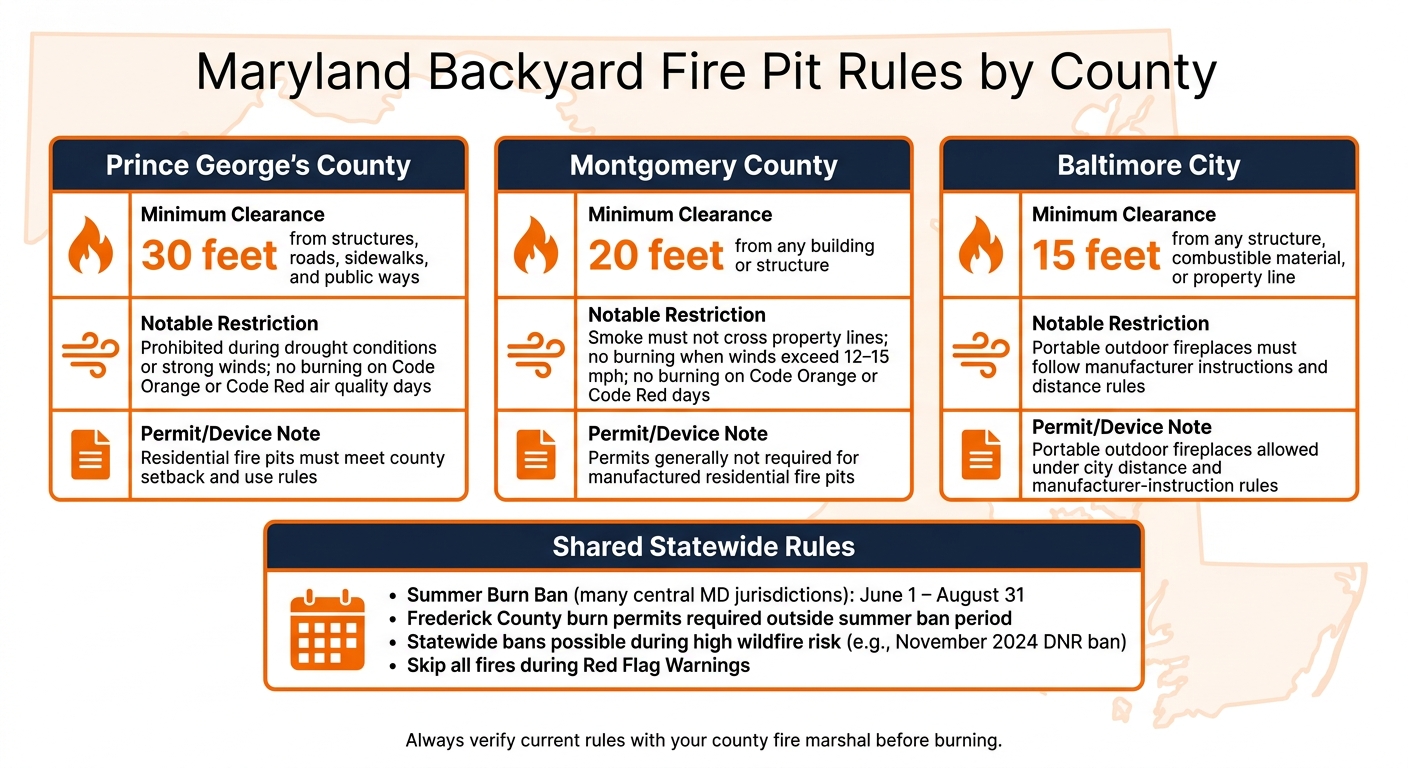
Maryland Backyard Fire Pit Rules by County: Clearances & Restrictions
Run this check every time before you burn. In Maryland, weather shifts fast, burn bans can pop up with little warning, and local permit rules don’t always match from one county to the next. A fire pit that was fine last weekend may not be safe today.
Check Wind Speed, Dry Conditions, And Fire Weather Alerts
Start with the same-day forecast before you light anything. If sustained winds reach 10–15 mph, hold off. Howard County says recreational fires “may not be ignited and shall be extinguished” if severe winds greater than 10 mph are present.[18] Montgomery County says you should not burn if winds are forecast to be greater than 12 mph for your ZIP Code, and its permitting guidance warns against lighting fires when sustained winds exceed 15 mph.[13][15]
Dry air matters too. Low humidity and dry fuels make it easier for embers to drift and start spot fires farther away. If the National Weather Service has issued a Red Flag Warning for your area – a mix of dry fuels, low humidity, and gusty winds – skip the fire altogether.[21]
Check Maryland And County Burning Restrictions
State and local rules can limit or ban outdoor burning at any time, and that includes a backyard fire pit. Many central Maryland jurisdictions prohibit open burning from June 1 through Aug. 31.[19][6]
Maryland has also put statewide burn bans in place when wildfire risk climbed. In November 2024, DNR enacted a statewide ban until precipitation lowered the risk, then lifted it once conditions improved.[2][4] That’s why it makes sense to check current status before every burn instead of going by memory.
For current restrictions, look at:
- Maryland DNR Forest Service pages
- Your county fire marshal’s website
- Your local air quality forecast
Prince George’s County and Montgomery County both prohibit recreational fires on Code Orange and Code Red days.[7][5][13]
Find Out If Your Fire Pit Needs A Permit Or Has Device-Specific Rules
Permit rules depend on the type of fire pit and where you live. In many cases, a manufactured fire pit in a single-family backyard does not need a permit. Montgomery County says that’s true for residential use when the device follows manufacturer guidelines and local safety rules.[15] Open fires, brush or debris burning, and larger ceremonial fires are more likely to need permits.
Distance rules also vary more than most homeowners think. A setup that works in one county may miss the mark in another.
| Jurisdiction | Minimum Clearance | Notable Restriction | Permit / Device Note |
|---|---|---|---|
| Prince George’s County | 30 feet from structures, roads, sidewalks, and public ways | Prohibited during drought conditions or strong winds | Residential fire pits must meet county setback and use rules.[7] |
| Montgomery County | 20 feet from any building or structure | Smoke must not cross property lines | Permits are generally not required for manufactured residential fire pits.[5][15] |
| Baltimore City | 15 feet from any structure, combustible material, or property line | Portable outdoor fireplaces must follow manufacturer instructions and distance rules | Portable outdoor fireplaces are allowed under the city’s distance and manufacturer-instruction rules.[16][17] |
Frederick County also has a summer burn ban from June 1 through August 31, and burn permits are required outside that period.[20]
If you’re not sure how your setup is classified, call your county fire marshal or fire code compliance office directly. It’s a short call, and it can save you from a fine – or a much bigger problem. If the fire is legal and conditions are calm, move to extinguisher and guest-safety prep.
How To Operate A Fire Safely When Guests Are Present
Once the fire is legal and lit, the job shifts to active supervision. If guests are around, one adult should stay with the fire until it is fully out. Keep your extinguishing gear close enough to grab without scrambling.
Keep An Extinguisher, Water Source, And Tools Within Reach
Set everything up before you light the fire. Place a charged ABC extinguisher, a connected hose, and buckets of water or sand just a few steps from the pit.[1][22]
Check the extinguisher every month. Make sure the gauge stays in the green zone, the safety pin and tamper seal are still in place, and the unit shows no visible damage or corrosion.[22]
The host and the designated fire watcher should also know the PASS method:
A shovel or metal rake helps too. It gives you a safe way to spread, smother, or separate burning logs without reaching into the flames.[1]
Set A Safety Zone For Adults, Children, And Pets
Keep children and pets at least 3 feet away from the fire pit. Adults should stay outside that same buffer and out of the path of sparks.[9] Children and pets should never be left alone near the fire, even for a moment.
It helps to assign one or two adults whose only job is to watch the fire and keep people back.[25] That may sound a bit strict, but when conversation picks up and people start moving around, someone needs to stay focused. Pets should be leashed or kept behind a barrier while the fire is active.[9][25]
Guests should wear closed-toe shoes and skip loose, flowing clothing, scarves, or dangling accessories that can catch sparks.[9] Synthetic fabrics are a bad mix with heat because they can melt onto skin.[9]
Use The Right Fuel And Avoid Unsafe Fire Conditions
Use only the fuel the fire pit was built for. Wood-burning pits should use clean, dry, seasoned hardwood. Gas fire pits should use the propane or natural gas setup listed by the manufacturer, with the regulator and ignition system connected the right way.[1][9][27][28]
Do not burn trash, cardboard, leaves, treated lumber, painted wood, plastics, rubber, or other debris. Those materials can create toxic smoke, throw off extra sparks, and may break Maryland and local rules.[1][23][24][26] Also avoid gasoline, lighter fluid, kerosene, and other liquid accelerants. They can trigger dangerous flare-ups and severe burns.[28]
Keep the fire small and under control. Recreational fires should be no larger than 3 feet in diameter and 2 feet high.[1][3][22] A fire pit isn’t a bonfire. If you pile on oversized logs, you increase the odds of flying embers and rolling logs escaping the fire ring.
When the fire starts to die down, move right into full extinguishing and ash disposal.
Put Out The Fire, Dispose Of Ashes, And Check The Area Before Bed
Once you’re done with the fire, shut it down right away. Don’t assume gray ash means you’re in the clear. Hot embers can stay dangerous for days, even when they look cold.[41][38]
Fully Extinguish The Fire And Confirm It Is Cool To The Touch
Stop adding wood or other fuel at least 30–60 minutes before you plan to put the fire out.[34][35] When the flames burn down to glowing embers, spread them out with a metal shovel. Then add water slowly with a hose or bucket, stir the embers, and repeat the process until the steam stops and the fire pit is cool to the touch.[33][34][35][36][37]
Gas and propane fire pits need a different shutdown routine. Turn off the burner first, then close the gas or propane supply valve.[35][36] After that, wait until the burner, lava rock, and glass media are fully cool before you put a cover on the unit. Don’t dump water on burner parts or decorative media. Sudden cooling can crack them. Check the owner’s manual for any model-specific directions.[31][37]
Store Ashes In A Metal Container Away From Structures
After the ash bed is cool all the way through, move the ashes with a metal shovel into a metal container with a tight-fitting lid.[32][38][40] Place that container on concrete, stone, or bare dirt, not on a wood deck, near mulch, or next to vinyl siding. Keep it at least 10 feet from the house, garage, and anything else that can burn.[41][42][43]
Never toss warm ashes into plastic bins, paper bags, cardboard boxes, compost, or regular household trash.
Do A Final Check Before Going Inside
Take one last walk around the area. Look for flame, smoke, heat, or stray embers. Check nearby grass, mulch, and outdoor furniture too. Make sure the hose and fire extinguisher are still close by and ready to use.[30][32][35][36][37][39][8]
FAQs
How do I find my county’s fire pit rules?
Contact your local county or municipal building department first. Fire pit rules can change from one part of Maryland to another, so the right office can confirm placement rules, zoning setbacks, and whether you need a permit.
If you live in a neighborhood with an HOA, check there too. An HOA may add its own rules on top of county code. The safest move is to ask local officials directly, since they can give you the most current requirements.
Can I use a fire pit on a patio or deck?
Yes, but be careful. A fire pit on a patio or deck, especially a wood or composite deck, can create a serious fire hazard if you don’t set it up and use it the right way.
Start by checking local municipal codes and any community rules. Then place a non-combustible heat shield or fire-resistant mat underneath the fire pit, and leave plenty of space between the pit and nearby railings, furniture, and overhead structures.
What should I do if wind picks up after I light the fire?
If the wind picks up after you light the fire, extinguish it immediately. Strong wind can blow sparks or embers into nearby grass, brush, or buildings, which can start a dangerous fire fast.
Once the fire is fully out, don’t relight it until the wind has calmed down and conditions are safe again.
Chat with Us