









- bhavya gada
- No Comments
A permeable surface only works well when the soil, slope, stone base, and overflow path all work together. If I want a driveway, patio, or walkway that drains water instead of holding it, I need to check site conditions first, pick the right surface type, build the base the right way, and keep the joints clean after installation.
Here’s the short version:
- Permeable pavers drain through joints between units
- Porous concrete drains through the slab itself
- Grid systems drain through open spaces filled with gravel or grass
- Most failures come from poor base prep, clogging, or bad drainage planning
- In many areas, I may need to check permits, grading rules, and utility locations
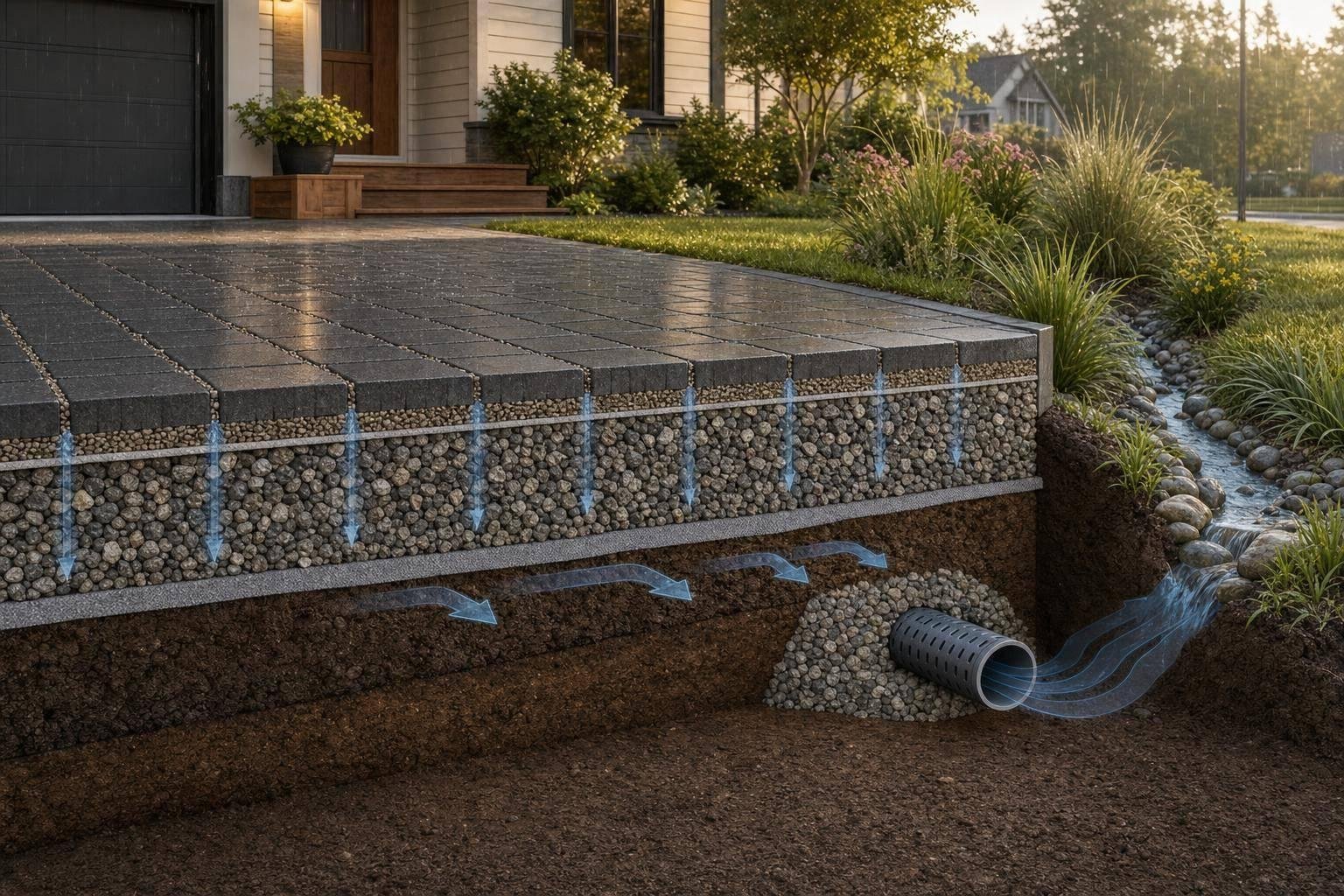
- A good system includes surface, bedding stone, open-graded base, edge support, and soil below
- Maintenance matters because clogged joints can slow drainage by a lot over time
A few facts help put this in context:
- Heavy rain is getting more common in many parts of the U.S., which puts more stress on hard surfaces
- Permeable systems can cut runoff compared with standard concrete or asphalt because water moves into the ground instead of across the surface
- For a driveway, the base often needs to be deeper than for a walkway because it has to handle vehicle weight
Permeable Base Construction – Edu-Series 2021
sbb-itb-843f8be
Quick Comparison
| Surface type | How water drains | Best use | Main watch-out |
|---|---|---|---|
| Permeable pavers | Through joints | Driveways, patios, walkways | Joints can clog if not cleaned |
| Porous concrete | Through the slab | Large flat areas | Mixing and curing must be done right |
| Grid systems | Through open cells | Overflow parking, access lanes | Fill material and support need close attention |
Bottom line: if I skip the site check or use the wrong base, the surface may look fine at first but drain poorly later. This guide breaks down the main choices, build steps, and care needs in plain English.
Planning the Project: Site Checks, Permits, and Design Decisions
Before you pick materials, start with the site itself. Check the slope, soil, utilities, and drainage paths. Look at permit rules and map out where overflow water will go. Those details shape the whole build, including base depth, surface type, and the drainage path.
Assess Slope, Soil, Utilities, and Water Flow
Start by watching how water moves after a storm. Look for puddles, low spots, and any areas near the foundation that stay wet longer than they should. The goal is simple: keep water moving away from the house and other low areas.
You’ll also want to check underground utilities before digging. From there, line up the layout with the drainage routes already on the property. Slope and soil conditions will affect how the base needs to be built, so this step matters early.
Permits and Load Requirements
Check permit rules before work begins, especially if the project changes grading or drainage. That can affect what’s allowed and what needs approval.
If the surface will be used for a driveway, plan for vehicle loads from the start. Once the use case and permit limits are clear, you can size the system for total runoff.
Size, Layout, and Overflow Path Planning
Size the area based on rainfall and runoff from nearby hard surfaces. That includes water that may flow in from adjoining paved or compacted areas, not just the footprint of the project itself.
It’s also smart to plan an overflow path. During larger storms, extra water needs a safe route away from the home.
For more complicated sites, Pro Landscapes MD can help with grading, drainage planning, and stormwater management in central Maryland.
Choosing Materials and Building the Right System
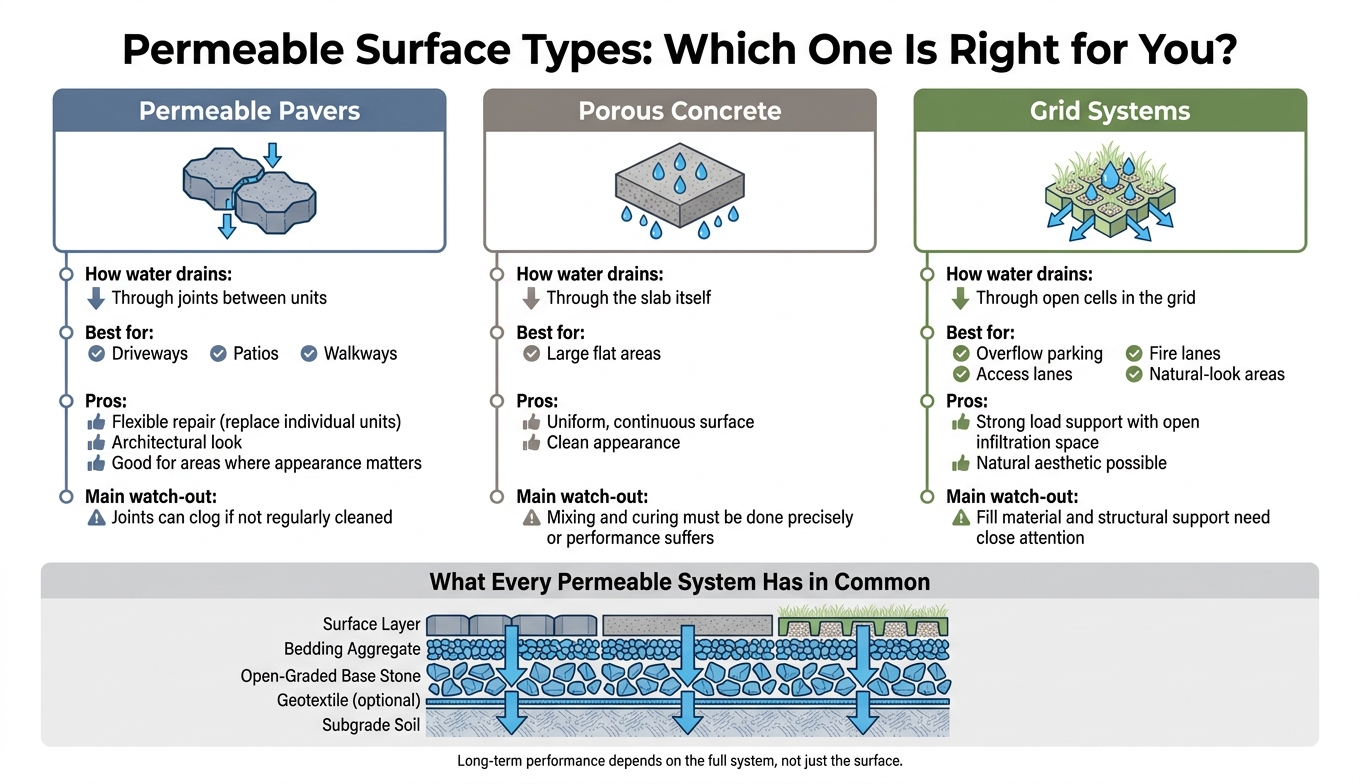
Permeable Surface Types Compared: Pavers vs. Porous Concrete vs. Grid Systems
Pick a system that fits how the space will be used. A light-use garden path needs something different from a driveway or parking area. Water flow matters too. If the site holds water after rain, the layers under the surface need to move that water well.
This is where people sometimes get tripped up. They focus on the top layer because that’s what you see. But long-term performance comes from the whole assembly working as one system. The base, bedding, geotextile, and edge restraint all have a job to do. If one part is off, the surface can shift, clog, or wear out sooner than expected.
Permeable Pavers, Porous Concrete, and Grid Systems Compared
These systems all handle stormwater, but they do it in different ways.
Permeable pavers use joints or openings between units so water can pass through into the stone base below. They’re a common pick for patios, walkways, driveways, and other areas where looks matter and repairs may need to be simple. If one section gets damaged, you can often remove and replace only that area.
Porous concrete lets water pass through the slab itself. It gives a more uniform surface, which some property owners prefer for larger paved areas. That said, installation needs close attention. Small mistakes during mixing, placement, or curing can lead to trouble later.
Grid systems are a bit different. They use a structural grid, often filled with gravel or grass, to support loads while leaving open space for water to soak through. They can work well for overflow parking, access lanes, fire lanes, or places where a more natural look makes sense.
Here’s the simple way to think about it:
- Permeable pavers: good for flexibility, repair access, and a finished architectural look
- Porous concrete: good for a clean, continuous surface
- Grid systems: good for load support with open infiltration space
The right pick depends on traffic, appearance, upkeep, and how much water the system needs to manage.
Base Stone, Bedding Aggregate, Geotextile, and Edge Restraints
The layers under and around the surface do most of the heavy lifting.
Base stone stores water and supports the pavement above. In many permeable systems, this layer uses clean, open-graded stone so water can move through it and collect temporarily before soaking into the soil or draining away. Thickness depends on load needs and site conditions. A pedestrian path and a commercial drive lane won’t use the same build-up.
Bedding aggregate sits above the base and below the surface material. It helps create a level setting layer while still allowing water to pass. Unlike standard sand settings in many non-permeable systems, permeable assemblies usually rely on washed aggregate to reduce clogging.
Geotextile can help separate soil from stone. That matters because when fines migrate into the base, the system can lose storage space and drainage capacity. But geotextile has to match the design. Use it in the wrong place, or use the wrong type, and it can create problems instead of fixing them.
Edge restraints hold the system in place. Without solid edge support, pavers can spread, joints can open up, and the surface can lose shape over time. It’s easy to overlook this part, but it plays a big role in keeping the pavement stable.
Think of the system like a team. The surface gets the attention, but the layers below do the dirty work day after day. If those parts are chosen well and installed the right way, the whole assembly has a much better shot at lasting.
Step-by-Step Installation Process
Once the system design is set, installation follows a fixed sequence.
Excavation, Subgrade Preparation, and Base Build
First, excavate to the planned depth, shape the subgrade, and build the base to the required grade and drainage profile. This part sets up the whole job, so the slope and depth need to be right from the start.
Pro Landscapes MD handles grading, drainage, and yard leveling across central Maryland. From there, the edge and bedding layers can be set.
Edge Restraints, Bedding Layer, and Surface Placement
Next, install edge restraints, place the bedding layer, and set the surface units. This is where layout starts to matter in a big way.
For driveways and other areas that get regular use, straight alignment and tight joint lines are critical. If the surface placement is off here, it can show up later in both looks and performance. After placement, the surface needs to be locked in and tested.
Joint Fill, Compaction, and Final Drainage Checks
Finish with joint fill, compaction, and a drainage test. The goal is simple: confirm that water drains through without ponding.
Maintenance, Repairs, and When to Call a Professional
Once the surface passes its final drainage check, the job isn’t over. Ongoing care is what keeps that drainage working. After installation, maintenance helps keep joints open, cuts down on clogging, and supports steady water flow.
Routine Cleaning and Seasonal Care
Sweep away leaves, remove sediment from the joints, and clear out debris after storms and during leaf season. It’s simple work, but it matters.
If cleaning stops fixing the problem, the issue is usually below the surface.
Common Problems: Clogging, Settlement, and Slow Infiltration
Slow drainage usually points to clogged joints, compacted stone, or weak subgrade support. Settlement usually points to failure in the base or edge restraint.
When drainage trouble traces back to the base, grading, or subgrade, surface cleaning won’t do the job. At that point, the repair goes deeper than what you can see on top.
When to Call a Professional
If drainage problems keep coming back or the surface starts to move, Pro Landscapes MD can inspect the system and handle grading, drainage, and repair work in central Maryland.
FAQs
How do I know if my soil drains well enough?
Use on-site infiltration testing instead of relying on broad soil classifications. Soil conditions can change a lot, even within the same area, so testing hydraulic conductivity at your project site gives you the most dependable answer.
If the infiltration rate is below 0.6 inches per hour, the soil drains poorly. In that case, the design will need a perforated underdrain and deeper aggregate layers. For a full review of drainage, slope, and groundwater clearances, consult a professional to meet local Maryland requirements.
How deep should the base be for a driveway?
Base depth for a permeable driveway depends on three main things: soil type, local rainfall, and traffic loads. If the driveway will handle heavier vehicles, the subgrade usually needs to be deeper and stronger. And if the soil drains slowly, like clay, you’ll often need deeper aggregate layers to move and store water.
A typical layered system includes:
- A subbase of ASTM No. 2 stone
- A base layer of No. 57 stone
- A bedding layer of No. 8 stone to help manage stormwater
Each layer has a job. The larger stone below supports the driveway and creates space for water, while the smaller stone near the top helps with leveling and paving support.
What maintenance does a permeable surface need?
Regular maintenance usually comes down to a few simple tasks:
- Sweeping away surface debris
- Refilling joints now and then if the aggregate shifts
- Checking the surface for settling or structural damage
A clean surface helps it keep managing stormwater the way it should. It also supports long-term durability and performance through Maryland’s changing weather.
Chat with Us