









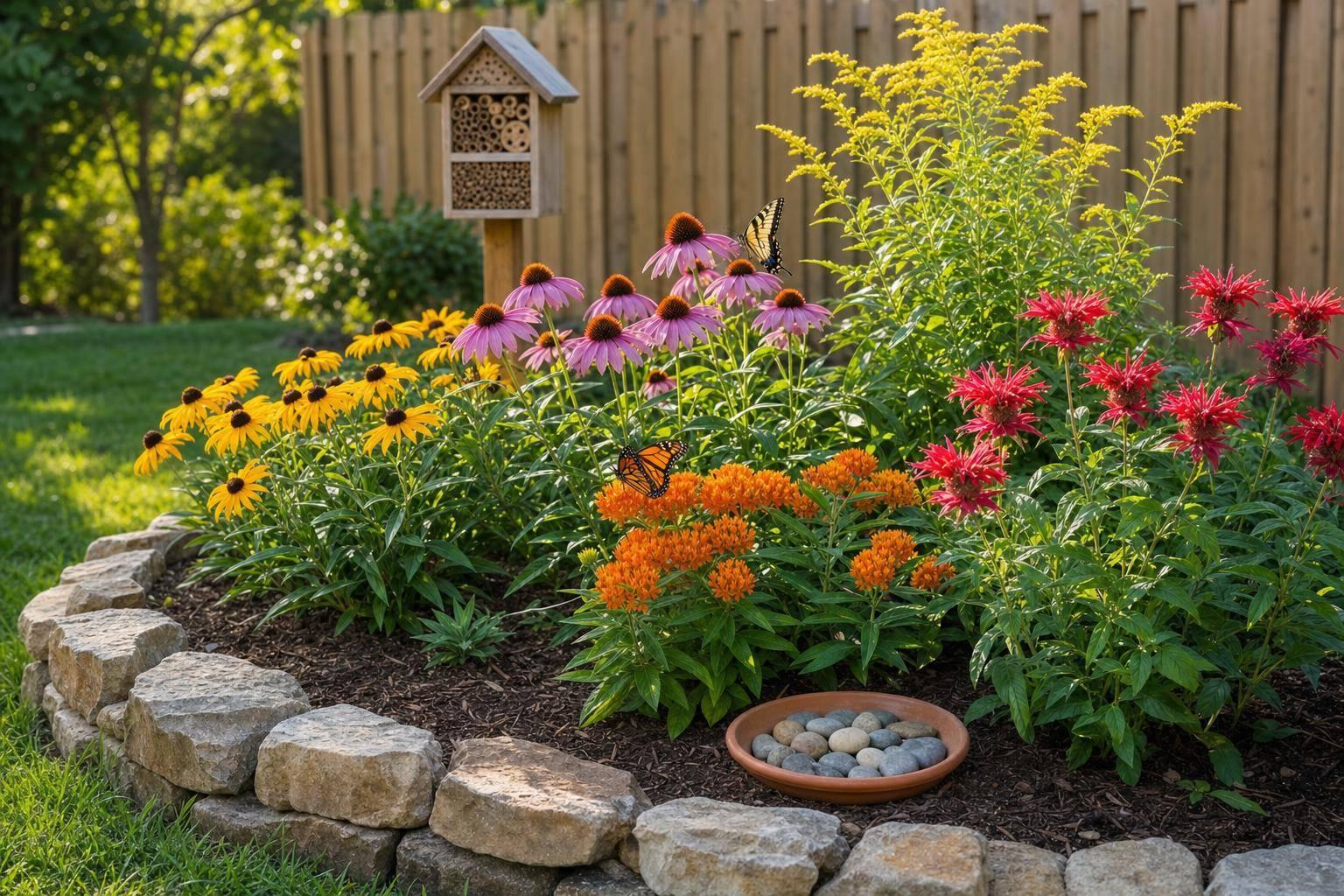
- bhavya gada
- No Comments
If I want a pollinator bed in Maryland to work, I need three things first: sun, drainage, and plants that bloom from spring through fall. Most pollinator plants need at least 6 hours of direct sun, and many native bees nest in the ground, so heavy mulch and soggy soil can get in the way.
Here’s the short version:
- I pick a site by checking hours of direct sun, shade patterns, and wet spots.
- I group flowers in clusters of 3 to 5+ so bees and butterflies can find them faster.
- I use Maryland native plants with bloom overlap in spring, summer, and fall.
- I mix flower shapes for bees, butterflies, moths, and hummingbirds.
- I mulch lightly, leave some bare soil, and keep leaf litter and stems in place through winter.
- I skip pesticides and water deeply during dry periods.
A good bed is not just about flowers. It also needs a simple layout, room for plants to spread, and small habitat touches like a shallow water dish, bare ground, and leaf cover for insects.
| Part | What I focus on |
|---|---|
| Site | Full sun or the right shade, plus well-drained soil |
| Layout | Drifts, layered heights, and easy reach |
| Plants | Native species with staggered bloom times |
| Habitat | Bare soil, water, leaf litter, brush edges |
| Care | Light mulch, deep watering, late spring cleanup |
If I get those basics right, the bed looks good, supports pollinators across the growing season, and stays simple to care for.
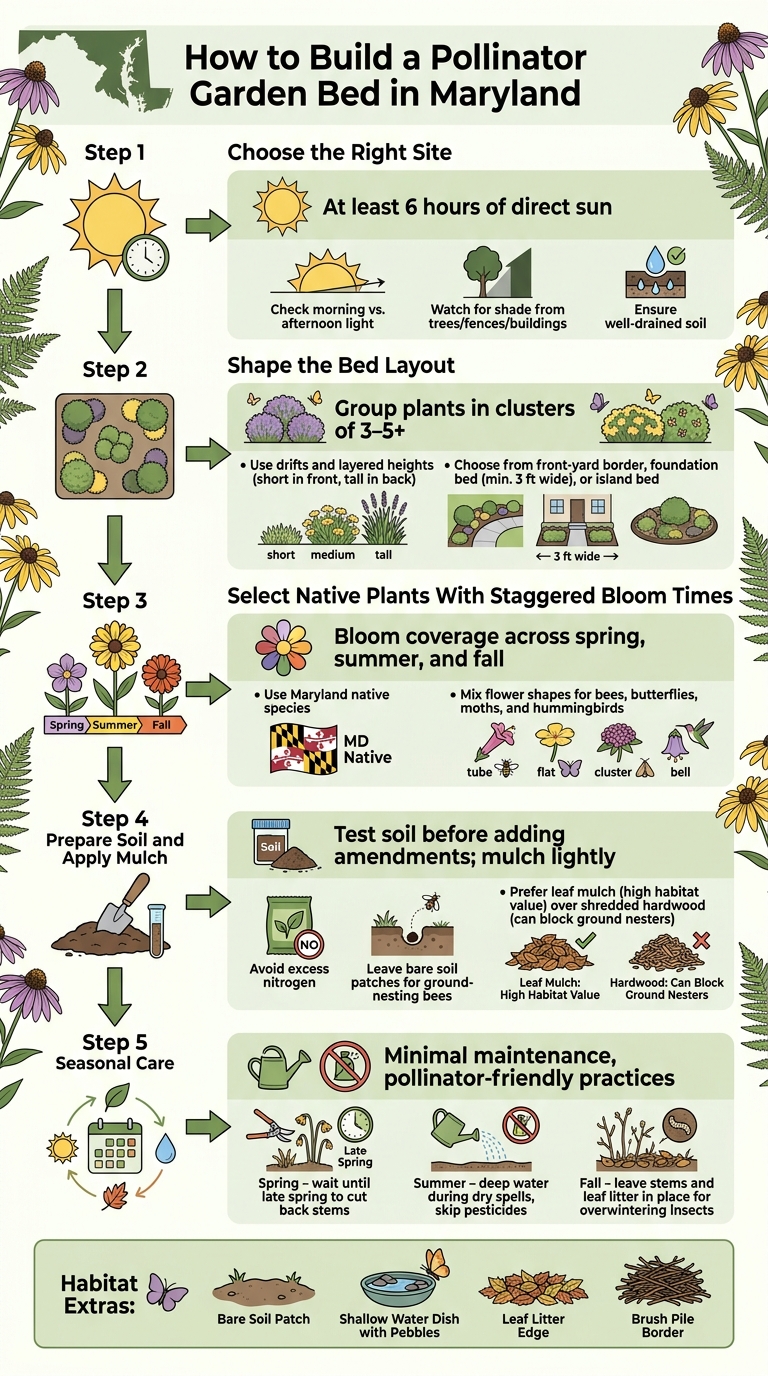
How to Build a Pollinator Garden Bed in Maryland
A Layered Garden Using Regionally Native Plants
sbb-itb-843f8be
Choose the Right Site and Sun Exposure
Where you plant matters more than most people think.
A plant can have good soil, enough water, and decent care, yet still struggle if it’s stuck in the wrong spot. In many cases, sun exposure is the dealbreaker.
Start by looking at how much direct sunlight the area gets during the day. Some plants need full sun, which usually means at least 6 hours of direct light. Others do better in partial shade or full shade, where harsh afternoon sun can do more harm than good.
It also helps to watch the space for a day or two. Morning sun, afternoon heat, nearby trees, fences, and walls can all change how that spot behaves. A corner that looks bright at 10:00 AM might be in deep shade by 2:00 PM.
A few things to check:
- How many hours of direct sun the site gets
- Whether the light comes mostly in the morning or afternoon
- If buildings, trees, or fences block light at certain times
- Whether the area holds heat or stays cooler than the rest of the yard
This step sounds simple, but it saves a lot of trouble later. Put sun-loving plants in shade, and they often grow weak and leggy. Put shade plants in strong afternoon sun, and they can scorch fast.
Shape the Bed for Pollinator Access and Easy Upkeep
Plant in Clusters, Drifts, and Layered Heights
Once you’ve picked the site, the next step is shaping the bed so pollinators can move through it with ease. Group the same plant species in patches of three to five or more. That makes blooms easier for bees and butterflies to spot, so they don’t burn energy hopping between isolated plants.
Loose, flowing groups tend to work better than single straight rows. They also give the bed a softer, more natural look. Place shorter plants in front and taller ones in back to add depth and keep flowers within reach. This kind of layout also cuts down on crowding, makes mulching simpler, and takes some of the hassle out of seasonal upkeep.
Add Small Habitat Features Beyond Flowers
Flowers matter, but pollinators need more than nectar. A small patch of bare soil in a sunny corner gives ground-nesting bees a place to dig. A shallow dish of water with a few pebbles lets butterflies and small bees land and drink without slipping in.
You can also leave a loose edge of leaf litter or add a small brush pile along the border of the bed. That bit of mess does a lot of work, giving overwintering insects a place to shelter through the colder months. These features don’t take much room, but they help support pollinators across the whole season.
Compare Common Bed Layouts for Maryland Yards
The bed’s shape changes how easy it is to plant, maintain, and reach.
- Front-yard border: A long, narrow strip along a fence, sidewalk, or property edge. This works well for yards with limited open space and gives you season-long color that’s easy to see from the street.
- Foundation bed: Planted along the front or side of the house. This is a good fit when the area gets steady sun and you want the home to feel tied into the landscape. Keep beds at least 3 feet wide so plants have space to spread.
- Island bed: A freestanding bed with lawn on all sides. Best for open backyards where you want a focal point and easy access from every direction, both for upkeep and for pollinators.
After the bed shape is set, fill it with native plants that bloom in sequence.
Pick Native Plants That Bloom From Spring Through Fall
Once the bed is shaped for easy access, the next step is picking native plants that keep nectar and pollen available from spring through fall.
Build a Bloom Calendar for Spring, Summer, and Fall
Think of your planting plan like a bloom calendar. The goal is simple: make sure something is flowering in spring, summer, and fall so pollinators don’t run into gaps in food.
That means planning for bloom overlap, not just a single burst of flowers. Use several native species for each season so the bed keeps working over time, even as some plants fade and others start up.
Use Maryland Natives and Varied Flower Types
Stick with Maryland native plants, and don’t just look at bloom time. Flower shape matters too.
A mix of flower shapes, colors, and sizes helps support bees, butterflies, and hummingbirds. Some pollinators do best with open, easy-to-reach flowers. Others are drawn to tubular blooms or clustered flower heads. When you mix things up, more kinds of pollinators can use the garden across the season.
Once the plant list is set, prepare the soil and add mulch so the bed stays healthy without blocking pollinators.
Prepare the Soil, Pick the Right Mulch, and Follow Seasonal Care
Prepare the Bed and Apply Mulch Without Harming Pollinators
Once you’ve picked native plants, keep the bed on the lean side: test the soil, mulch lightly, and don’t overfeed it.
Start with a soil test before adding any amendments. Native plants usually need very little fertilizer. Too much nitrogen leads to weak, floppy growth and gives weeds an edge. Add compost only if the soil test says you need it, and keep amendments light.
Use a thin layer of mulch, and leave some bare patches of soil for ground-nesting bees.
Compare Mulch Options for Weed Control, Moisture, and Habitat
| Mulch Type | Weed Suppression | Moisture Retention | Habitat Value |
|---|---|---|---|
| Shredded Hardwood | Excellent | Excellent | Low – can form a dense mat that blocks ground-nesting bees |
| Leaf mulch | Good | Good | High – mimics the natural forest floor and supports overwintering insects |
Once the mulch is in place, seasonal care stays pretty light and pollinator-friendly.
Spring, Summer, and Fall Maintenance in Maryland
In spring, wait until late spring to cut back dead stems so overwintering insects have time to emerge.
During summer, water deeply in dry spells to help roots grow down and build drought tolerance. Hand-pull weeds before they go to seed, and skip pesticides.
In fall, leave stems and leaf litter in place through winter so insects have shelter.
Wet spots are worth fixing before they turn into planting headaches. If drainage, runoff, or low areas keep beds too wet, Pro Landscapes MD can correct the grade and drainage before planting.
Conclusion: Key Steps for a Maryland Pollinator Bed That Works
A Maryland pollinator bed works best when you start with the basics: a sunny spot, well-drained soil, and a location that makes sense for the yard. From there, keep the layout simple. Group plants in clusters or drifts so pollinators can find them more easily, and so the bed is easier to care for.
Plant choice matters just as much. Pick Maryland natives with different flower shapes and staggered bloom times, then layer plant heights to give the bed shape and fuller cover. When those parts line up, the bed looks good and keeps doing its job through the growing season.
This kind of setup also makes the bed easier to manage through spring, summer, and fall. When it’s planned well, it helps local wildlife, brings seasonal color, and asks for only modest upkeep. If drainage or grading issues are getting in the way, Pro Landscapes MD can fix them before planting.
FAQs
What if my yard gets less than 6 hours of sun?
If your yard gets less than six hours of sun, you’re dealing with partial sun or shade. A smart first step is to watch how light moves across your yard during the day and map it out. Sun patterns don’t stay fixed, either. As trees leaf out during the growing season, some spots can get a lot darker.
Once you know which areas get more or less light, choose plants that fit those conditions. It also helps to match them to the soil moisture in each spot. Native species that suit the light and moisture levels are key, because a plant that’s wrong for the site may struggle.
Which Maryland native plants bloom by season?
Choose Maryland native plants with overlapping bloom times from early spring through late fall so pollinators can find food across the season, not just in short bursts.
Here’s a simple way to think about it: build your planting around spring, summer, and fall bloom windows that overlap a bit. That overlap matters. If one plant finishes blooming, another is ready to take over.
- Spring: Virginia bluebells, bloodroot, spring beauty, wild geranium, redbud, serviceberry, wild columbine, Golden Alexanders
- Summer: purple coneflower, bee balm, black-eyed Susan, butterfly weed, blazing star, milkweeds, mountain mint, coreopsis
- Fall: New England aster, aromatic aster, goldenrods, Joe-pye weed, ironweed, blue mistflower
A garden like this gives bees, butterflies, and other pollinators a more steady food supply from early spring into late fall. It also makes the yard feel more alive through the year, since something is almost always coming into bloom.
How do I keep weeds down without blocking bees?
Start with manual weeding, especially when the soil is moist. Pulling invasive weeds early makes the job easier and helps you avoid chemicals that can harm pollinators.
You can also make the area less inviting to weeds by planting native groundcovers like wild strawberry or creeping phlox. Then add a thin 2- to 3-inch layer of organic mulch, such as shredded leaves or pine needles.
For ground-nesting bees, leave 2 to 3 square feet of bare, well-drained soil. Skip landscape fabric and plastic barriers, which can block access and get in the way of healthy habitat.
Chat with Us