









- bhavya gada
- No Comments
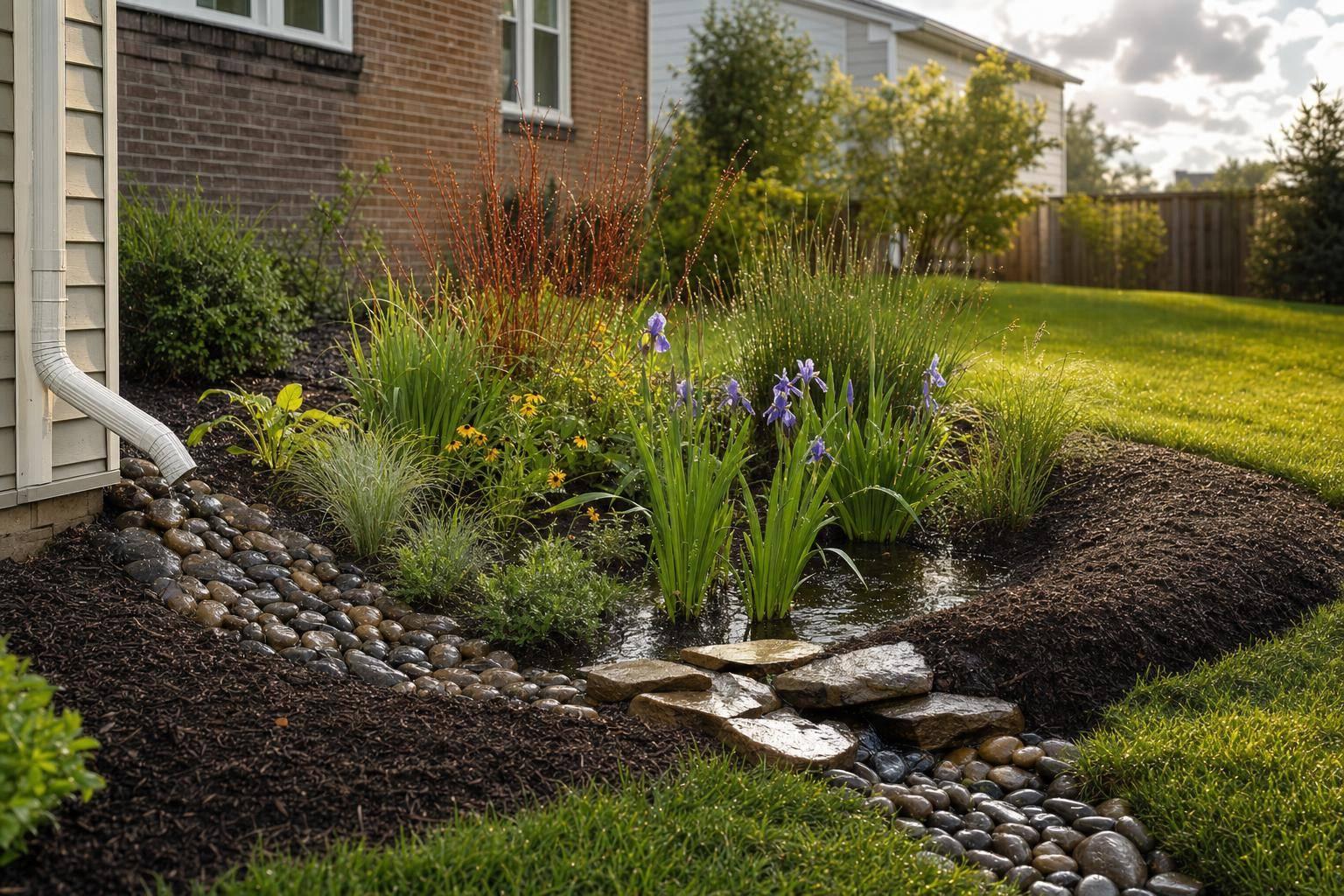
A rain garden works when it sits in the right place, drains within 24 to 48 hours, fits the runoff it receives, uses plants for each moisture zone, and has a safe overflow route. If I get those five parts right, I end up with a yard feature that helps with runoff and looks like it belongs there.
Here’s the short version:
- Place it away from the house and in a spot that can catch runoff
- Grade it to fit the yard’s slope so water flows into the basin
- Size it to the drainage area, often about 20% to 30% of the hard surface draining to it
- Use plants by zone: wet bottom, moist middle, dry edge
- Plan overflow so heavy rain moves away from the home
A few numbers matter most:
- The basin should drain in 1 to 2 days
- Side slopes should stay around 3:1
- Soil within 10 feet of the house should slope away at 2% or more
- Many home rain gardens use a planting depth of about 4 to 8 inches
| Tip | What I focus on | Why it matters |
|---|---|---|
| Location | Away from the home, in a low spot | Helps keep water off the house |
| Slope | Water path, swales, grading | Moves runoff into the basin |
| Size | Drainage area and soil speed | Helps stop overflow and standing water |
| Plants | Wet, moist, and dry zones | Keeps planting in step with site conditions |
| Overflow | Clear outlet for big storms | Sends extra water to a safe area |
If I’m dealing with soggy soil, regrading, or a spot near the home, it makes sense to get a drainage pro to check the plan first.
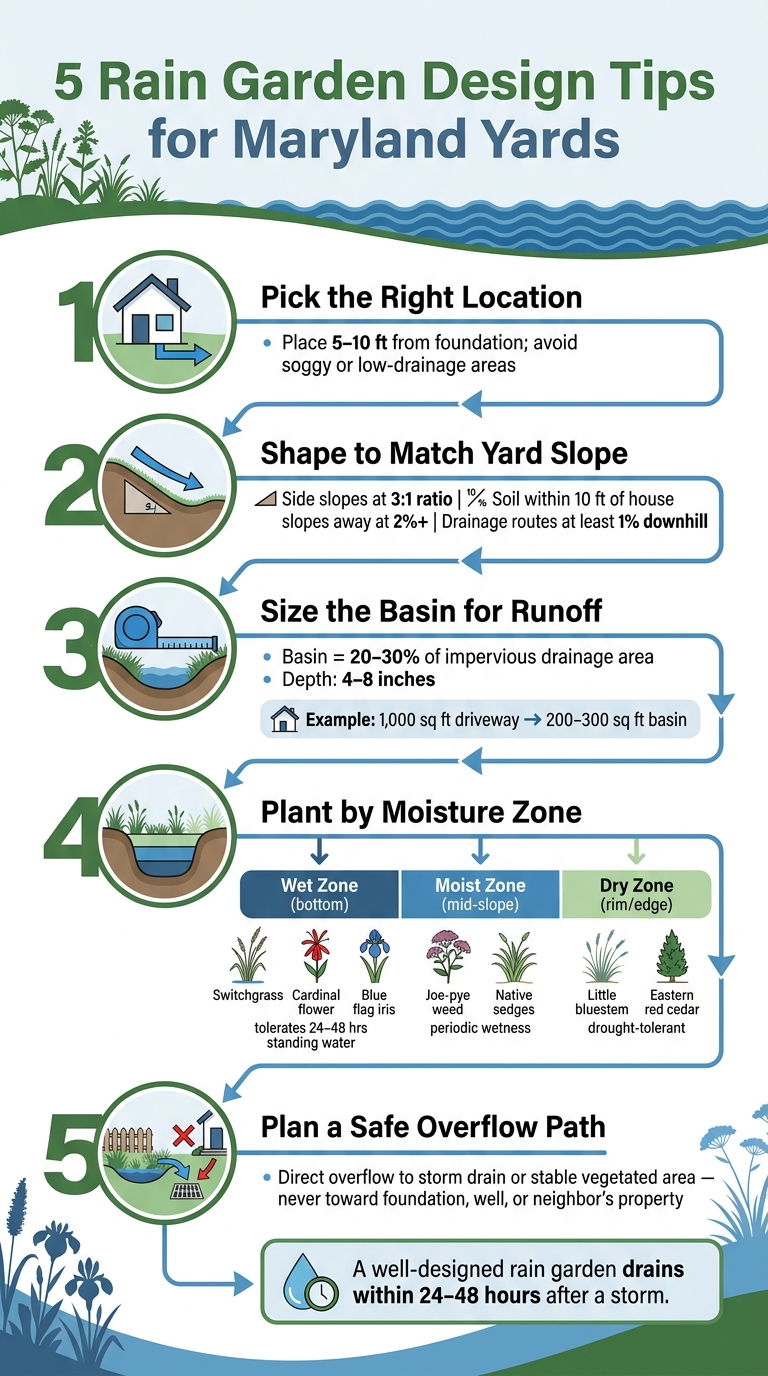
5 Rain Garden Design Tips for Maryland Yards
How To Create a Rain Garden | Ask This Old House

sbb-itb-843f8be
What Makes a Rain Garden Work in Maryland Yards
A rain garden in Maryland needs to do two jobs at once: catch runoff from roofs, driveways, and patios, and drain fast enough to keep plants and soil in good shape. That’s why placement comes first.
The garden should drain within 24 to 48 hours after a storm.
Slope plays a big part, too. The best spot is usually a low area where water already tends to collect. In plain terms: place it away from the house, but still low enough to catch runoff.
1. Pick a Spot That Drains Well and Sits Away From the House
Start with a spot that helps move water away from your home and lets runoff flow into the basin on its own. Put the rain garden far enough from the house, basement, septic system, and other structures so water doesn’t collect near the foundation. Skip areas that stay soggy or hold standing water long after it rains.
Before you lock in the location, map out downspouts, low spots, property lines, trees, and patios. That little bit of planning goes a long way. It also helps the garden look planned and purposeful instead of like an afterthought.
When the garden follows the yard’s natural water flow, it tends to work better over time.
Once the site is set, the next step is shaping the basin to match the yard’s slope.
2. Shape the Rain Garden to Match Your Yard’s Slope
Walk your yard during a rainstorm and watch what the water does. Follow the spots where it runs, slows down, and collects. Then shape the rain garden around that path. After you map the flow, grade the area so water moves into the basin the way you want.
A shallow, planted swale can guide water from a downspout into the basin. Keep the side slopes at 3:1 to help slow the water and cut down on erosion[1].
If runoff travels through a long, narrow part of the yard, use an elongated swale instead of a round basin. That longer layout gives water more time to slow down before it reaches the planted area.
A few slope rules matter here:
- Keep drainage routes at least 1% downhill
- Slope soil within 10 feet of the house away at 2% or more[1]
Maryland soils can change a lot from one yard to the next, so basin depth and width should fit the site. If your soil has a lot of clay, a shallower, wider basin usually works better because it helps prevent standing water[1].
Once the shape lines up with the slope, the next step is sizing the basin for the runoff it will take in.
3. Size the Basin for the Runoff It Will Receive
Once the shape works with the slope, the next step is sizing the basin for the amount of runoff it needs to catch. Start by measuring the total square footage of impervious surfaces that drain into the rain garden, like roof sections, driveways, and patios. A solid rule of thumb is to make the basin 20% to 30% of the draining surface area for a 1-inch storm [1].
Here’s a quick sizing guide [1]:
| Impervious Drainage Area | Recommended Rain Garden Size (20–30%) |
|---|---|
| 500 sq. ft. | 100–150 sq. ft. |
| 1,000 sq. ft. | 200–300 sq. ft. |
| 1,500 sq. ft. | 300–450 sq. ft. |
| 2,000 sq. ft. | 400–600 sq. ft. |
Then use soil drainage to dial in the final dimensions. Most home rain gardens need 4 to 8 inches of basin depth in the planting zone [1]. If your soil drains slowly, you may need a larger basin or an underdrain. If it drains faster, you can often get by with a smaller footprint. Test infiltration before you lock in the size. If the soil is slow to drain, increase the basin’s surface area or plan for an underdrain [1].
4. Choose Plants for Wet, Moist, and Dry Zones
Once the basin is sized, plant choice does a lot of the heavy lifting. It affects how well the rain garden works and how it looks through the seasons. In plain terms: your plants need to match the basin’s wet, moist, and dry areas. When they do, the garden drains better and looks planned instead of random.
In Maryland, that matters even more. The state swings between wet and dry periods, so native plants tend to handle those shifts best. That holds whether your site has sandy loam near the Chesapeake Bay or heavy clay farther inland [1].
Here’s a simple way to match plants to each moisture zone:
| Zone | Moisture Level | Recommended Maryland Native Plants |
|---|---|---|
| Wet Zone (Basin Bottom) | Temporarily flooded | Switchgrass, Blue flag iris, Cardinal flower |
| Moist Zone (Mid-Slope) | Moist but well-drained | Joe-pye weed, Native sedges (Carex spp.) |
| Dry Zone (Rim/Edge) | Stays mostly dry | Little bluestem |
Wet-zone plants can handle short periods of standing water, then make it through drier stretches. Moist-zone plants do well with periodic wetness without needing soggy soil all the time. Dry-zone plants help hold the rim in place, which is a small detail that makes a big difference.
With plants set for each zone, the last design step is figuring out how to handle extra water during heavy storms.
5. Plan a Clear Overflow Path for Heavy Storms
Once the basin is planted, map out where extra water will go during a heavy storm. Even a well-sized rain garden needs a safe overflow route. Maryland summers can bring intense downpours, and Nor’easters can dump far more water than a standard basin can hold. If you don’t give that extra water a place to go, it can pool near your foundation or drift into a neighbor’s yard.
That overflow should carry water away from the house and toward a stable outlet. The overflow swale should direct excess runoff to a storm drain or stable vegetated area – never toward a foundation, well, or neighboring property [3]. Keep the rain garden at least 5 to 10 feet from the home’s foundation so it helps protect both the landscape and the house over time [3].
Shape the overflow swale with a shallow slope so water keeps moving without washing out the soil.
This path doesn’t need to look like a drainage ditch. You can line the swale with tough grasses and flood-tolerant plants so it blends into the yard while still helping control erosion [1][2]. Check the outlet twice a year and after major storms.
Wet-Zone, Mid-Slope, and Rim Planting at a Glance
Use this quick reference to match plants to each moisture zone.
| Zone | Moisture Tolerance | Maryland Plant Examples |
|---|---|---|
| Wet Zone | High; tolerates standing water for 24–48 hours | Swamp milkweed, Cardinal flower |
| Mid-Slope | Moderate; handles changing wet and dry soil | Ironweed, Joe-pye weed |
| Rim | Low; drought-tolerant, prefers well-drained soil | Little bluestem, Eastern red cedar |
Native plants can also help support pollinators and add seasonal curb appeal [2].
If slope, soil, or overflow conditions are still unclear, a drainage professional can confirm the layout before installation.
When to Call a Maryland Drainage and Landscape Professional
If a site has simple drainage, a DIY rain garden may be enough. It tends to work best in a straightforward yard with no chronic drainage problems. But if water keeps pooling on your property or the soil stays soggy after rain, get a professional assessment before you start digging.
One of the clearest signs you need expert help is regrading. If a rain garden will sit near a foundation or another permanent structure, the grading plan needs to be precise. The same goes for overflow paths. Once overflow routing becomes part of the grading plan, it’s time to bring in a professional.
Pro Landscapes MD provides drainage, grading, planting, and landscape design across central Maryland, including Howard, Montgomery, Carroll, Frederick, Prince George’s, and Baltimore counties. Call a professional when basin size, grading, or overflow routing could affect a foundation or a larger drainage plan.
Conclusion
A well-designed rain garden does more than handle runoff. It becomes a useful, good-looking part of your yard.
These five choices work together to guide water and improve the look of the space. Each one supports the next. When everything lines up, the rain garden drains well, feels planned, and adds curb appeal that lasts.
For Maryland homeowners, good design is what helps a rain garden work through seasonal rain and keep its value over time.
FAQs
How do I test soil drainage before building a rain garden?
Watch your yard during and after a rainstorm. Pay attention to where water puddles, where it moves, and how long the soil stays wet.
If you want a closer look, dig a 2- to 3-foot-deep test hole to check the soil and see how water moves through it. Rub the soil between your fingers to tell if it feels sandy, silty, or heavy with clay. Then use a formal percolation test to verify whether the site drains well enough for a standard rain garden or if it may need an underdrain system.
Can a rain garden work in heavy Maryland clay soil?
Yes. A rain garden can work in heavy Maryland clay soil, even though clay drains slowly.
The key is setting it up the right way. In most cases, that means adding an underdrain system, using a planting mix of 50% coarse sand, 30% topsoil, and 20% compost, and choosing native, water-tolerant plants that do well in Maryland’s climate.
Clay soil tends to hold water longer than looser soils. That sounds like a problem, but it doesn’t rule out a rain garden. It just means the garden needs a bit more help so water can move through the system instead of sitting too long.
Do I need a permit for a rain garden in Maryland?
It depends on where you live and what the project changes.
You may need a permit if the rain garden:
- changes drainage patterns
- alters a large area
- redirects water onto neighboring properties
- sends runoff toward public rights-of-way
Rules can differ from one county or city to the next. So before you start construction, check with your local permitting office or Soil Conservation District.
Chat with Us