









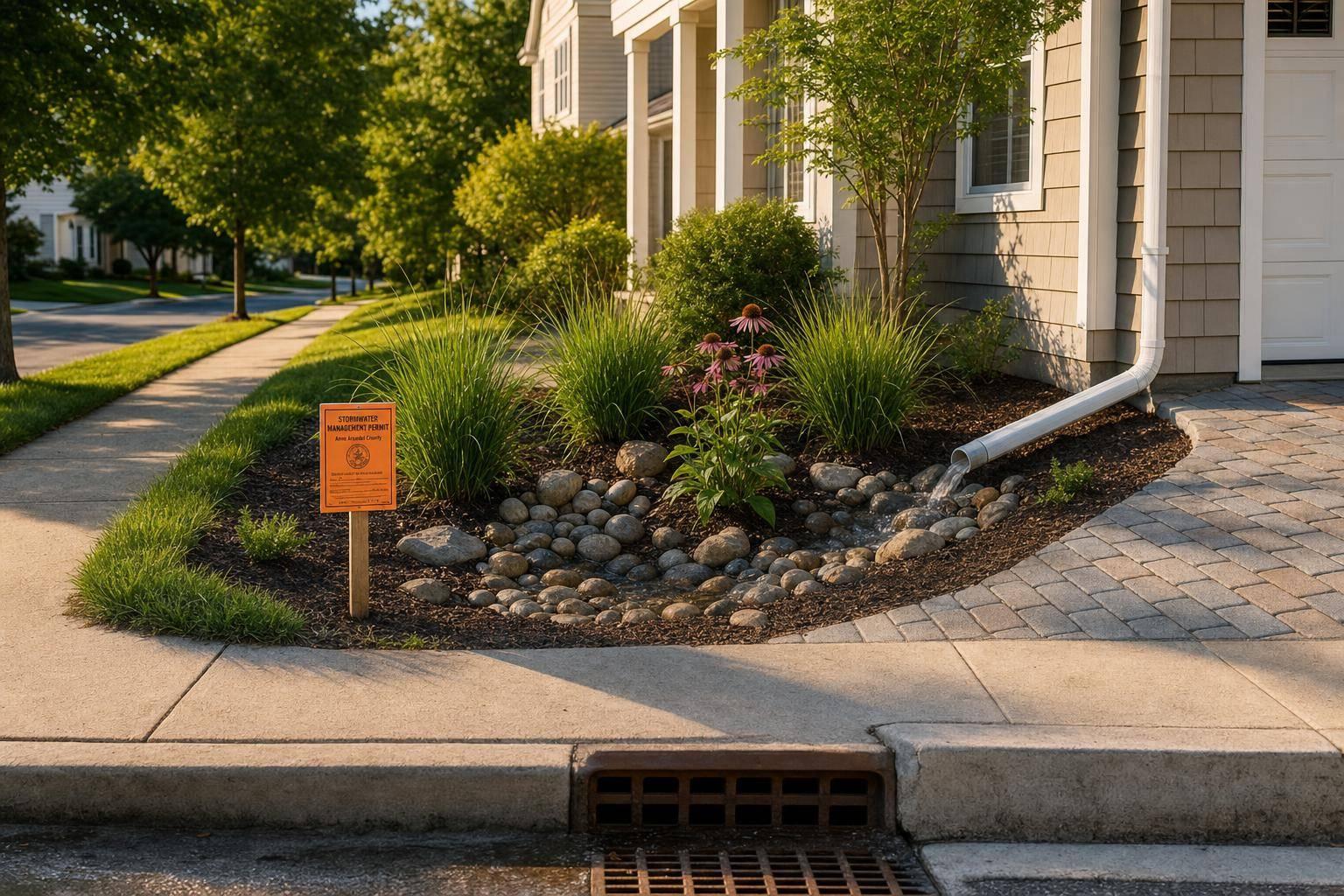
- bhavya gada
- No Comments
If your project changes drainage, grading, or adds hard surface, you may need county approval before work starts. In Anne Arundel County, that often means a stormwater permit, a grading permit, or both. If you build first and ask later, you can face delays, added plan changes, inspections issues, and extra cost.
Here’s the short version:
- Patios, driveways, and other hard surfaces can trigger review
- Slope changes, cut/fill work, and steep lots can trigger grading review
- Critical Area lots, tidal areas, wells, and septic systems may add more steps
- You’ll usually need a site plan, property details, portal submission, and comment responses
- After approval, the work must match the approved plans, pass inspections, and meet as-built and maintenance rules
I’d look at it this way: the permit process has 3 parts – figure out if your project triggers review, submit the right plans, and follow the approved design after permit issuance. Miss any one of those, and the job can stall.
| Step | What I’d check first | What can trip people up |
|---|---|---|
| 1. Permit trigger | New hard surface, drainage change, grading | Assuming small residential work is always exempt |
| 2. Application | Site plan, documents, fees, portal upload | Incomplete plans and slow comment responses |
| 3. Post-approval | Build per plan, inspections, maintenance records | Field changes without county sign-off |
One more point: county review is shaped by both Maryland rules and county code, so the answer is not just about the project size. It’s also about where the lot is, how water moves, and what the plans show.
That’s the full picture in plain English.
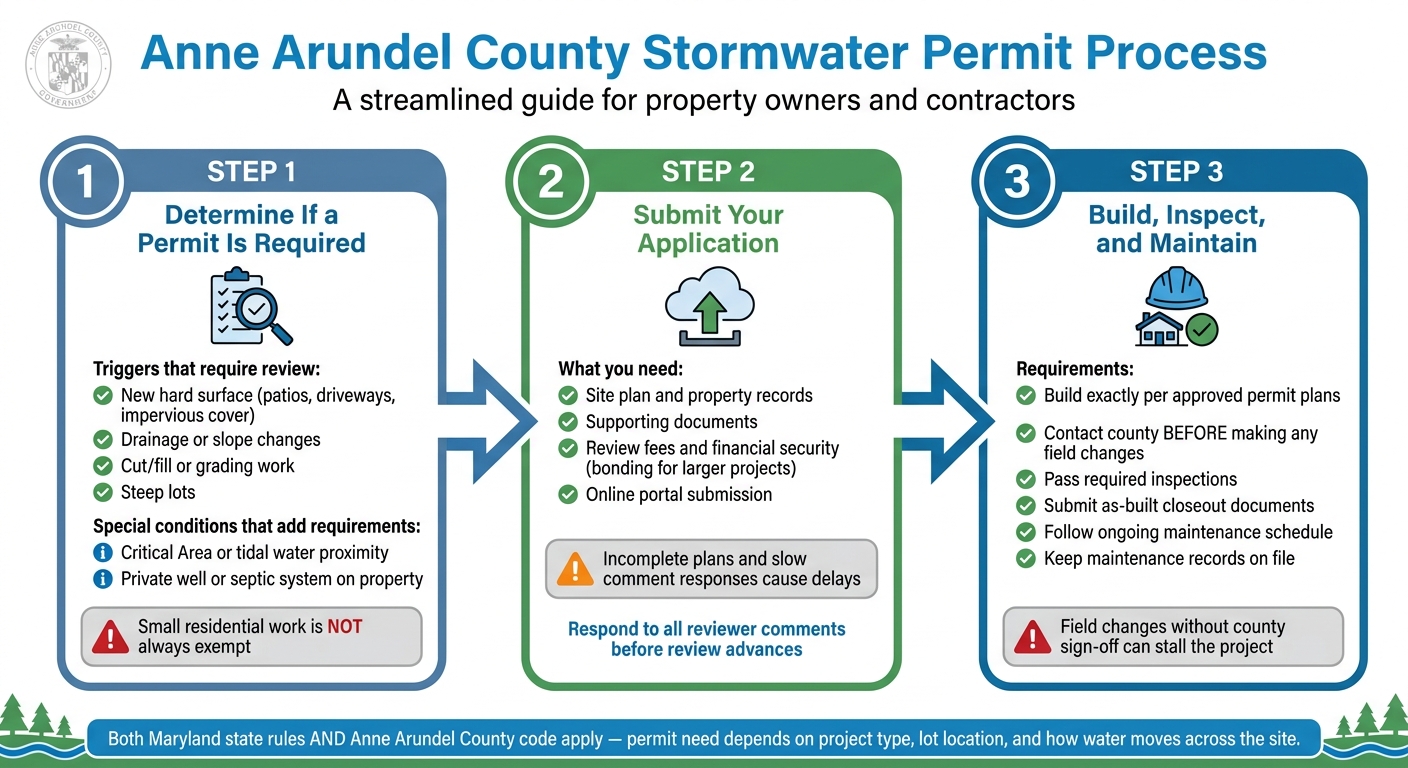
Anne Arundel Stormwater Permit Process: 3 Steps to Approval
Stormwater in Anne Arundel County: Where does it go and how does it get there?

Stormwater Rules in Anne Arundel County
Anne Arundel County reviews stormwater projects under both state law and county code. Those two sets of rules shape when a permit is needed, what the county checks, and which projects need plans before any work starts.
The next two points explain the state and county rules behind permit review.
State and county permit rules work side by side. State standards set the base rules for how stormwater must be handled, and county code governs local permit review and approval. When you understand both layers, it becomes much easier to tell whether a project needs approval before work begins.
A few key terms show up again and again in this article and in the permit process:
- Stormwater management means controlling how rainwater flows, soaks into the ground, or is stored on a site.
- Grading means changing the slope or elevation of land.
- Impervious surface means any material – pavement, roofing, or compacted gravel – that keeps water from soaking into the ground.
- Disturbance area means the total land area affected by construction or grading work.
Knowing these terms makes it easier to read county requirements and figure out which rules apply to a given project.
Projects That Require Stormwater or Grading Permits
Not every outdoor project needs county review. But if a residential project adds impervious cover, changes how water moves across the lot, or includes major grading, it often does.
Residential Work That Often Triggers a Permit
Large patios and driveway expansions often trigger review because they add impervious surface. That means more runoff, which the county may want to check before work starts.
Grading can also trigger review on its own. If a project changes slopes, cuts into a hill, fills low areas, or takes place on steep ground, you may need a grading permit. In some cases, the same project needs both stormwater and grading approval.
Site Conditions That Add Requirements
Some lots come with extra layers of review. Properties in the Critical Area or near tidal waters face added restrictions and may need coordination with more than one office.
Steep slopes can also bring added grading and stormwater review to help limit erosion and runoff. And if the property has a private well or septic system, there may be extra coordination so stormwater features don’t conflict with that utility setup.
Once you’ve confirmed the site constraints, gather the property records and site plan for the application.
sbb-itb-843f8be
How to Apply for Stormwater and Grading Permits
Gather Your Property Information and Site Plan
Start by pulling together your property details and a complete site plan. A full plan set helps you avoid review delays, which can save a lot of back-and-forth later.
Before you open the county portal, make sure you have all documents and plans the county asks for. Once the plan set is ready, upload it through the county portal.
Submit Online and Respond to Reviewer Comments
Anne Arundel County uses an online portal for stormwater and grading applications. Choose the right permit type, then upload your plans and supporting documents.
During review, expect comments. Reviewers may ask for revisions, added stormwater details, grading updates, erosion control notes, or other site-specific information. Respond to each comment and submit updated documents before the county moves the review forward.
You should also plan for fees and any required financial security before final approval.
Fees, Financial Security, and When to Hire a Professional
Set aside money for review fees before you file. Bigger projects may also need bonding or other financial security.
Some plans get technical fast. BMP sizing, grading, and drainage details often need a trained hand. For more technical projects, a landscape or drainage professional can help with BMP sizing and grading coordination.
After approval, the county will expect the work to match the approved plans and permit conditions. Installation, inspections, and maintenance also need to follow the approved design.
Design, Construction, and Maintenance After Permit Approval
Once the permit is approved, the job shifts from planning to execution. At that point, the project needs to match the approved permit plans from installation all the way through closeout.
Stormwater Features for Residential Properties
Build the stormwater feature exactly as shown in the approved permit plans. That means use the approved design only – no substitutions, no scope changes, and no field edits unless the county signs off first.
If site conditions change during construction, stop and contact the county before changing the approved design. It’s a lot easier to clear up a change early than to fix a compliance issue later.
Once construction begins, inspection is the next part of the process.
Inspections and As-Built Requirements
Before construction starts, confirm inspection timing and any as-built submittal requirements with the county. Then stay on top of inspections during the job and submit any closeout documents the county requires.
Missing an inspection or skipping as-built paperwork can slow final approval and leave the project out of compliance. In plain terms, even if the work looks done, the county may not treat it as complete until the inspection and closeout steps are handled the right way.
After inspection and closeout, maintenance shifts to the property owner.
Ongoing Maintenance and Key Takeaways
Keep the permit file, follow the maintenance plan, and service the stormwater feature on schedule. Just as important, keep records of that service. Proof of maintenance matters if the county later asks whether the feature is working as designed.
For current inspection schedules, closeout requirements, and maintenance expectations, contact the Anne Arundel County Department of Inspections and Permits directly before construction begins.
FAQs
Do I need a permit for a new patio or driveway?
It depends on the size and scope of the job.
In Maryland, you need an erosion control permit if the work disturbs 5,000 square feet or more of soil or includes 100 cubic yards or more of excavation.
There’s another trigger too: if your project changes an existing stormwater management facility, you need approval no matter how small the disturbed area is.
For a final yes or no, check with Anne Arundel County or talk to a professional who handles local permit rules.
When do I need both stormwater and grading permits?
In Anne Arundel County, you’ll usually need both permits when a project includes major land disturbance or excavation. That’s because the county may review the work for erosion control and stormwater management at the same time.
A grading permit is required if your project disturbs 5,000 square feet or more or moves more than 100 cubic yards of fill.
A state stormwater permit is required for construction that disturbs 1 acre or more.
If you’re changing an existing stormwater facility, that also needs approval.
What happens if I change the work after approval?
If your project plans change after a stormwater permit has been approved, you need more approval before you keep going. That applies to changes to the permitted work and to any existing stormwater management facility. The updated plans still have to meet state and local rules.
If you move ahead without updated approval, you could face work stoppages, fines, or legal penalties. It’s smart to check with your local permitting office or a qualified professional before making any changes.
Chat with Us