









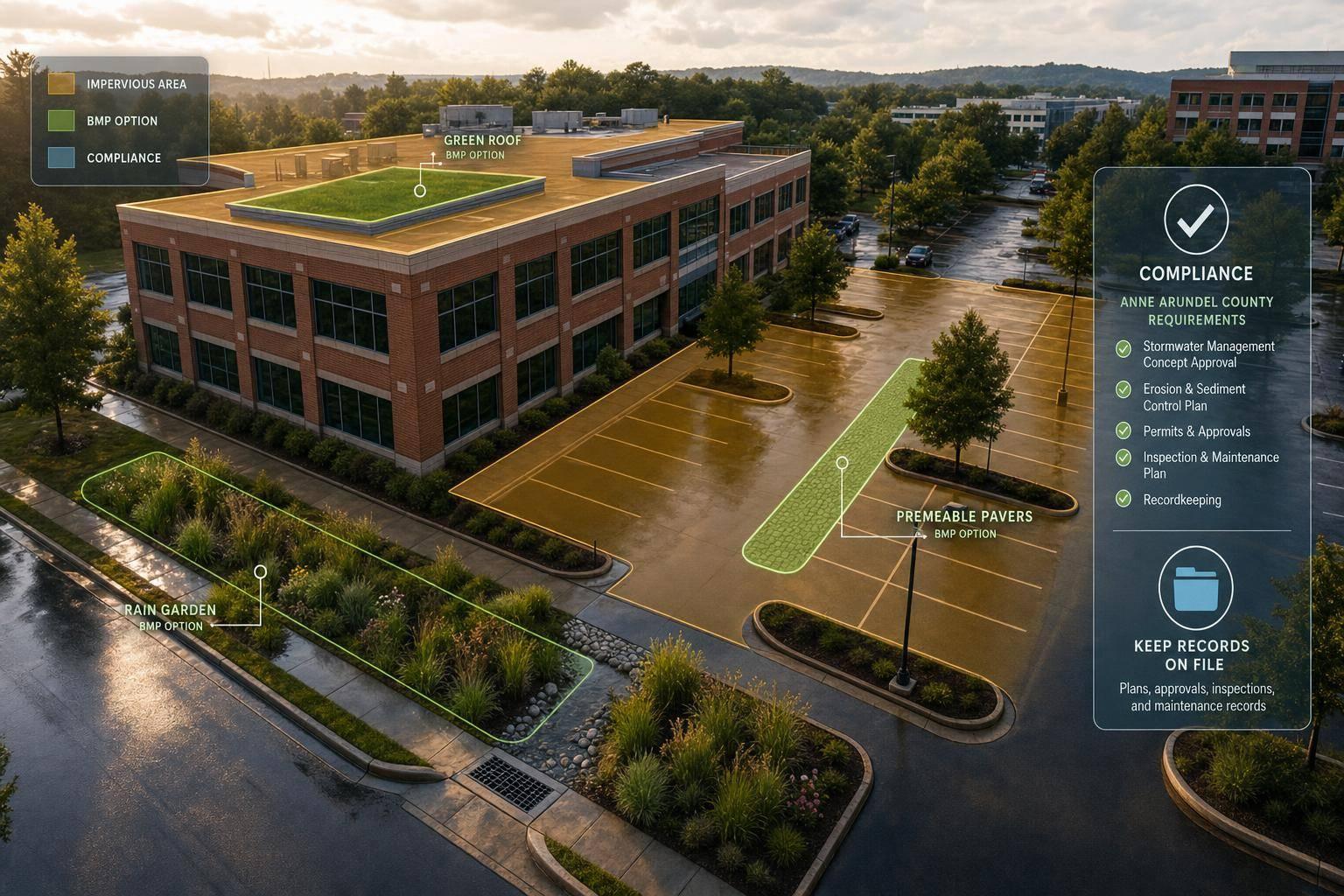
- bhavya gada
- No Comments
If runoff on your Maryland property is not under control, a retrofit usually comes down to 4 steps: review the site, pick the right BMPs, get county approval, and keep records after the work is done.
I’d boil the process down like this: you first map hard surfaces and drainage paths, then check soil, slope, setbacks, and overflow routes, then build only after permit review, and finally inspect and log maintenance. In Maryland, this work is tied to the Maryland Stormwater Management Act of 2007 and COMAR 26.17.02, with ESD to the MEP as the main rule standard.
Here’s the short version:
- Step 1: Find where runoff starts and where it goes
- Step 2: Match the site to BMPs such as rain gardens, French drains, grading, dry riverbeds, or permeable pavers
- Step 3: Check county permit triggers before work starts
- Step 4: Save plans, as-builts, inspections, and maintenance logs
A few facts matter right away:
- 1 heavy storm can expose drainage failures fast
- 100% of impervious areas should be reviewed during the site check
- 0 construction should start until approvals are in place
If I were planning retrofit work on a home or mixed-use lot, I’d treat the site review as the make-or-break step. Good records and routine inspections are what keep the system working after install.
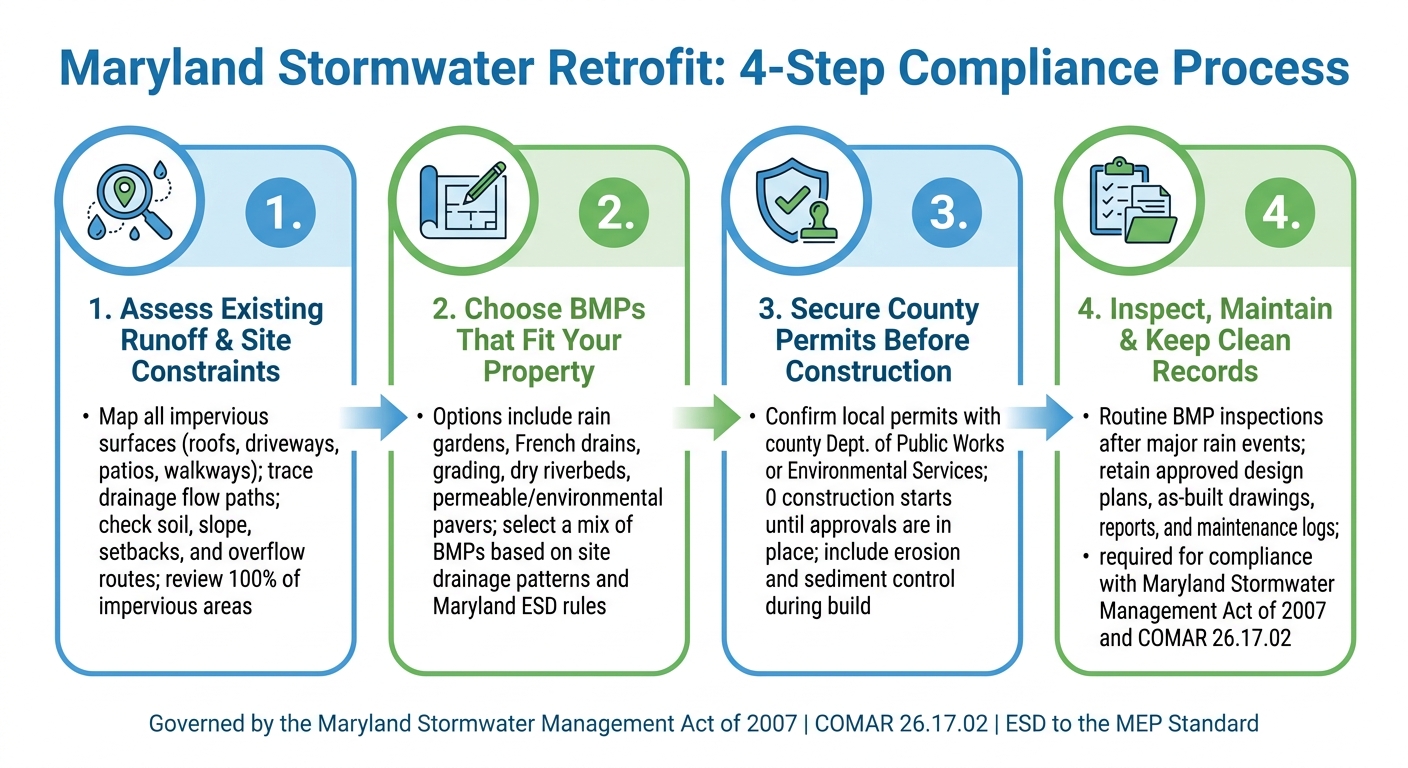
Maryland Stormwater Retrofit: 4-Step Compliance Process
Managing Stormwater with Basin Retrofits
Step 1: Assess Existing Runoff Problems and Site Constraints
Start with a site inventory. You want to find the runoff sources, trace flow paths, and note any blockages or diversion points.
Map Impervious Surfaces and Existing Drainage Features
List every impervious surface on the property. On a Maryland property, that usually means roofs, downspouts, driveways, patios, walkways, and paver areas. Mark each downspout and note where it discharges now.
Next, map the drainage features already on site. This includes swales, drain pipes, catch basins, dry wells, and any older stormwater features. Then trace the existing flow paths so you can see where runoff is already being controlled and where treatment is missing.
Use this map to connect each runoff source to a retrofit option in Step 2.
Check Soil, Slope, Setbacks, and Overflow Routes
After you know where the water is coming from, check what the site can actually handle. Grading and slope shape how water moves. They show whether runoff will flow toward a retrofit feature or away from it. Low spots that hold water after rain often signal a drainage issue.
You should also check how close the area is to structures, property lines, utilities, easements, tree roots, and overflow routes. Infiltration does not work on every site, so soil conditions need to be reviewed before you choose a design. Maryland permits may call for soil data and infiltration testing.
These limits help determine whether infiltration, conveyance, or another BMP can meet the site’s ESD requirements.
When a Professional Review Is Worth It
Some sites need a deeper look before design starts. If the drainage is complicated, Pro Landscapes MD can review grading, runoff paths, and soil constraints on central Maryland properties.
Step 2: Plan Retrofit Measures That Fit Your Property
Use your site inventory to pick retrofit measures that match the property’s drainage patterns, space limits, and Maryland ESD rules. For many homes, the best setup is a mix of BMPs instead of a single fix. So don’t try to force every option onto the lot. Stick with the BMPs that make sense for the site.
Choose Retrofit Practices That Fit Residential Lots
A few retrofit practices tend to work well on residential lots:
- Grading and land leveling help redirect water away from low spots and toward a safer outlet.
- Drainage installation, drain pipe placement, and French drains help control runoff in trouble areas.
- Dry riverbeds guide runoff through the yard in a clean, simple way.
- Rain gardens collect roof runoff and slow it down in planted areas.
- Environmental pavers can replace standard hardscape on patios, walkways, and driveways.
Pro Landscapes MD provides drainage, grading, rain garden, dry riverbed, and environmental paver installation services across central Maryland.
After you narrow your options, size each BMP and check local review requirements.
sbb-itb-843f8be
Step 3: Get Approvals and Build the Retrofit Correctly
Once the BMP layout is set, it’s time to move from design into approvals. Before any construction starts, make sure you have all required approvals in place.
Confirm Local Permits, Reviews, and County Program Requirements
County approval is often needed for major grading, structural BMPs, pond changes, or major drainage changes. The catch is that the trigger points can differ from one county to the next, so check with your local Department of Public Works or Environmental Services office.
These approvals help confirm that the retrofit meets local and state stormwater rules before any ground is broken.
Some jurisdictions also require pre-approval if you plan to apply for a local stormwater credit or rebate program. Once those approvals are secured, construction can move forward under the approved design.
Protect Compliance During Construction
Your plan should include erosion and sediment control, and construction should begin only after approvals are complete and any required inspections have been cleared.
After installation, the project moves into inspection and recordkeeping.
Step 4: Maintain Records and Keep the System Working
Once the retrofit is in place, the job shifts from construction to upkeep. At that point, compliance depends on two things: keeping the system working as designed and keeping clean records.
Inspect and Maintain Each BMP on a Routine Schedule
Each BMP needs routine inspections to make sure it’s still doing its job. After major rain events, check inlet and outlet areas for blockages, sediment buildup, and erosion. If you spot damage or clogging, fix it fast so the system doesn’t slip out of compliance with Maryland ESD standards.
Keep Design Files, As-Builts, and Maintenance Logs
Hold on to all project records, including approved design plans, as-built drawings, inspection reports, and maintenance logs. These documents show that the retrofit stays in compliance over time. They may also be required if the property is sold, a permit comes back under review, or a county program audit takes place.
FAQs
Do I need a permit for a stormwater retrofit in Maryland?
Yes, you’ll usually need a permit for a stormwater retrofit in Maryland.
The exact rules depend on the size of the project, where it’s located, and the methods you plan to use. That’s why it helps to check with the Maryland Department of the Environment (MDE) or your local stormwater management office early, before you get too far into planning.
For smaller residential jobs, the process may be simpler. Bigger retrofit projects often call for detailed plans, supporting documents, and drainage calculations.
Which BMP works best for my property?
The best BMP for your property depends on the conditions on-site, like soil type, how much space you have, and the kind of drainage problems you’re dealing with. In Maryland, regulations give priority to ESD methods that work more like natural water absorption.
Common options include rain gardens, permeable pavers, and French drains or dry riverbeds. A professional assessment can help match the right fix to your property and local requirements.
What records should I keep after installation?
Keep organized records that show you’re still in compliance after installation, including:
- your signed maintenance agreement
- logs of BMP upkeep, inspections, and repairs
- annual reports showing the system still works as intended and meets Maryland standards
Good recordkeeping helps protect your property and can help you avoid potential penalties.
Chat with Us