









- bhavya gada
- No Comments
If water keeps washing soil down your slope, terracing is often the fix. It breaks one long hill into level steps, slows runoff, helps water soak in, and can cut erosion by 70% to 80% in the right setup.
Here’s the short version:
- Terraces work best on steeper yards where grading alone does not slow water enough.
- Clay-heavy Maryland soils make runoff worse because water tends to stay near the surface.
- Warning signs include rills, gullies, exposed roots, muddy buildup, sinking patios, and bulging walls.
- Slope matters: gentle slopes may only need grading, but steeper slopes often need step terraces, bench terraces, or engineered walls.
- Drainage is the make-or-break part: gravel backfill, a 4-inch perforated drainpipe, and safe water outlet points are key.
- Plants help hold the soil after construction, especially layered roots from grasses, groundcovers, and shrubs.
- Call a pro if the slope is over 30%, walls are taller than 3 to 4 feet, or runoff is threatening a foundation or driveway.
If I had to sum it up in one line, it would be this: terracing works when the steps, drainage, walls, and planting all work together.
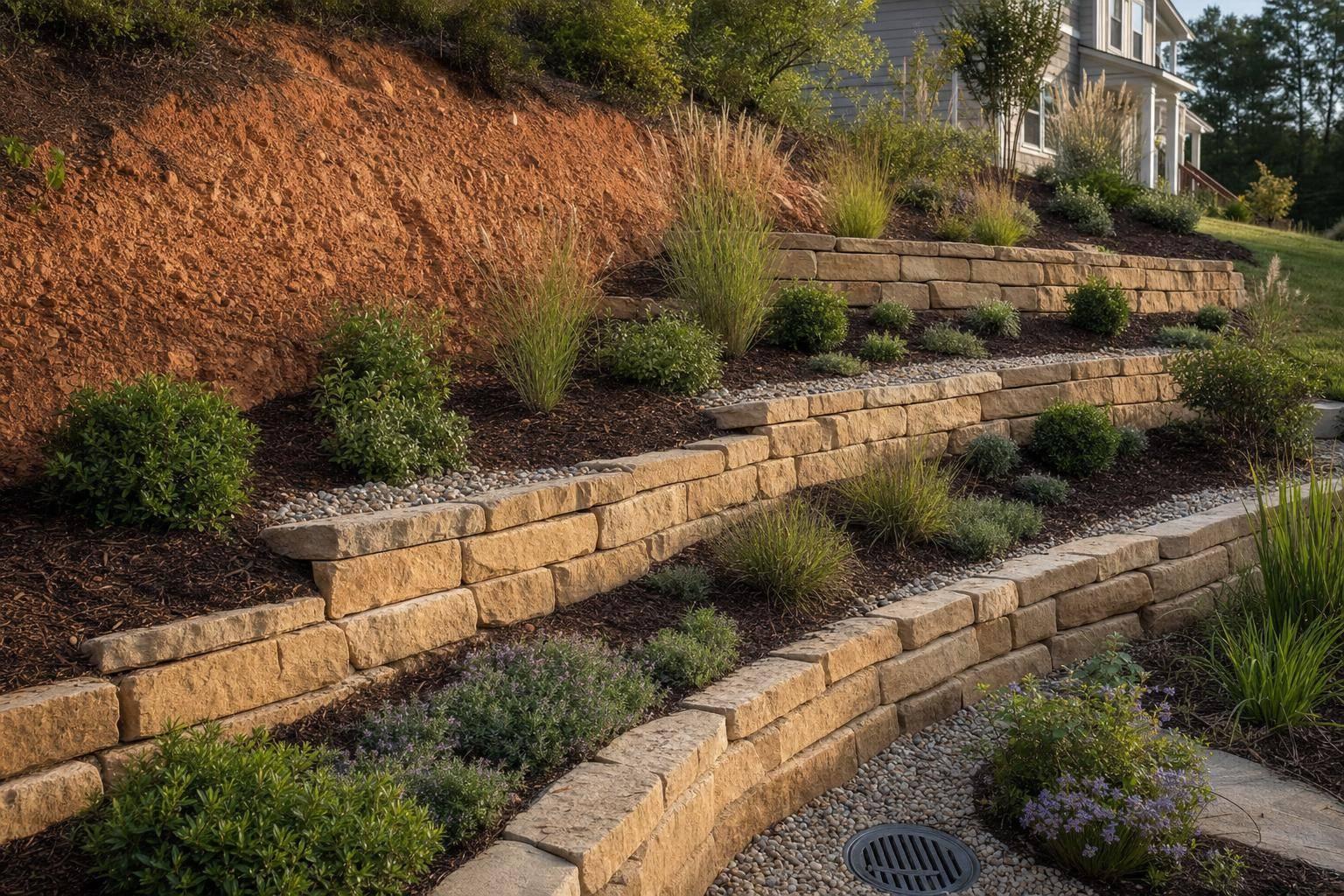
Terracing Extremely Steep Hillside Slope with Loose Eroding Soil to Create Stable Hill for Planting
sbb-itb-843f8be
What Causes Slope Erosion and What Damage It Does
Slope erosion usually comes down to a simple chain reaction: gravity pulls water downhill, runoff speeds it up, and weak soil structure makes it easier for topsoil to wash away. This gets worse on long, unbroken slopes, where water can keep building speed. Terracing helps by interrupting that downhill flow.
As runoff moves faster, hard surfaces like patios, driveways, and roof downspouts add to the problem. Instead of soaking water in, they send it across the surface and funnel it into tight channels on the slope. That concentrated flow cuts deeper into the ground and carries even more soil away. In Maryland’s clay-heavy soils, a lot of that water stays on the surface, which makes erosion hit harder.
Most homeowners spot the visible damage first: bare patches, exposed roots, and muddy buildup at the bottom of the hill. But the damage you don’t see can cost more. Runoff can wash out the base material under patios, walkways, and driveways, which can make those hardscape areas sink, crack, or shift. Wet clay soil can also build strong pressure behind retaining walls, causing them to bulge or crack. Standing water and silt at the bottom of a slope are also red flags. They usually mean active soil loss is already happening.
Common warning signs include:
| Warning Sign | What It Indicates |
|---|---|
| Rills or gullies | Active soil loss; water is moving too fast |
| Silt at the base | Significant soil loss; runoff is carrying sediment downhill |
| Cracked or sinking hardscapes | Undermining beneath patios, walkways, or driveways |
| Bulging retaining walls | Strong water pressure from saturated soil |
| Exposed roots | Topsoil has been stripped away |
Terracing works because it stops that runoff pattern before the damage spreads.
How Terracing Controls Slope Erosion
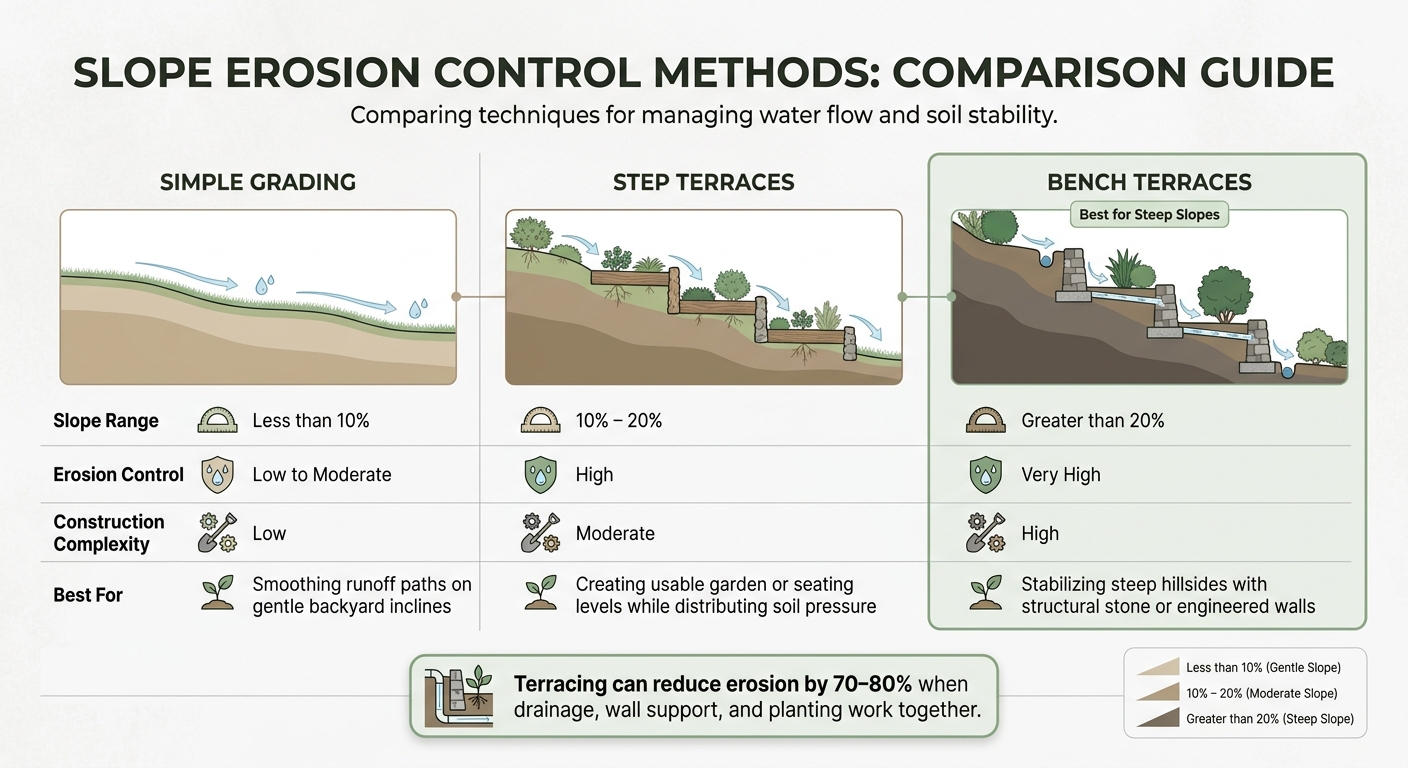
Terracing Methods Compared: Simple Grading vs. Step vs. Bench Terraces
Terracing tackles the slope problems mentioned above by turning one long hillside into a series of shorter, flatter sections. That change matters. It slows runoff, catches sediment, and keeps soil from washing downhill. In the right setting, terracing can cut erosion by 70–80% [4].
How Terraces Slow Runoff and Hold Soil in Place
Terraces slow surface runoff and give water more time to soak into the ground instead of racing downhill. That alone can make a big difference on a sloped yard.
Level planting areas also give roots a steadier place to anchor the soil. Add layered plantings like grasses, groundcovers, and shrubs, and you get extra hold where the slope needs it most.
Bench Terraces, Step Terraces, and Simple Grading Compared
Not every slope needs the same fix. A mild incline may only need grading, while a steeper hill often calls for terraces or added support. The best choice depends on the slope itself and how much runoff it has to handle.
| Feature | Simple Grading | Step Terraces | Bench Terraces |
|---|---|---|---|
| Slope Range | <10% | 10–20% | >20% |
| Erosion Control Effectiveness | Low to moderate | High | Very high |
| Construction Complexity | Low | Moderate | High |
| Typical Use Case | Smoothing runoff paths on gentle backyard inclines [1] | Creating usable garden or seating levels while distributing soil pressure [2] | Stabilizing steep hillsides with structural stone or engineered walls [1] |
Simple grading tends to work best on gentle slopes under 10%. Once a slope falls between 10% and 40%, terraces or retaining structures are usually a better option [1]. Bench terraces fit steeper hillsides, while step terraces sit in the middle and can double as garden beds or seating areas.
That said, the setup only works if drainage and wall support are done the right way. If those parts are off, water pressure can build up fast.
Design and Construction Details That Make Terraces Work
Terraces tend to fail when layout, drainage, walls, and planting are handled like separate jobs. They hold up when those parts work together to move runoff, ease pressure, and keep soil in place.
Site Layout, Drainage Flow, and Terrace Spacing
Start by measuring the slope’s grade and total length. Slopes in the 20% to 40% range will often need terraces, while slopes above 40% may need engineered retaining walls or rock stabilization [2]. It also helps to step walls down in tiers, because that spreads soil pressure across several shorter walls instead of pushing it all against one tall wall [2].
Next, map where runoff enters the yard and where it can leave without causing trouble. That step matters more than people think. If water is allowed to build speed, it can tear through a slope in a hurry.
Space terrace levels so they break up runoff before it gains force. Each level should be graded to move water away from the home’s foundation and toward a safe discharge spot, like a dry creek bed [5]. In Maryland, projects near regulated waters may need local or state permits before any work starts [3].
Once the layout sends water in the right direction, the wall base and drainage system need to handle that flow without backing up.
Retaining Wall Materials, Base Preparation, and Wall Drainage
A stable wall starts below grade. The trench should be deep enough to bury at least half of the first course of material, plus 6 inches of compacted gravel [2]. For the base, use 6 inches of compactible gravel, such as 3/4-inch crushed stone, and compact it level [2].
In Maryland, heavy clay soils and frequent rain make drainage a big deal. In many cases, water pressure – not the weight of the soil – is what causes walls to fail [3]. That’s why every wall should include:
- Gravel backfill
- A 4-inch perforated drainpipe at the base with the holes facing down
- Landscape fabric to keep soil from clogging the drainage system [3]
Walls should also lean back slightly and use staggered joints to resist outward pressure [2].
Segmental block, natural stone, timber, and gabion systems can all work, but each suits different slope and drainage conditions [3][4][5]. In many Maryland counties, retaining walls taller than 3 to 4 feet need a building permit and an engineering seal [3].
With the wall and drainage doing their job, planting takes over the surface layer and helps tie the terraces together.
Planting Terraces for Long-Term Slope Stability
Once the walls are dealing with water pressure, plants help cut surface erosion and turn the terraces into a more stable slope over time.
The simple way to think about it is this: walls hold the shape, plants hold the soil. Use a mix of shallow-, mid-depth-, and deep-rooted plants so each terrace level is held at more than one soil depth [1].
For Maryland terraces, native plants tend to do best. Switchgrass and little bluestem build strong root mass and handle dry, sunny slopes well. Virginia wild strawberry and native sedges spread fast and cover bare soil. Inkberry holly and bayberry shrubs grow deeper roots that help steady the middle of the slope [1].
A few spacing rules help here:
- Plant shrubs in staggered rows 3 to 6 feet apart
- Space groundcover 6 to 12 inches apart for faster fill-in [1]
Before planting, amend the top 6 to 8 inches of backfill with good compost or garden soil, since terrace backfill is often compacted and low in nutrients [4]. It also helps to pair planted terraces with a French drain or dry creek bed so extra water moves away from the walls [5].
When to Call a Professional and Key Takeaways
Projects That Call for Professional Terrace Design and Installation
Some terrace jobs are fine for DIY. This isn’t one of them.
When a slope gets steep, drainage gets tricky, or wall height starts climbing, it’s time to bring in a pro. You should call a professional when the slope is more than a 30% grade, when a wall needs to be taller than 3 to 4 feet, or when erosion is already putting a foundation or driveway at risk. Those site conditions are too complex for a safe DIY build [1][3].
In Maryland’s clay-rich soils, waterlogged clay can put a lot of pressure behind retaining walls. That’s why drainage isn’t optional here. It has to be built correctly [3]. And if the project is near regulated waters, permits are also required [1].
Terraces only stop erosion when the slope, drainage, and wall height fit the site. When those factors get more demanding, professional design and installation help keep the system level, drained, and permitted. Pro Landscapes MD handles grading, retaining walls, drainage, and planting for complex terrace projects across central Maryland.
What Homeowners Should Remember About Terracing
Here’s the main point: terracing works by turning one long slope into shorter sections, which slows water down before it can wash soil away. And terraces hold up when drainage, wall support, and planting all work together [1][2].
FAQs
How do I know if my slope needs terracing or just grading?
It comes down to how steep the slope is and what you want the space to do.
Gentle slopes under 10% can often be handled with minor grading. Slopes in the 10% to 20% range may need added erosion-control measures.
Once a slope reaches 20% to 40% or more, terracing is usually the better choice. It helps control erosion, stabilize the slope, and create flat areas you can actually use. Pro Landscapes MD can assess your soil, drainage, and grade.
How much maintenance do terraces need over time?
Terraces need regular upkeep to stay stable and keep doing their job over time. Even a well-built system can serve as a long-term erosion control measure, but it still calls for routine monitoring and periodic inspection.
Check drainage parts to make sure they stay clear, including weep holes and backfill areas. Keep ridges and channels in shape, and inspect the site after major weather events. In many cases, professional oversight is a smart move to help preserve grading and structural integrity.
What happens if terrace drainage is installed incorrectly?
If terrace drainage is installed the wrong way, water can collect behind walls and create hydrostatic pressure. That pressure puts stress on retaining walls and can make them bulge, move out of place, or even fail.
Bad drainage can also let runoff keep eating away at the soil. Over time, that can wash off topsoil, harm nearby foundations, and make the slope less stable. Pro Landscapes MD offers professional grading, drainage installation, and landscape design to help protect your property.
Chat with Us