









- bhavya gada
- No Comments
Maintaining a patio isn’t just about keeping it clean – it’s about extending its lifespan and protecting your investment. Without regular care, even the best patios can deteriorate in as little as 10 years. But with proper upkeep, your patio can last 25–50 years or more.
Here’s what you need to know:
- Routine Maintenance: Sweep debris, clean spills, and inspect for damage regularly.
- Seasonal Care: Address issues like frost heave in spring, algae in summer, and snow in winter.
- Sealing: Reseal every 2–5 years to prevent water damage and stains.
- Drainage: Ensure proper slope and fix pooling water to avoid structural problems.
- Material-Specific Tips:
- Concrete Pavers: Refill joints with polymeric sand and reseal.
- Natural Stone: Use pH-neutral cleaners and breathable sealers.
- Poured Concrete: Monitor for cracks and reseal as needed.
Maryland’s weather – freeze-thaw cycles, humidity, and heavy rains – demands extra attention. Neglecting maintenance can lead to costly repairs or even complete replacement. Regular inspections and timely fixes are key to keeping your patio safe, attractive, and functional for decades.
Want to know how to clean, protect, and repair your patio? Read on for a step-by-step guide.
How to Clean and Seal Paver Patios the RIGHT Way!
Patio Materials and Their Maintenance Needs
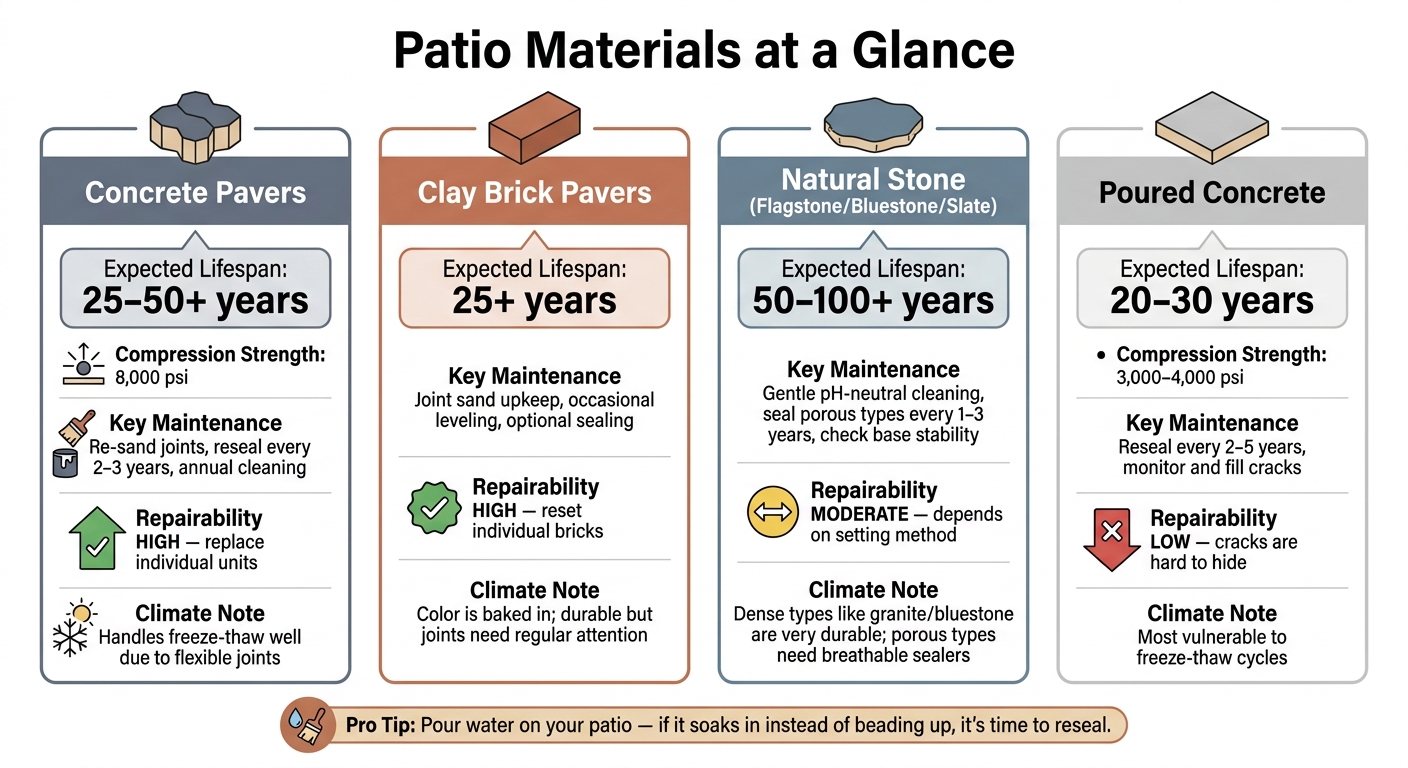
Patio Materials Comparison: Lifespan, Maintenance & Repairability
Your choice of patio material plays a big role in determining how much cleaning, sealing, and repair work it will require over time.
Common Patio Materials at a Glance
Here are the four most common materials used for residential patios: concrete pavers, clay brick pavers, natural stone (like flagstone, bluestone, or slate), and poured concrete.
| Material | Expected Lifespan | Key Maintenance | Repairability |
|---|---|---|---|
| Concrete Pavers | 25–50+ years | Re-sand joints, reseal every 2–3 years, annual cleaning | High – replace individual units |
| Clay Brick Pavers | 25+ years | Joint sand upkeep, occasional leveling, optional sealing | High – reset individual bricks |
| Natural Stone (Flagstone/Bluestone) | 50–100+ years | Gentle cleaning, seal porous types, check base stability | Moderate – depends on setting method |
| Poured Concrete | 20–30 years | Reseal every 2–5 years, monitor and fill cracks | Low – cracks are hard to hide |
Concrete pavers are known for their strength and durability, with a compression rating of about 8,000 psi, compared to 3,000–4,000 psi for poured concrete [1]. Maintaining them involves refilling joints with polymeric sand as needed and resealing every few years to prevent moisture damage and staining.
Clay brick is prized for its long-lasting color, thanks to the pigment being baked into the brick itself. However, its joints need regular attention to avoid weed growth and shifting. Natural stone, especially dense types like granite or bluestone, can last for decades. Softer, more porous stones, though, require a breathable sealant to protect against water damage and stains. On the other hand, poured concrete is susceptible to cracking, scaling, and spalling if not sealed, and repairing cracks in concrete can be tricky to make seamless.
Each material reacts differently to weather, which becomes especially important in Maryland’s challenging climate.
How Maryland’s Climate Affects Patio Materials
Maryland’s weather – marked by freeze-thaw cycles, high humidity in summer, and heavy spring rains – can take a toll on outdoor surfaces.
The freeze-thaw cycle is particularly harsh. Water that seeps into cracks or joints freezes and expands, causing gaps to widen, pavers to lift, or joints to loosen. Poured concrete is especially vulnerable to this, while pavers and bricks handle it better because their flexible joints absorb some of the stress. Meanwhile, Maryland’s humid summers promote algae, moss, and mildew growth, especially on shaded or poorly drained areas, creating slip hazards and discoloration. Heavy rains add to the challenge by washing out joint sand and eroding the base underneath, which can lead to uneven surfaces.
Understanding how these weather patterns impact your patio materials is key to keeping them in good shape.
Signs Your Patio Needs a Professional Assessment
Sometimes, surface-level fixes aren’t enough. Here are some warning signs that your patio might need professional attention:
- Multiple pavers rocking or sinking, especially near areas where water tends to collect, like downspouts or low spots.
- Wide or growing cracks in poured concrete, which could point to structural issues.
- Standing water that doesn’t drain after rain.
- Edges or steps separating from the main patio surface.
- Recurring efflorescence, the white, chalky deposits caused by water moving through the material from below [1].
If the same issues keep cropping up or water is pooling near your home’s foundation, the problem might not be with the surface itself but with the underlying structure or drainage. Pro Landscapes MD specializes in patio repairs and drainage solutions across central Maryland, offering assessments to figure out whether the issue is surface-level or deeper.
Knowing your patio material and how Maryland’s climate interacts with it will help you plan the right maintenance, which we’ll dive into in the next sections.
Building a Patio Maintenance Routine
Keeping your patio in great shape for years doesn’t have to be complicated. A regular maintenance plan can help you avoid expensive repairs and keep everything looking its best. By breaking tasks into smaller, manageable steps, you can tackle potential issues before they escalate.
Daily, Weekly, and Seasonal Maintenance Tasks
For everyday upkeep, a quick sweep or use of a leaf blower can clear debris. If you notice any spills, clean them right away to avoid stains.
On a weekly basis, take a closer look at your patio. Sweep the joints and edges thoroughly, and check for weeds, standing water, or any signs of shifting pavers.
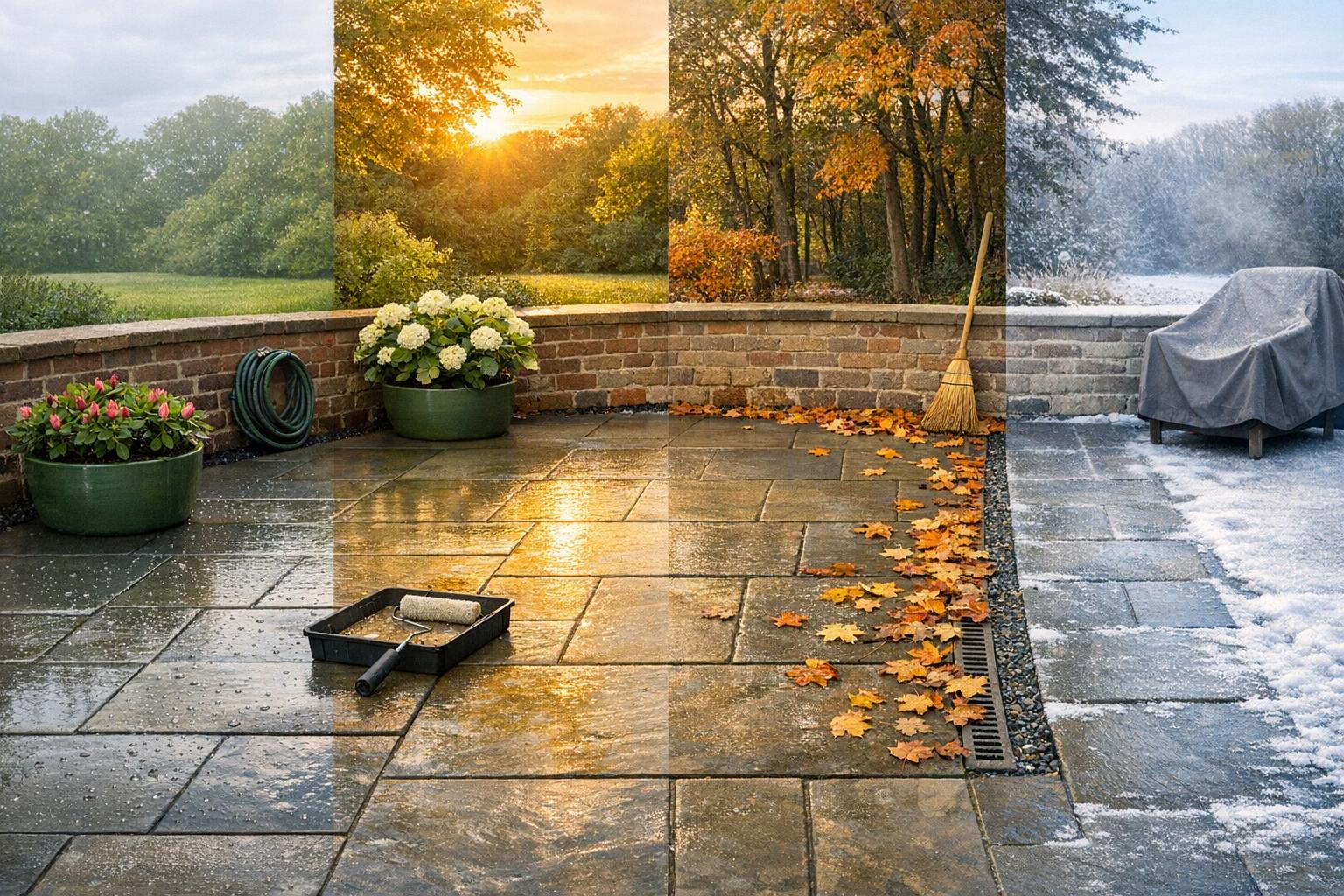
Maryland’s changing seasons call for specific care throughout the year. Here’s a handy guide to seasonal tasks:
| Season | Priority Tasks |
|---|---|
| Spring | Deep clean; check for frost heave; inspect drainage; assess sealer condition |
| Summer | Watch for algae or mildew in shaded areas; adjust sprinklers to avoid overspray |
| Fall | Clear leaves promptly to prevent stains; clean gutters and downspouts near the patio |
| Winter | Use plastic shovels; avoid rock salt; monitor ice buildup in low spots |
Once a year, do a full inspection of the patio’s surface, joints, edge restraints, and drainage. This is also a good time to check if your sealer needs reapplying, which typically happens every 2–5 years, depending on wear.
These regular tasks lay the groundwork for more thorough cleaning, which we’ll dive into next.
How to Clean Different Patio Surfaces
Routine cleaning is important, but different patio materials require different approaches. A good rule of thumb is to start with the gentlest method and only escalate if needed.
For concrete pavers, begin by sweeping or blowing away debris. Then, use a paver-safe cleaner diluted as directed. Scrub gently with a soft-bristle brush and rinse thoroughly. If you’re using a pressure washer, stick to a fan-tip nozzle at low-to-moderate pressure and keep the wand moving to avoid damaging the joint sand or paver edges. For grease stains, try a poultice or an oil-specific cleaner.
Natural stone surfaces, like flagstone or slate, need extra care. Always use a pH-neutral stone cleaner designed for natural stone, and steer clear of acidic or citrus-based cleaners that can damage the surface. Stick to soft-bristle brushes, and if you need to pressure wash, use low pressure and make sure the stone can handle it. Spot-test any new cleaner in an out-of-the-way area before applying it broadly.
For poured concrete, mild detergent and a stiff brush (not wire) work best for general cleaning. Avoid frequent use of bleach, as it can wear down sealers, fade colors, and harm nearby plants.
Caring for Outdoor Furniture and Accessories
Once your patio surface is clean, don’t forget about your outdoor furniture and accessories. Maryland’s weather can take a toll – humid summers can cause rust or mildew, while freezing winters can crack or warp certain materials.
For metal furniture, check frames and legs monthly during warmer months for rust. If you spot any, sand lightly and touch up with paint to keep it from spreading. Adding rubber or felt pads to furniture legs can also protect your patio surface from scratches, especially in hot weather when metal can leave marks on softer materials.
As fall winds down, inspect your outdoor accessories. Move fragile items like ceramic planters, decorative pieces, and cushions into storage before the first freeze. For larger furniture that stays outside, fitted covers can shield it from moisture and ice. Also, check planters and saucers for pooling water, which can stain the patio. Elevating them slightly can help prevent this.
Built-in features like stone seating walls or fire pits usually need less attention. A seasonal rinse and a quick check for gaps in mortar joints should suffice.
If you run into issues that seem beyond routine care, reaching out to local professionals like Pro Landscapes MD can ensure your patio gets the expert attention it needs to stay in top shape year-round.
sbb-itb-843f8be
Protecting Your Patio from Weather and Water Damage
Maryland’s weather can be tough on patios. Humid summers, heavy rains, and freeze-thaw cycles in winter can cause cracks, shifting, and erosion. Taking steps to protect your patio ensures it stays both attractive and structurally sound for years to come.
Sealing and Surface Protection
Sealing is one of the best ways to extend your patio’s lifespan. A good sealer can reduce water absorption by up to 95%, help prevent stains, and slow fading caused by UV exposure.
There are two main categories of sealers:
- Penetrating sealers: These soak into the surface without altering its appearance, making them ideal for natural stone and concrete if you prefer a natural look.
- Film-forming sealers: These create a surface layer that can enhance color or add a glossy finish. However, they may become slippery when wet and require periodic maintenance. For areas like patios or pool decks, adding a non-slip additive is a smart move.
How often you need to reseal depends on the material and its exposure to the elements. For example:
- Natural stone (like flagstone): Reseal every 1–3 years due to its porous nature.
- Concrete and pavers: These usually last 2–5 years between applications, but heavily used patios or those in full sun may need attention every 1–2 years.
Here’s a quick way to check if it’s time to reseal: pour a little water on the surface. If it soaks in rather than beads up, it’s time to reseal. Before applying a new coat of sealer, make sure the surface is clean and completely dry – this usually takes 24–48 hours.
While sealing is crucial, proper drainage is just as important to prevent water-related damage.
Drainage Maintenance and Fixes
Poor drainage can significantly shorten a patio’s lifespan. Standing water weakens the base, washes out joint sand, and exacerbates freeze-thaw damage. To avoid these issues, patios should have a minimum 2% slope (1/4 inch per foot) to direct water away from structures and foundations.
After heavy rain, check your patio for standing water that lingers for more than a few hours. If you spot problem areas, here are some common fixes:
- Regrade the soil around the patio.
- Extend downspouts at least 4–6 feet away from the patio.
- Install a French drain or channel drain for persistent pooling.
For paver patios, refill any joints where sand has eroded more than 1/4 inch. This helps secure the pavers and limits water infiltration. If widespread pooling occurs, or if water is reaching your foundation, it’s wise to call a professional. Companies like Pro Landscapes MD specialize in drainage solutions, grading, and patio repairs, ensuring these problems don’t escalate.
Seasonal Prep for Spring, Summer, Fall, and Winter
Maryland’s changing seasons demand specific care to keep your patio in top shape. Here’s what to focus on throughout the year:
| Season | Key Actions |
|---|---|
| Spring | Clear debris and salt residue from winter, check for frost heave or cracks, flush drains, and plan resealing when nights stay above 50°F. |
| Summer | Rinse surfaces to minimize heat expansion and mildew, ensure irrigation systems aren’t soaking patio edges, and clean spills quickly to avoid stains setting in the heat. |
| Fall | Remove leaves and acorns promptly to prevent tannin stains, clean gutters, and address drainage issues before the ground freezes. |
| Winter | Use plastic shovels to clear snow, avoid rock salt on concrete (opt for sand or calcium magnesium acetate), and prevent ice from forming in cracks or joints to avoid freeze damage. |
Fall is an excellent time for sealing and minor repairs in Maryland. Cooler temperatures make materials easier to handle, and sealers cure more evenly before winter arrives [2].
Patio Repairs and Upgrades Over Time
Maryland’s climate, with its freeze-thaw cycles, heavy rains, and root activity, can take a toll on patios despite your best preventive efforts. Over time, repairs and upgrades may become necessary, but most issues can be addressed without tearing everything apart.
Common Patio Problems and How to Fix Them
After a rainstorm, take a close look at your patio. Check for areas where water pools, uneven spots, or pavers that have shifted along the edges.
Settling often shows up as sunken areas, typically along high-traffic paths or the patio’s center. For paver or flagstone patios, here’s how to fix it:
- Remove the stones in the affected area.
- Add 1–2 inches of fresh bedding sand and compact it.
- Ensure the slope leads water away from your home (a drop of about 1/8 to 1/4 inch per foot).
- Relay the stones, refill the joints with polymeric sand, and mist the area to activate the sand.
Heaving, which creates raised or uneven sections due to frost or root growth, requires more attention. Remove the impacted pavers, reinforce the base with compacted gravel, and make sure drainage is sufficient to prevent water from freezing underneath.
Edge failure happens when the outer pavers shift outward. To fix this, reset the outer pavers and install a staked metal or plastic edge restraint anchored into the compacted base. For surface wear on concrete, apply a resurfacer or flexible crack sealant for minor cracks. For pavers, re-sand the joints and seal them to improve durability and appearance.
These fixes work best when the base is still in good condition and the problem is isolated. However, if the damage is widespread or the base material is compromised, a full rebuild might be necessary.
Once repairs are complete, think about upgrades that can make your patio more functional and appealing.
Patio Upgrade Options Worth Considering
Adding upgrades to your patio can elevate both its usability and visual appeal. Consider these options:
- A built-in fire pit makes your patio usable during cooler evenings and creates a cozy gathering spot.
- An outdoor kitchen, even a simple grill island with a stone countertop and storage, turns your patio into an entertainment hub.
- Seating walls or garden walls provide permanent seating while visually defining different zones.
- Permeable pavers are ideal for managing drainage issues, as they allow water to seep through the joints into a prepared stone base, reducing puddles and runoff.
| Upgrade | Functional Benefit | Aesthetic Benefit |
|---|---|---|
| Fire pit | Extends outdoor use into cooler months | Adds a warm, inviting focal point |
| Outdoor kitchen | Enhances cooking and entertaining outdoors | Creates a polished, built-in look |
| Seating walls | Provides durable, low-maintenance seating | Defines spaces and adds structure |
| Permeable pavers | Reduces water pooling and runoff | Offers a sleek, modern look |
When to Call a Professional
While many repairs can be tackled on your own, some issues require professional expertise. If settling or heaving persists despite your repairs, it may indicate deeper base problems that need excavation and proper grading. Similarly, recurring drainage problems, water near your foundation, or widespread unevenness are signs you should bring in an expert.
For Maryland homeowners, Pro Landscapes MD provides comprehensive patio repair and upgrade services. From resetting pavers and flagstones to installing French drains, fire pits, and outdoor kitchens, they’ve got you covered. Professionally installed patios can last 25 to 50 years, making timely repairs a smart investment to ensure long-term durability [1].
Conclusion: Key Steps for Keeping Your Patio in Good Shape
Your patio isn’t just a functional outdoor space – it’s an extension of your home, deserving the same level of care as any other part of your property. Maryland’s humid summers, heavy rain, and freeze-thaw cycles mean that neglecting regular upkeep can lead to bigger, more expensive problems down the line. As this guide highlights, staying on top of maintenance helps you avoid costly repairs and keeps your patio looking great for years.
Here are the essentials: sweep and rinse often, inspect every spring and fall, reseal every 2–3 years, and ensure proper drainage to direct water away from your home. Whether your patio is stone, concrete, or pavers, routine cleaning, managing moisture, and resealing are universal practices that protect and extend its lifespan.
The financial benefits are undeniable. A new patio can run anywhere from $1,900 to $5,600, but with consistent care, it can last 30 years or more [1]. Spending a little on regular maintenance is a smart way to avoid the steep cost of replacing the entire structure.
Be alert for warning signs that require more than a DIY solution: standing water that won’t drain, large areas of settling or heaving, widening cracks, or safety hazards like slippery surfaces or unstable steps. Addressing these issues quickly can prevent them from escalating. For Maryland homeowners, Pro Landscapes MD offers expert repairs and upgrades designed for the region’s climate challenges.
FAQs
What’s the best sealer for my patio material?
The ideal sealer for your patio depends on the type of material used, as different stones and pavers have unique needs. Pro Landscapes MD works with high-quality materials like Techo-Bloc, natural stone, and concrete pavers, ensuring durability and style. To find the right sealer and get maintenance tips tailored to your specific patio, it’s best to consult a professional. The team at Pro Landscapes MD can offer expert guidance to help you achieve long-lasting results for your outdoor space.
How do I stop water from pooling on my patio?
To stop water from collecting on your patio, it’s crucial to tackle drainage and grading problems. Some effective options include installing French drains, regrading the area, or using berms and swales to direct water flow. Another great option is permeable pavers, which let water seep into the ground instead of pooling. Features like dry riverbeds or rain gardens can also help control runoff naturally. For a more permanent solution, consider bringing in professionals to evaluate the slope of your patio and its drainage system.
When is patio damage too big for DIY?
Minor tasks like sweeping or swapping out a single paver are manageable for most DIY enthusiasts. But when it comes to more complicated issues – like damage in heavily used areas, steep inclines, or dealing with clay-heavy soil – it’s best to rely on professionals. Experts like Pro Landscapes MD can handle repairs, address drainage challenges, and ensure the structural integrity of your patio, keeping it safe and durable for years to come.
Chat with Us