









- bhavya gada
- No Comments
If I want a backyard skating zone in Maryland, I need to get three things right first: drainage, slope, and a solid base. A 1% to 2% slope helps move water away, and a packed base helps limit cracks during freeze-thaw weather. Without that, even a good-looking surface can end up with puddles, edge lips, or ice spots in winter.
Here’s the short version:
- Concrete and asphalt are the main low-cost hard surfaces.
- Acrylic coatings can make skating feel smoother if the base is flat and in good shape.
- Cushioned acrylic adds a bit more impact relief for longer sessions.
- Modular sport tiles help with drainage and let me swap out small damaged sections.
- Rubberized surfaces and synthetic ice fit more specific use cases.
- Edges, transitions, and layout matter just as much as the surface itself.
If I’m choosing between these options, I should look at:
- Upfront cost
- Comfort
- Drainage
- Repair needs
- How the space will be used
Building a 60ft Sport Pad / Hockey Rink in our backyard
Quick Comparison
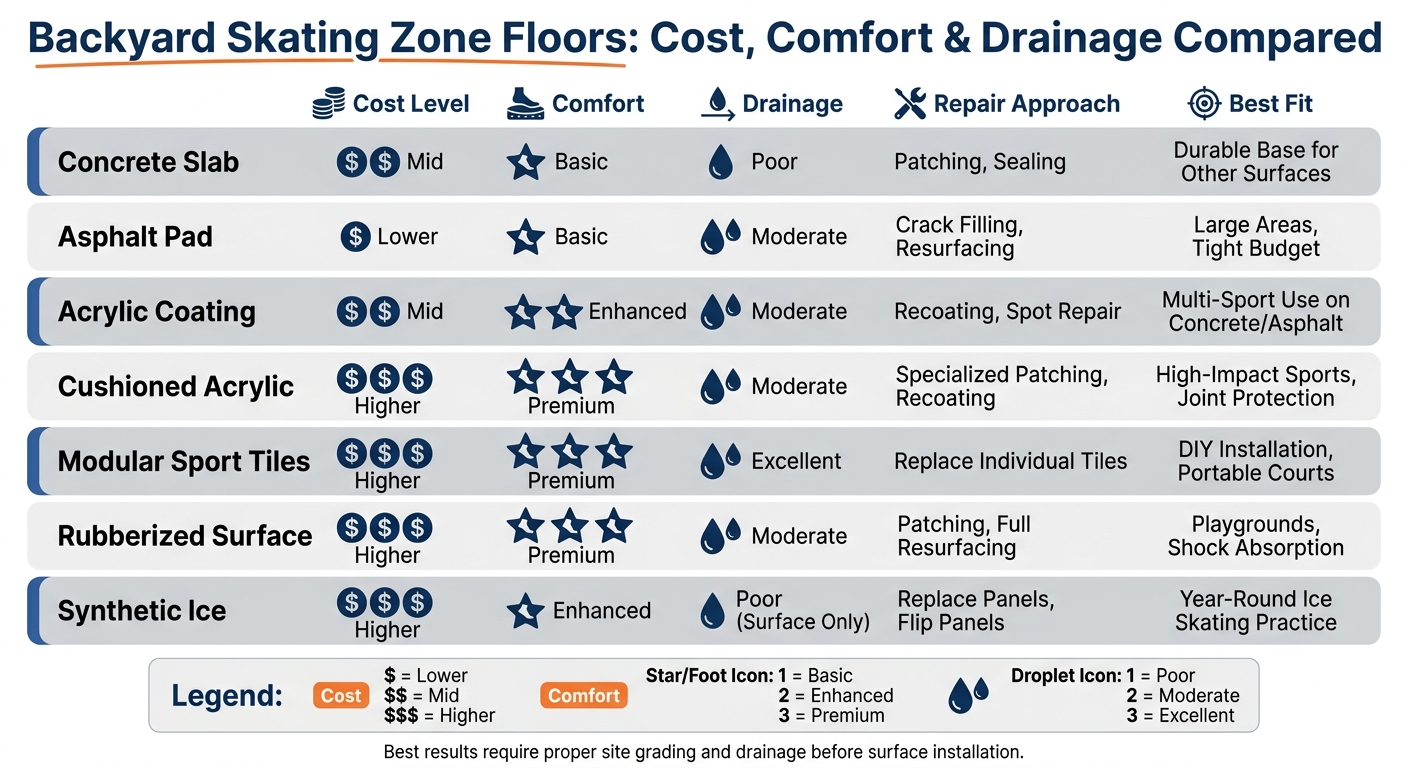
Backyard Skating Zone Floors: Cost, Comfort & Drainage Compared
| Floor type | Cost level | Comfort | Drainage | Repair approach | Best fit |
|---|---|---|---|---|---|
| Concrete slab | Lower | Firm | Depends on grading | Patch/repair sections | Basic skating use |
| Asphalt pad | Lower | Firm | Depends on grading | Patch/repair sections | Low-cost outdoor use |
| Acrylic coating | Mid | Smoother feel | Dries fast on sound base | Surface repair/recoat | Skating on existing slab/pad |
| Cushioned acrylic | Mid to higher | More impact relief | Needs flat base | Surface repair/recoat | Longer sessions, mixed roller use |
| Modular sport tiles | Mid to higher | Good under wheels | Built-in drainage channels | Replace single tiles | Wet yards, roller hockey, mixed use |
| Rubberized surface | Varies | Softer underfoot | Depends on system | Section repair | Shared activity spaces |
| Synthetic ice | Higher | Ice-style training feel | Panel-based setup | Replace panels as needed | Hockey drills, off-season practice |
Bottom line: if I want the safest and longest-lasting result, I should treat the floor choice and the site work as one project, not two.
Budget-friendly floors for backyard skating zones
If cost is your main concern, start with the simplest hard surfaces. For a budget-friendly backyard skating zone, concrete slabs and asphalt pads are the most direct place to begin. Both stand up well to skate traffic and deal with Maryland’s seasonal weather without asking for much upkeep.
So if you’re trying to keep spending in check, the main low-cost options come down to concrete slabs and asphalt pads.
sbb-itb-843f8be
Comfortable and low-upkeep skating surfaces
If you want a skating surface that feels better day to day without turning upkeep into a chore, acrylic sport coatings and modular sport tiles are the two main picks. Both keep maintenance fairly low while making regular skating more comfortable.
Acrylic sport coatings over concrete or asphalt
An acrylic sport coating is applied right over an existing concrete slab or asphalt pad. The result is a firmer skating surface that still cleans up easily after rain. It’s a simple setup that works well if your base is already in good shape.
Cushioned acrylic systems add a thin cushioned layer under the topcoat. That extra layer gives some impact relief during longer sessions and mixed roller sports. It’s not a soft, bouncy surface, but it can take the edge off. The catch? You need a flat, crack-free base for it to work well.
Modular sport tiles for drainage and easy replacement
Interlocking outdoor sport tiles snap together over your base and include built-in drainage channels. That makes them a strong fit for wetter yards where standing water can be a pain.
They’re a good match for:
- Roller hockey
- Rollerblading
- Spaces where small repairs matter
If one section gets damaged, you can replace tiles one by one instead of dealing with the whole surface. That keeps repairs small and helps control costs.
Rubberized surfaces and synthetic ice for specialty use
Rubberized surfaces give a softer feel underfoot, which can work well in yards where skating shares space with other active use. Synthetic ice panels are more of a niche choice, usually for off-season hockey training or ice skating practice without refrigeration.
Next comes how to size the court and detail the edges so the surface stays safe.
Court layouts, edging, and backyard integration
Sizing and positioning a court for multiple activities
Once you’ve picked the surface, the layout does a lot of the heavy lifting. It affects how safe the area feels, how easy it is to move through, and whether the skating zone fits the rest of the yard instead of feeling dropped in as an afterthought.
Size the skating area around traffic flow, nearby paths, and any seating or play zones. If people are cutting across the space to get to a patio, garden, or gate, that can turn into a headache fast. It helps to keep the layout open so the surface connects naturally to the rest of the yard.
Edging, transitions, and drainage details that prevent trip hazards
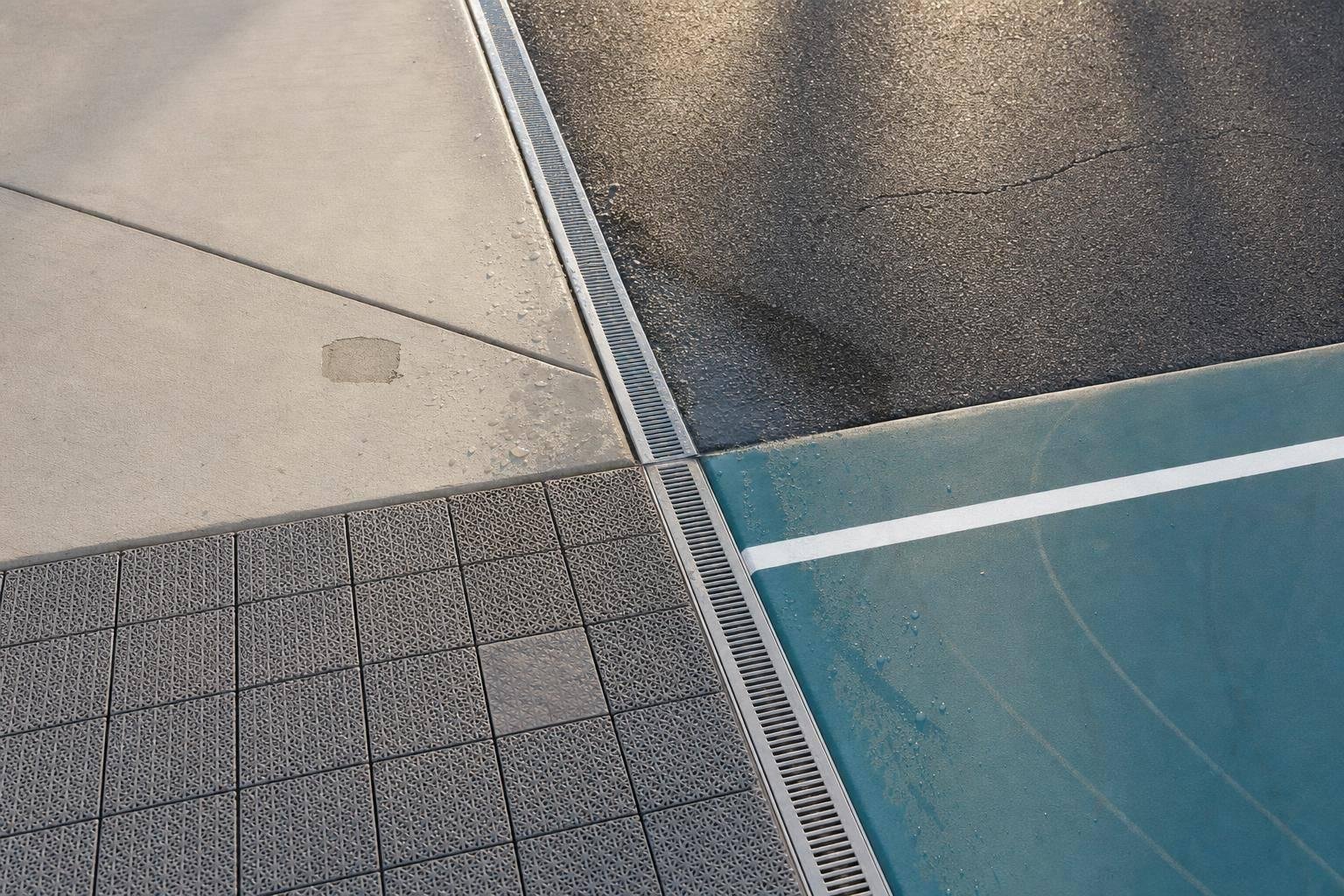
After that, the perimeter needs clear definition. Smooth, safe transitions matter here. Even a small lip at the edge can become a trip hazard, especially when wheels are involved.
Drainage also depends on both the surface and the perimeter. A concrete curb can give the area a clean edge, while low seat walls can frame the space and add extra seating. Done well, these details make the court feel like part of the backyard, not a separate slab.
Where Pro Landscapes MD fits into a backyard skating project
If the project needs grading, drainage, and hardscape work, Pro Landscapes MD handles yard leveling, grading, French drains, retaining walls, seat walls, patios, and walkways to tie the skating zone into the surrounding yard.
Conclusion: Picking the right skating floor for your budget, comfort, and yard
In Maryland, the best skating floor comes down to three things: your budget, how well the area drains, and how you plan to use it.
Concrete and asphalt are the most practical low-cost bases for a backyard skating zone. If you want a smoother, more comfortable ride, acrylic coatings work well over a sound concrete or asphalt base. And for mixed-use yards, modular sport tiles are the best match. They offer drainage, simple replacement, and low upkeep.
If your project also needs grading, drainage work, or hardscape integration, Pro Landscapes MD handles grading, drainage, and hardscape integration across central Maryland, including Howard, Montgomery, and Baltimore counties.
FAQs
Which skating floor handles Maryland weather best?
Interlocking modular concrete pavers and high-density natural stone tend to hold up best in Maryland weather. They handle freeze-thaw cycles and humid summers well because they can shift a bit with soil movement instead of fighting against it.
If you want steady, year-round skating, modular sport tiles are another strong pick. Their interlocking build gives them room to expand and contract, and the perforated surface helps water drain fast after rain or snow.
Do I need concrete or asphalt under sport tiles?
Yes. Modular sport tiles need a stable, level, well-drained base, so concrete or asphalt is the best foundation for a skating zone.
A properly built concrete slab or asphalt surface gives the tiles the support they need. The base should be professionally graded and kept level to help prevent shifting and drainage problems, especially in Maryland’s climate.
How much slope should a backyard skating area have?
A backyard skating area should have a slight perimeter slope of about 1% to 2%. That small pitch helps water drain off instead of sitting on the surface, where it can pool and cause damage over time.
If your yard already slopes toward the rink, it’s smart to fix that before you build. Professional grading or drainage options like French drains can help protect the skating surface.
Chat with Us