









- bhavya gada
- No Comments
Most Maryland homes can cut runoff with a few simple yard fixes. If I were planning a retrofit, I’d start by checking where roof and driveway water goes, how fast the soil drains, and how close the work would be to the house, well, septic area, utilities, and property lines.
Here’s the short version:
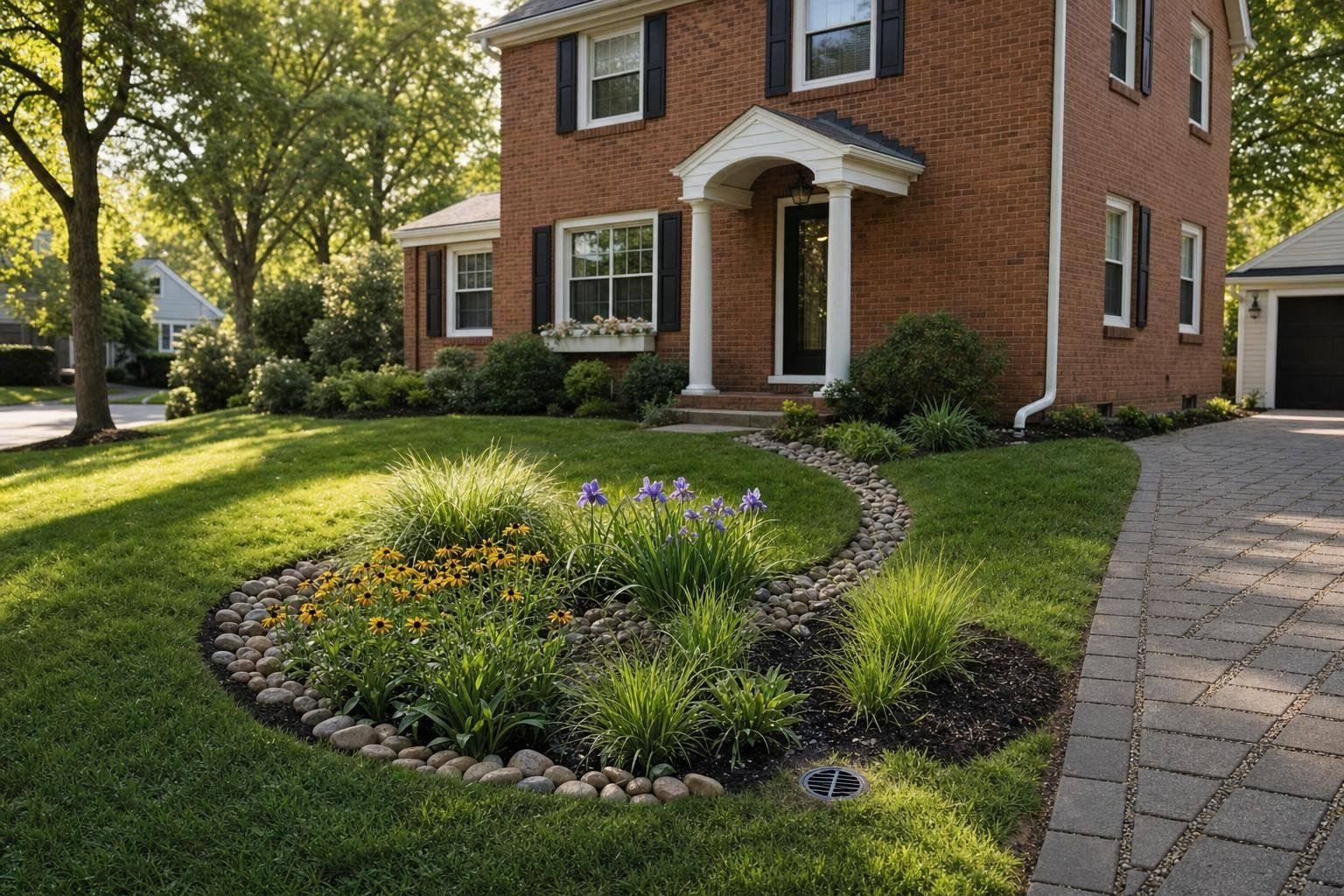
- Rain gardens fit roof or yard runoff on gentle slopes and usually handle up to 2,000 sq. ft.
- Dry wells fit roof-only runoff where yard space is tight, but they need soil that drains well and enough depth above groundwater
- Permeable pavers work for driveways, patios, and walkways when I want runoff control and new hardscape in one project
- Downspout redirection is often the first, lowest-effort step
- Grading fixes help when water sits near the foundation or flows back toward the house
- Planting plans help hold soil in place and support rain gardens and swales
A few limits matter right away:
- Water should drain out in about 24 to 48 hours
- Rain gardens are often set at least 10 feet from a downhill foundation
- Dry wells may be limited by county rules, soil group, slope, and groundwater depth
- Work under 5,000 sq. ft. may avoid full state stormwater review, but county rules can still apply
- In some places, adding 250 sq. ft. or more of hard surface can trigger extra review or offset rules
- If you live in a Critical Area, expect tighter site limits
Quick Comparison
| Retrofit | Best for | Main limit | Main upkeep |
|---|---|---|---|
| Rain garden | Roof and yard runoff | Needs space, setbacks, and decent drain-down | Weed, mulch, clear inlets |
| Dry well | One downspout, small lot | Roof-only use, soil and groundwater limits | Check screens, pipes, and settling |
| Permeable pavers | Driveways, patios, walkways | Base design, slope, sediment control | Vacuum/sweep and keep joints clear |
| Downspout redirection | Simple roof runoff change | Needs a safe outlet with no erosion | Check outlet after storms |
| Grading updates | Water near foundation | Can affect drainage around the house | Watch for settling and erosion |
| Planting plan | Slopes, rain gardens, bed edges | Needs plant choices that fit wet/dry swings | Water early on, replace weak plants |
There’s also a money angle. Some county programs, such as Howard County CleanScapes, may pay 50% of project cost up to $1,200 for some projects, and up to $600 for dry wells, with fee credits in some cases. But those deals usually depend on proper install and upkeep.
So if I had to boil this guide down to one point, it would be this: pick the retrofit based on runoff source, soil, slope, and setbacks – not just what looks good in the yard.
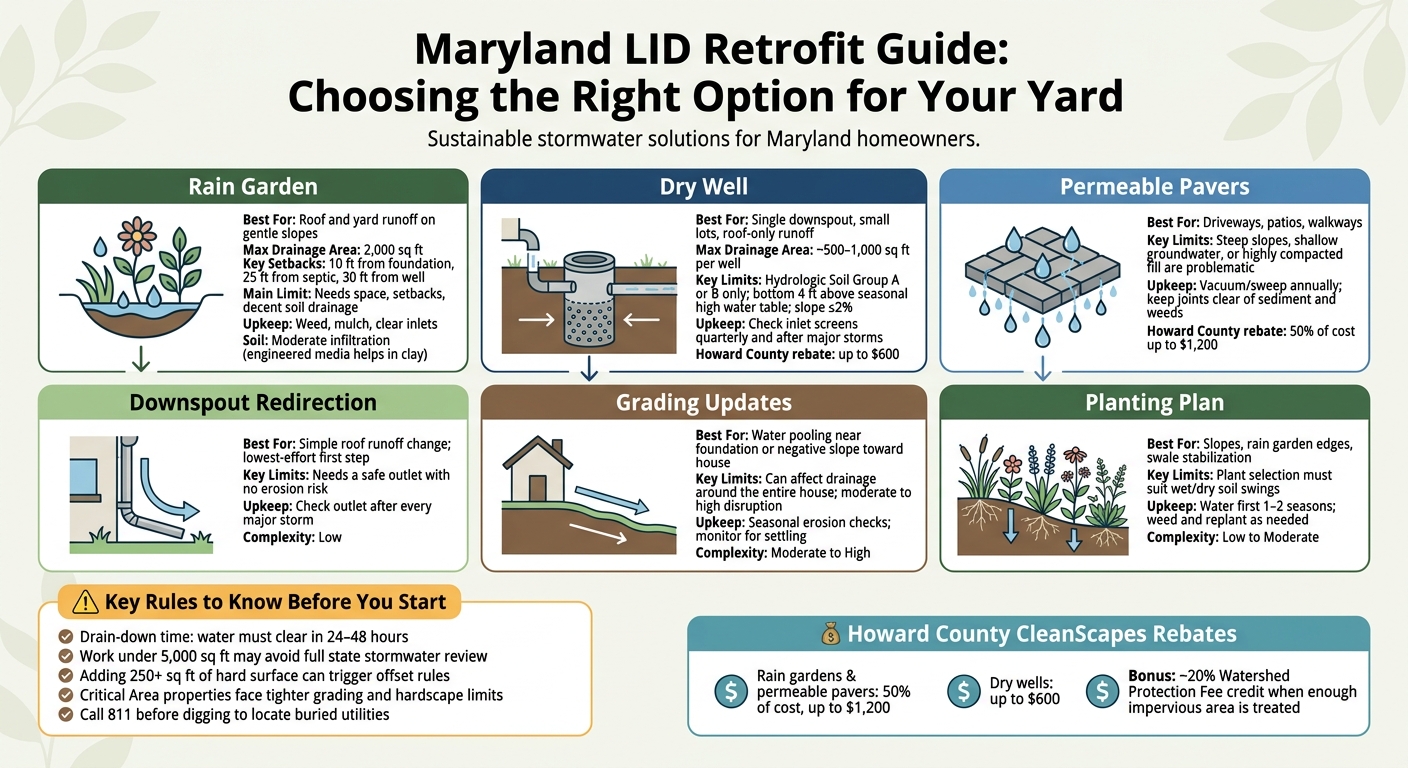
Maryland LID Retrofit Comparison: Rain Gardens, Dry Wells & More
Maryland Stormwater Rules and Site Checks Before Construction
Stormwater Rules That Affect Residential Retrofit Decisions
After you narrow down the retrofit types that fit your yard, the next move is to check the rules that decide what can actually be built. In Maryland, redevelopment projects must use ESD-based practices that manage runoff close to where it lands. For residential redevelopment, that usually means reducing impervious area by 50%, treating 50% of existing impervious area with ESD, or using a mix of both [12][15].
A lot of smaller retrofit projects fall into an exemption. If the work disturbs less than 5,000 square feet, and in some cases involves single-family residential changes, it may be exempt from full state stormwater review. That said, county-level rules can still come into play [11][13]. Permit triggers also change based on the job and the property. For example, work in a Critical Area, or adding 250 square feet or more of impervious surface, can mean you need to offset the new pollution load with planting or stormwater practices [5][14]. In some counties, approved retrofits may also qualify for rebates or stormwater fee credits.
Once those guardrails are clear, it makes sense to look at the lot itself – how water moves, how steep the ground is, and where setbacks limit your options.
A Basic Property Assessment Checklist for Retrofit Planning
| Assessment Step | What to Look For |
|---|---|
| Map downspouts and paved areas | Note which downspouts drain to lawn, driveway, or an underground pipe; estimate roof area served by each downspout |
| Identify low spots and erosion paths | Look for places where water sits after rain, plus bare soil, gullies, or worn turf that show concentrated flow |
| Test infiltration | Dig a small hole, fill it with water, and time how long it takes to drain; if water is still there after 24 hours, the soil drains too slowly for most infiltration practices |
| Confirm slopes | Gentle slopes under 5% to 8% tend to work best; steeper areas may need terracing, walls, or a different retrofit type |
| Check setbacks | Verify required clearances from the foundation, septic system, well, property lines, utilities, and easements [19][7][9] |
| Locate utilities and easements | Call 811 (Call Before You Dig) before digging and review recorded easements that may limit construction |
Maryland guidance says a residential rain garden should drain no more than 2,000 square feet, with ponding depth capped at 6 inches and filter beds set at 12–18 inches deep [18][20]. Howard County limits dry wells to drainage areas of 500 square feet of impervious surface and requires a minimum infiltration rate of 0.52 inches per hour within 50 feet of the proposed location [2][17].
Those numbers matter. If your roof section or paved area is too large for one practice, you may need to divide the drainage between two spots instead of forcing everything into one small area.
When to Bring in a Professional for Grading, Drainage, or Hardscape Work
Some retrofits are very doable for a hands-on homeowner. A small rain garden in a flat side yard with soil that drains well, or a simple downspout extension across a lawn, can be a good weekend project.
Other cases are a different story.
Persistent wet basements or drainage trouble near the foundation are the biggest warning signs. If you change how water moves around the house without understanding the grading that is already there, you can make the problem worse. Sloped or uneven yards can create the same kind of risk, especially if the project needs a retaining wall or a terraced bed to support a rain garden safely.
Projects that combine hardscape and drainage work also get complicated fast. A permeable paver driveway or patio may sound simple on paper, but the subbase, underdrain routing, and planting layout all need to work together. If one piece is off, the whole setup can struggle.
For grading, drainage, and permeable paver work in central Maryland, Pro Landscapes MD handles land leveling, drainage repair, French drains, dry riverbeds, permeable pavers, and planting plans. Those limits help narrow down which retrofit makes sense for your lot.
sbb-itb-843f8be
How To Create a Rain Garden | Ask This Old House
Choosing the Right LID Retrofit for Your Lot
The right retrofit depends on where the runoff starts: the roof, paved areas, or water collecting near the foundation. Use that starting point to narrow the choice fast.
Rain Gardens and Planting Plans for Roof and Yard Runoff
Rain gardens work best for spread-out roof or yard runoff on gently sloped lots. Maryland guidance generally sizes a residential rain garden for up to about 2,000 sq ft of contributing area.[1][2][7][22][23]
Placement matters just as much as size. A rain garden should be at least 10 feet from a downhill foundation, about 25 feet from a septic system, and about 30 feet from a water supply well.[25][21] Planting usually follows a simple zone layout: plants that can handle wetter soil go in the lowest center area, while more drought-tolerant native plants go on the side slopes.
Rain gardens usually aren’t a good fit for heavy clay soils where water already sits for days. They’re also tough to use on sites that can’t meet the setback rules, unless the design includes amended soils or underdrains.
| Factor | Rain Garden | Dry Well | Permeable Pavers |
|---|---|---|---|
| Drainage area | Small to moderate roof or yard runoff | Small roof-only runoff from a single downspout | Depends on the hardscape area being replaced |
| Soil needs | Works best with moderate infiltration; engineered media can help in clay | Best in permeable A or B soils | Needs good native infiltration or a designed base and underdrain |
| Visibility | Visible planted landscape feature | Mostly hidden underground | Visible pavement surface |
| Maintenance | Weeding, mulching, and inlet and overflow checks | Inspect inlets and watch for clogging | Sweep or vacuum joints and keep sediment out |
| Space needed | Dedicated planting area plus setbacks | Minimal surface footprint | Replaces existing or planned hardscape |
If there’s no room for a planting area, a subsurface option usually makes more sense.
Dry Wells for Roof-Only Runoff and Limited Surface Space
Dry wells are a good match for one roof downspout on a small lot. They serve roof-only runoff and are commonly sized for about 1,000 sq ft per well.[26][22][30][32]
Soil is the big gatekeeper here. Dry wells are typically limited to Hydrologic Soil Group A or B soils, and the bottom of the well should sit at least 4 feet above the seasonal high water table or bedrock.[29][31][32] Slopes of 2% or less are preferred. Pretreatment, such as a leaf screen or a small sediment sump, also helps keep the stone from clogging.[31][22]
| Factor | Dry Well | Infiltration Trench |
|---|---|---|
| Footprint | Compact, near an individual downspout | Longer and linear, often along a driveway or property edge |
| Depth and shape | Deeper pit within recommended limits | Shallower and longer, spreading flow across a larger area |
| Overflow handling | Overflow pipe or surface relief grade | Can tie into swales or surface conveyance |
| Maintenance access | Cleanout pipes or access points | Harder to inspect along the full length |
| Best site fit | Roof-only runoff, small lots, limited surface space | Linear space, moderate slopes, or sheet flow from driveways and yard edges |
If the runoff is coming from pavement, or from a roof edge that can be redirected, it often makes sense to look at permeable pavers, downspout changes, or grading work instead.
Permeable Pavers, Downspout Changes, and Grading Updates
Permeable pavers are a strong fit for driveways, patios, and walkways that need both hardscape and runoff control. They usually aren’t the best choice on very steep slopes, in areas with shallow groundwater, or over highly compacted fill.
Downspout disconnection is often the simplest first move. It redirects roof runoff away from the house and toward a lawn, rain garden, or dry well. Regrading does something similar in a different way: it restores slope away from the house so water doesn’t sit near the foundation.
| Factor | Permeable Pavers | Downspout Disconnection | Regrading |
|---|---|---|---|
| Project complexity | High – subbase, drainage layer, and surface all need coordination | Low to moderate – usually an extension pipe or splash block | Moderate to high – depends on slope and scope |
| Site disruption | Moderate – existing pavement is removed and replaced | Low – minimal excavation | Moderate to high – soil movement and compaction |
| Maintenance | Regular sweeping or vacuuming; keep sediment out | Check the outlet area for erosion each season | Minimal once stable; monitor for settling |
| Drainage benefit | Reduces runoff from hardscape and improves infiltration on-site | Redirects roof runoff to infiltration or planted areas | Prevents water from pooling near structures |
| Best fit | Driveways, patios, and walkways where hardscape is already planned | Roof runoff that can be safely spread or conveyed | Lots with negative slope toward the house |
For projects that combine drainage and hardscape work, the parts need to be planned together. Pro Landscapes MD handles permeable pavers, grading, and drainage work for central Maryland homes.
Design Limits, Permits, and Construction Details That Affect Performance
Sizing and Siting Limits Homeowners Should Know
After you pick a retrofit type, the next step is simple: make sure your site can handle it. That check matters more than many homeowners expect. Rain gardens, dry wells, and permeable pavers each come with runoff and soil limits that decide whether they’ll work on your lot.
Start with drain-down time. If water is still sitting there after 24–48 hours, that usually means the practice is too large, the soil drains too slowly, or both.[8][35] When that happens, the plan may need a soil amendment, an underdrain, or a different retrofit altogether.[8][2][27]
Location matters too. Infiltration practices need to stay clear of foundations, wells, septic systems, and buried utilities.[20][24] Slopes can also shut a project down fast. Putting an infiltration practice at the bottom of a steep slope, especially where soils are already soft, eroding, or unstable, can lead to erosion or soil movement instead of fixing the drainage issue.[2][16]
Permeable pavers have their own limit. They usually work best when the runoff comes from the paved surface itself, not from large uphill areas that can clog the system over time.[6][4]
If the site clears those checks, the project can move into layout and permit review.
Permit, County Review, and Utility Coordination Questions
Once sizing and siting are sorted out, permit review is the next hurdle.
Bigger grading or hardscape jobs can trigger stormwater and grading review, so it’s smart to check with your county before any work begins.[21][28][34] Properties in Critical Area zones face tighter limits on grading, clearing, and hardscape work, including permeable installations.[8][10][16] If your lot sits near the Chesapeake Bay or a tidal tributary, ask county staff whether your retrofit needs review under local Critical Area rules before you lock in the design.
Before anyone digs, check for buried utilities and drainage easements. Call 811, then review your plat and deed for limits or access rules.[21][34] It also helps to make sure the retrofit won’t block access to shared stormwater features like storm drains or culverts. And one more thing: don’t send runoff onto a neighbor’s lot unless you have permission.[21]
Maintenance, Compliance Value, and Final Retrofit Planning Steps
What to Inspect After Installation and Each Season
Once installation is done, the job isn’t over. These systems only keep working if you keep an eye on them. Regular maintenance helps LID features do their job and helps protect credit eligibility. Inspection records also make it easier to show that the system still works as approved.
For rain gardens and dry wells, the main post-install check is drain-down time. If water is still sitting after 48 hours, the feature needs attention before the next storm.[7][9]
For rain gardens, check the basics that tend to slip over time:
- Clear trash and sediment from inlets
- Remove weeds and fix bare spots
- Refresh mulch to 2–3 inches
- Replace failing plants with species that can handle the site’s wet-dry cycle[36][7][42]
Each spring, cut back dead stems before new growth starts. In fall, remove fallen leaves. During dry periods in the first 1–2 years, water new plantings so they can get established.[36][7][43]
Dry wells should be inspected quarterly and after major storms. Make sure downspouts and piping are still connected, clear sediment from inlet screens, confirm that the well drains between storms, and watch for settlement or surface depressions above the system.[47][35][9][37]
For permeable pavers, vacuum sweep in dry weather at least once a year, and again after fall leaf drop. That helps clear sediment and restore infiltration. Joints should stay free of leaves and weeds.[38][39][40][41][33]
Downspout connections and grading paths also need a quick check after every major storm. Look for shifted outlets, clogged gutters or downspouts, and any new erosion or wet spots near the foundation.[37][9]
How Combined Retrofits Support Maryland Stormwater Goals
Maintenance becomes even more important when a property uses more than one retrofit type. A combined setup spreads runoff control across the lot and helps Maryland counties work toward MS4 and Chesapeake Bay goals.[44][45][52]
Howard County’s CleanScapes program is a good example. It offers reimbursement of 50% of cost up to $1,200 for qualifying rain gardens and permeable paver installations, and up to $600 for dry wells. It also offers credits that can cut your Watershed Protection Fee by about 20% when enough impervious area is treated.[3][35][48][49][51]
There is a catch: those credits stay active only if the practices are installed and maintained under approved plans.[37][35][50]
Building a Practical LID Retrofit Plan for Your Property
Start with the facts on your lot: where water collects, how fast it drains, and which surfaces send the most runoff. Then match each retrofit to those conditions, check county review or permit needs where needed, and plan for maintenance from day one.
A simple log can go a long way. Save photos after major storms, note when mulch gets replaced, and record drain-down time checks. That kind of documentation can support credit renewals and help you spot problems early.[37][46][35][50]
Use this checklist to track post-install performance:
| Retrofit Type | Post-Install Check | Maintenance Action | Compliance Note |
|---|---|---|---|
| Rain garden | Drain-down within 48 hours | Clear inlets, refresh mulch, replace failing plants | Follow county BMP guidance |
| Dry well | Drain-down between storms; no surface depressions | Clear inlet screens quarterly and after major storms | Check county guidance for larger systems |
| Permeable pavers | No standing water on surface; joints clear | Vacuum sweep annually; replenish joint aggregate as needed | Check county stormwater review if required |
| Downspout redirection | Outlet stable; no erosion at discharge point | Seasonal gutter and outlet checks | Keep runoff on-site |
| Grading updates | Positive drainage maintained; no new wet spots near foundation | Seasonal erosion checks; clear swales | Check county rules before changing drainage paths |
| Planting plans | Plants establishing; no bare soil on slopes | Water first 1–2 seasons; weed and replant as needed | Usually none |
If your lot has tricky grading or more than one drainage issue, Pro Landscapes MD can plan drainage, grading, and permeable paver work with stable inlets, accessible cleanouts, and clear overflow paths.
FAQs
Which retrofit is best for my yard?
The best retrofit comes down to three things: how water moves through your yard, what kind of soil you have, and the shape of the site.
If drainage is the main problem, or your yard has heavy clay soil, options like French drains, dry riverbeds, and grading can help move water where it needs to go instead of letting it pool.
If your goal is to support local ecosystems, native gardens and rain gardens are strong picks. They can help your yard work better with the landscape around it, not against it.
For sloped areas, well-drained retaining walls can help with stability while also managing runoff.
Do I need a permit for this work?
Permit rules for Low Impact Development (LID) retrofits in Maryland depend on the size and scope of the job. Small installs may not need approval. Bigger or more involved projects often do.
A good example is a retaining wall. In many cases, you’ll need a permit if the wall is more than 3 feet tall, supports a surcharge load, crosses a lot line, or sits on problem soils.
Local rules can change from one area to the next, which is where things can get tricky. Pro Landscapes MD can help figure out which permits your project needs.
What if my soil drains too slowly?
If your soil drains slowly – something that happens a lot in Maryland, especially with clay-heavy or compacted ground – it’s smart to deal with water buildup early. Too much standing water can put stress on plants and may lead to damage around your home’s structure over time.
Pro Landscapes MD can help with French drains, dry riverbeds, and grading or land leveling to move excess water where it should go. In spots that stay damp, moisture-tolerant native plants like Swamp Milkweed and Cardinal Flower can also help put that extra water to use.
Chat with Us